

 Arabic
shop
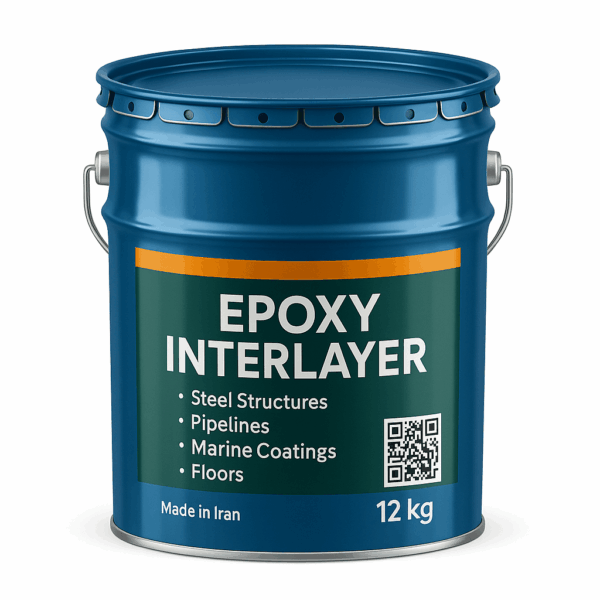
Industrial Epoxy Interlayer Paint
Epoxy Interlayer paints are available in several types such as high-build epoxy interlayers, MIO (Micaceous Iron Oxide) epoxy interlayers, surface-tolerant epoxies, and standard epoxy mid-coats. They are widely applied on structural steel, oil & gas pipelines, storage tanks, offshore and marine structures, bridges, power plants, and industrial equipment. The main ingredients typically include epoxy resins (Bisphenol-A or Bisphenol-F), amine or polyamide hardeners, anti-corrosive pigments, MIO flakes (in MIO grades), fillers, and performance additives. Key advantages of epoxy interlayer paints include excellent adhesion to primers, high film build in fewer coats, low permeability to water and oxygen, strong chemical resistance, and excellent compatibility with epoxy and polyurethane topcoats.
From a performance perspective, epoxy interlayer paints provide outstanding barrier protection, high mechanical strength, good abrasion resistance, and long service life in C3 to C5 corrosion environments according to ISO 12944. They help smooth surface irregularities and significantly extend the lifetime of complete coating systems. Commercially, epoxy interlayer paints are supplied as two-component systems (base + hardener) and are available in 5 kg, 10 kg, 12 kg, 20–25 kg metal pails, as well as 200 kg drums and IBC containers for large-scale industrial projects. These characteristics make epoxy interlayer paints an essential and cost-effective solution for professional industrial coating applications.
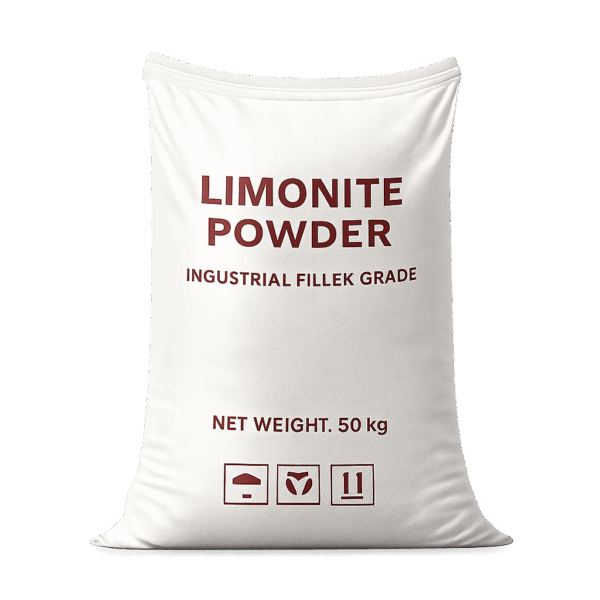
Industrial Filler Grade Limonite
Thanks to its high iron oxide content and earthy yellow-brown to dark brown color tone, limonite powder performs both as a cost-effective filler and a natural pigment in industrial products. In the paint and coating industry, industrial filler grade limonite powder improves opacity, color stability, and film durability while helping to optimize formulation costs. Its good dispersibility makes it suitable for solvent-based and water-based coatings, primers, and industrial paints. In construction materials, limonite powder is widely used in cement, mortar, plasters, tiles, and concrete products, where it contributes to color uniformity, bulk density control, and mechanical strength.
Commercial grades are typically available in 200 mesh, 325 mesh, and micronized sizes, depending on the application requirements. Industrial filler grade limonite powder is valued for its natural origin, low toxicity, good availability, and competitive price, making it an attractive alternative to synthetic pigments and fillers. Supplied in export-ready packaging such as 25 kg and 50 kg PP bags or bulk packaging, this product is suitable for global industrial markets seeking reliable performance, consistent quality, and sustainable mineral raw materials.
The material is also applied in rubber and plastics compounds, where it functions as an inert mineral filler, enhancing dimensional stability and abrasion resistance. In addition, industrial limonite powder is used in foundry applications, refractory blends, bricks, and ceramic bodies, benefiting from its thermal stability and natural mineral origin.
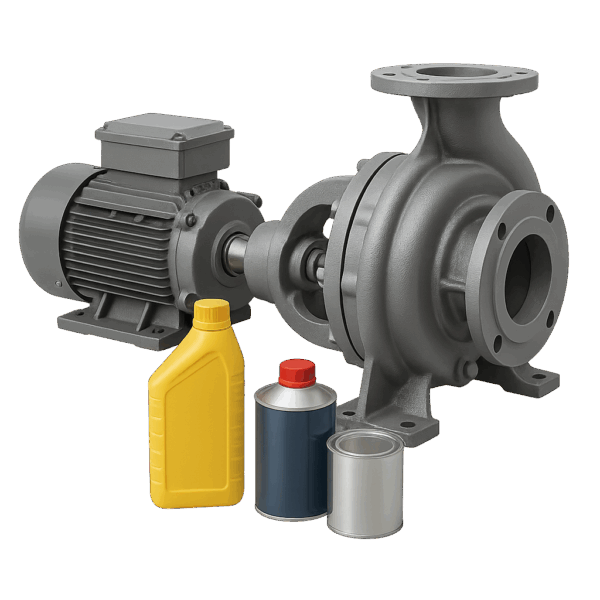
Industrial Gear Oil
Industrial Gear Oil is widely used in enclosed gearboxes, reduction gear units, conveyors, crushers, mixers, compressors, industrial drives, material-handling equipment, steel and metal-processing machinery, mining equipment, cement plants, paper mills, textile machinery, plastic-processing equipment, and other heavy-duty industrial systems where gears require dependable lubrication. EP Industrial Gear Oil is particularly suitable for applications involving shock loads, high contact pressures, and demanding mechanical conditions, while synthetic grades are preferred where extended drain intervals, wide operating-temperature ranges, low-temperature performance, or improved thermal and oxidation stability are required. Gear oils are also available in formulations designed for specific gearbox technologies and operating environments, including helical, spur, bevel, worm, and planetary gear systems, although the correct lubricant must always be selected according to the equipment manufacturer’s specifications. Important technical characteristics may include viscosity at 40°C and 100°C, viscosity index, flash point, pour point, density, oxidation stability, rust and corrosion protection, foam tendency, demulsibility, extreme-pressure performance, and four-ball or similar wear characteristics. Depending on formulation and application, Industrial Gear Oil may comply with recognized performance classifications and specifications such as DIN, ISO, AGMA, and other applicable industrial lubricant standards. Proper viscosity selection is essential because an oil that is too thin may provide insufficient film strength, while an excessively viscous oil can increase friction, energy consumption, and operating temperature.
Industrial Gear Oil is commercially available in multiple packaging formats selected according to customer requirements, transportation conditions, consumption volume, and storage practices. Common packaging options include 1-liter and 5-liter bottles for smaller requirements, 20-liter or 25-liter plastic or metal pails for maintenance operations, 180-liter or 208-liter steel drums for industrial users, and intermediate bulk containers (IBCs) for larger-volume applications.
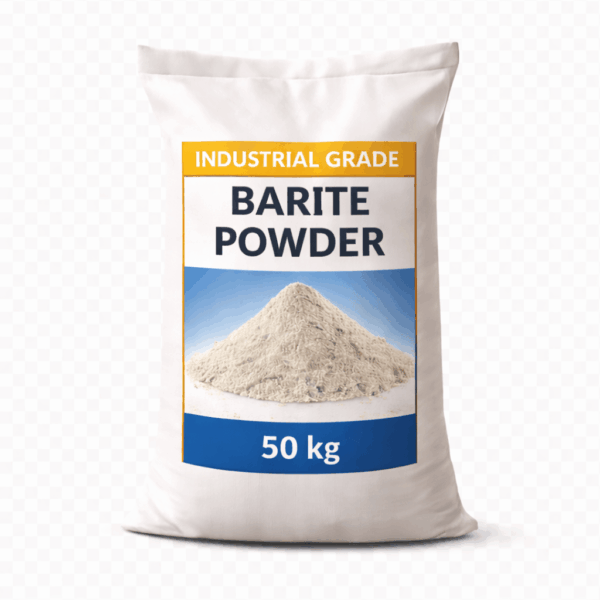
Industrial Grade Barite Powder
Commercial industrial grade barite is available in several grades and varieties, including Paint & Coating Grade Barite, Plastic & Rubber Grade Barite, Construction Grade Barite, and Chemical Grade Barite, classified by BaSO₄ purity, whiteness, and particle fineness. These grades allow manufacturers to optimize performance according to specific application requirements. Industrial grade barite powder is widely used in paints and coatings, plastics and rubber compounds, sealants, adhesives, brake pads, ceramics, glass, radiation shielding concrete, and construction materials. It improves density, surface finish, chemical resistance, corrosion protection, and dimensional stability while reducing overall formulation costs.
Key properties of industrial barite include high specific gravity, excellent chemical and thermal stability, low oil absorption, good brightness, and low abrasiveness. Commercial particle sizes typically range from 200 mesh and 325 mesh to micronized grades between 1 and 10 µm, suitable for both standard and high-performance applications. Industrial grade barite powder is supplied in 25 kg and 50 kg bags, 1-ton jumbo bags, or bulk packaging, providing manufacturers with a reliable, versatile, and economical mineral solution for diverse industrial production needs.
Industrial Grade Polyethylene Glycol
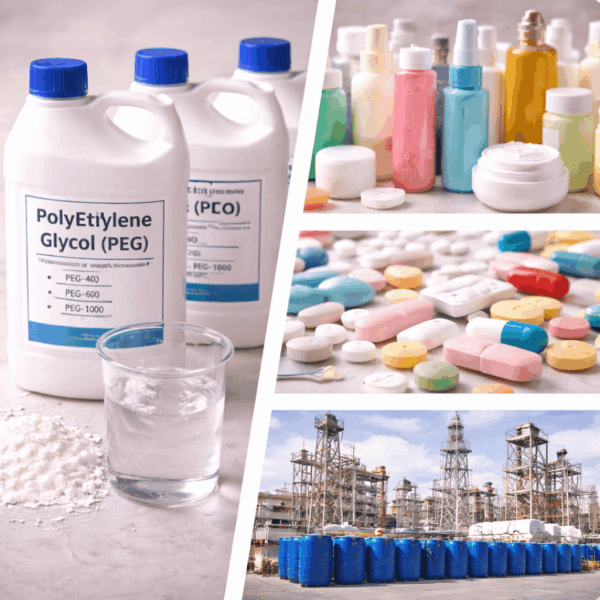
Industrial grade PEG is available in a wide range of molecular weights, including PEG-200, PEG-300, PEG-400, PEG-600, PEG-1000, PEG-1500, PEG-2000, PEG-4000, PEG-6000, and PEG-8000. Lower molecular weight grades appear as clear liquids, while higher molecular weight grades are supplied as semi-solids, flakes, granules, or free-flowing powders, allowing precise selection for different process requirements. Low molecular weight PEGs such as PEG-200 to PEG-400 are widely used as industrial solvents, plasticizers, humectants, heat-transfer media, and formulation carriers in resins, inks, coatings, lubricants, and surface treatment chemicals. Medium molecular weight PEGs including PEG-600 to PEG-2000 function effectively as binders, dispersants, emulsifiers, lubricants, and viscosity modifiers in rubber processing, textiles, ceramics, agrochemicals, and cleaning formulations.
High molecular weight PEGs such as PEG-4000 to PEG-8000 are solid materials used as processing aids, mold-release agents, anti-static additives, slip agents, and controlled-release matrices in industrial compounds, polymer modification, and specialty chemical applications. Molecular weights of industrial PEG typically range from 200 to over 8,000 g/mol, directly influencing solubility, melting point, viscosity, and mechanical behavior. Key properties of industrial grade polyethylene glycol include excellent water solubility, low volatility, chemical and thermal stability, lubricating performance, low toxicity, and high compatibility with organic and inorganic materials. Supplied in drums, bags, or bulk packaging, industrial grade PEG provides manufacturers with a reliable, multifunctional polymer solution for efficient processing, consistent performance, and broad industrial usability.

Industrial Talc Powder
Thanks to its unique plate-like structure, industrial talc offers excellent reinforcement, smoothness, lubricity, and dimensional stability. It enhances stiffness and heat resistance in polypropylene and engineering plastics, improves opacity and barrier properties in paints and coatings, and provides superior anti-blocking and processing behavior in rubber compounds and masterbatches. In ceramics and tiles, talc improves firing behavior and surface finish, while in adhesives and sealants it contributes to rheology control and formulation stability.
Key properties of industrial talc include high thermal resistance, chemical inertness, low moisture absorption, excellent electrical insulation, and high whiteness. These characteristics make talc an ideal mineral filler for applications requiring durability, smooth surface quality, and long-term performance under mechanical or thermal stress. Available in bulk bags, paper sacks, or customized packaging, industrial talc is a cost-effective and versatile solution for manufacturers seeking reliable raw materials with consistent quality, tailored particle sizes, and proven performance across multiple industrial sectors.
Infant Powder Milk , Amino Acid Formulas
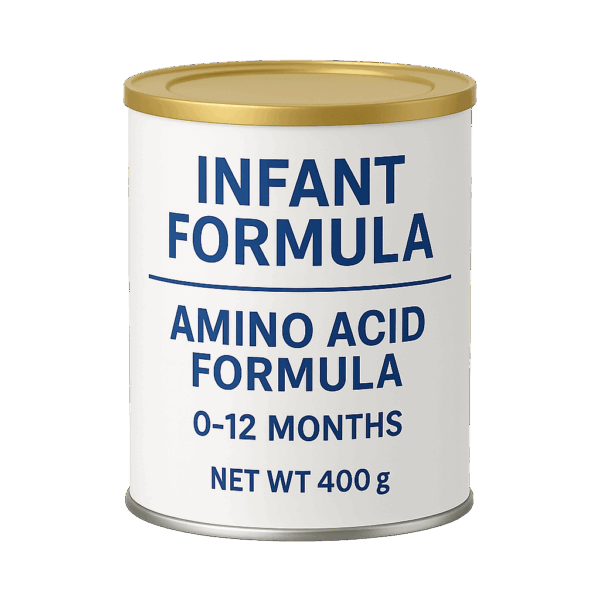
Amino acid-based formula is a type of infant milk formula made from individual amino acids. It is hypoallergenic and intended for infants suffering from severe allergy to milk and various gastrointestinal conditions, such as food protein-induced enterocolitis syndrome and malabsorption syndromes. Amino acids are the building blocks of protein and together they form the protein requirements in formula needed for growth and development. The amino acids are in the simplest form, making it easy for the body to process and digest. Amino acid-based formula may be considered hypoallergenic since it does not contain peptides that may trigger an immune response. Because infants and children have different nutritional needs, amino acid-based formulas are typically formulated either for infants 0–1 years of age
Infant Powder Milk ,Lactose-Free Formula
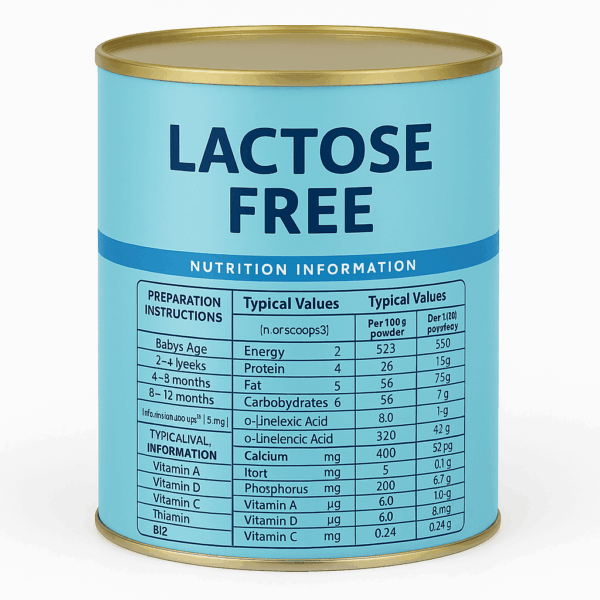
Lactose-free baby formula is a cow’s milk-based formula that is specially processed to remove lactose, the sugar found in milk. Manufacturers then replace the lactose with another type of carbohydrate, such as corn syrup, to make it easier for babies with lactose intolerance to digest.
Lactose intolerance is rare in babies. Symptoms include diarrhoea, abdominal pain, wind and bloating. This formula ,nutritionally is complete for the entire first year, just made for babies with a milk protein allergy, and often used for reflux babies.

Infant Powder Milk Soy-Based Formulas
It’s a good source of plant-based protein, containing all the essential amino acids. It also provides vitamins and minerals like B vitamins, calcium, and magnesium. Soy-based formulas are made from soy proteins and are suitable for infants with galactosemia or congenital lactase deficiency. They can also be helpful for babies with colic and milk allergies. However, it’s important to note that some infants allergic to dairy milk may also be allergic to soy milk. Soy products should not be used in infants under six months of age with food allergy.
Infant Powder Milk, Anti-reflux Formula
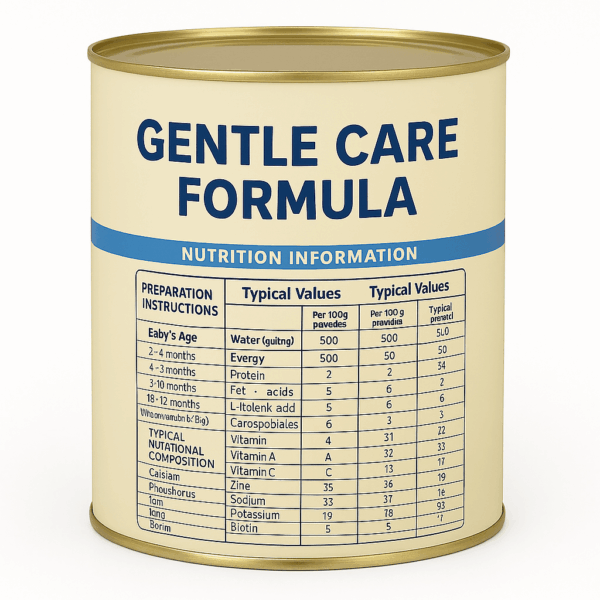
Anti-reflux (staydown) formula is suitable from birth but only under medical supervision. Anti-reflux formulas are designed to provide all the necessary nutrients for an infant’s growth and development.
Some special anti- reflux formulas are available that are designed to be used as the sole source of nutrition from birth up to six months of age, and as part of a weaning diet from six months to a year. This type of formula is thickened with the aim of preventing reflux in babies (when babies bring up milk during or after a feed). Although it’s available in pharmacies and supermarkets, it’s recommended you only use it on the advice of a health professional.

Infant Powder Milk, Goat Milk Formula
These formulas are fortified with essential nutrients and designed to mimic the composition of human breast milk. Goat milk formulas have lower lactose content, making them a potential choice for babies with lactose intolerance. One of the top reasons parents consider goat’s milk is a cow’s milk allergy or intolerance. Cow’s milk allergy affects up to 3 percent of infants in the developed world. Goats’ milk formula is suitable from birth , different kinds of goats’ milk formula are available to supply . They are produced to the same nutritional standards as cow’s milk-based formula. Goats’ milk formula is not less likely to cause allergies in babies than cows’ milk formula.

Infant Powder Milk, Hungrier Babies Formula
If the baby has a bigger appetite and it’s too early to introduce solid foods, infant milk for hungrier babies is a nutritionally complete breastmilk substitute with a different balance of milk protein. This is a casein-dominant infant milk formula that may help delay weaning in hungrier infants until the recommended time of 6 months. It is nutritionally complete and can be used from birth that contains 80% casein and 20% whey protein. This formula can also contains DHA* (Omega-3 LCPs). *As required by the legislation for all infant formula.