

 Arabic
shop
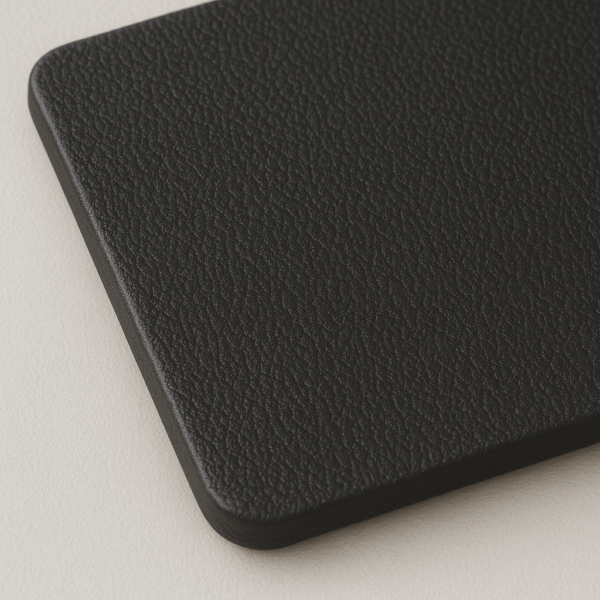
Wrinkle Powder Coating
Formulated with high-durability polyester or hybrid resins, wrinkle-texture additives, curing agents, mineral fillers, flow modifiers, UV absorbers, anti-yellowing stabilizers, and corrosion inhibitors, Wrinkle Powder Coating ensures consistent texture development and long-term outdoor performance. Available in black wrinkle, grey wrinkle, metallic wrinkle, and custom-textured colors, it maintains stable appearance under exposure to sunlight, moisture, oil, dust, and mechanical impact. The rough, tactile pattern improves grip and reduces fingerprint visibility on high-touch surfaces. This coating provides a bold, non-slip, matte appearance that hides surface defects and offers excellent protection, making it ideal for automotive parts, machinery housings, toolboxes, outdoor equipment, gym machines, audio equipment, electronic enclosures, industrial control panels, metal cabinets, and architectural components.
The production process begins with precise premixing of resin systems with texture-forming additives and pigments, followed by controlled extrusion to maintain the wrinkle agent structure. After cooling and micronized grinding, the powder is sieved to ensure consistent particle size distribution. During application, the powder is electrostatically sprayed onto steel or aluminum substrates, and the wrinkle texture forms during curing at 170–200°C as surface tension and crosslinking reactions create a controlled wrinkled skin. Key advantages include zero-VOC emissions, excellent abrasion resistance, high mechanical strength, superior defect-masking capability, long-term UV and corrosion protection, and cost-efficient large-scale production. Wrinkle Powder Coating is the ideal solution for manufacturers seeking durable, visually distinct, and functional textured finishes.
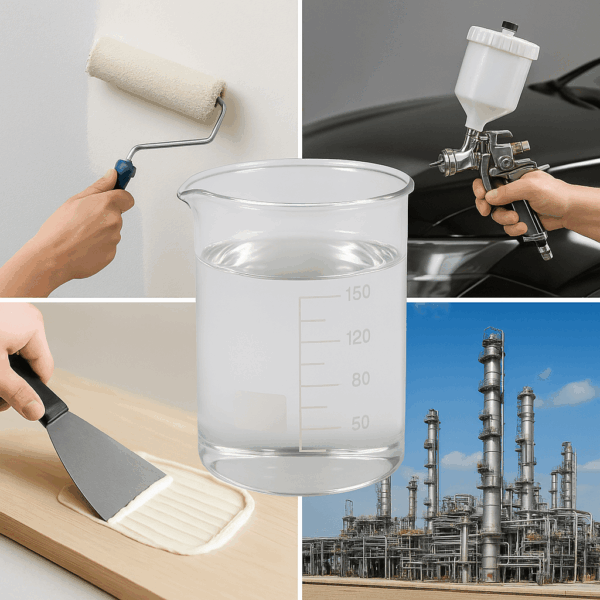
Xylene
Xylene production involves the processing of petroleum-derived aromatic fractions through distillation, extraction, and purification stages to remove impurities and control the ratio of different isomers. Depending on the intended application, manufacturers supply various grades including industrial-grade xylene, solvent-grade xylene, mixed xylene, and high-purity xylene. Industrial-grade xylene is commonly used as a powerful solvent, while high-purity grades are preferred for chemical synthesis and specialized manufacturing processes. Due to its strong dissolving capability, controlled evaporation rate, and compatibility with many organic materials, xylene is considered an essential raw material for global chemical industries and wholesale export markets.
Xylene has extensive applications in paint, coating, adhesive, printing ink, rubber, leather, pharmaceutical, and chemical industries. It is widely used as a solvent for paints, varnishes, resins, and cleaning formulations, as well as a feedstock for producing polyester, plastics, synthetic fibers, and other chemical intermediates. Para-xylene is mainly used in the production of purified terephthalic acid (PTA) for polyester manufacturing, while ortho-xylene is used for phthalic anhydride production. The advantages of xylene include high solvency power, excellent blending ability, chemical versatility, efficient processing performance, and suitability for various industrial applications. Reliable xylene suppliers provide consistent quality, competitive commercial availability, and customized grades according to international industrial requirements.
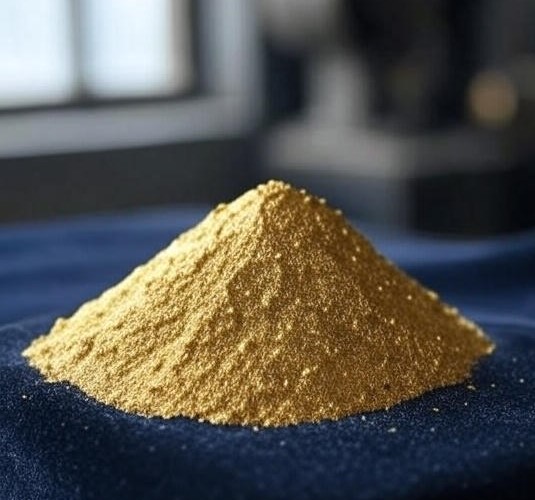
Yellow Brass
Yellow Brass offers excellent ductility, good thermal and electrical conductivity, and outstanding resistance against atmospheric corrosion and oxidation. Due to its easy fabrication characteristics, this alloy can be processed through machining, stamping, forging, extrusion, bending, and deep drawing operations. Its attractive yellow-gold surface finish makes it suitable for decorative applications, while its mechanical properties allow it to be used in demanding industrial environments. Different grades of Yellow Brass are selected based on zinc content, hardness level, tensile strength, and manufacturing requirements.
Commercially available Yellow Brass products are widely used in plumbing systems, electrical components, automotive parts, marine equipment, industrial valves, fittings, fasteners, musical instruments, decorative hardware, and architectural applications. Yellow Brass sheets and strips are commonly used for stamping and forming parts, while brass rods and bars are preferred for machining precision components. Export-quality Yellow Brass can be supplied in different sizes, tempers, surface finishes, and packaging options based on customer requirements. Reliable sourcing from professional suppliers ensures consistent chemical composition, dimensional accuracy, and compliance with international quality standards.
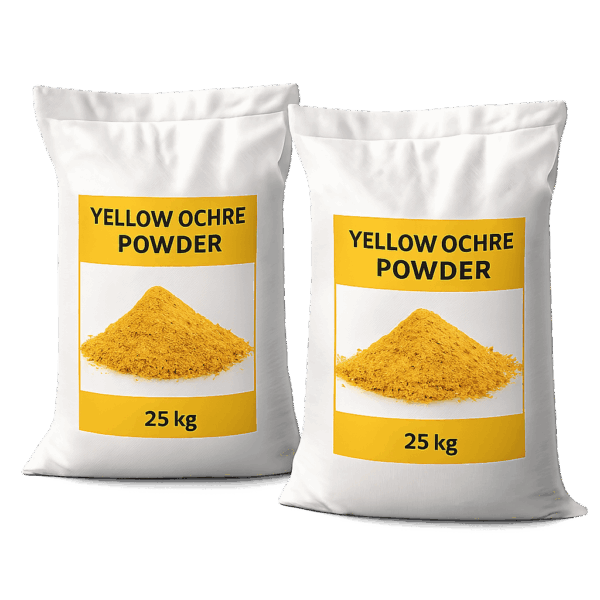
Yellow Ochre Powder
Commercial yellow ochre is available in several grades and varieties, including Natural Yellow Ochre, Golden Yellow Ochre, Light Yellow Ochre, and Deep Yellow Ochre, distinguished by iron oxide content, brightness, and processing level. These grades allow manufacturers to select precise shades ranging from soft pastel yellow to rich golden hues. Yellow ochre powder is extensively used in architectural and industrial paints, cement and concrete coloring, plasters, mortars, bricks, tiles, ceramics, putties, asphalt, rubber, plastics, and decorative coatings. Its natural stability makes it especially suitable for exterior applications where color permanence and weather resistance are required.
Key properties of yellow ochre include excellent lightfastness, high alkali and UV resistance, thermal stability, low oil absorption, and good dispersibility. Commercial particle sizes are typically supplied as fine grades below 10 µm for paints and coatings, standard grades of 10–45 µm for construction materials and plastics, and coarser grades above 45 µm for textured plasters and decorative finishes.
Zeolite
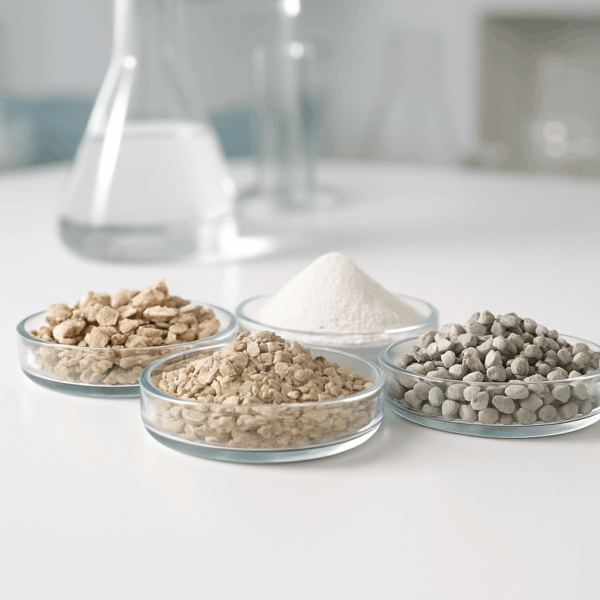
The production process of zeolite starts with the extraction of high-quality natural zeolite ores from mineral deposits, followed by crushing, screening, drying, grinding, and classification according to required specifications. For activated zeolite products, additional processing steps such as thermal activation, purification, and surface modification may be applied to improve adsorption performance and chemical efficiency. Advanced processing technologies ensure stable quality, controlled particle size distribution, high purity, and consistent performance for international markets. Synthetic zeolite, including molecular sieve grades, is manufactured through controlled chemical crystallization processes to achieve specific pore structures and adsorption characteristics required for specialized applications.
Commercially available zeolite types include natural clinoptilolite zeolite, powdered zeolite, granular zeolite, activated zeolite, zeolite molecular sieves, and customized industrial zeolite grades. Natural zeolite is widely used in agriculture as a soil conditioner, fertilizer additive, and ammonia control agent, while granular zeolite is commonly applied in water purification, wastewater treatment, aquaculture, and filtration systems. Activated zeolite is suitable for gas purification, odor control, heavy metal removal, and chemical processing, while molecular sieve zeolite is used in petrochemical industries, gas drying, oxygen separation, and catalyst applications. Zeolite offers major advantages including high adsorption capacity, environmental compatibility, chemical stability, reusability, cost efficiency, and excellent performance as an eco-friendly solution for industrial and commercial processes.
Zinc Chromate Alkyd Primer
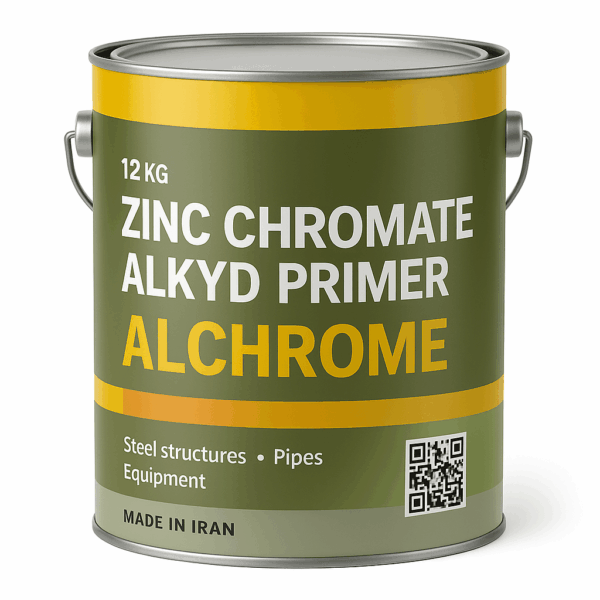
Zinc Chromate Alkyd Primers are typically supplied as single-pack (one-component) systems and are applied on structural steel, metal frameworks, machinery, storage tanks (external surfaces), pipelines, marine equipment, agricultural machinery, and general industrial steelwork. Key advantages include good corrosion resistance, effective passivation of steel surfaces, easy application by brush, roller, or spray, and compatibility with alkyd, synthetic enamel, and certain epoxy topcoats. Typical properties include good surface wetting, smooth film formation, fast air drying, moderate chemical resistance, and suitability for low to medium corrosive environments.
Zinc Chromate Alkyd Primers are available in standard industrial packaging such as 1 kg, 5 kg, 10 kg, 12 kg, and 20 kg metal pails, as well as 200 kg drums for large-scale projects. These primers are commonly selected for construction, fabrication, and maintenance painting where ease of use, cost efficiency, and reliable corrosion protection are required. Zinc Chromate Alkyd Primers remain a practical solution for many export-oriented and industrial coating applications.
Zinc Chromate Epoxy Primer
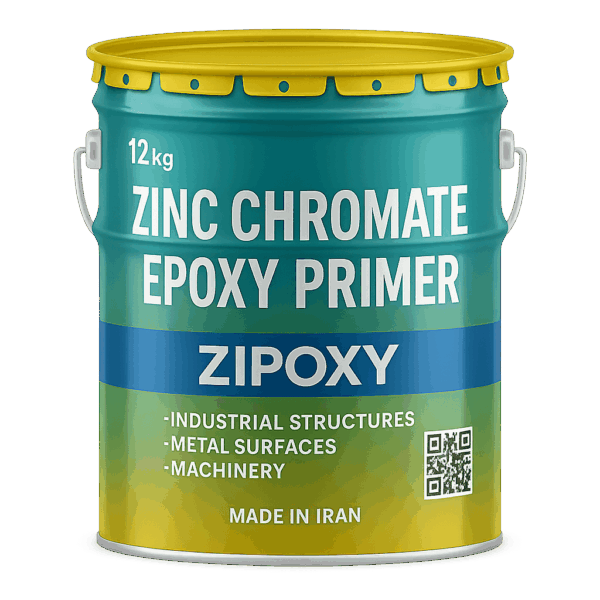
Zinc Chromate Epoxy Primers are mainly supplied as two-component epoxy systems (base + hardener) and are used on structural steel, industrial equipment, pipelines, storage tanks, marine structures, ship components, offshore platforms, and heavy machinery. Their key advantages include outstanding corrosion resistance, effective passivation of steel surfaces, excellent adhesion to properly prepared substrates, and compatibility with epoxy, polyurethane, and acrylic topcoats. Typical properties include good resistance to moisture, salts, oils, and mild chemicals, high mechanical strength, smooth film formation, and suitability for medium to high corrosion categories (C3–C5 environments).
Zinc Chromate Epoxy Primers are applied by airless spray, air-assisted spray, brush, or roller, making them suitable for both workshop and site application. They are available in standard industrial packaging such as 10 kg, 12 kg, 20 kg metal pails, as well as 200 kg drums for large-scale projects. These primers are commonly specified in infrastructure, oil & gas, marine, and export-oriented coating systems, offering reliable performance, extended service life, and compliance with widely used international standards such as ISO 12944 and SSPC.
Zinc Dust
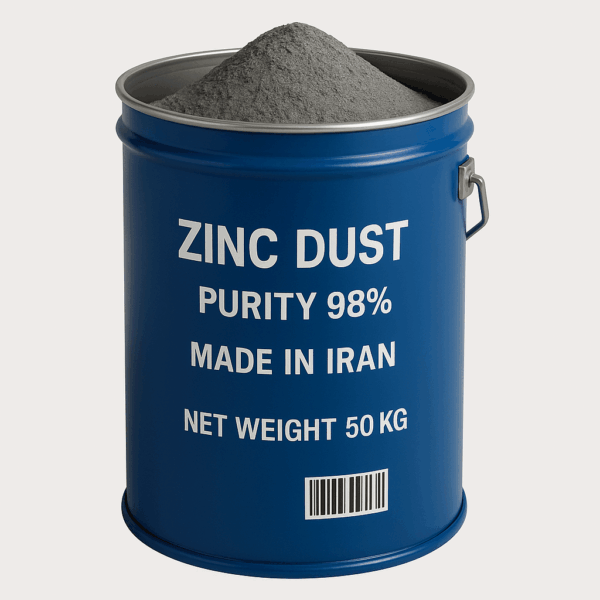
The production process of Zinc Dust generally involves melting high-purity zinc metal followed by vaporization, condensation, and controlled atomization techniques to create fine zinc particles. Advanced manufacturing processes allow producers to control particle size, purity level, and physical characteristics according to customer requirements. The produced Zinc Dust is carefully screened, tested, and analyzed for zinc content, impurities, moisture level, and particle distribution to ensure stable performance in industrial applications. Different commercial grades of Zinc Dust are available, including standard grade, high purity zinc dust, fine zinc powder, and specialized grades designed for chemical reactions, coatings, and metallurgical processes. These variations allow manufacturers and industrial users to select the most suitable type according to their production needs.
Zinc Dust is widely used in zinc-rich paints and coatings for steel structures, bridges, pipelines, marine equipment, and industrial machinery due to its outstanding anti-corrosion protection properties. It is also applied in chemical manufacturing as a reducing agent, in gold and silver recovery processes, in hydrometallurgy, zinc-based chemicals production, and various metallurgical applications. The main advantages of Zinc Dust include high zinc concentration, excellent conductivity, effective corrosion protection, controlled reactivity, long storage stability, and versatility across multiple industries. Available for international commercial supply, Zinc Dust is an important export product for companies seeking a dependable source of high-quality zinc materials for industrial and manufacturing operations.
Zinc Ethyl Silicate Primer
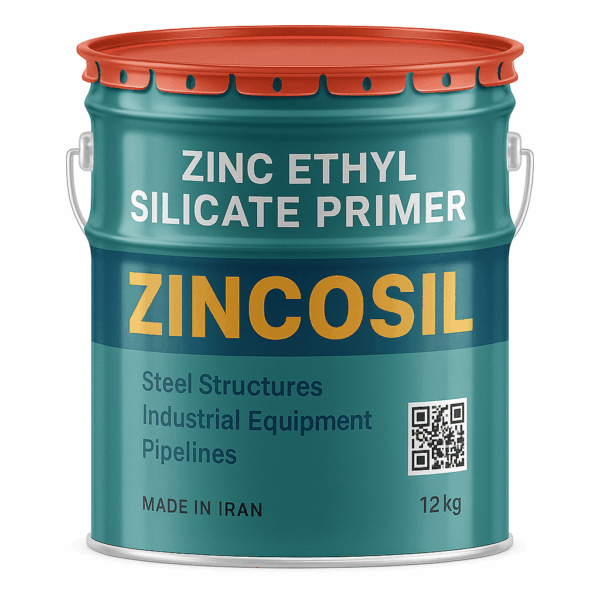
The production process of Zinc Ethyl Silicate Primer includes precise formulation of zinc powder, hydrolysis and polymerization of ethyl silicate resin, controlled dispersion of zinc particles, and quality testing to ensure uniform performance and long-term protection. The Standard Industrial Grade is mainly applied for bridges, steel frameworks, storage tanks, pipelines, and machinery where strong corrosion resistance is required. The Marine and Offshore Grade is designed for ships, offshore platforms, ports, and coastal structures exposed to saltwater and high humidity conditions. The Fast Drying Grade is suitable for repair works, construction projects, and applications requiring quick handling and overcoating. The High Temperature Grade is used for boilers, heat exchangers, industrial furnaces, and equipment exposed to thermal stress. This primer provides excellent adhesion, fast curing properties, abrasion resistance, chemical resistance, and long-term protection of steel surfaces.
Zinc Ethyl Silicate Primer is widely exported for use in construction, oil and gas industries, petrochemical plants, power generation facilities, transportation infrastructure, shipbuilding, and heavy machinery manufacturing. The high zinc content in the coating provides sacrificial protection by preventing oxidation of steel, while the inorganic silicate binder ensures superior durability compared with conventional organic primers. The main advantages of Zinc Ethyl Silicate Primer include excellent anti-corrosion performance, outstanding adhesion to properly prepared steel surfaces, resistance to solvents and chemicals, rapid curing capability, long service life, and compatibility with various topcoat systems. Due to its reliable performance in harsh environments, this product is considered one of the most effective solutions for protecting industrial steel structures against corrosion and extending maintenance intervals.

Zinc Ingot
The production process of zinc ingots begins with zinc ore extraction and concentration, followed by roasting, leaching, purification, and electrolysis or thermal reduction methods depending on the production technology. During refining, impurities are carefully removed to achieve the required zinc purity level, commonly ranging from standard commercial grades to 99.995% high-grade zinc. The molten refined zinc is then cast into standardized ingot shapes and inspected according to international quality requirements. Zinc ingots are commercially available in different grades including Special High Grade (SHG) Zinc Ingot, High Grade Zinc Ingot, Die Casting Zinc Alloy Ingot, and Zinc Alloy Ingots containing aluminum, magnesium, or copper, each designed for specific industrial uses such as hot-dip galvanizing, zinc die casting, brass manufacturing, battery production, and chemical processing.
Zinc ingots supplied for wholesale export are valued for their durability, dimensional stability, excellent corrosion protection, and compatibility with various alloying processes. They are extensively used in steel galvanizing to protect metal structures from rust, in automotive and machinery components through die casting, in brass and bronze manufacturing, in zinc oxide production, and in electrical, chemical, and engineering industries. Available in different purity levels, sizes, and industrial grades, zinc ingots provide manufacturers with a dependable source of zinc metal for large-scale production. With consistent quality, competitive commercial availability, and suitability for global supply chains, zinc ingot remains one of the most important non-ferrous metal products in international markets.
Zinc Oxide
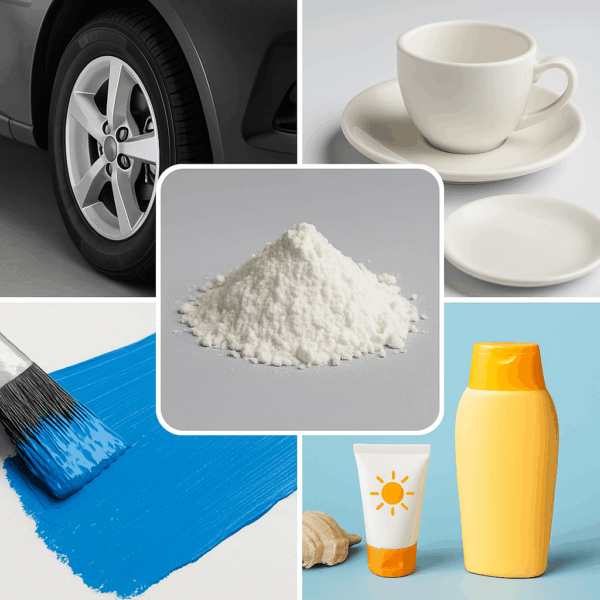
The production process of Zinc Oxide is carried out through advanced industrial methods including the French Process (indirect method) and American Process (direct method), depending on the required purity, particle size, and application. In the French Process, high-purity zinc metal is vaporized at high temperatures and oxidized with controlled airflow to produce fine Zinc Oxide particles with superior quality and consistency. The direct process uses zinc-containing raw materials that are reduced and oxidized to obtain commercial-grade Zinc Oxide. During production, strict quality control procedures are applied to ensure chemical purity, uniform particle distribution, low impurity content, and compliance with international industrial standards.
Zinc Oxide is commercially available in different grades such as industrial grade, rubber grade, ceramic grade, pharmaceutical grade, cosmetic grade, feed grade, and high-purity electronic grade. Rubber-grade Zinc Oxide is widely used as an activator in tire and rubber manufacturing, improving durability, elasticity, and resistance properties. Ceramic and glass industries use Zinc Oxide to enhance strength, gloss, thermal stability, and surface quality. Paints and coatings manufacturers utilize Zinc Oxide for corrosion resistance and UV protection, while pharmaceutical and cosmetic industries use high-purity grades in creams, ointments, sunscreens, and personal care products. Zinc Oxide offers advantages including excellent chemical stability, high thermal resistance, anti-corrosion performance, UV absorption, electrical properties, and compatibility with various industrial formulations, making it a valuable export product for global markets.
Zinc Phosphate Alkyd Primer
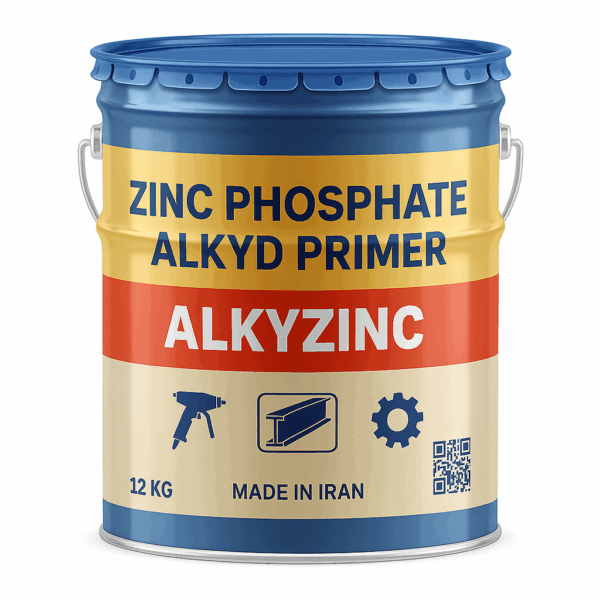
Zinc Phosphate Alkyd Primers are generally supplied as single-pack (one-component) systems and are suitable for application on structural steel, metal frameworks, machinery, pipelines (above ground), storage racks, agricultural equipment, and fabricated steel components. Key advantages include good adhesion to properly cleaned steel, improved corrosion resistance compared to iron oxide primers, easy application by brush, roller, or spray, and good compatibility with alkyd, synthetic enamel, and certain epoxy topcoats. Typical properties include good surface wetting, smooth film formation, fast air drying, and suitability for low to medium corrosive environments.
Zinc Phosphate Alkyd Primers are available in common industrial packaging such as 1 kg, 5 kg, 10 kg, 12 kg, and 20 kg metal pails, as well as 200 kg drums for large-scale consumption. These primers are widely selected for infrastructure, fabrication shops, and maintenance painting due to their balanced performance, economic pricing, and ease of use. Zinc Phosphate Alkyd Primers offer a practical solution for projects requiring dependable corrosion protection with simple application and broad topcoat compatibility.