

 Arabic
shop
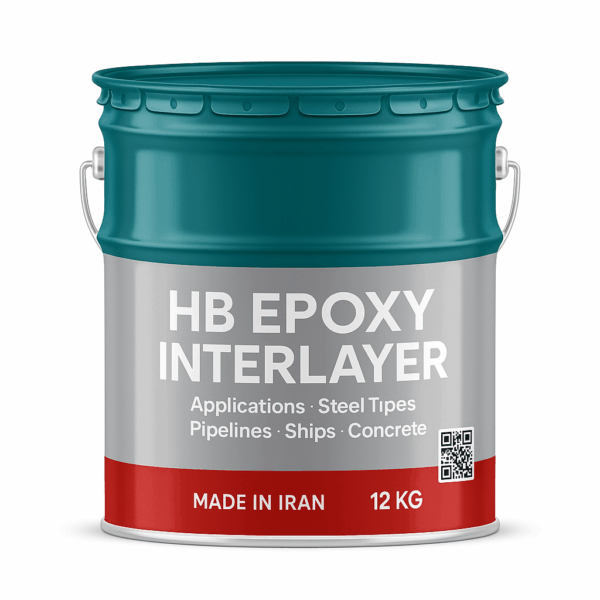
High Build Epoxy Interlayer Paint
High Build Epoxy Interlayer paints are available in standard high-build epoxies, MIO (Micaceous Iron Oxide) high-build grades, and surface-tolerant epoxy interlayers for less-than-ideal surface preparation. Typical applications include structural steel, bridges, oil & gas pipelines, storage tanks, offshore and marine structures, power plants, and heavy industrial equipment. The main ingredients generally consist of high-solid epoxy resins (Bisphenol-A or Bisphenol-F), amine or polyamide curing agents, anti-corrosive pigments, MIO flakes (where specified), fillers, and rheology additives. Key advantages include very high film build per coat, excellent adhesion to epoxy primers, low water vapor permeability, strong chemical and abrasion resistance, and outstanding compatibility with epoxy and polyurethane topcoats.
In terms of performance properties, High Build Epoxy Interlayer paints provide exceptional barrier protection, high mechanical strength, good impact resistance, and extended service life in severe corrosion environments classified as C3 to C5 according to ISO 12944. They also help reduce total coating costs by minimizing the number of application layers and labor time. Commercially, these coatings are supplied as two-component systems (base + hardener) and are available in 5 kg, 10 kg, 12 kg, 20–25 kg metal pails, as well as 200 kg steel drums and IBC containers for large-scale industrial use, making them a reliable and economical choice for professional coating projects.
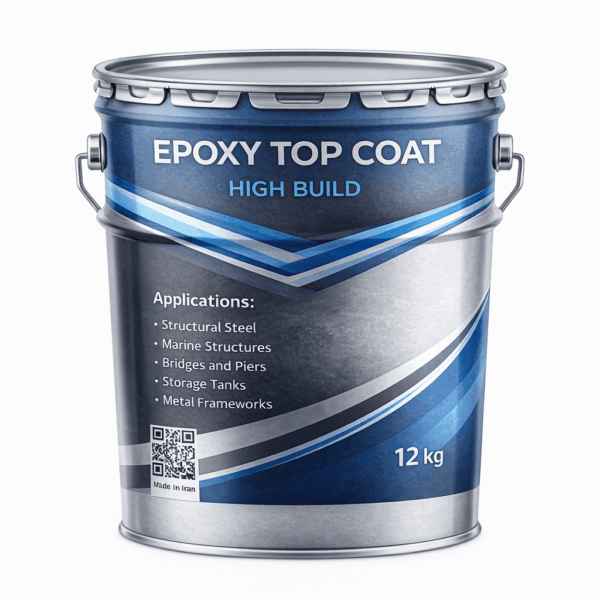
High Build Epoxy Top Coat
High Build Epoxy Top Coats are available in standard high-build, MIO-filled, polyamide-cured, polyamine-cured, and chemical-resistant grades, depending on exposure conditions and specifications. Typical applications include structural steel, bridges, storage tanks, pipelines, offshore and marine structures, power plants, industrial equipment, and heavy machinery. Key specifications include high solids content, excellent adhesion to epoxy primers and interlayers, low permeability to water and oxygen, and strong resistance to abrasion, impact, oils, fuels, and chemicals. These coatings can be applied by airless spray, roller, or brush and are compatible with multi-layer epoxy coating systems.
High Build Epoxy Top Coat paints are supplied as two-component systems (base + hardener) in standard industrial packaging such as 12 kg and 20–25 kg metal pails, as well as 200 kg drums and bulk containers for large-scale projects. Export packaging is palletized, shrink-wrapped, and labeled according to international standards. High Build Epoxy Top Coats are a preferred solution for infrastructure, oil & gas, marine, and industrial sectors seeking durable, cost-effective, and specification-compliant surface protection.
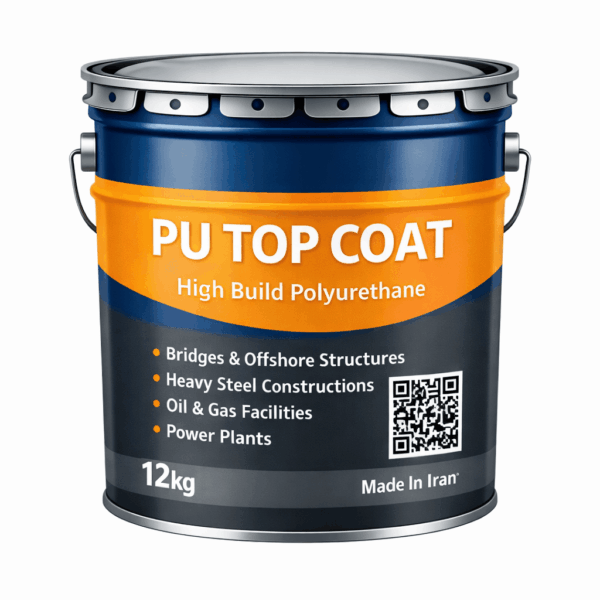
High Build Polyurethane Top Coat
These coatings combine mechanical strength with an attractive, uniform appearance. They are widely selected for projects where both protection and visual quality are critical. High build polyurethane top coats are based on premium polyurethane resins that provide excellent adhesion, flexibility, and impact resistance. High-solids content enables thick film formation without sagging or surface defects. The cured coating forms a tough yet elastic film that withstands thermal movement and vibration. They show strong resistance to water, oils, fuels, solvents, and many industrial chemicals and their excellent flow and leveling properties result in smooth, glossy or semi-gloss finishes.
High build PU top coats are fully compatible with epoxy and polyurethane primers and interlayers that can be extensively used on steel structures, bridges, tanks, pipelines, industrial machinery, and marine equipment. They are ideal for facilities operating in aggressive chemical or coastal environments and The coatings maintain long-term gloss and color stability under sunlight exposure. High build PU top coats offer a balanced solution combining durability, efficiency, and aesthetics .
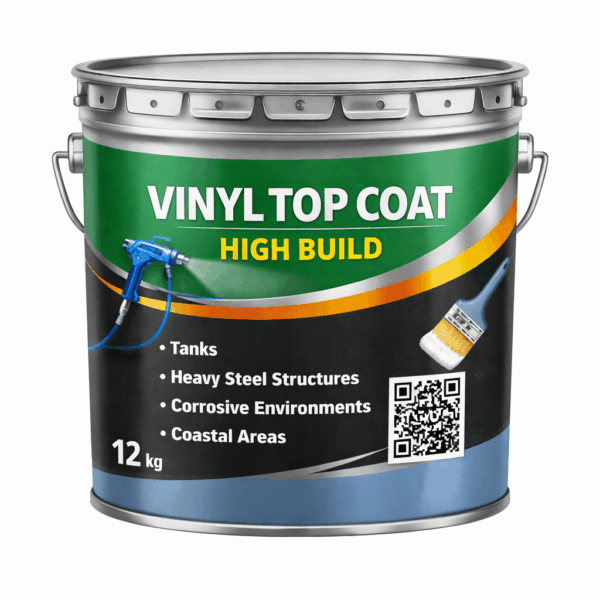
High Build Vinyl Top Coat
It forms a dense, durable layer that protects substrates against corrosion and environmental exposure. High build vinyl top coats are widely used where strong protection and cost-effective application are required. High build vinyl top coat is formulated with advanced vinyl resin systems that allow high dry film build without sagging or cracking. The cured coating exhibits excellent adhesion to properly prepared steel and metal surfaces. Its low permeability significantly reduces the penetration of moisture, oxygen, and corrosive agents. The coating offers good resistance to humidity, salt spray, industrial fumes, and mild chemicals. High build vinyl top coats also provide good abrasion resistance and mechanical strength. Fast drying characteristics support efficient application by spray, roller, or brush. Smooth flow and leveling help achieve uniform, defect-free finishes.
High build vinyl top coats are commonly applied on storage tanks, pipelines, steel structures, industrial plants, and marine installations. They are especially suitable for protective coating systems in coastal and industrial environments. The coating helps extend maintenance intervals and lower lifecycle costs. It performs reliably in both indoor and outdoor exposure. High build vinyl top coats are compatible with vinyl and epoxy primer systems. Available in various colors and finishes, they offer a balanced combination of durability, build efficiency, and industrial performance for long-term protection.
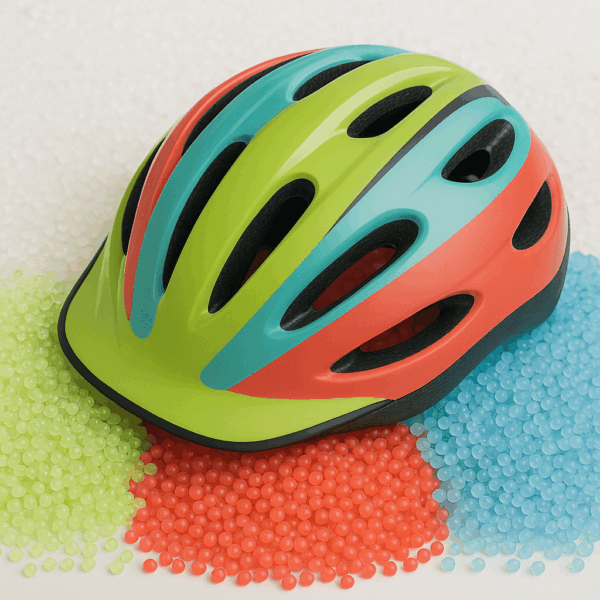
High Impact Polystyrene (HIPS)
HIPS grades are designed for different processing methods and end-use applications. Injection molding grades are commonly used for manufacturing electronic housings, appliance components, toys, automotive interior parts, and household products where high impact strength and dimensional stability are required. Extrusion and thermoforming grades are mainly used for food packaging trays, refrigerator liners, disposable containers, and sheet applications requiring good forming ability and surface quality. Flame retardant HIPS grades are available for electrical and electronic applications where improved safety performance is required, while high gloss and easy-flow grades are selected for decorative products and complex molded parts. The main advantages of High Impact Polystyrene include excellent impact resistance, easy processing, good dimensional accuracy, attractive surface finish, recyclability, and compatibility with various coloring systems.
This polymer is widely traded worldwide due to its reliable performance and versatility in multiple industries such as packaging, electronics, automotive, consumer goods, construction, and medical equipment manufacturing. High-quality HIPS resin provides manufacturers with a cost-effective solution for producing lightweight, durable, and visually attractive plastic products while maintaining efficient production processes. Selecting the correct HIPS grade based on melt flow rate, impact strength, processing method, and final application ensures optimum product quality and long-term performance.
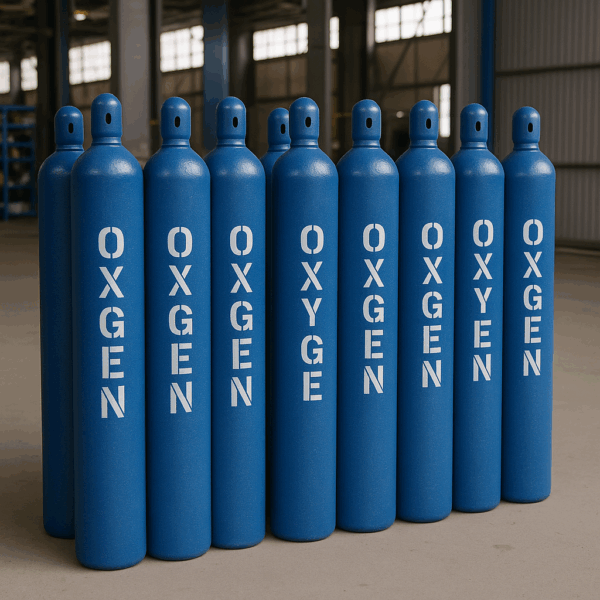
High Pressure Industrial Gas Cylinder
High-pressure gas cylinders are manufactured from Seamless Steel Tubes, and the alloy composition depends upon the pressure rating and water volume of the respective cylinders but mostly, ,. For low volume and low pressure (Up to 150Kg/Cm2), Manganese Alloy steel is used. For high volume and high pressure (More than 150Kg/Cm2), Chrome Molybdenum alloy steel is used. Cylinders are designed to withstand specific working pressures, which can range from 130 to 140 bar (or 200 bar) they undergo hydrostatic testing to ensure their structural integrity and safety. These cylinders Complies with DOT, TC, ISO, and military specifications and multiple sizes , capacities and options for customization ,painting , stamping , neck-rings are available .
Applications:
- Industrial: Used in various industries for processes like cutting, welding, and manufacturing.
- Medical: Oxygen cylinders are used in medical settings for breathing support.
- Diving: High-pressure cylinders are used for storing breathing gases for diving.
- Other: They are also used in fire extinguishers, food industries and beverages , welding and other industrial application
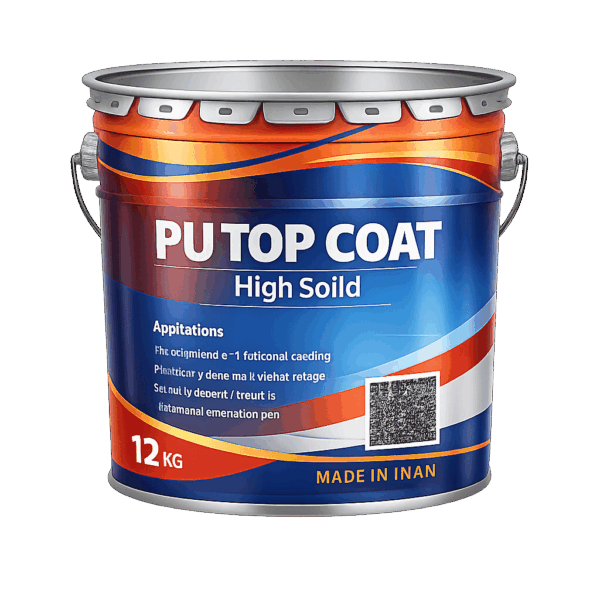
High Solid Polyurethane Top Coat
High solid PU top coats are formulated with a high percentage of polyurethane resin and reduced solvent levels, allowing greater dry film thickness per coat without sagging or surface defects. After curing, the coating forms a tough yet flexible film with excellent adhesion to properly primed steel, concrete, and metal surfaces. It offers strong resistance to abrasion, impact, moisture, oils, fuels, and a wide range of industrial chemicals. High solid PU top coats also demonstrate excellent weathering and UV resistance, maintaining gloss and color stability in outdoor exposure. Their good flow and leveling properties ensure smooth finishes when applied by spray, roller, or brush. Combining efficiency, durability, and environmental responsibility, high solid PU top coats provide a reliable and cost-effective industrial finishing solution.
High solid polyurethane top coats are commonly applied on steel structures, bridges, pipelines, storage tanks, industrial machinery, and marine equipment. They are ideal for heavy-duty protective coating systems where fewer application layers and faster project completion are required. Reduced VOC content helps meet environmental and regulatory requirements while lowering overall application costs. For export and international supply, these coatings are available in standard packaging such as 5 L and 20 L metal cans, 18–20 L steel pails, and 200 L drums, suitable for long-distance transportation.
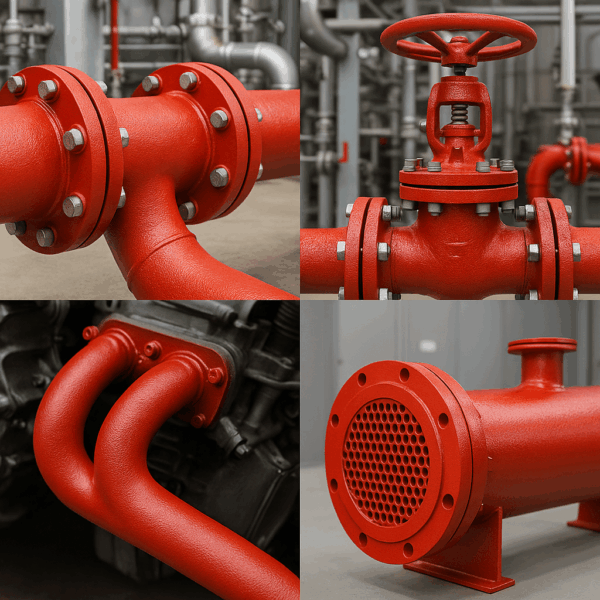
High Temperature Resistant Epoxy Powder Coating
Produced using advanced epoxy resins, heat-stabilizing additives, ceramic fillers, anti-oxidation agents, and high-temperature curing systems, the coating forms a dense cross-linked structure capable of withstanding temperatures ranging from 180°C to 260°C or higher depending on grade. The formulation offers excellent resistance to thermal shock, hot oils, solvents, corrosive vapors, and industrial chemicals and its specialized chemistry prevents film degradation, discoloration, and structural breakdown under continuous heat loads.
The production process includes precision resin blending, controlled dispersion of ceramic and heat-resistant fillers, extrusion through twin-screw compounding lines, rapid cooling, fine grinding, and exact sieving to achieve a consistent powder profile. Each batch undergoes strict quality testing for thermal stability, adhesion strength, corrosion resistance, film hardness, and chemical durability.

High Tension Power Cable
Manufactured using advanced extrusion and cross-linking technologies, HT Power Cables are typically produced in single-core and three-core types, with copper or aluminum conductors. The insulation layer is commonly made of XLPE (Cross-Linked Polyethylene) or EPR (Ethylene Propylene Rubber), designed to withstand high thermal and electrical stress. These cables are widely used in power plants, substations, transmission networks, and heavy industries where reliability and voltage endurance are critical. Specifications often range between 11 kV to 132 kV and beyond, with precise shielding and armoring options to prevent electrical interference and mechanical damage.
Applications of High Tension Power Cables include underground and overhead installations for urban grids, renewable energy systems, and industrial power distribution. They are produced according to international standards such as IEC, BS, and IS specifications, ensuring global compatibility and performance assurance. With their excellent dielectric strength, long service life, and resistance to moisture, chemicals, and heat, HT Power Cables deliver dependable energy flow in the most demanding environments, serving as the backbone of modern electrical networks.

High Zinc Beta Brass
The proportions of zinc and copper within brass can be varied, creating a range of brass with varying properties. For instance, small additions can be made of other metals, including lead, tin, aluminum, and arsenic, to improve properties such as machinability, strength, and corrosion resistance. these alloys are known for being easily formed and retaining high strength after forming. In high zinc beta (CuZn15) , the content of zinc is high, which is about 85% and the rest of 15% is copper. It is a single-phase structure with the BCC crystal.
High Zinc Beta Brass offers excellent fluidity and has a low melting point followed by high wear resistance. It can, however, end up cracking due to stress. High zinc beta brass is used in applications involving die casting. Components like hinges, locks, and fasteners are manufactured using it.
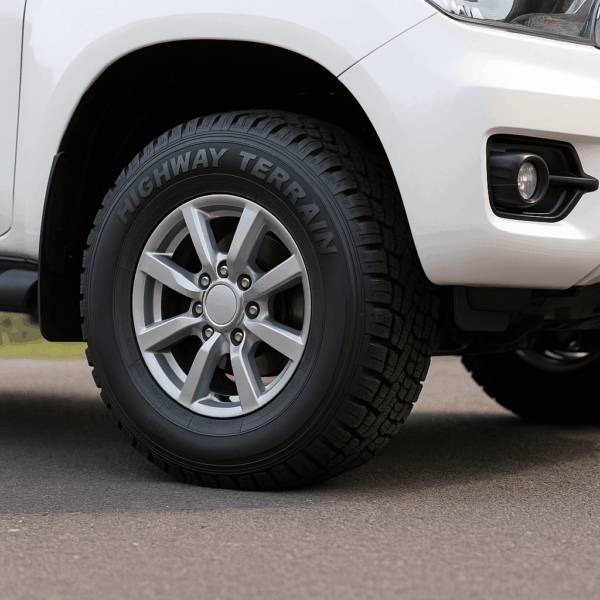
Highway Terrain Tire
Highway Terrain (HT) means the tire is 90% Road, 10% Off-Road, Highway Terrain tires are suited to 4WDs that spend most of their time on-road and a limited amount of time off-road (like parked up on the nature strip while you give it a wash). The tires are designed for paved roads and highways. Less aggressive tread, optimized for comfort, low noise, better fuel economy. Not made for very rough off-road conditions. Highway-Terrain (often abbreviated H/T or HT) tires are designed mainly for road / paved surfaces, with occasional light-off or mild rough roads. They’re a middle ground for vehicles like SUVs, crossovers, light trucks that drive mostly on asphalt or smooth road. They tend to have a smoother, more continuous tread pattern compared to All-Terrain (A/T) or Mud-Terrain (M/T) tires, which have chunkier lugs for grip off-road. Their design focuses on comfort, low noise, fuel efficiency, stability at highway speeds, and long tread life when used primarily on paved roads
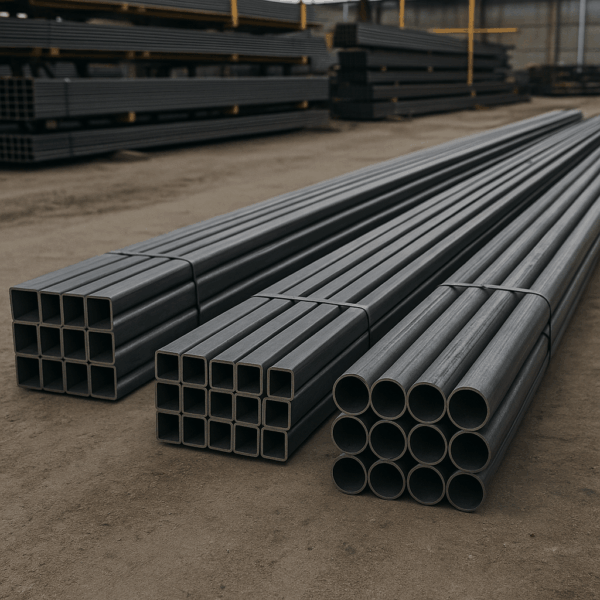
Hollow Structural Steel Section (HSS)
The production process of HSS includes high-quality raw material selection, steel forming, welding, sizing, straightening, surface inspection, and final quality control. Advanced manufacturing technologies such as Electric Resistance Welding (ERW) ensure strong weld integrity, smooth surface finishing, and consistent mechanical properties throughout the product length. Depending on customer requirements, HSS can be supplied with different steel grades, wall thicknesses, dimensions, and surface treatments including black finish, galvanized coating, and anti-corrosion protection. Commercially available types include Square Hollow Sections (SHS) for columns, frames, and architectural structures; Rectangular Hollow Sections (RHS) for beams, bridges, and heavy-duty structures; and Circular Hollow Sections (CHS) for pipelines, towers, mechanical structures, and transportation projects.
Hollow Structural Steel Sections offer numerous advantages including high structural efficiency, excellent torsional resistance, reduced material consumption, easy fabrication, attractive appearance, and cost-effective transportation. These products are widely applied in residential and commercial buildings, steel structures, warehouses, oil and gas facilities, agricultural equipment, automotive industries, machinery manufacturing, and renewable energy projects such as solar panel support structures. Our HSS products are available in various specifications based on international standards including ASTM, EN, DIN, and JIS requirements. For export shipments, products are carefully packed with steel straps, protective wrapping, bundles, and customized packaging methods to ensure safe handling during transportation. With consistent quality, flexible production capacity, and export expertise, our Hollow Structural Steel Sections are an ideal choice for distributors, contractors, and industrial buyers worldwide.