

 Arabic
shop
Methylene Diphenyl Diisocyanate (MDI)
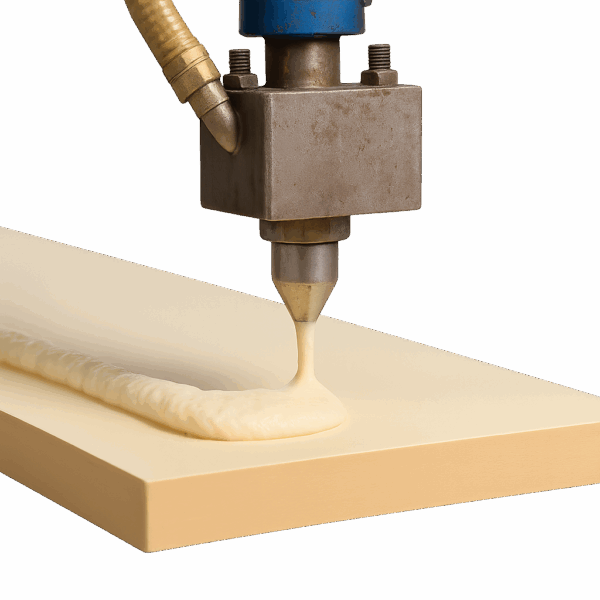
Polymeric MDI is a dark to brownish liquid with relatively high functionality and is extensively used for rigid polyurethane and polyisocyanurate foams, insulation panels, spray foam systems, refrigerators, freezers, construction insulation and structural foam applications where high strength and thermal insulation are required. Pure MDI, which mainly contains the 4,4′-MDI isomer, is commonly supplied as a solid or controlled-temperature material and is used in polyurethane elastomers, thermoplastic polyurethane, high-performance adhesives, sealants, coatings and specialty molded products where controlled reactivity and high mechanical properties are important. Modified MDI grades are formulated to improve handling, processing characteristics, storage stability or low-temperature performance and are commonly selected for flexible elastomers, footwear, automotive components, synthetic leather, rollers, wheels and other demanding polyurethane systems. MDI specifications normally include NCO content, viscosity, density, acidity, hydrolyzable chlorine, functionality, isomer composition and appearance, while the exact values depend on the commercial grade and manufacturer. Key advantages of MDI include high reactivity, strong bonding capability, excellent tensile and tear strength, good abrasion resistance, thermal stability, chemical resistance and compatibility with a broad range of polyol systems.
Its broad application range, high performance and versatility make MDI an essential raw material for modern polyurethane manufacturing, particularly in construction, refrigeration, automotive, furniture, footwear, insulation, industrial equipment and specialty chemical industries. Buyers selecting MDI should evaluate the required grade, NCO content, viscosity, functionality, packaging, storage conditions and intended polyurethane formulation to ensure reliable processing and consistent final-product performance.
Mica Powder
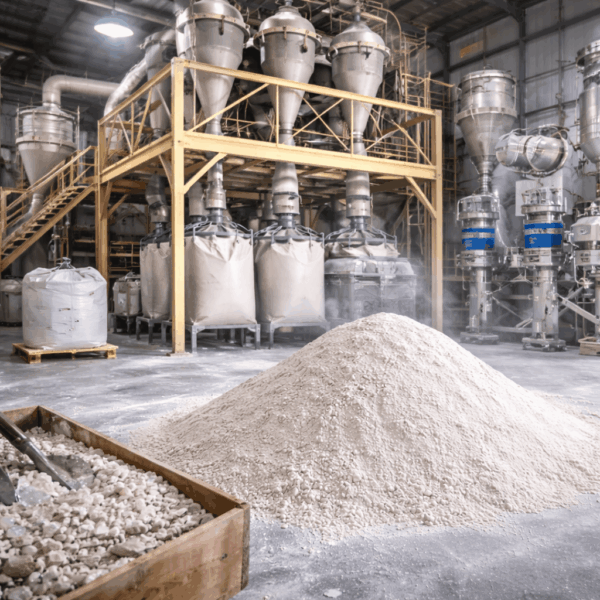
The available grades of Mica Powder are selected according to mineral composition, color, particle size distribution, and performance requirements. Muscovite Mica Powder is widely used in electrical insulation materials, paints, coatings, plastics, rubber, and cosmetics due to its excellent dielectric strength and chemical resistance. Phlogopite Mica Powder is preferred for high-temperature applications such as thermal insulation boards, brake linings, welding electrodes, and heat-resistant plastics because of its superior heat stability. Cosmetic Grade Mica Powder with very fine particle size and high purity is used in makeup products including eyeshadow, lipstick, nail polish, and skincare formulations. Paint and Coating Grade Mica Powder improves durability, corrosion resistance, weather resistance, and surface appearance of decorative and industrial coatings. Plastic Grade Mica Powder acts as a reinforcing filler that enhances dimensional stability, stiffness, and heat resistance of polymer products, while Drilling Grade Mica Powder is used as a lost circulation material in oil and gas drilling operations.
Mica Powder is supplied in customized particle sizes and packaging options to meet international export requirements for various industries. Typical specifications include mica content, moisture content, brightness, color, mesh size, and chemical composition. The major advantages of Mica Powder include high temperature resistance, excellent electrical insulation, low moisture absorption, superior chemical stability, lightweight structure, excellent dispersion, and compatibility with many industrial materials. Due to these characteristics, Mica Powder is an important raw material for manufacturing companies producing paints, coatings, plastics, rubber products, cosmetics, construction materials, electrical components, welding electrodes, and drilling additives. High-quality Mica Powder supplied for wholesale export provides manufacturers with a reliable mineral solution for improving product performance, durability, and production efficiency.
Microporous Basic Water Filter
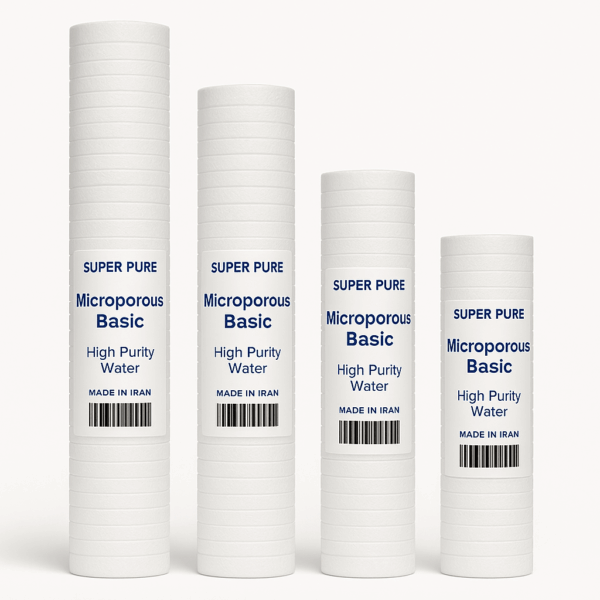
Manufactured from high-quality polymers such as polypropylene (PP), polytetrafluoroethylene (PTFE), and polyethersulfone (PES), these filters feature pore sizes ranging from 0.1 to 5 microns, depending on the application. They come in various types — pleated, melt-blown, string-wound, and membrane-style — and in standard sizes like 5”, 10”, 20”, and 30” cartridges. Their chemical composition offers excellent resistance to acids, bases, and organic solvents, making them ideal for both potable and process water systems. Key specifications include an operating pressure up to 125 psi, a temperature range of 5–80°C, and a flow rate capacity of up to 10 liters per minute, with filtration efficiency exceeding 99.9%.
Microporous water filters are widely used in drinking water purification, food and beverage industries, pharmaceuticals, and laboratory applications. They deliver high flow rates, long service life, and easy maintenance while ensuring absolute filtration without chemical additives. With their robust design, fine pore control, and compatibility with most filter housings, these filters combine technological precision with reliability — delivering ultra-clean, safe, and consistent water for all professional and domestic needs.

Mild Steel Heating Radiator For Home
Multiple steels sheets are assembled to form several hollow panels that make up the radiator. Then, the hot water flows into these hollow radiator panels. Mild steel is anti-corrosive, durable and recyclable. And the steel stays warm long after the radiators are turned off. Meanwhile mild steel radiators are cost effective and affordable .
These radiators heat up rapidly and also have significant levels of inertia, which contribute to your home heating. Plus, steel hot water radiators can be fitted with additional elements in order to boost the heat they diffuse into your home via convection. Steel, or ‘mild steel’, can be shaped into all sorts of wild and wonderful styles. They also come in a variety of colors…
Mineral Oil
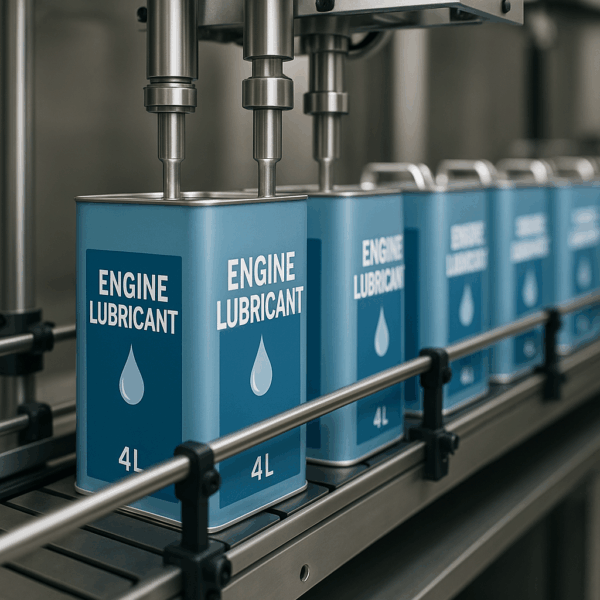
Industrial Mineral Oil is available in different viscosity grades and quality levels to meet the requirements of lubrication, manufacturing, processing, and formulation industries. Light mineral oils are commonly used in light-duty lubrication, textile processing, polishing formulations, and selected cosmetic or technical applications, while medium and higher-viscosity grades can be used in industrial lubricants, hydraulic formulations, metalworking fluids, rubber processing, plastics manufacturing, and equipment protection. Highly refined mineral oil and white mineral oil are also commercially available for applications requiring greater purity and improved color and odor characteristics, subject to the relevant regulatory requirements and intended use. Mineral oil offers several important technical advantages, including good lubricating performance, resistance to oxidation when properly refined and formulated, controlled viscosity, low volatility in suitable grades, chemical stability, water-repellent characteristics, and effective surface protection. Its relatively consistent composition and broad compatibility with many industrial formulations make mineral oil a practical raw material for manufacturers seeking reliable performance and consistent production results.
Mineral Oil specifications vary according to grade and final application, and typical commercial parameters include kinematic viscosity, density, flash point, pour point, color, sulfur content, water content, and refining quality. Before purchasing, manufacturers should select the appropriate grade according to operating temperature, viscosity requirements, compatibility, regulatory requirements, and the specific formulation or production process. High-quality Mineral Oil can therefore serve as a dependable industrial raw material for lubricant manufacturers, rubber and plastic processors, chemical producers, textile industries, and other manufacturers requiring stable petroleum-based process fluids.

Mini Refrigerator
There are many sizes and models are available , cube size with steel door , mid size refrigerators with visible glass doors , under counter mini fridges and mini bars , convertible mini fridges and smart ones .In a convertible mini refrigerator , it easy to convert the freezer to a refrigerator whenever you want. You enjoy the convenience of being able to set storage temperatures as per your preference. These are suitable for fluctuating uses.
Smart mini fridges are Wi-Fi enabled and come with additional features such as the ability to adjust temperature via an app or voice commands. You employ these for simplicity and optimal racking, which come in handy when storing products requiring certain temperature or humidity.
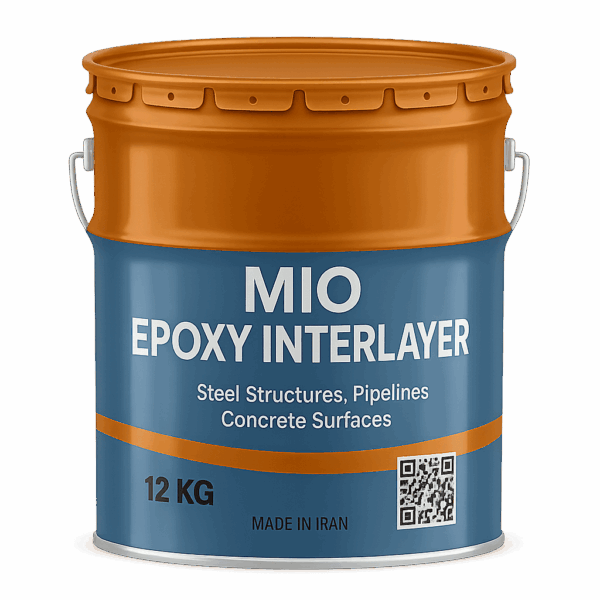
MIO Epoxy Interlayer Paint
MIO Epoxy Interlayer paints ,technically, are available in high-build MIO epoxy, standard MIO epoxy mid-coats, and surface-tolerant MIO epoxy grades for demanding site conditions. They are widely used on structural steel, bridges, offshore platforms, oil & gas pipelines, storage tanks, power plants, and marine structures. The main ingredients typically include epoxy resins (Bisphenol-A or Bisphenol-F), amine or polyamide hardeners, micaceous iron oxide pigments, anti-corrosive additives, fillers, and flow modifiers. Key advantages include excellent barrier protection due to the flake-like MIO structure, strong adhesion to epoxy primers, high film build capability, low permeability to water and gases, and excellent resistance to abrasion and mechanical damage.
MIO Epoxy Interlayer paints provide exceptional durability, long service life, and enhanced corrosion resistance in severe environments classified as C4–C5 according to ISO 12944. They also improve coating system stability by reducing cracking and improving intercoat adhesion. These coatings are supplied as two-component systems (base + hardener) and are available in 5 kg, 10 kg, 12 kg, and 20–25 kg metal pails, as well as 200 kg drums and IBC containers for large-scale industrial projects. This combination of performance, durability, and flexible packaging makes MIO Epoxy Interlayer paints a preferred choice for professional corrosion protection systems.

Moccasin Shoes
Rooted in Native American footwear, moccasins are gentle and easy-to-wear slip-on shoes. Crafted from leather or suede, they showcase a distinctive stitched design. These shoes offer the perfect blend of comfort and flexibility, making them a beloved option for casual and outdoor pursuits. Whether paired with jeans, shorts, or casual dresses, moccasins infuse your outfit with rustic charm.
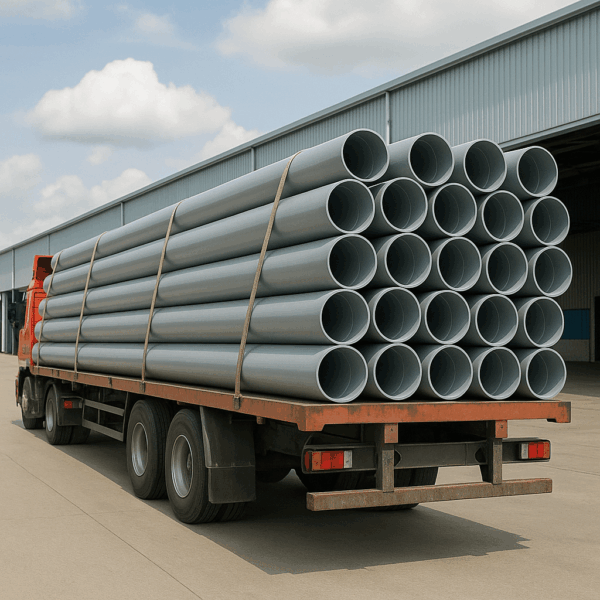
Modified PVC HI Pipes & Fitting
This enhanced toughness enables modified PVC pipes to be manufactured with a thinner wall, with subsequent material savings and improved hydraulic properties. The alloying of PVC with modifying polymers achieves improvement in resistance to cracking. The result is the minimization of the effect of stress concentrators such as scratches. PVC-HI stands for High Impact PVC. The PVC-HI grade is obtained by adding an impact modifier to PVC-U that increases the resistance of the pipes to external blows.
PVC-HI is a material of choice for natural gas networks and is fit for hydrogen. PVC-Hi or Hi Impact pipes are PVC pipes that are conventional, having a modifier that makes them very resistant to external blows. To improve its durability, its composition is a mixture of compounds, including PVC. It needs to have the ability to be effective under high pressure and have long term strength.
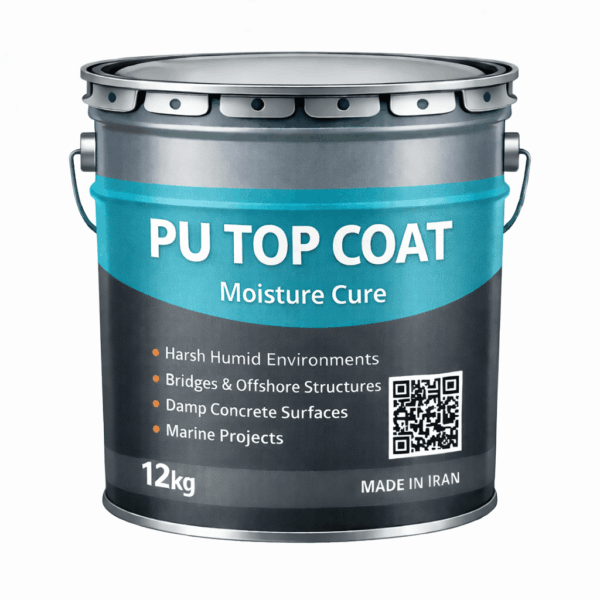
Moisture Cure Polyurethane Top Coat
Moisture Cure PU Top Coats are based on isocyanate-terminated polyurethane prepolymers that cross-link upon exposure to humidity. This curing mechanism allows consistent film formation even in high-moisture environments. The cured coating exhibits strong adhesion, high mechanical strength, and good flexibility, enabling it to withstand impact, vibration, and thermal movement. Moisture cure PU top coats provide good resistance to water, oils, fuels, mild chemicals, and atmospheric corrosion. They also show satisfactory abrasion resistance and maintain stable performance in outdoor exposure. Application can be carried out by spray, roller, or brush over properly prepared and primed substrates.
Moisture cure polyurethane top coats are widely used on steel structures, pipelines, storage tanks, marine equipment, industrial machinery, and maintenance coating projects. They are ideal for field applications, repair works, and environments where controlled curing conditions are not available. Fast curing reduces downtime and accelerates project completion. The coatings perform well in both interior and exterior conditions and are compatible with epoxy and moisture-cure primer systems. Available in various colors and gloss levels, moisture cure PU top coats offer a practical balance of application simplicity, durability, and long-term protection for industrial surfaces.
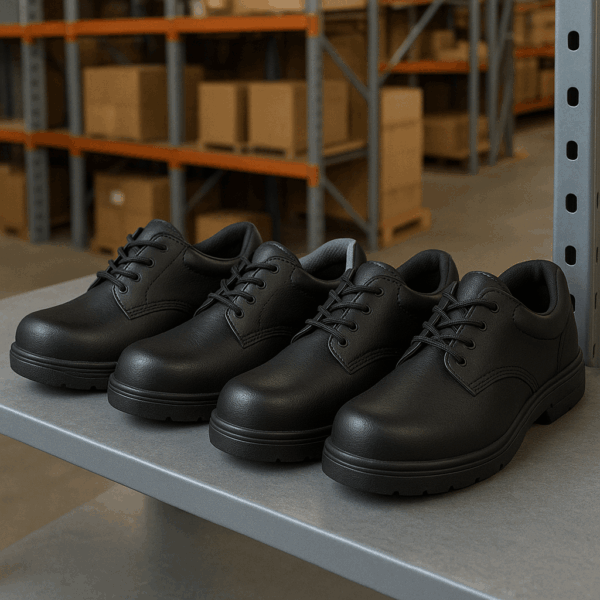
Moisture-Resistant Work Shoes
These shoes are made with water-resistant materials such as rubber or synthetic uppers to repel water and prevent moisture from seeping in. By resisting moisture, they protect against mold, rot, and fungus growth. These work shoes are two main groups . first is Water-Resistant. Water-resistant shoes are best for conditions where you may need protection from infrequent splashes of water. They are usually breathable, light weight, and easy to clean. They will eventually let water inside the shoe and are not ideal for harsh weather environments , and the second is Waterproof Work Shoes that have a special membrane coating that will cause water to bead up and roll off the shoe to keep water out and your feet completely dry. They provide protection from moisture and cold air and are ideal for environments with harsh weather conditions and/or where water is frequently present.
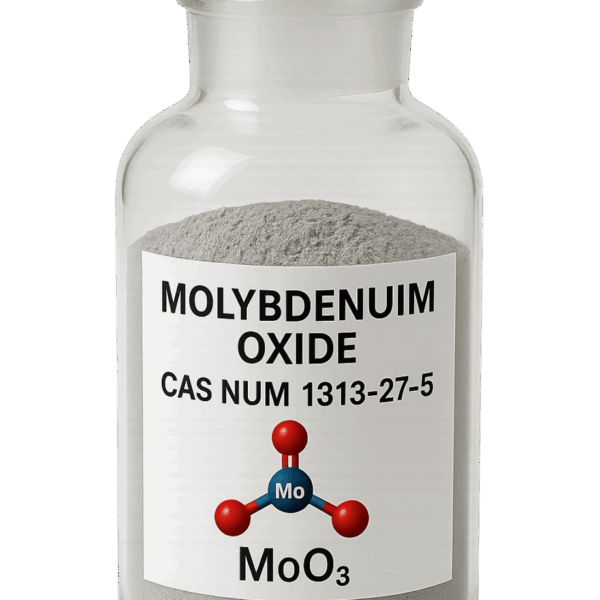
Molybdenum Oxide
Molybdenum Oxide compound is produced on the largest scale of any molybdenum compound. It occurs as the rare mineral molybdite. Its chief application is as an oxidation catalyst and as a raw material for the production of molybdenum metal vacuum to make transparent electrodes for photovoltaic cells. Molybdenum oxide is widely used as an oxidation catalyst for acid-mediated catalytic reactions. It is a colorant used as yellow and orange pigment in paint, inks, plastics and Rubber industry. Also Molybdenum oxide is used in production of the final product that is Ferro Molybdenum.
Industrial Molybdenum Oxide is primarily produced from molybdenum-containing concentrates through controlled roasting and subsequent purification processes designed to remove volatile impurities and achieve the required chemical composition. During production, molybdenite concentrate is oxidized at elevated temperature under controlled atmospheric conditions, converting molybdenum sulfide into molybdenum oxide while sulfur compounds are removed from the process gases. Depending on the required grade, additional purification, classification, and particle-size control can be applied to produce technical, metallurgical, or higher-purity grades. Commercial Molybdenum Oxide is available in different purity levels, particle sizes, and physical forms according to the intended application, including standard industrial grades for ferroalloy and steel production, higher-purity grades for chemical and catalyst applications, and specially controlled grades for advanced materials and specialized manufacturing processes.