

 Arabic
shop
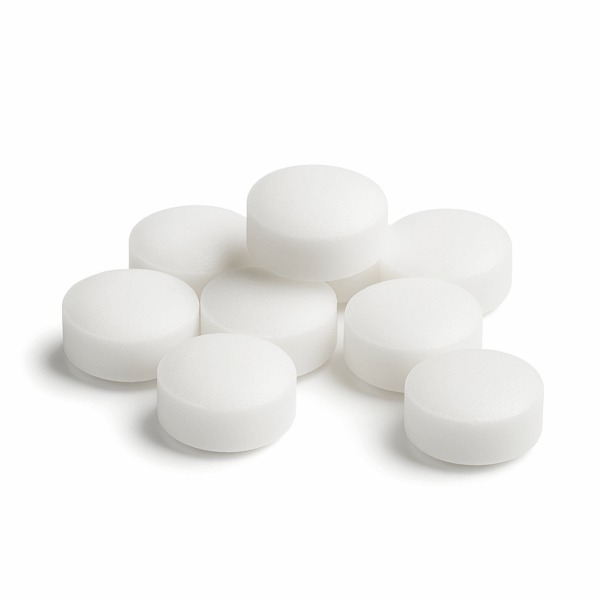
Naphthalene
Naphthalene is also an essential raw material for producing naphthalene sulfonates, which are widely applied as dispersing agents, concrete water reducers and additives in construction chemicals, textile processing, dyes and pigment industries. In addition to these major applications, Naphthalene derivatives are used in the production of synthetic resins, specialty chemicals, surfactants, pigments and other industrial formulations where reliable aromatic chemical performance is required. Industrial-grade Naphthalene is commonly selected for large-volume chemical processing applications, while refined Naphthalene with higher purity is preferred by manufacturers producing high-quality chemical derivatives where precise composition and consistent reaction performance are necessary. The product quality is generally determined by important parameters such as purity percentage, melting point, moisture content, color, crystallization characteristics and impurity level, allowing manufacturers to select the appropriate grade according to their production process. Naphthalene provides several advantages including high availability, efficient conversion into valuable chemical intermediates, stable industrial demand and compatibility with multiple manufacturing processes. These characteristics have made Naphthalene a strategically important product for chemical producers, resin manufacturers, construction chemical companies and industrial buyers seeking a reliable aromatic hydrocarbon raw material.
Naphthalene is supplied according to customer specifications regarding purity, physical form, quantity, packaging and transportation requirements. Commercial packaging options include polyethylene-lined bags, kraft bags, fiber drums, jumbo bags and bulk packaging solutions designed to ensure safe handling, storage protection and efficient transportation.
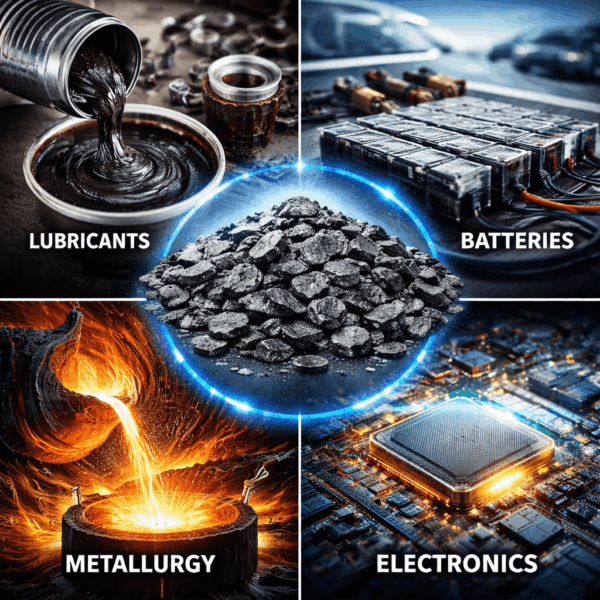
Natural Graphite Chips
Natural Graphite Chips are available in various grades including High Carbon Graphite Chips, Medium Carbon Graphite Chips, Low Carbon Graphite Chips, Large Flake Graphite, Medium Flake Graphite, Fine Flake Graphite, and Ultra-Pure Graphite Chips. High Carbon Graphite Chips with carbon content above 95% are mainly used for refractory bricks, crucibles, foundry coatings, and metallurgical applications due to their high heat resistance and chemical stability. Large Flake Graphite is preferred for expandable graphite production, lithium-ion battery anodes, lubricants, and specialty carbon products because of its superior crystallinity and conductivity. Medium and Fine Flake Graphite grades are commonly used in brake linings, paints, coatings, conductive materials, and powder metallurgy. Ultra-pure Natural Graphite Chips with carbon purity above 99% are utilized in advanced applications such as battery materials, semiconductor industries, and high-performance carbon components.
Natural Graphite Chips offer outstanding advantages including excellent electrical and thermal conductivity, high oxidation resistance, low friction coefficient, superior lubrication performance, resistance to chemical corrosion, and stability under extreme temperatures. The product can be customized according to customer requirements in terms of particle size, carbon percentage, ash content, moisture level, and packaging options. With reliable quality, competitive pricing, and suitability for global industrial markets, Natural Graphite Chips are an important export commodity for manufacturers and industrial buyers seeking high-performance graphite raw materials for various applications.
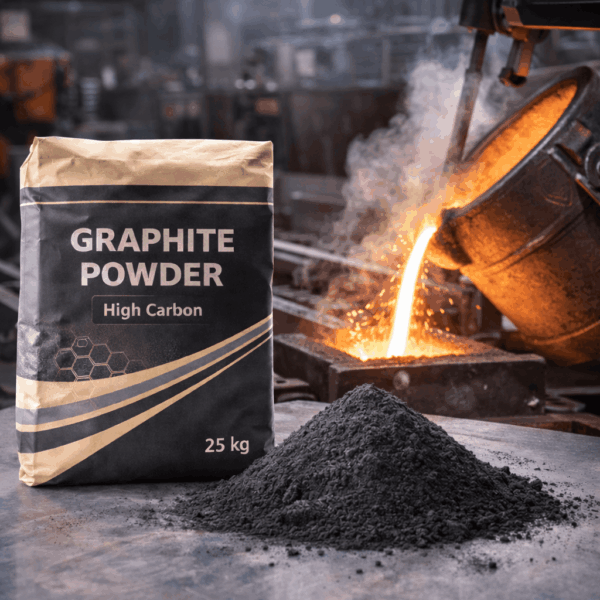
Natural Graphite Powder
Natural Graphite Powder is available in several types, including flake graphite powder, amorphous graphite powder, and microfine or micronized graphite powder, each classified by carbon content, particle size, and purity. Typical fixed carbon levels range from 85% to over 99%, depending on processing and application needs. Flake graphite powder is preferred for refractories, batteries, and expandable graphite production due to its crystalline structure, while amorphous graphite powder is commonly used in foundries, brake linings, and carbon additives. Key applications include refractory bricks and crucibles, carbon raisers in steelmaking, dry lubricants, conductive fillers, battery anode materials, gaskets and seals, friction materials, and anti-corrosion coatings. Chemically, natural graphite powder consists mainly of elemental carbon, with controlled ash content and trace minerals such as silica and alumina. Important technical parameters include particle size distribution (mesh or micron range), fixed carbon percentage, moisture content, bulk density, and surface morphology.
It is possible to supply Natural Graphite Powder in 25 kg multiwall paper bags, 25–50 kg PP woven bags, or 1-ton jumbo bags for bulk industrial consumption. Customized packaging, carbon grades, and particle sizes are available to meet specific production requirements. With its stable performance, wide availability, and adaptability across industries, natural graphite powder remains a strategic raw material for traditional manufacturing as well as emerging technologies such as energy storage and advanced composites.
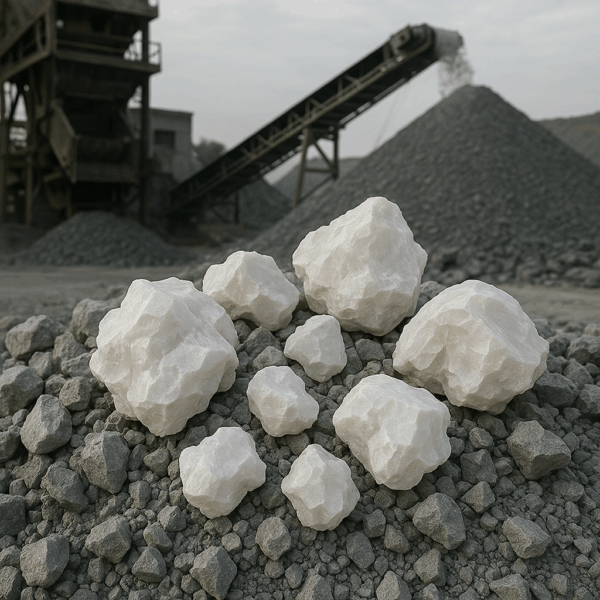
Natural Gypsum Rock
Natural Gypsum Rock is available in several commercial forms, including run-of-mine material, manually or mechanically selected lump gypsum, crushed gypsum, screened gypsum, and industrial grades prepared according to customer requirements. Typical commercial particle sizes may range from large mineral lumps to smaller crushed fractions, while customized screening can be used to provide a more controlled size distribution for specific production systems and feeding equipment. For cement plants, the preferred grade is generally selected according to the plant’s grinding system, gypsum addition rate, required setting control, and chemical specifications, whereas plaster and gypsum-board manufacturers may require material with tighter purity and processing characteristics.
High-purity Natural Gypsum Rock is particularly valued as a feedstock for applications where low levels of impurities and consistent calcium sulfate content are required, while standard industrial grades may be suitable for general cement and mineral-processing applications.
Natural Gypsum Rock offers a versatile mineral feedstock for cement, construction materials, plaster production, gypsum board manufacturing, agriculture, and other applications where calcium sulfate-based raw materials are required. Its relatively simple extraction and mechanical preparation process makes natural gypsum an established industrial mineral that can be supplied in large quantities for continuous manufacturing operations. In cement manufacturing, gypsum is primarily used to control cement setting behavior, while in plaster and gypsum-product manufacturing it serves as the principal mineral feedstock that can be further processed through grinding and thermal treatment.

Naval Brass
The main characteristics of Naval Brass include high tensile strength, good impact resistance, excellent machinability, superior wear resistance, and long-term stability in marine conditions. The addition of tin provides enhanced protection against saltwater exposure, making this alloy suitable for components that operate continuously in seawater environments. Naval Brass also offers good thermal and electrical conductivity compared with many engineering alloys, making it a preferred material for valves, pumps, propeller components, bushings, bearings, fasteners, and marine hardware. Its combination of mechanical performance and corrosion resistance makes it a reliable alternative to conventional brass grades in demanding applications.
Commercially available Naval Brass grades are supplied in various compositions and specifications such as C46400 Naval Brass, marine-grade brass plates, naval brass rods, naval brass bars, naval brass tubes, and custom alloy products. These materials are produced according to international standards including ASTM, UNS, EN, and other customer-specific specifications. Naval Brass is widely selected by manufacturers of marine equipment, ship repair companies, offshore platforms, chemical processing industries, and industrial machinery producers. With proper processing and surface finishing, Naval Brass provides excellent service life, reduced maintenance costs, and dependable performance in aggressive operating environments.
Needle Felt Carpet
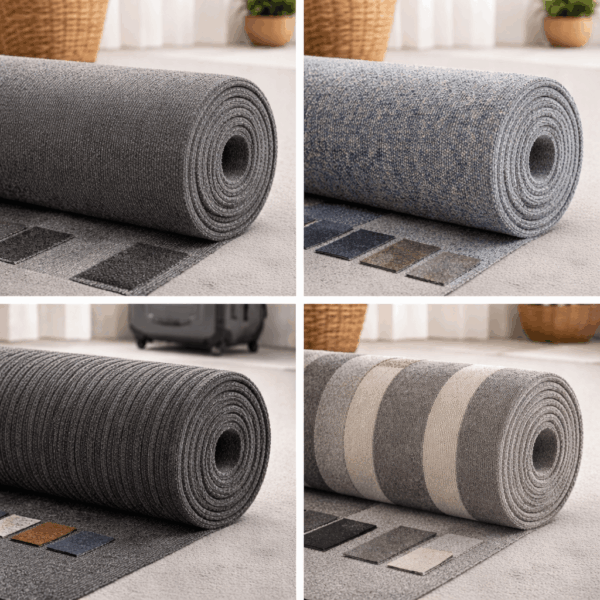
Needle Felt Carpet is available in different grades and constructions based on fiber type, density, thickness, backing material, and intended application. Standard Needle Felt Carpet is commonly used for offices, commercial spaces, corridors, and general indoor flooring where economical performance and durability are required. Heavy Duty Needle Felt Carpet with higher fiber density and stronger backing is suitable for airports, hotels, conference halls, shopping centers, and areas with intensive pedestrian traffic. Automotive Grade Needle Felt Carpet is manufactured with specific fiber properties for vehicle interiors, trunk liners, floor coverings, and acoustic insulation components. Anti-Static Needle Felt Carpet is designed for electronic rooms, server rooms, laboratories, and technical areas where static electricity control is important. Decorative and Patterned Needle Felt Carpet provides aesthetic designs for hospitality, residential, and commercial interior applications while maintaining the functional advantages of nonwoven flooring.
Needle Felt Carpet provides many advantages including high abrasion resistance, excellent sound insulation, low maintenance requirements, quick installation, dimensional stability, and good resistance to heavy use. Its nonwoven structure allows manufacturers to produce carpets in various colors, patterns, thicknesses, and roll widths according to customer requirements. The product is also valued for its lightweight structure, cost efficiency, and ability to improve interior comfort by reducing noise and providing a soft walking surface. Due to these technical advantages, Needle Felt Carpet is an ideal choice for global buyers looking for reliable flooring materials for commercial, industrial, transportation, and interior design projects. High-quality production standards and customizable specifications make Needle Felt Carpet an attractive export product for international markets.

Neoprene Glove
The gloves made from Neoprene are tough, versatile and often impervious to liquid, so they are an excellent choice for situations where skin and hands must be in prolonged contact with substances like alcohol, peroxide, fuel, hydraulic fluid, acids, bases, hydrocarbons and organic acids.
These neoprene rubber gloves are more puncture, abrasion, or cut-resistant than nitrile gloves.

Neufchatel Cheese
Neufchatel cheese is soft, white looks , provided from cow milk ,similar to Camembert, but is made in many forms, shapes and sizes. Unlike similar cheeses, Neufchatel has a grainy texture. This is a neutral cheese and is often used in both desserts and savory dishes alike, adding richness to either. Whether stirred into sauces or baked into cheesecake, it never fails to delight.
It is often compared to cream cheese because of its creamy texture and mild flavor. Neufchatel cheese has a rich, tangy flavor with subtle hints of saltiness. Its texture is creamy and somewhat crumbly, with a distinct graininess that sets it apart from other soft cheeses like Camembert or Brie.
Neutral Silicon Sealant
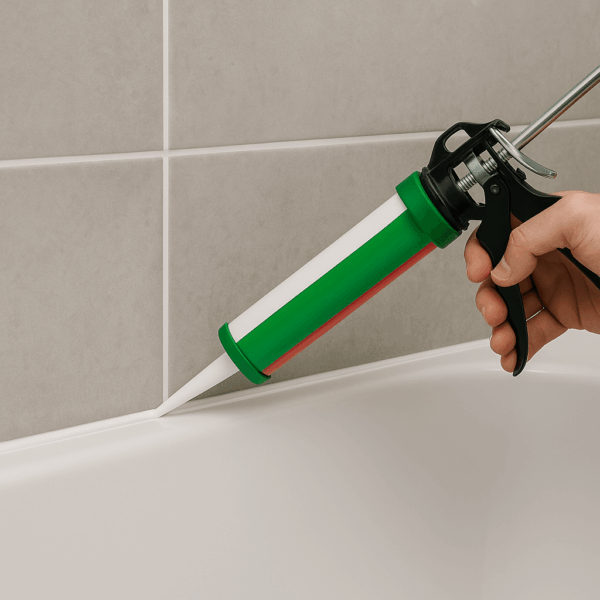
Available types include Neutral Cure Construction Silicone, Weatherproof Silicone, Structural Neutral Silicone, Anti-Fungal Neutral Silicone, and High-Modulus Industrial Grades. Specialized formulations such as Low-Modulus façade sealants, High-Movement expansion joint grades, Fast-Cure neutral silicones, and Paintable hybrid-modified neutral sealants support a broad spectrum of professional applications. Typical applications include façade sealing, glazing, window & door frame installation, HVAC systems, sanitary joints, expansion joints, and vibration-resistant sealing in industrial assemblies. Neutral silicones are supplied in various grades such as 100%, 200%, and 300-series construction grades, available in 300 ml cartridges, sausage packs, and bulk drums for high-volume production lines.
Neutral Silicone Sealants deliver strong adhesion to concrete, aluminum, PVC, glass, ceramic, polycarbonate, and coated metal surfaces. Their high elasticity, low shrinkage, and stable rheology provide consistent extrusion, smooth finishing, and long service life even under extreme climate conditions. Key advantages include excellent water resistance, UV stability, anti-mold performance, non-corrosive curing, low odor, and superior aging resistance. Their flexible chemistry ensures long-term weatherability, UV resistance, and superior adhesion across a wide temperature range.
Nickel Powder
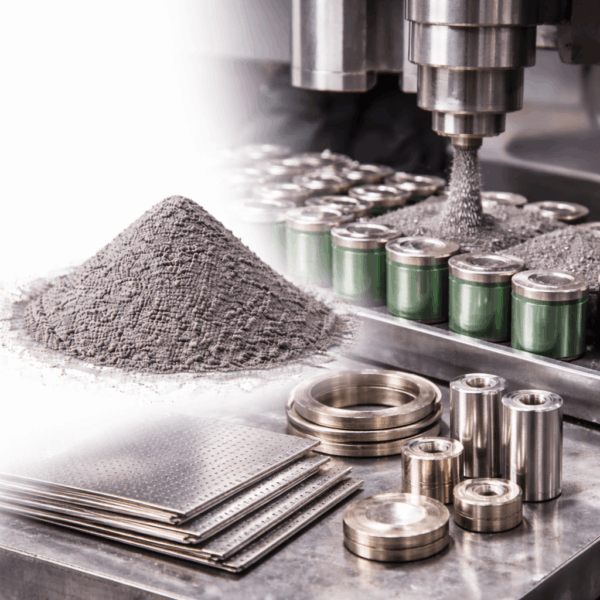
Different grades of Nickel Powder are designed for specific industrial applications. Carbonyl Nickel Powder with extremely high purity and spherical particles is mainly used in powder metallurgy, superalloys, catalysts, and electronic components. Electrolytic Nickel Powder is preferred for batteries, conductive materials, and chemical applications due to its high purity and excellent electrical properties. Micron Nickel Powder is widely used in thermal spraying, metal injection molding, welding materials, and coatings, while Nano Nickel Powder is applied in advanced electronics, fuel cells, magnetic materials, and research applications. Nickel Powder specifications typically include nickel content above 99%, controlled oxygen level, particle size distribution, apparent density, morphology, and chemical composition. Its major advantages include excellent corrosion resistance, high electrical and thermal conductivity, strong catalytic performance, superior mechanical strength, and compatibility with advanced manufacturing processes.
Nickel Powder is an essential raw material for many high-value industries including aerospace, automotive, electronics, chemical processing, energy storage, and metal manufacturing. It is used in the production of nickel-based superalloys, lithium-ion batteries, alkaline batteries, fuel cells, hard alloys, magnetic materials, conductive pastes, electrodes, and protective coatings. The availability of different Nickel Powder grades allows manufacturers to select the most suitable material according to purity requirements, particle size, production method, and final application. Export-quality Nickel Powder is supplied according to international standards with strict quality control to ensure consistent performance, reliability, and suitability for global industrial markets.
Nitric Acid
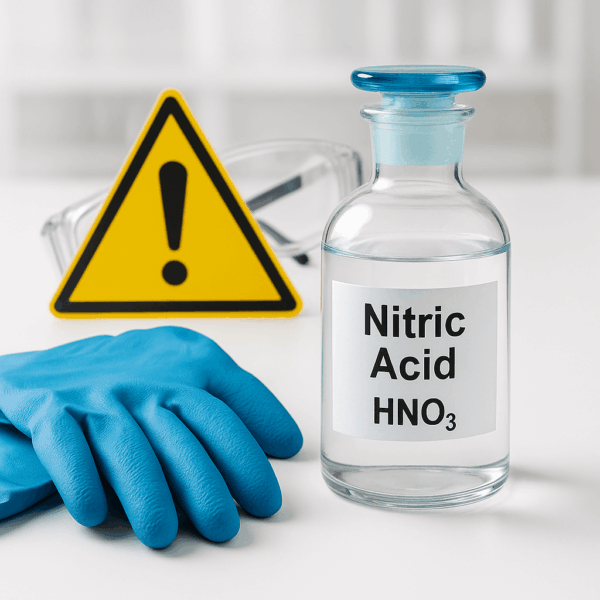
Industrial nitric acid is mainly produced through the Ostwald process, in which ammonia is catalytically oxidized with air at elevated temperature to produce nitric oxide, which is subsequently oxidized to nitrogen dioxide and absorbed in water to form nitric acid. The production process is carefully controlled to achieve the required concentration, purity, and consistency, while industrial-grade material is normally subjected to quality control and analytical testing before packaging and shipment. Depending on customer requirements and the intended end use, commercial nitric acid may be supplied as dilute nitric acid, concentrated nitric acid, or higher-purity grades for specialized chemical and technical applications. Dilute nitric acid is commonly used in fertilizer and chemical manufacturing, metal cleaning, pickling, and surface treatment, while concentrated nitric acid is widely used in nitration reactions, specialty chemical production, and applications requiring a stronger oxidizing medium. High-purity nitric acid can be used in analytical, laboratory, electronics, and other controlled industrial processes where low levels of impurities are important.
Nitric acid is particularly important in the manufacture of ammonium nitrate and other nitrate-based fertilizers, supporting large-scale agricultural and fertilizer industries. It is also used for metal pickling, cleaning, etching, surface treatment, and the preparation of metal nitrates, as well as in the production of dyes, pigments, pharmaceuticals, explosives, specialty chemicals, and intermediates. Depending on concentration and customer requirements, nitric acid can be supplied in compatible HDPE containers, drums, intermediate bulk containers (IBCs), or bulk tankers, with packaging selected according to transportation regulations, concentration, volume, and handling requirements. Key advantages of quality nitric acid include consistent concentration, high chemical reactivity, reliable oxidizing performance, broad industrial applicability, and suitability for continuous manufacturing processes.

Nitrile Coated Glove
Fabric gloves coated with Nitrile are becoming popular due to their excellent properties.These gloves are known for their durability. Nitrile coating provides protection against abrasion, puncturing, snagging, and tearing. Additionally, nitrile is more durable than latex, which results in a longer-lasting glove that withstands harsh environments.
One of the main advantages of nitrile coated gloves is their flexibility. The seamless, machine-knit design provides form-fitting comfort, providing excellent dexterity, and reduced hand fatigue. Nitrile’s wet and dry dip technologies also enable sure-handed performance on various surfaces.