
 Arabic
Blog
Introduction: Understanding the Role of Industrial Paint Thinners
Paint thinner is one of the most important auxiliary materials used in the coatings industry. Although many people associate paint thinner only with reducing paint viscosity for easier application, industrial paint thinners perform much more complex functions. They influence paint flow, leveling, drying speed, surface appearance, adhesion, gloss, and the final performance of protective coatings.
For paint manufacturers, coating formulators, automotive refinishing companies, furniture producers, and industrial coating suppliers, selecting the correct thinner is a critical technical decision. A wrong solvent blend can cause serious defects such as poor leveling, bubbling, whitening, slow drying, loss of gloss, cracking, or weak adhesion.
Industrial paint thinners are not a single chemical product. They are carefully balanced solvent mixtures designed according to the chemistry of the paint system. Alkyd paints, epoxy coatings, nitrocellulose lacquers, acrylic coatings, vinyl paints, and water-based coatings each require different solvent characteristics.
Global demand for industrial coatings continues to grow due to expansion in construction, automotive, infrastructure, machinery, marine applications, and manufacturing industries. As a result, reliable sourcing of high-quality paint thinner and solvent blends has become increasingly important for international buyers.
Through professional chemical suppliers and export platforms such as Irancorps, international buyers can connect with evaluated Iranian manufacturers and exporters of industrial chemicals and coating raw materials.
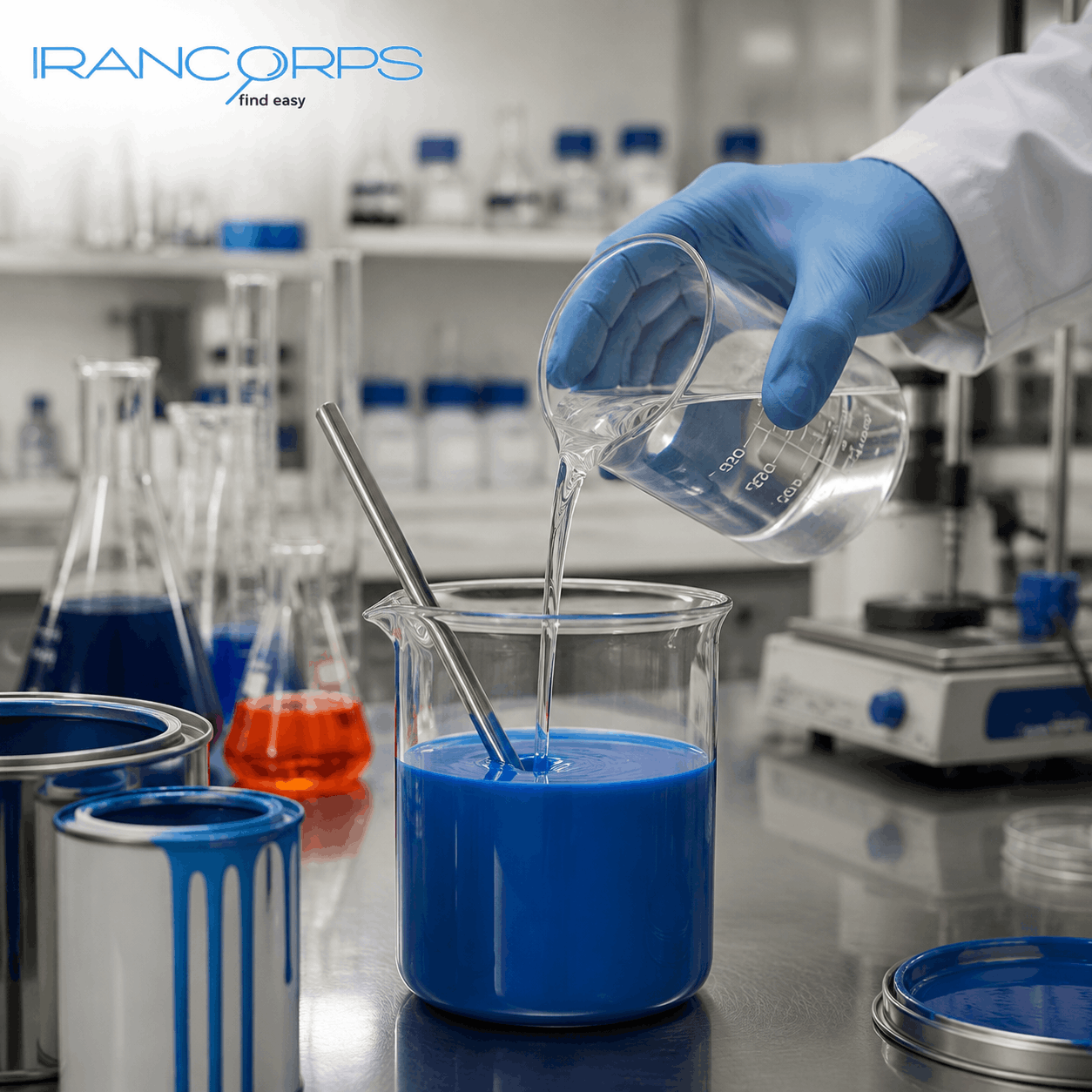
What Is Industrial Paint Thinner?
Industrial paint thinner is a liquid solvent blend used to adjust the viscosity and application properties of paint, coating, lacquer, and resin systems.
The main functions of paint thinner include:
- Viscosity Adjustment
During production or application, many paints are too thick to be applied properly. Adding the correct thinner reduces viscosity and improves:
- Spray performance
- Brush application
- Roller application
- Surface coverage
- Film formation
- Improving Paint Flow and Leveling
A suitable thinner allows paint molecules to spread evenly across a surface.
Good leveling helps prevent:
- Brush marks
- Uneven coating thickness
- Orange peel appearance
- Surface roughness
- Controlling Drying Time
The evaporation rate of solvents directly affects drying behavior.
A fast evaporating thinner can provide:
- Quick surface drying
- Higher production speed
However, excessive evaporation speed may create:
- Poor leveling
- Dry spray
- Loss of gloss
A slower solvent system can improve:
- Surface smoothness
- Gloss
- Film appearance
- Improving Solvent Compatibility
Paint systems contain different components:
- Resins
- Pigments
- Additives
- Plasticizers
The thinner must dissolve or properly interact with these components to achieve a stable coating system.
Difference Between Paint Thinner, Solvent, Reducer, and Diluent
These terms are often used interchangeably, but technically they have different meanings.
| Term | Meaning | Main Function |
| Solvent | Chemical liquid capable of dissolving another substance | Dissolves resin and coating components |
| Thinner | Solvent mixture added to reduce viscosity | Adjusts application properties |
| Reducer | Solvent used mainly in automotive coatings | Adjusts spray viscosity |
| Diluent | Liquid added mainly to reduce concentration | Controls formulation strength |
In industrial applications, paint thinner is usually a formulated blend containing several solvents selected for specific coating systems.
Basic Chemistry Behind Paint Thinner Selection
A paint consists of several main components:
Resin
The resin determines:
- Adhesion
- Hardness
- Chemical resistance
- Durability
Examples:
- Alkyd resin
- Epoxy resin
- Acrylic resin
- Vinyl resin
- Nitrocellulose resin
Pigments
Pigments provide:
- Color
- Opacity
- Protection properties
Additives
Additives improve:
- UV resistance
- Flow
- Stability
- Anti-foaming properties
Solvents
Solvents control:
- Viscosity
- Application
- Drying
- Film formation
The thinner must match the resin chemistry.
For example:
An epoxy coating requires solvents with strong solvency power because epoxy resin systems are chemically different from alkyd systems.
Main Types of Industrial Paint Thinners
Industrial paint thinners can be classified according to the coating system they are designed for:
- Alkyd Paint Thinner
- Epoxy Paint Thinner
- Nitrocellulose (NC) Paint Thinner
- Acrylic Paint Thinner
- Vinyl Paint Thinner
- Water-Based Paint Thinner
Each type has different solvent requirements, evaporation characteristics, and applications.
- Alkyd Paint Thinner
What Is Alkyd Paint Thinner?
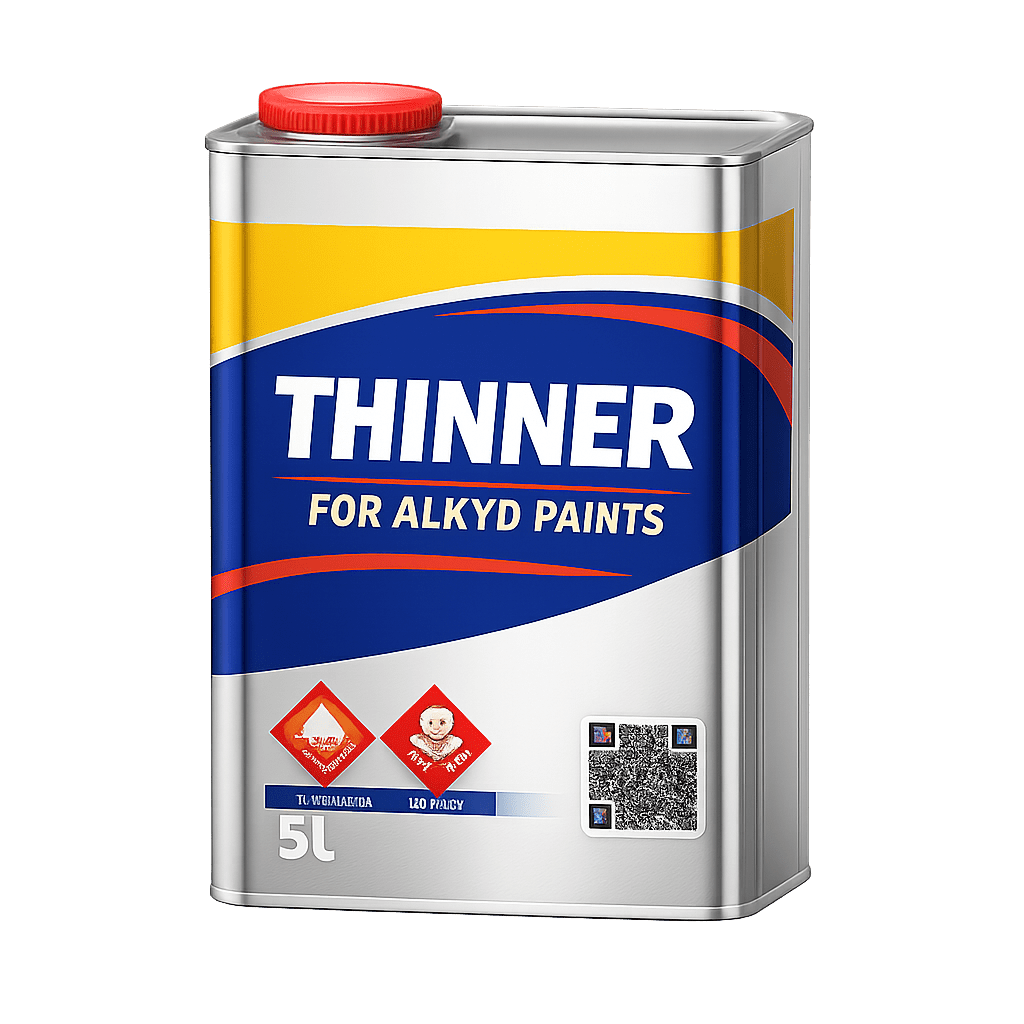
Alkyd paint thinner is a solvent blend specially formulated for alkyd resin-based paints.
Alkyd coatings are among the oldest and most widely used industrial coating systems because they provide:
- Good durability
- Excellent gloss
- Easy application
- Cost effectiveness
They are commonly used for:
- Metal painting
- Machinery coatings
- Decorative paints
- Industrial maintenance coatings
- Architectural coatings
Typical Solvents Used in Alkyd Paint Thinner
Common components include:
- Mineral Spirits
- White Spirit
- Xylene
- Toluene
- Butyl Acetate
- Aromatic solvents
- Glycol ethers
The exact formulation depends on required drying speed and application method.
Properties Required for Alkyd Thinner
A high-quality alkyd thinner should provide:
Good Resin Solubility
The thinner must dissolve alkyd resin properly to prevent:
- Separation
- Gel formation
- Poor film quality
Controlled Evaporation
If evaporation is too fast:
- Paint may dry before leveling
- Surface defects may appear
If evaporation is too slow:
- Drying time increases
- Dust contamination may occur
Applications of Alkyd Paint Thinner
Common applications include:
Industrial Metal Coatings
Used for:
- Steel structures
- Machinery
- Equipment
- Pipes
Decorative Paints
Used in:
- Interior paints
- Exterior paints
- Enamel coatings
Automotive Applications
Some alkyd-based systems are used for:
- Repair coatings
- Maintenance painting
- Epoxy Paint Thinner
What Is Epoxy Paint Thinner?
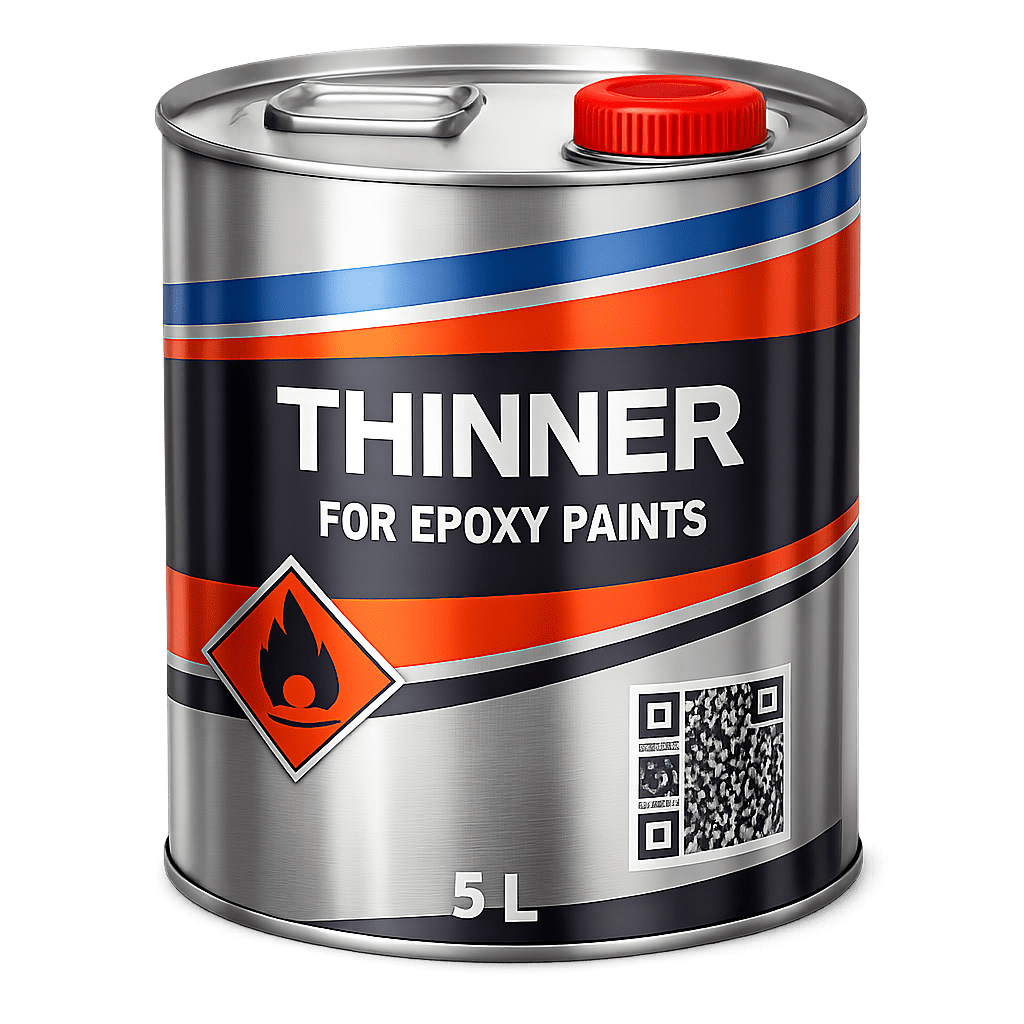
Epoxy paint thinner is designed for epoxy resin coatings that require strong solvency and controlled evaporation.
Epoxy coatings are high-performance systems known for:
- Excellent chemical resistance
- High adhesion
- Mechanical strength
- Corrosion protection
They are widely used in:
- Industrial floors
- Oil and gas facilities
- Marine coatings
- Heavy machinery
- Chemical plants
Why Epoxy Systems Need Special Thinner
Epoxy resins have different chemical structures compared with conventional paints.
A suitable epoxy thinner must provide:
- Strong solvency
- Good resin compatibility
- Proper curing performance
Using an unsuitable solvent can affect:
- Cross-linking reaction
- Hardness
- Chemical resistance
Common Solvents in Epoxy Paint Thinner
Typical components may include:
- Butyl Acetate
- Xylene
- Methyl Isobutyl Ketone (MIBK)
- Ketones
- Aromatic hydrocarbons
- Glycol ethers
Applications of Epoxy Paint Thinner
Industrial Flooring
Used for:
- Warehouses
- Factories
- Parking structures
Protective Coatings
Used in:
- Pipelines
- Steel structures
- Storage tanks
Marine Industry
Used for:
- Ships
- Offshore equipment
- Marine infrastructure
- Nitrocellulose (NC) Paint Thinner
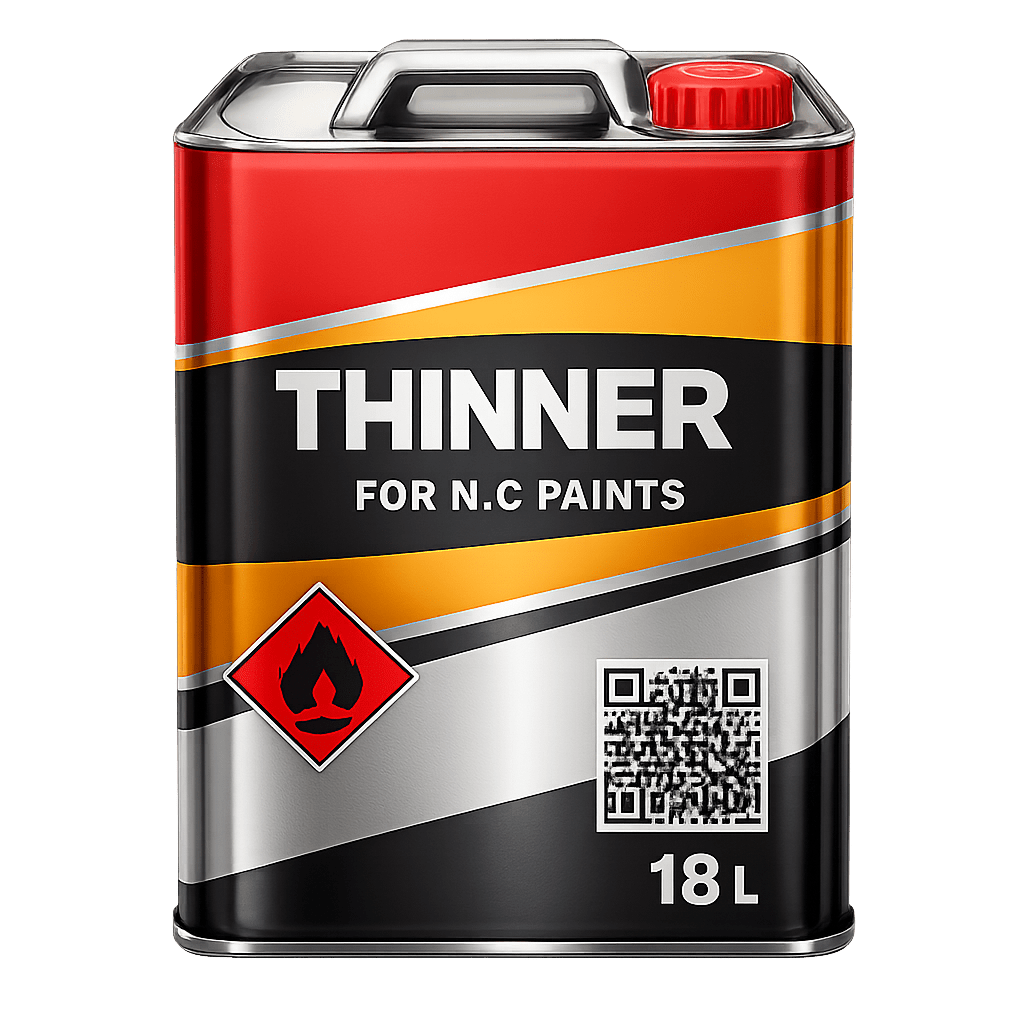
What Is Nitrocellulose Paint Thinner?
Nitrocellulose (NC) paint thinner is a specially formulated solvent blend designed for nitrocellulose-based coatings, lacquers, and finishing systems.
Nitrocellulose coatings are known for:
- Very fast drying speed
- Excellent appearance
- High gloss finish
- Easy polishing characteristics
- Good hardness development
For decades, NC coatings have been widely used in industries where fast production cycles and attractive surface appearance are important.
The most common applications include:
- Automotive refinishing
- Wood furniture coatings
- Musical instruments
- Printing inks
- Industrial lacquers
- Decorative coatings
Why Nitrocellulose Paint Requires Special Thinner
Nitrocellulose resin has specific solvent requirements. The thinner must dissolve the resin effectively and maintain a balanced evaporation rate.
A suitable NC thinner provides:
- Proper resin dissolution
- Smooth film formation
- Fast but controlled drying
- High gloss
- Good leveling
If the wrong thinner is used, several coating problems may occur:
Poor Gloss
Fast evaporation can prevent proper film formation and reduce surface brightness.
Blushing Effect
In humid environments, incorrect solvent balance can create a cloudy or white appearance on the coating surface.
Poor Adhesion
Insufficient resin compatibility may reduce bonding strength.
Orange Peel Surface
Incorrect evaporation speed can produce uneven coating texture.
Common Solvents Used in NC Paint Thinner
Commercial NC thinner formulations typically contain combinations of:
Esters
Examples:
- Butyl Acetate
- Ethyl Acetate
- Methyl Acetate
Esters provide:
- Good solvency
- Balanced evaporation
- Improved flow
Ketones
Examples:
- Acetone
- Methyl Ethyl Ketone (MEK)
- Methyl Isobutyl Ketone (MIBK)
Ketones provide:
- Strong solvency power
- Fast drying characteristics
Aromatic Solvents
Examples:
- Toluene
- Xylene
Benefits:
- Resin compatibility
- Solvency improvement
Applications of NC Paint Thinner
Automotive Refinishing
NC coatings are historically important in automotive repair applications because of:
- Fast drying
- Easy polishing
- Smooth appearance
Wood Coatings and Furniture Industry
NC lacquers remain popular for:
- Wooden furniture
- Doors
- Cabinets
- Decorative wood surfaces
Advantages:
- High gloss
- Fast production
- Easy repair
Printing Ink Industry
Nitrocellulose-based inks require controlled solvents for:
- Packaging printing
- Flexible films
- Labels
- Acrylic Paint Thinner
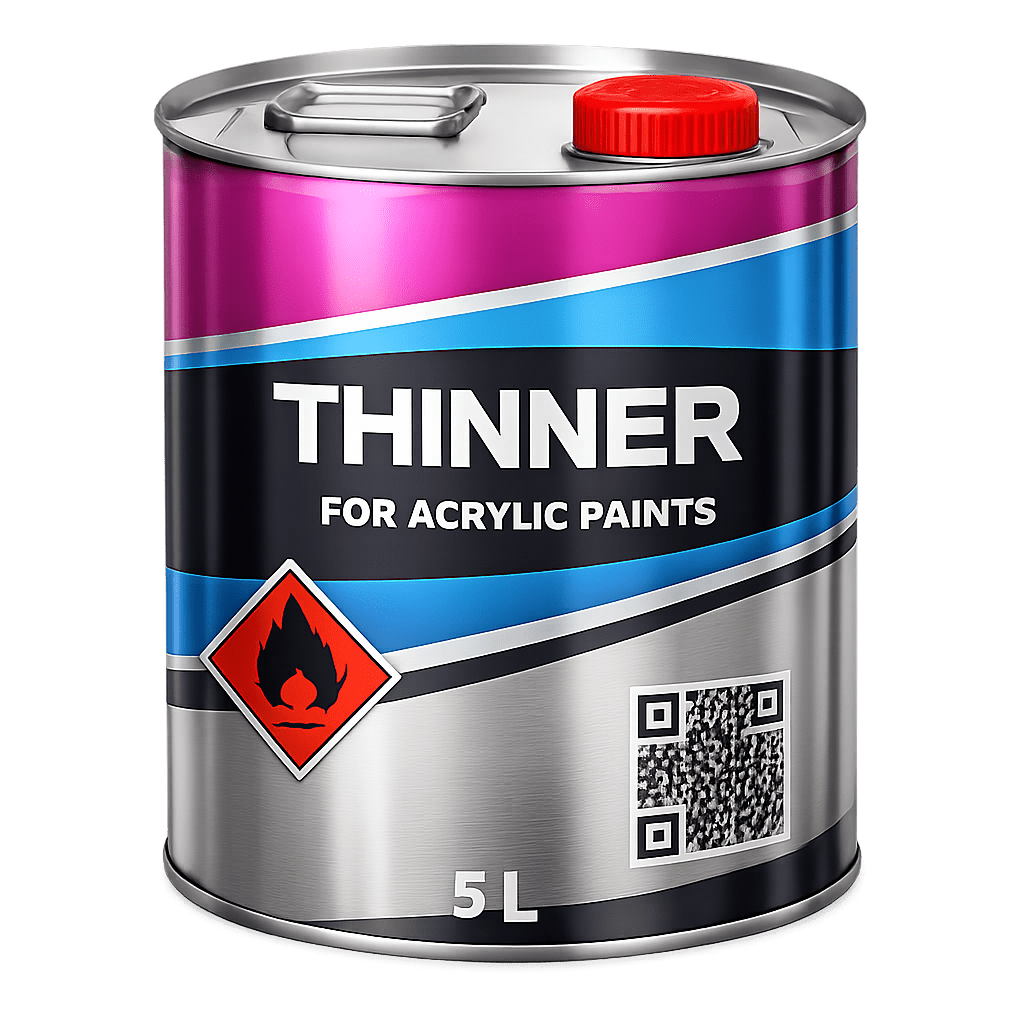
What Is Acrylic Paint Thinner?
Acrylic paint thinner is a solvent blend designed for acrylic resin-based coatings.
Acrylic coatings are among the most important modern coating technologies due to their:
- Excellent weather resistance
- UV stability
- Color retention
- Gloss retention
- Fast drying capability
They are widely used in:
- Automotive coatings
- Industrial coatings
- Plastic coatings
- Machinery paints
- High-performance finishes
Characteristics of Acrylic Paint Systems
Acrylic paints are preferred when long-term appearance and environmental resistance are important.
Main advantages include:
Excellent UV Resistance
Acrylic coatings maintain color stability even under:
- Sunlight exposure
- Outdoor conditions
- Temperature changes
Good Chemical Resistance
Many acrylic systems provide resistance against:
- Oils
- Mild chemicals
- Environmental contamination
Attractive Appearance
Acrylic coatings provide:
- High gloss
- Smooth surface
- Professional finish
Solvents Used in Acrylic Paint Thinner
Acrylic thinner formulations commonly include:
Esters
Examples:
- Butyl Acetate
- Ethyl Acetate
Functions:
- Resin dissolution
- Flow improvement
Ketones
Examples:
- MEK
- MIBK
Functions:
- Strong solvency
- Drying control
Glycol Ethers
Examples:
- Propylene Glycol Monomethyl Ether Acetate (PMA)
- Ethylene Glycol Monobutyl Ether Acetate (EGBEA)
Functions:
- Improved leveling
- Reduced surface defects
Applications of Acrylic Paint Thinner
Automotive Industry
Used in:
- Automotive refinish coatings
- Car repair paints
- Clear coats
Industrial Equipment
Used for:
- Machinery
- Metal structures
- Industrial products
Plastic Coatings
Acrylic coatings are commonly applied on:
- Plastic components
- Consumer products
- Electronic housings
Acrylic Thinner Selection Factors
Professional buyers should consider:
Drying Speed
Fast thinner:
- Faster production
- Suitable for small surfaces
Slow thinner:
- Better leveling
- Better appearance
Climate Conditions
The correct thinner depends on:
- Temperature
- Humidity
- Application method
For example:
Hot climates usually require slower evaporating solvents.
Cold climates may require faster evaporation.
- Vinyl Paint Thinner
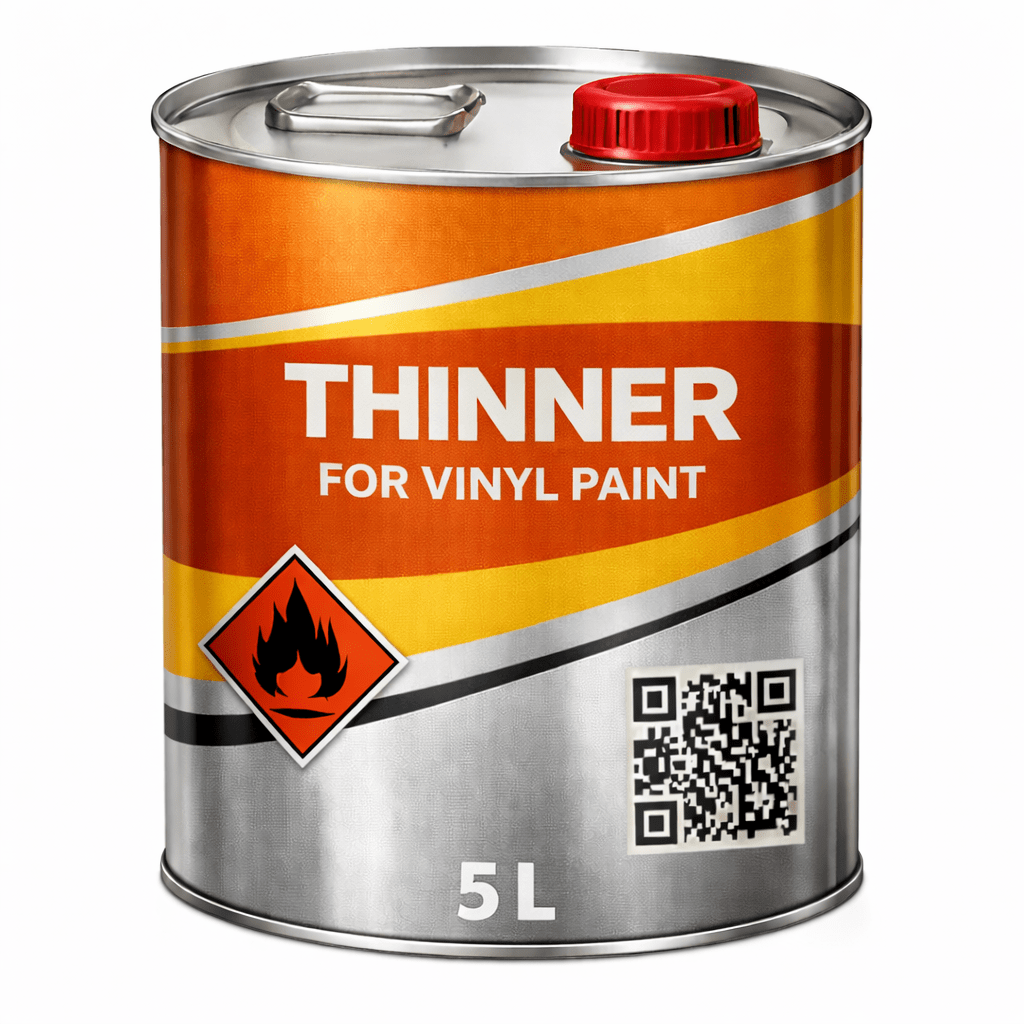
What Is Vinyl Paint Thinner?
Vinyl paint thinner is formulated for vinyl resin-based coatings.
Vinyl coatings are known for:
- Flexibility
- Water resistance
- Chemical resistance
- Durability
They are commonly used in demanding industrial environments.
Applications include:
- Protective coatings
- Marine paints
- Industrial maintenance coatings
- Chemical-resistant coatings
Properties of Vinyl Coatings
Flexibility
Vinyl coatings can withstand:
- Vibration
- Mechanical movement
- Surface expansion
Water Resistance
They provide protection against:
- Moisture
- Humidity
- Marine environments
Chemical Resistance
Suitable for environments exposed to:
- Chemicals
- Industrial contamination
Solvents Used in Vinyl Paint Thinner
Common solvent components include:
- Ketones
- Aromatic hydrocarbons
- Esters
- Glycol ethers
Examples:
- MEK
- MIBK
- Toluene
- Xylene
- Butyl Acetate
Applications of Vinyl Paint Thinner
Marine Industry
Used in:
- Ship coatings
- Offshore structures
- Marine equipment
Industrial Protection
Used for:
- Steel structures
- Chemical facilities
- Storage equipment
Infrastructure Projects
Vinyl coatings are used for:
- Bridges
- Pipelines
- Heavy-duty applications
- Water-Based Paint Thinner
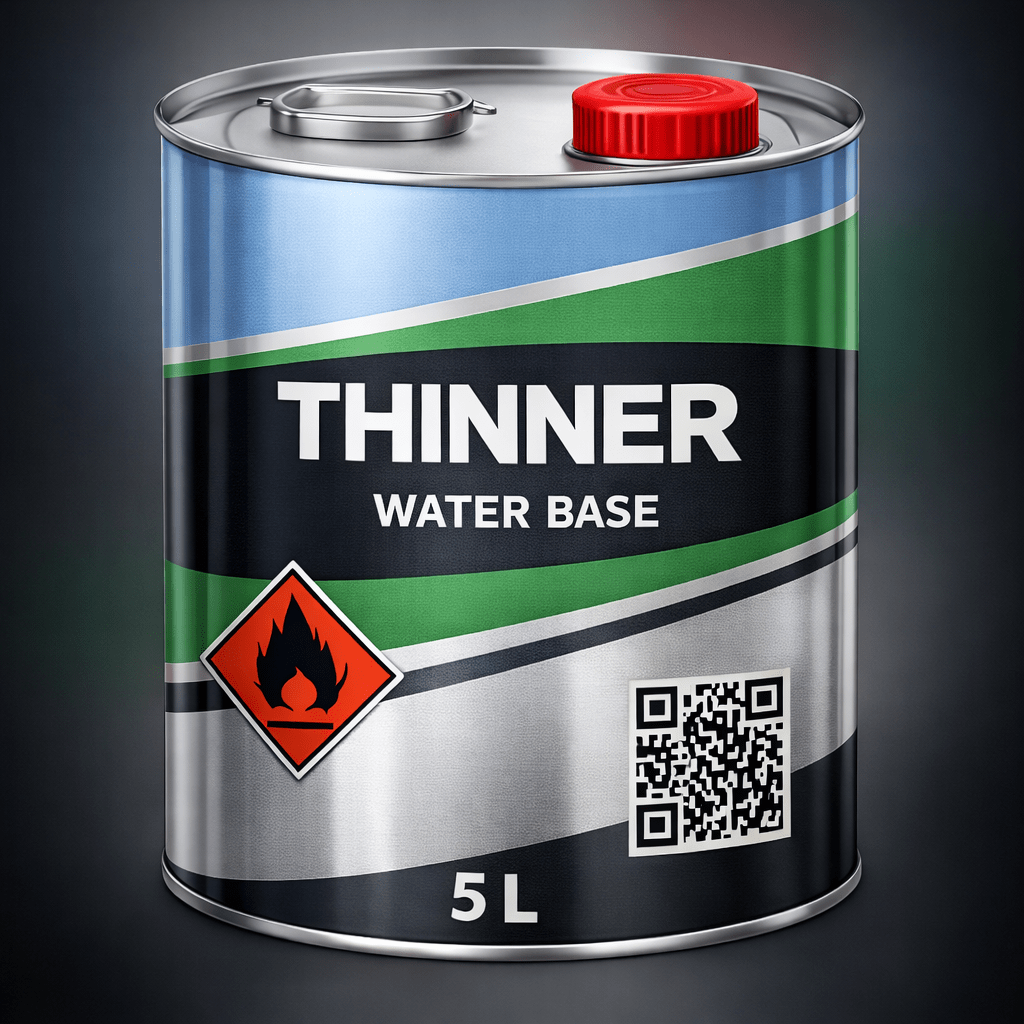
What Is Water-Based Paint Thinner?
The term “water-based paint thinner” is different from traditional solvent-based thinners.
Water-based coatings use water as the primary carrier, but they may require specific additives or co-solvents to adjust:
- Viscosity
- Flow
- Drying behavior
- Film formation
In many cases, the correct term is:
- Coalescent solvent
- Flow modifier
- Co-solvent
rather than conventional paint thinner.
Why Water-Based Coatings Are Growing Globally
Environmental regulations are increasing demand for low-VOC coating technologies.
Advantages include:
Lower VOC Emissions
Compared with solvent-based coatings, water-based systems reduce volatile organic compounds.
Improved Workplace Safety
They generally provide:
- Lower odor
- Reduced flammability
- Better working conditions
Environmental Compliance
Many industries are moving toward:
- Eco-friendly coatings
- Sustainable manufacturing
Common Additives Used in Water-Based Paint Systems
Examples include:
Glycol Ethers
Used for:
- Flow improvement
- Film formation
Examples:
- Propylene Glycol
- Propylene Glycol Monomethyl Ether
Coalescing Agents
Used to improve:
- Film formation
- Surface appearance
Applications of Water-Based Paint Systems
Architectural Coatings
Used for:
- Walls
- Buildings
- Decorative paints
Industrial Coatings
Used for:
- Machinery
- Equipment
- Metal coatings
Automotive Applications
Used increasingly in:
- OEM automotive coatings
- Environmentally friendly systems
Comparison of Industrial Paint Thinners
| Type | Main Resin System | Main Applications | Drying Speed | Industrial Importance |
| Alkyd Thinner | Alkyd Resin | Metal, decorative coatings | Medium | Very High |
| Epoxy Thinner | Epoxy Resin | Flooring, marine, heavy industry | Controlled | Very High |
| NC Thinner | Nitrocellulose | Furniture, automotive repair | Very Fast | High |
| Acrylic Thinner | Acrylic Resin | Automotive, industrial coatings | Medium-Fast | Very High |
| Vinyl Thinner | Vinyl Resin | Marine, protective coatings | Medium | High |
| Water-Based Thinner | Water-based systems | Eco-friendly coatings | Variable | Rapidly Growing |
How International Buyers Select the Right Paint Thinner Supplier
When purchasing industrial paint thinner internationally, buyers should evaluate several factors.
- Technical Capability
A reliable supplier should provide:
- Technical Data Sheet (TDS)
- Safety Data Sheet (SDS/MSDS)
- Certificate of Analysis (COA)
- Batch information
- Manufacturing Quality
Important quality parameters include:
- Purity
- Moisture content
- Density
- Color
- Solvent balance
- Evaporation characteristics
- Packaging Options
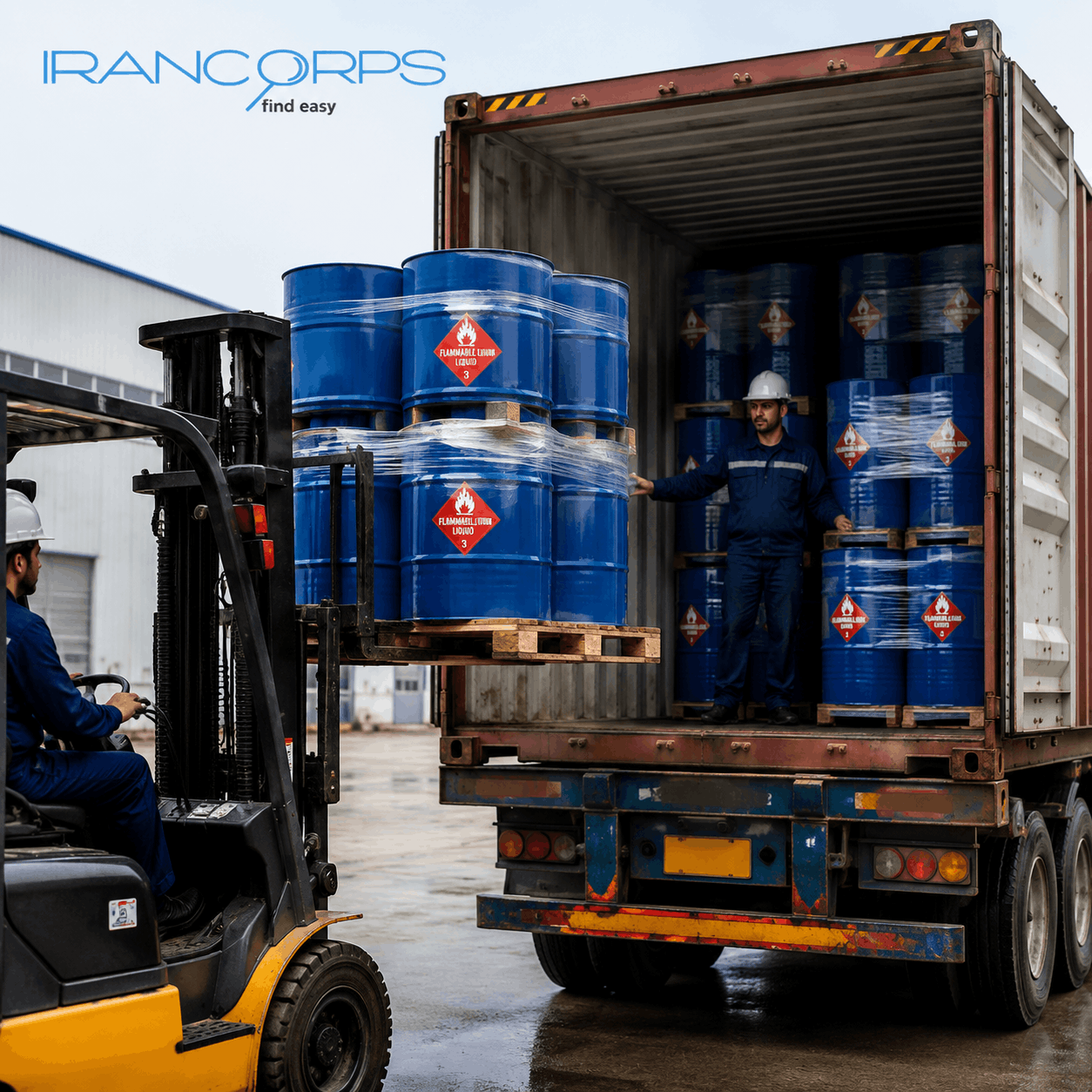
Industrial paint thinners are commonly exported in:
Metal Drums
Capacity:
- 180–220 kg
Suitable for:
- Industrial buyers
- Standard shipments
Plastic Drums
Advantages:
- Lightweight
- Corrosion resistance
IBC Tanks
Capacity:
- Approximately 1,000 liters
Suitable for:
- Large-volume users
ISO Tanks / Bulk Shipment
Used for:
- Large industrial customers
- Continuous production facilities
Paint Thinner Formulation: Raw Materials Used in Industrial Thinners
Industrial paint thinner is not simply a single solvent. Professional manufacturers create balanced formulations by combining different solvents according to:
Resin type
Application method
Required drying speed
Climate conditions
Final coating performance
A high-quality paint thinner requires the correct balance between solvency power and evaporation rate.
Main Raw Materials Used in Paint Thinner Production
- Aromatic Hydrocarbons
Aromatic solvents are widely used because of their strong solvency properties.
Toluene is one of the most common industrial solvents.
Main characteristics:
Strong solvency
Fast evaporation
Good resin compatibility
Applications:
Alkyd thinner
NC thinner
Acrylic thinner
Adhesives
Printing inks
Xylene provides:
Higher boiling point compared with toluene
Slower evaporation
Good coating flow
Applications:
Epoxy coatings
Alkyd paints
Industrial coatings
- Esters
Esters are among the most important solvents used in coating industries.
Butyl acetate is widely used because it provides:
Excellent solvency
Balanced evaporation
Good leveling
Applications:
Automotive coatings
Acrylic paints
NC lacquers
Furniture coatings
Characteristics:
Fast evaporation
Good solvent power
Low residue
Applications:
Nitrocellulose coatings
Printing inks
Adhesives
Methyl Acetate
Advantages:
Fast evaporation
Low toxicity compared with some traditional solvents
High solvency efficiency
Applications:
Fast-drying coatings
Adhesives
Industrial cleaning formulations
- Ketones
Ketones provide strong solvency for many resin systems.
Acetone
Properties:
Very fast evaporation
Strong solvent power
Applications:
Cleaning
Coating formulations
Adhesives
Methyl Ethyl Ketone (MEK)
MEK is important in:
NC coatings
Vinyl coatings
Industrial paints
Advantages:
Excellent resin solvency
Fast drying
Methyl Isobutyl Ketone (MIBK)
MIBK provides:
Moderate evaporation
Good flow
High-quality finish
Applications:
High-performance coatings
Acrylic systems
- Mineral Spirits and White Spirit
Mineral spirits are petroleum-based solvents widely used in:
Alkyd paints
Enamel coatings
Industrial maintenance coatings
Advantages:
Cost efficiency
Good compatibility
Moderate evaporation
- Glycol Ethers
Glycol ethers are premium solvents used where high-quality surface appearance is required.
Examples:
Propylene Glycol Monomethyl Ether Acetate (PMA)
Ethylene Glycol Monobutyl Ether Acetate
Benefits:
Excellent leveling
Improved flow
Reduced coating defects
Applications:
Automotive coatings
High-performance paints
Electronics coatings
Technical Specifications of Industrial Paint Thinner
Professional buyers usually request technical documents before purchasing.
A typical Paint Thinner TDS includes:
Parameter Typical Requirement
Appearance Clear and transparent liquid
Color Water white to slightly colored
Odor Characteristic solvent odor
Density Depends on formulation
Moisture Content Controlled low level
Solvent Content High purity
Non-Volatile Matter Very low
Evaporation Rate According to application
Compatibility Suitable resin system
Storage Stability Stable under recommended conditions
Certificate of Analysis (COA) for Paint Thinner
A professional chemical supplier should provide COA documents including:
Product name
Batch number
Manufacturing date
Test results
Quality approval
Typical COA parameters:
Test Purpose
Density Confirms formulation consistency
Appearance Checks contamination
Purity Ensures solvent quality
Water Content Prevents coating defects
Distillation Range Controls evaporation behavior
Safety and Storage Requirements
Paint thinners are generally classified as flammable chemical products.
International buyers should consider:
Storage Conditions
Recommended storage:
Cool area
Dry environment
Away from ignition sources
Proper ventilation
Packaging Safety
Containers should be:
Properly sealed
Chemically compatible
Clearly labeled
Required Documentation
Export shipments normally require:
SDS (Safety Data Sheet)
Hazard classification
Transport information
International Export of Industrial Paint Thinner
The global paint and coatings industry depends heavily on reliable solvent suppliers.
International buyers include:
Paint manufacturers
Coating producers
Automotive refinishing companies
Furniture coating factories
Chemical distributors
Construction material suppliers
Major Factors Buyers Consider When Importing Paint Thinner
- Product Quality
The most important factor is consistent quality.
Buyers need:
Stable formulation
Reliable performance
Batch-to-batch consistency
- Competitive Pricing
Solvent prices depend on:
Raw material availability
Production cost
Logistics
Packaging
Countries with strong petrochemical industries can provide competitive advantages.
- Supply Reliability
Industrial customers require:
Regular shipments
Production continuity
Reliable communication
- Technical Support
Professional suppliers should understand:
Coating chemistry
Solvent compatibility
Application requirements
Why International Buyers Source Paint Thinner from Iran?
Iran has a significant advantage in the chemical industry due to its access to abundant petrochemical raw materials.
The country has developed strong production capabilities in:
Petrochemical solvents
Hydrocarbon products
Esters
Industrial chemicals
Advantages of Buying Paint Thinner from Iranian Suppliers
- Competitive Production Costs
Access to domestic petrochemical feedstocks allows Iranian manufacturers to offer competitive pricing.
- Strategic Geographic Location
Iran provides access to important markets:
Middle East
Central Asia
Caucasus
Turkey
CIS countries
- Flexible Export Packaging
Iranian suppliers can commonly provide:
Drums
IBC tanks
Bulk quantities
- Experience in Chemical Export
Many Iranian chemical companies have experience supplying:
Solvents
Petrochemical products
Industrial raw materials
How Irancorps Helps International Buyers Find Paint Thinner Suppliers
Finding reliable chemical manufacturers can be challenging for international buyers.
Irancorps provides a platform connecting global buyers with evaluated Iranian manufacturers and exporters.
The platform helps buyers:
Find verified suppliers
Submit purchase requests
Compare offers
Communicate directly with manufacturers
For buyers searching for:
Alkyd Paint Thinner
Epoxy Paint Thinner
NC Paint Thinner
Acrylic Paint Thinner
Industrial Solvent Products
Irancorps creates a simpler connection between demand and qualified suppliers.
RFQ Template for Industrial Paint Thinner Buyers
International buyers can provide the following information when requesting quotations:
Product Information
Product:
Alkyd Paint Thinner
Epoxy Paint Thinner
NC Paint Thinner
Acrylic Paint Thinner
Vinyl Paint Thinner
Water-Based Coating Solvent
Required Quantity
Example:
20 MT
50 MT
100 MT
Monthly requirement
Packaging Requirement
Choose:
20 L cans
200 kg drums
IBC tanks
Bulk shipment
Technical Requirements
Provide:
Required solvent composition
Application type
Required drying speed
Required TDS specification
Shipping Information
Include:
Destination country
Port of arrival
Incoterms:
Examples:
FOB
CFR
CIF
Frequently Asked Questions (FAQ)
What is industrial paint thinner?
Industrial paint thinner is a solvent mixture designed to reduce paint viscosity, improve application performance, and control drying characteristics.
What is the difference between alkyd thinner and epoxy thinner?
Alkyd thinner is designed for alkyd resin paints, while epoxy thinner is formulated for epoxy coatings that require stronger solvency and controlled evaporation.
Which thinner is used for automotive paint?
Depending on the paint technology, automotive coatings commonly use acrylic thinner, NC thinner, or specialized reducer systems.
Can one thinner be used for all types of paint?
No. Different resin systems require different solvent balances. Using the wrong thinner can damage coating performance.
What documents should a paint thinner exporter provide?
Professional exporters normally provide:
TDS
SDS/MSDS
COA
Commercial invoice
Packing list
Certificate of origin
What packaging is available for exported paint thinner?
Common options include:
Metal drums
Plastic drums
IBC tanks
Bulk shipments
How can I buy industrial paint thinner from Iran?
International buyers can contact verified Iranian manufacturers through platforms such as Irancorps to request quotations and supplier information.
Conclusion: Choosing the Right Industrial Paint Thinner Supplier
Industrial paint thinner selection is a technical decision that directly affects coating quality, production efficiency, and final product performance.
Whether the requirement is for:
Alkyd Paint Thinner
Epoxy Paint Thinner
Nitrocellulose Paint Thinner
Acrylic Paint Thinner
Vinyl Paint Thinner
Water-Based Paint Systems
buyers should select suppliers capable of providing consistent quality, technical documentation, competitive pricing, and reliable export service.
With access to petrochemical resources, experienced manufacturers, and strategic geographic advantages, Iran represents a competitive source for industrial solvents and coating raw materials.
Through Irancorps, international buyers can connect with qualified Iranian manufacturers and exporters and simplify the sourcing process for industrial paint thinner and related chemical products.