
 Arabic
Blog
Introduction
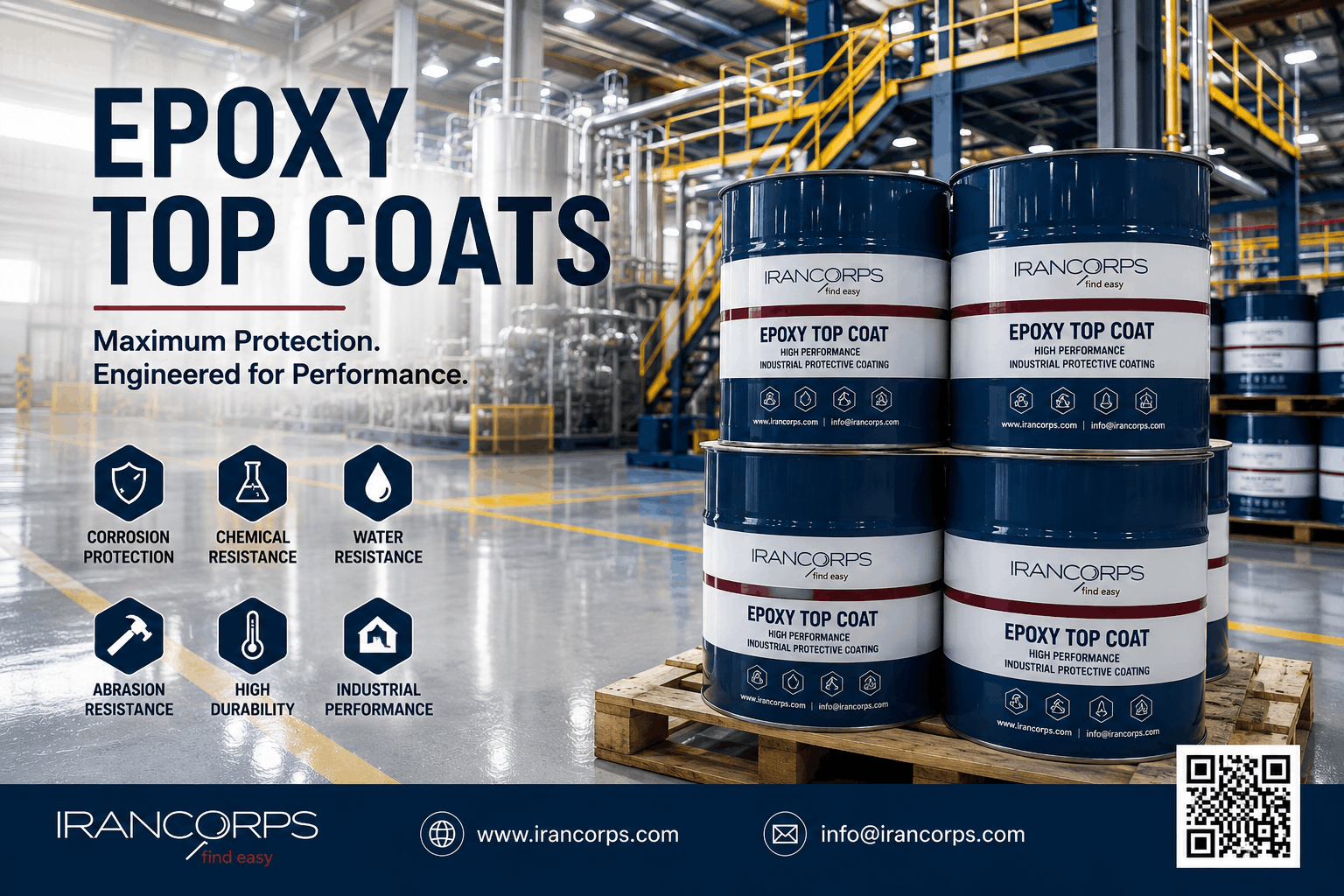
Epoxy top coats are among the most widely used protective coatings in modern industry. Known for their exceptional adhesion, chemical resistance, mechanical strength, and corrosion protection, they have become essential components of protective coating systems used across oil & gas facilities, chemical plants, marine structures, power stations, manufacturing plants, water treatment facilities, bridges, storage tanks, and countless other industrial assets.
Unlike decorative paints that primarily improve appearance, epoxy top coats are engineered to withstand some of the world’s harshest operating conditions. They protect steel, concrete, and other substrates from corrosion, abrasion, chemicals, moisture, and mechanical damage while extending the service life of valuable infrastructure.
Over the past several decades, epoxy coating technology has advanced significantly. Manufacturers now offer specialized formulations designed for specific environments and performance requirements. Buyers can choose from products such as:
- Polyamine Epoxy Top Coat
- Polyamide Epoxy Top Coat
- Conventional Epoxy Top Coat
- Water-Based Epoxy Top Coat
- Solvent-Free Epoxy Top Coat
- High Build Epoxy Top Coat
- Epoxy MIO (Micaceous Iron Oxide) Top Coat
- Novolac Epoxy Top Coat
- Phenolic Modified Epoxy Top Coat
Each type has unique properties, advantages, and ideal applications. Selecting the wrong coating can result in premature failure, costly maintenance, and reduced equipment life, while selecting the correct epoxy system can provide decades of reliable protection.
This comprehensive guide is intended for:
- International buyers
- Procurement managers
- EPC contractors
- Consulting engineers
- Protective coating specialists
- Industrial maintenance teams
- Manufacturers
- Distributors
- Construction companies
- Oil & gas operators
By the end of this guide, you will understand:
- What epoxy top coats are
- How they work
- Their advantages and limitations
- Differences between major epoxy technologies
- How to choose the best epoxy top coat
- Application recommendations
- Industry-specific solutions
- Common technical questions
- Buying recommendations for international projects
What Is an Epoxy Top Coat?
An epoxy top coat is a high-performance protective coating applied as the final or intermediate layer in a coating system. It is formulated using epoxy resins and curing agents that chemically react to form a dense, highly cross-linked polymer network.
This cured film provides excellent:
- Adhesion
- Chemical resistance
- Abrasion resistance
- Water resistance
- Mechanical strength
- Corrosion protection
Epoxy top coats are commonly used where durability is more important than long-term color retention.
Unlike polyurethane top coats, which are selected primarily for their weatherability and UV resistance, epoxy top coats are typically chosen for their outstanding protective properties in industrial environments.
The Role of Epoxy Top Coats in Protective Coating Systems
A protective coating system usually consists of multiple layers, each serving a specific purpose.
A typical heavy-duty system may include:
Surface Preparation
↓
Zinc Rich Epoxy Primer
↓
High Build Epoxy Intermediate Coat
↓
Epoxy Top Coat or Polyurethane Top Coat
In indoor or chemically aggressive environments, epoxy top coats often serve as the final protective layer.
For outdoor exposure, epoxy layers are frequently overcoated with polyurethane to improve UV resistance and color retention.
How Epoxy Coatings Work
Epoxy coatings cure through a chemical reaction between two components:
Part A
Contains:
- Epoxy resin
- Pigments
- Fillers
- Additives
- Solvents (if applicable)
Part B
Contains:
- Hardener (curing agent)
When mixed in the specified ratio, the epoxy resin reacts with the curing agent to create a tightly cross-linked polymer structure.
This reaction produces a coating that is:
- Extremely hard
- Highly adhesive
- Chemically resistant
- Water resistant
- Mechanically durable
Unlike air-drying paints, epoxy coatings do not simply dry through solvent evaporation—they cure through a chemical reaction that creates a permanent protective film.
Understanding Epoxy Chemistry
The performance of an epoxy coating depends largely on the curing agent used.
Different curing agents produce coatings with different characteristics.
Examples include:
- Polyamine
- Polyamide
- Phenolic
- Novolac
- Modified Amine Systems
Each curing technology is optimized for particular service environments.
For example:
Polyamine systems produce very hard coatings with excellent chemical resistance.
Polyamide systems provide better flexibility and adhesion.
Novolac systems offer exceptional resistance to concentrated chemicals and elevated temperatures.
These differences explain why there is no single “best” epoxy coating for every project.
Major Advantages of Epoxy Top Coats
Outstanding Adhesion
One of epoxy’s greatest strengths is its exceptional adhesion to properly prepared surfaces.
Epoxy coatings bond extremely well to:
- Carbon steel
- Stainless steel
- Aluminum
- Galvanized steel
- Concrete
- Existing compatible coatings
Strong adhesion minimizes the risk of peeling and delamination.
Excellent Corrosion Protection
Epoxy coatings create an effective barrier against:
- Water
- Oxygen
- Salt
- Industrial contaminants
This barrier significantly slows corrosion and extends the service life of steel structures.
High Chemical Resistance
Epoxy top coats resist many industrial chemicals, including:
- Oils
- Fuels
- Hydraulic fluids
- Salt solutions
- Cleaning chemicals
- Mild acids
- Mild alkalis
Special formulations such as Novolac Epoxy provide even greater chemical resistance.
Excellent Mechanical Strength
Epoxy coatings are known for their ability to withstand:
- Impact
- Compression
- Heavy traffic
- Mechanical abuse
- Abrasion
This makes them ideal for industrial facilities where equipment and surfaces are subjected to continuous wear.
Water Resistance
Properly cured epoxy films provide excellent resistance to water penetration, making them suitable for:
- Water treatment plants
- Pipelines
- Storage tanks
- Marine splash zones
- Industrial floors
Long Service Life
When correctly applied over properly prepared substrates, epoxy coating systems can provide many years of reliable protection with relatively low maintenance requirements.
Limitations of Epoxy Top Coats
Despite their many advantages, epoxy coatings also have limitations.
Understanding these limitations helps buyers select the appropriate coating system.
Limited UV Resistance
One of the biggest disadvantages of standard epoxy coatings is poor resistance to ultraviolet radiation.
Prolonged sunlight exposure may cause:
- Chalking
- Yellowing
- Loss of gloss
- Surface fading
Although these changes are usually cosmetic and do not immediately affect corrosion protection, they reduce the coating’s decorative appearance.
For outdoor structures where appearance is important, polyurethane top coats are commonly applied over epoxy systems.
Brittleness
Highly cross-linked epoxy coatings may become less flexible than polyurethane systems.
On substrates subject to frequent movement or thermal expansion, a more flexible coating may be preferable.
Pot Life
Most epoxy coatings have a limited pot life after mixing.
Once the resin and hardener are combined, the chemical reaction begins immediately.
The coating must be applied before it hardens inside the container.
Surface Preparation Requirements
Epoxy coatings require proper surface preparation to achieve maximum adhesion.
Applying epoxy over contaminated or poorly prepared surfaces can result in premature coating failure.
Where Are Epoxy Top Coats Used?
Because of their outstanding protective properties, epoxy top coats are used in a wide range of industries.
Oil & Gas
Typical applications include:
- Refineries
- Pipelines
- Storage tanks
- Offshore platforms
- Process equipment
- Structural steel
Chemical Processing
Epoxy coatings protect:
- Chemical reactors
- Pipe racks
- Process vessels
- Pump stations
- Manufacturing equipment
Marine Industry
Typical uses include:
- Ship interiors
- Ballast tanks
- Cargo holds
- Port equipment
- Offshore structures
Water & Wastewater
Applications include:
- Water treatment plants
- Clarifiers
- Concrete basins
- Steel tanks
- Pipelines
Industrial Flooring
Epoxy top coats are widely used for:
- Manufacturing plants
- Warehouses
- Logistics centers
- Automotive workshops
- Pharmaceutical facilities
- Food processing plants
Their durability and chemical resistance make them ideal for high-traffic environments.
Power Generation
Power plants rely on epoxy coatings to protect:
- Structural steel
- Cooling systems
- Equipment foundations
- Storage facilities
Infrastructure
Epoxy coatings are commonly used for:
- Bridges
- Steel frameworks
- Airports
- Railway facilities
- Public utilities
- Industrial buildings
Why Buyers Choose Epoxy Top Coats
Compared with many conventional industrial paints, epoxy coatings offer:
- Excellent adhesion
- Outstanding corrosion resistance
- High chemical resistance
- Superior mechanical strength
- Long service life
- Proven industrial performance
- Wide application versatility
- Low maintenance requirements
These advantages make epoxy one of the most trusted coating technologies in heavy industry.
Types of Epoxy Top Coats (Core Technologies)
So far , we explored the fundamentals of epoxy top coats, including their chemistry, advantages, limitations, and major industrial applications. In this section, we examine the four most common epoxy top coat technologies and explain how each performs under different operating conditions.
Choosing the correct epoxy top coat depends on factors such as:
- Chemical exposure
- Moisture levels
- Mechanical stress
- Surface type
- Indoor or outdoor application
- Environmental regulations
- Desired service life
- Application method
- Budget
Understanding these differences allows engineers and procurement teams to select the most cost-effective coating system for their specific projects.
- Conventional Epoxy Top Coat
Overview
Conventional Epoxy Top Coat is the standard two-component epoxy coating used across a wide range of industrial applications. It provides an excellent balance of corrosion protection, chemical resistance, mechanical durability, and cost-effectiveness.
The coating consists of an epoxy resin (Part A) and a curing agent (Part B). Once mixed, these components react to form a hard, chemically resistant protective film.
Because of its versatility and reliability, conventional epoxy remains one of the most widely specified coatings for industrial maintenance and new construction projects.
Main Characteristics
- Excellent adhesion
- High hardness
- Good chemical resistance
- Excellent corrosion protection
- Good abrasion resistance
- Strong water resistance
- Smooth finish
- Cost-effective
Typical Applications
Conventional epoxy top coats are commonly used for:
- Industrial machinery
- Structural steel
- Manufacturing facilities
- Warehouses
- Steel tanks
- Pipelines
- Processing equipment
- Interior steel structures
- Industrial flooring
- Maintenance projects
Advantages
✓ Proven industrial performance
✓ Economical solution
✓ Easy application
✓ Excellent adhesion
✓ Reliable corrosion protection
Limitations
Conventional epoxy coatings have limited resistance to prolonged UV exposure. Outdoor applications where appearance is important generally require an additional polyurethane top coat.
Recommended Industries
- Manufacturing
- Construction
- Water treatment
- Steel fabrication
- Oil & Gas
- Mining
- Cement plants
- General industrial maintenance
- Polyamine Epoxy Top Coat
What Is Polyamine Epoxy?
Polyamine epoxy coatings use polyamine curing agents, producing a dense polymer network with exceptional hardness and chemical resistance.
Among all standard epoxy technologies, polyamine systems generally provide some of the highest levels of:
- Chemical resistance
- Solvent resistance
- Mechanical strength
- Water resistance
This makes them well suited for aggressive industrial environments.
Performance Characteristics
Polyamine epoxy coatings typically offer:
- Very high hardness
- Excellent adhesion
- Outstanding chemical resistance
- Excellent corrosion protection
- Excellent water resistance
- High compressive strength
- Superior durability
Because of their rigid cross-linked structure, they are often selected for equipment exposed to aggressive process chemicals.
Typical Applications
Chemical Plants
- Chemical reactors
- Pipe racks
- Process equipment
- Storage vessels
Oil & Gas
- Refineries
- Pipelines
- Process units
- Tank farms
Marine
- Ballast tanks
- Splash zones
- Offshore equipment
Heavy Industry
- Structural steel
- Industrial machinery
- Processing equipment
Advantages
✓ Excellent chemical resistance
✓ High hardness
✓ Excellent solvent resistance
✓ Superior corrosion protection
✓ Long service life
Limitations
Compared with polyamide epoxy, polyamine systems are generally less flexible and may be more sensitive to application conditions, particularly temperature and humidity during curing.
Buyer Recommendation
Choose Polyamine Epoxy Top Coat when your project requires:
- Maximum chemical resistance
- Heavy industrial performance
- High hardness
- Severe corrosion protection
- Long-term durability
- Polyamide Epoxy Top Coat
Overview
Polyamide epoxy coatings use polyamide curing agents, producing coatings with greater flexibility and improved adhesion compared with many polyamine systems.
Rather than maximizing hardness, polyamide epoxy emphasizes toughness and resistance to impact.
This makes it an excellent choice for structures subject to vibration, thermal movement, or mechanical stress.
Main Characteristics
- Excellent adhesion
- Good flexibility
- Excellent impact resistance
- Good corrosion protection
- Good abrasion resistance
- Good water resistance
- Excellent workability
Why Flexibility Matters
Steel structures naturally expand and contract due to temperature changes.
Machinery vibrates during operation.
Bridges move under traffic loads.
A coating with improved flexibility is less likely to crack under these conditions, helping maintain long-term protection.
Typical Applications
Polyamide epoxy top coats are widely used for:
- Steel bridges
- Pipelines
- Industrial equipment
- Marine structures
- Cranes
- Heavy machinery
- Steel fabrication
- Construction equipment
Advantages
✓ Better flexibility
✓ Better impact resistance
✓ Excellent adhesion
✓ Easy application
✓ Reliable industrial performance
Limitations
Chemical resistance is generally lower than that of polyamine epoxy systems, making polyamine coatings the preferred option for highly aggressive chemical environments.
Polyamine vs Polyamide Epoxy
| Property | Polyamine Epoxy | Polyamide Epoxy |
| Hardness | ★★★★★ | ★★★★☆ |
| Flexibility | ★★★☆☆ | ★★★★★ |
| Chemical Resistance | ★★★★★ | ★★★★☆ |
| Solvent Resistance | ★★★★★ | ★★★★☆ |
| Impact Resistance | ★★★★☆ | ★★★★★ |
| Water Resistance | ★★★★★ | ★★★★☆ |
| Industrial Durability | Excellent | Excellent |
- Water-Based Epoxy Top Coat
Overview
Water-Based Epoxy Top Coats are formulated using water as the primary carrier instead of organic solvents.
Growing environmental regulations and increased emphasis on workplace safety have made water-based epoxy systems increasingly popular in both commercial and industrial applications.
Modern formulations offer significantly improved performance compared with earlier generations.
Key Benefits
Compared with solvent-based products, water-based epoxy coatings provide:
- Lower VOC emissions
- Lower odor
- Easier cleanup
- Improved worker safety
- Reduced environmental impact
These benefits make them suitable for projects where solvent emissions must be minimized.
Performance Characteristics
Modern water-based epoxy top coats provide:
- Excellent adhesion
- Good abrasion resistance
- Good chemical resistance
- Excellent water resistance
- Low odor during application
- Smooth finish
Although solvent-based epoxies generally offer higher resistance to aggressive chemicals, many water-based systems perform very well in light to medium industrial environments.
Typical Applications
Water-based epoxy top coats are commonly specified for:
- Hospitals
- Schools
- Food processing plants
- Pharmaceutical facilities
- Warehouses
- Commercial buildings
- Concrete floors
- Parking garages
- Public infrastructure
Advantages
✓ Low VOC
✓ Environmentally friendly
✓ Easier cleanup
✓ Reduced odor
✓ Improved indoor air quality
Limitations
Application conditions should be carefully controlled, as temperature and humidity can influence curing and final film properties. For extremely aggressive chemical service, solvent-based or specialty epoxy systems may be more suitable.
Buyer Recommendation
Water-Based Epoxy Top Coat is an excellent choice when environmental compliance, indoor application, and worker safety are major priorities.
Conventional vs Water-Based Epoxy
| Property | Conventional Epoxy | Water-Based Epoxy |
| VOC | Medium–High | Low |
| Odor | High | Low |
| Cleanup | Solvent | Water |
| Environmental Impact | Moderate | Excellent |
| Chemical Resistance | Excellent | Good to Very Good |
| Indoor Application | Good | Excellent |
| Corrosion Protection | Excellent | Very Good |
Choosing Among These Four Epoxy Technologies
| If Your Project Requires… | Recommended Product |
| General industrial protection | Conventional Epoxy Top Coat |
| Maximum chemical resistance | Polyamine Epoxy Top Coat |
| Better flexibility and impact resistance | Polyamide Epoxy Top Coat |
| Low VOC and indoor application | Water-Based Epoxy Top Coat |
Summary
The first four epoxy technologies discussed in this section cover the majority of industrial coating requirements:
- Conventional Epoxy Top Coat provides reliable, cost-effective protection for a wide range of applications.
- Polyamine Epoxy Top Coat delivers superior hardness and chemical resistance for demanding industrial environments.
- Polyamide Epoxy Top Coat offers greater flexibility and impact resistance, making it ideal for structures subject to movement and vibration.
- Water-Based Epoxy Top Coat addresses modern environmental and workplace safety requirements while maintaining excellent protective performance.
In the previous section, we discussed the four most common epoxy technologies used across industrial coating systems. While those coatings meet the needs of many applications, some industries require coatings with enhanced resistance to chemicals, abrasion, corrosion, or demanding service conditions.
Examples include:
- Chemical processing plants handling aggressive acids and solvents
- Offshore oil and gas platforms exposed to salt spray
- Wastewater treatment facilities with continuous immersion
- Tank linings storing corrosive chemicals
- Heavy-duty industrial floors
- Marine structures subjected to severe weather
- Steel bridges requiring extended maintenance intervals
To address these challenges, manufacturers have developed specialized epoxy top coats with formulations optimized for specific environments.
- Solvent-Free Epoxy Top Coat
What Is Solvent-Free Epoxy?
A Solvent-Free Epoxy Top Coat is formulated with little to no volatile organic solvents. Unlike conventional epoxy coatings that rely on solvent evaporation during curing, solvent-free systems contain a very high percentage of reactive solids.
Typical solid content:
- Conventional Epoxy: 50–70%
- High Solid Epoxy: 70–85%
- Solvent-Free Epoxy: 95–100%
Because nearly all of the applied material remains on the surface after curing, solvent-free epoxy creates a thick, durable protective film with minimal shrinkage.
Major Advantages
Extremely Low VOC
Solvent-free systems significantly reduce volatile organic compound (VOC) emissions, making them suitable for projects with strict environmental requirements.
High Film Build
The absence of solvent allows thicker films to be applied in a single coat.
Outstanding Chemical Resistance
Dense cross-linking produces excellent resistance to:
- Acids
- Alkalis
- Fuels
- Oils
- Saltwater
- Process chemicals
Excellent Corrosion Protection
The thick barrier minimizes moisture penetration and protects steel against corrosion.
Typical Applications
Solvent-Free Epoxy Top Coats are widely used for:
- Potable water tanks (when certified)
- Wastewater facilities
- Secondary containment areas
- Chemical storage tanks
- Pipelines
- Offshore platforms
- Industrial floors
- Food processing facilities (approved systems)
Advantages
✓ Very low VOC
✓ Excellent corrosion resistance
✓ Thick protective film
✓ Outstanding chemical resistance
✓ Long service life
Limitations
Due to their higher viscosity, solvent-free epoxy coatings generally require specialized application equipment, such as airless spray systems, and careful control during application to achieve a smooth finish.
- High Build Epoxy Top Coat
Overview
High Build Epoxy Top Coat is designed to achieve greater dry film thickness (DFT) than conventional epoxy coatings while maintaining excellent adhesion and corrosion resistance.
Typical Dry Film Thickness:
- Conventional Epoxy: 40–75 μm
- High Build Epoxy: 100–250 μm
This thicker film provides improved barrier protection with fewer coats.
Why High Build Matters
Increasing film thickness improves:
- Corrosion resistance
- Edge protection
- Impact resistance
- Barrier properties
- Service life
It also reduces labor costs because fewer coats are required to achieve the specified thickness.
Typical Applications
High Build Epoxy is commonly specified for:
- Steel bridges
- Offshore structures
- Refineries
- Structural steel
- Marine equipment
- Water treatment plants
- Storage tanks
- Industrial facilities
Main Advantages
✓ Fewer coats required
✓ Excellent corrosion protection
✓ Improved productivity
✓ Excellent adhesion
✓ Long maintenance intervals
Limitations
Thicker coatings require careful application to prevent runs, sags, and solvent entrapment. Following the manufacturer’s recommended film thickness is essential.
- Epoxy MIO (Micaceous Iron Oxide) Top Coat
What Is Epoxy MIO?
Epoxy MIO Top Coat contains Micaceous Iron Oxide (MIO) pigment, a lamellar (plate-like) mineral that enhances the barrier properties of the coating.
The plate-like particles align parallel to the substrate, creating a longer and more difficult path for water, oxygen, and corrosive ions to penetrate the coating.
This significantly improves corrosion protection.
Why MIO Improves Performance
Unlike conventional pigments, Micaceous Iron Oxide acts as a physical shield within the epoxy film.
Benefits include:
- Reduced moisture permeability
- Improved weather resistance
- Enhanced corrosion resistance
- Better mechanical durability
Main Characteristics
- Excellent corrosion resistance
- Improved barrier protection
- High mechanical strength
- Good abrasion resistance
- Excellent adhesion
- Extended service life
Typical Applications
Epoxy MIO coatings are widely used on:
- Bridges
- Offshore platforms
- Transmission towers
- Steel buildings
- Marine structures
- Power plants
- Industrial facilities
- Port equipment
Advantages
✓ Superior barrier protection
✓ Excellent corrosion resistance
✓ Improved coating durability
✓ Longer maintenance cycles
Limitations
Because of the iron oxide pigment, Epoxy MIO coatings typically have a limited range of colors and are often supplied in gray or similar industrial shades.
- Novolac Epoxy Top Coat
Overview
Novolac Epoxy Top Coat represents one of the highest-performing epoxy technologies available for aggressive industrial service.
Novolac epoxy resins contain a higher functionality than conventional epoxy resins, creating a much denser cross-linked network after curing.
The result is exceptional resistance to aggressive chemicals and elevated temperatures.
Performance Characteristics
Compared with conventional epoxy systems, Novolac coatings provide:
- Superior acid resistance
- Outstanding solvent resistance
- Excellent alkali resistance
- Improved temperature resistance
- Exceptional chemical durability
Typical Applications
Novolac epoxy is commonly used for:
- Chemical reactors
- Chemical storage tanks
- Secondary containment systems
- Tank linings
- Refineries
- Petrochemical facilities
- Process equipment
- Pharmaceutical plants
Advantages
✓ Exceptional chemical resistance
✓ Excellent solvent resistance
✓ High-temperature performance
✓ Outstanding industrial durability
Limitations
Novolac epoxy systems generally have a higher material cost than conventional epoxy coatings and should be selected where their enhanced performance provides clear lifecycle benefits.
Buyer Recommendation
Choose Novolac Epoxy Top Coat whenever equipment will be exposed to aggressive chemicals or elevated operating temperatures.
- Phenolic Modified Epoxy Top Coat
What Is Phenolic Modified Epoxy?
Phenolic Modified Epoxy combines epoxy resin technology with phenolic chemistry to improve chemical and heat resistance.
These coatings are frequently selected for immersion service and tank lining applications.
Performance Characteristics
Phenolic modified epoxy provides:
- Excellent chemical resistance
- High-temperature resistance
- Excellent solvent resistance
- Good abrasion resistance
- Excellent water resistance
- Strong adhesion
Typical Applications
These coatings are commonly used for:
- Crude oil tanks
- Fuel storage tanks
- Chemical storage vessels
- Process equipment
- Refineries
- Marine tanks
- Offshore facilities
- Industrial processing plants
Main Advantages
✓ Excellent immersion performance
✓ Superior solvent resistance
✓ High-temperature capability
✓ Long service life
✓ Reliable industrial performance
Limitations
Application generally requires strict adherence to the manufacturer’s recommendations regarding mixing ratios, environmental conditions, and curing schedules to achieve the intended performance.
Comparison of Specialty Epoxy Top Coats
| Product | Main Advantage | Typical Applications |
| Solvent-Free Epoxy | Low VOC, thick film | Water tanks, containment, wastewater |
| High Build Epoxy | High DFT, fewer coats | Bridges, offshore, steel structures |
| Epoxy MIO | Enhanced barrier protection | Bridges, marine, structural steel |
| Novolac Epoxy | Maximum chemical resistance | Chemical plants, refineries, tank linings |
| Phenolic Modified Epoxy | Heat and immersion resistance | Fuel tanks, process equipment, refineries |
Complete Comparison of All Epoxy Top Coat Types
| Product Type | Chemical Resistance | Corrosion Protection | Abrasion Resistance | Water Resistance | Typical DFT |
| Conventional Epoxy | ★★★★☆ | ★★★★★ | ★★★★☆ | ★★★★★ | 40–75 μm |
| Polyamine Epoxy | ★★★★★ | ★★★★★ | ★★★★★ | ★★★★★ | 50–100 μm |
| Polyamide Epoxy | ★★★★☆ | ★★★★★ | ★★★★☆ | ★★★★☆ | 50–100 μm |
| Water-Based Epoxy | ★★★☆☆ | ★★★★☆ | ★★★★☆ | ★★★★☆ | 40–75 μm |
| Solvent-Free Epoxy | ★★★★★ | ★★★★★ | ★★★★★ | ★★★★★ | 150–500 μm |
| High Build Epoxy | ★★★★☆ | ★★★★★ | ★★★★★ | ★★★★★ | 100–250 μm |
| Epoxy MIO | ★★★★☆ | ★★★★★ | ★★★★☆ | ★★★★★ | 75–150 μm |
| Novolac Epoxy | ★★★★★ | ★★★★★ | ★★★★☆ | ★★★★★ | 100–250 μm |
| Phenolic Modified Epoxy | ★★★★★ | ★★★★★ | ★★★★☆ | ★★★★★ | 100–250 μm |
Which Specialty Epoxy Should You Choose?
| If Your Project Requires… | Recommended Product |
| Thick, solvent-free protection | Solvent-Free Epoxy Top Coat |
| Fewer coats with high film thickness | High Build Epoxy Top Coat |
| Enhanced corrosion barrier | Epoxy MIO Top Coat |
| Maximum resistance to aggressive chemicals | Novolac Epoxy Top Coat |
| High-temperature or immersion service | Phenolic Modified Epoxy Top Coat |
Summary
Specialty epoxy top coats are engineered to meet demanding industrial requirements that conventional coatings may not fully address.
- Solvent-Free Epoxy provides very high solids, low VOC emissions, and excellent barrier protection.
- High Build Epoxy achieves greater dry film thickness with fewer coats, improving productivity and corrosion resistance.
- Epoxy MIO incorporates micaceous iron oxide to enhance barrier performance and extend maintenance intervals.
- Novolac Epoxy delivers exceptional resistance to aggressive chemicals and elevated temperatures.
- Phenolic Modified Epoxy combines excellent chemical resistance with strong immersion and heat performance, making it suitable for tanks and process equipment.
These formulations allow engineers and buyers to tailor coating systems to specific operating conditions, maximizing asset protection and reducing lifecycle costs.
How to Choose the Right Epoxy Top Coat
Selecting the correct epoxy top coat is one of the most important decisions in any industrial coating project. While all epoxy coatings are designed to provide corrosion protection and durability, not every formulation is suitable for every environment. Factors such as chemical exposure, operating temperature, humidity, abrasion, maintenance requirements, and environmental regulations all influence the ideal coating choice.
This section provides a practical, step-by-step guide to help engineers, procurement teams, contractors, and international buyers select the most appropriate epoxy top coat for their projects.
Why Proper Selection Matters
Many coating failures occur not because the product is defective, but because it was used in the wrong environment.
For example:
- Using a conventional epoxy inside a chemical tank storing concentrated acids may lead to rapid degradation.
- Applying a water-based epoxy in a highly aggressive chemical plant may not provide sufficient resistance.
- Choosing an epoxy top coat for an exterior architectural structure without UV protection can result in chalking and discoloration.
Selecting the right coating system from the beginning reduces maintenance costs, extends service life, and improves overall asset protection.
Step 1 – Identify the Service Environment
The first step is to understand where and how the coating will perform.
Consider the following questions:
- Is the application indoors or outdoors?
- Will the coating be exposed to direct sunlight?
- Is the structure immersed in water?
- Will aggressive chemicals contact the surface?
- Is the environment marine or coastal?
- Will the coating experience heavy abrasion?
- Are there high operating temperatures?
- Are low-VOC products required?
The answers will significantly narrow the range of suitable epoxy systems.
Indoor Industrial Environments
Indoor facilities typically expose coatings to:
- Machinery
- Oils
- Cleaning chemicals
- Forklift traffic
- Mechanical wear
Recommended products:
- Conventional Epoxy Top Coat
- Polyamide Epoxy Top Coat
- High Build Epoxy Top Coat
Chemical Processing Facilities
Chemical plants expose coatings to:
- Strong acids
- Alkalis
- Organic solvents
- Industrial cleaners
- Process chemicals
Recommended products:
- Novolac Epoxy Top Coat
- Phenolic Modified Epoxy Top Coat
- Polyamine Epoxy Top Coat
Marine Environments
Marine facilities expose coatings to:
- Saltwater
- High humidity
- Splash zones
- Continuous condensation
Recommended products:
- Epoxy MIO Top Coat
- High Build Epoxy Top Coat
- Polyamide Epoxy Top Coat
Water & Wastewater Plants
Water treatment facilities require coatings that resist continuous moisture and immersion.
Recommended products:
- Solvent-Free Epoxy Top Coat
- Phenolic Modified Epoxy Top Coat
Step 2 – Evaluate the Substrate
The substrate affects both primer selection and long-term coating performance.
Common substrates include:
- Carbon steel
- Stainless steel
- Galvanized steel
- Aluminum
- Concrete
- Previously coated surfaces
Proper surface preparation and primer compatibility are essential for achieving maximum adhesion.
Step 3 – Determine Required Service Life
Project specifications often define the expected maintenance interval.
Typical expectations include:
| Required Service Life | Typical Applications |
| 5–8 Years | General industrial maintenance |
| 10–15 Years | Commercial facilities |
| 15–20 Years | Bridges, tanks, offshore structures |
| 20+ Years | Heavy-duty multi-coat protective systems |
Longer service life generally requires:
- Better surface preparation
- Premium epoxy systems
- Greater dry film thickness
- Routine inspection and maintenance
Step 4 – Evaluate Chemical Exposure
Chemical resistance depends on:
- Chemical type
- Concentration
- Exposure time
- Operating temperature
- Frequency of contact
Examples include:
- Sulfuric acid
- Hydrochloric acid
- Sodium hydroxide
- Solvents
- Petroleum products
- Hydraulic oils
For highly aggressive service, Novolac and Phenolic Modified Epoxy systems are usually preferred.
Step 5 – Consider Abrasion and Mechanical Wear
Mechanical wear is common in:
- Manufacturing plants
- Warehouses
- Mining facilities
- Logistics centers
- Workshops
Sources of abrasion include:
- Forklifts
- Steel wheels
- Heavy equipment
- Dragging materials
- Foot traffic
Recommended products:
- High Build Epoxy
- Polyamine Epoxy
- Solvent-Free Epoxy
Step 6 – Evaluate Temperature Requirements
Operating temperature can significantly affect coating performance.
Typical conditions include:
- Ambient temperatures
- Warm process equipment
- Heated pipelines
- Storage tanks
Phenolic Modified Epoxy and Novolac Epoxy generally provide better performance at elevated temperatures than conventional epoxy systems.
Step 7 – Review Environmental Regulations
Many projects require coatings with reduced environmental impact.
Typical requirements include:
- Low VOC
- Reduced odor
- Improved worker safety
Recommended products:
| Requirement | Recommended Product |
| Lowest VOC | Water-Based Epoxy |
| Very Low VOC | Solvent-Free Epoxy |
| Standard Industrial Performance | Conventional Epoxy |
Step 8 – Select the Appropriate Film Thickness
Dry Film Thickness (DFT) directly influences coating durability.
Typical recommendations include:
| Product | Typical DFT |
| Conventional Epoxy | 40–75 μm |
| Polyamine Epoxy | 50–100 μm |
| Polyamide Epoxy | 50–100 μm |
| Water-Based Epoxy | 40–75 μm |
| High Build Epoxy | 100–250 μm |
| Solvent-Free Epoxy | 150–500 μm |
| Epoxy MIO | 75–150 μm |
| Novolac Epoxy | 100–250 μm |
| Phenolic Modified Epoxy | 100–250 μm |
Higher DFT generally improves barrier protection but must remain within the manufacturer’s recommended range.
Surface Preparation
Surface preparation is one of the most critical factors affecting coating performance.
Even the highest-quality epoxy coating cannot compensate for inadequate preparation.
Abrasive Blast Cleaning
Preferred for new steel surfaces.
Benefits include:
- Removes rust
- Removes mill scale
- Creates an anchor profile
- Maximizes adhesion
Standards such as Sa 2½ (ISO 8501-1) are commonly specified for heavy-duty protective systems.
Mechanical Cleaning
Used when abrasive blasting is impractical.
Methods include:
- Power tools
- Needle guns
- Rotary wire brushes
Suitable mainly for maintenance work.
Solvent Cleaning
Removes:
- Oil
- Grease
- Wax
- Dust
- Process contaminants
Cleaning should always be completed before applying primers or top coats.
Typical Epoxy Coating System
A heavy-duty protective system may consist of:
Surface Preparation
↓
Zinc Rich Epoxy Primer
↓
High Build Epoxy Intermediate Coat
↓
Epoxy Top Coat
For outdoor structures where long-term color retention is required, a polyurethane top coat is often applied instead of an epoxy finish.
Application Methods
Proper application is essential to achieve the coating’s intended performance.
Airless Spray
Recommended for:
- Bridges
- Storage tanks
- Structural steel
- Pipelines
- Offshore platforms
Advantages:
- High productivity
- Uniform film thickness
- Reduced overspray
- Excellent finish
Conventional Spray
Suitable for:
- Machinery
- Fabricated components
- Steel structures
- Maintenance work
Brush
Typically used for:
- Repairs
- Weld seams
- Touch-up applications
- Small areas
Roller
Commonly used for:
- Floors
- Concrete surfaces
- Maintenance projects
Common Application Mistakes
Many coating failures result from preventable errors.
Common mistakes include:
- Incorrect mixing ratio
- Applying beyond pot life
- Poor surface preparation
- Moisture contamination
- Applying below the recommended temperature
- Excessive film thickness causing sagging
- Insufficient film thickness reducing protection
- Inadequate curing time between coats
- Using incompatible primers or thinners
Following the manufacturer’s Technical Data Sheet (TDS) is essential for proper application.
Inspection and Quality Control
Quality control should be carried out throughout the coating process.
Typical inspections include:
- Surface cleanliness
- Surface profile measurement
- Wet Film Thickness (WFT)
- Dry Film Thickness (DFT)
- Adhesion testing
- Holiday (pinhole) detection where required
- Visual inspection for defects such as runs, sags, blistering, or pinholes
These inspections help ensure the coating system meets project specifications.
Maintenance Recommendations
Routine maintenance extends the service life of epoxy coating systems.
Recommended practices include:
- Wash surfaces regularly to remove dirt, salts, and industrial contaminants.
- Inspect coated areas periodically for mechanical damage.
- Repair chips, scratches, and localized coating failures promptly.
- Avoid prolonged exposure to chemicals beyond the product’s resistance limits.
- Follow the manufacturer’s maintenance recommendations.
Preventive maintenance is generally less expensive than large-scale recoating.
Procurement Checklist
Before placing an order, verify the following:
- Type of epoxy top coat
- Required chemical resistance
- Abrasion requirements
- Operating temperature
- Indoor or outdoor use
- Required DFT
- Surface preparation standard
- Compatible primer system
- Color and finish
- Packaging size
- Application method
- Quantity required
- Applicable industry standards
- Required documentation (TDS, SDS, COA if applicable)
Quick Selection Guide
| Project Requirement | Recommended Epoxy Top Coat |
| General industrial maintenance | Conventional Epoxy |
| Maximum chemical resistance | Novolac Epoxy |
| Better flexibility | Polyamide Epoxy |
| High hardness | Polyamine Epoxy |
| Thick protective coating | High Build Epoxy |
| Low VOC | Water-Based Epoxy |
| Solvent-free application | Solvent-Free Epoxy |
| Superior corrosion barrier | Epoxy MIO |
| High temperature and immersion | Phenolic Modified Epoxy |
FAQ, Global Sourcing, Buying from Iran, RFQ Guide & Conclusion
This final section answers the most common questions from engineers, procurement professionals, contractors, and international buyers. It also provides practical guidance on sourcing epoxy top coats from reliable manufacturers and preparing an effective Request for Quotation (RFQ).
Frequently Asked Questions (FAQ)
- What is an epoxy top coat?
An epoxy top coat is a high-performance protective coating formulated from epoxy resin and a curing agent. It provides excellent adhesion, corrosion protection, chemical resistance, abrasion resistance, and mechanical durability for industrial and commercial applications.
- What is the difference between an epoxy primer and an epoxy top coat?
An epoxy primer is primarily designed to promote adhesion and protect the substrate from corrosion.
An epoxy top coat provides the final protective layer, improving chemical resistance, abrasion resistance, and mechanical durability. In indoor environments, it can also serve as the final finish.
- Is epoxy suitable for outdoor use?
Epoxy performs well outdoors in terms of corrosion protection, but standard epoxy coatings have limited UV resistance and may chalk or discolor after prolonged exposure to sunlight.
For exterior structures where appearance is important, epoxy systems are commonly finished with an aliphatic polyurethane top coat.
- Which epoxy top coat provides the highest chemical resistance?
Novolac Epoxy Top Coat generally offers the highest resistance to aggressive chemicals, solvents, acids, and alkalis.
- What is the difference between Polyamine and Polyamide epoxy?
Polyamine Epoxy
- Higher hardness
- Better chemical resistance
- Excellent solvent resistance
- Higher compressive strength
Polyamide Epoxy
- Better flexibility
- Better impact resistance
- Excellent adhesion
- Easier application
- What is Solvent-Free Epoxy?
A Solvent-Free Epoxy Top Coat contains little or no volatile solvents and typically has a solids content above 95%.
Benefits include:
- Very low VOC
- Thick film build
- Excellent corrosion protection
- Outstanding chemical resistance
- What is High Build Epoxy?
High Build Epoxy is formulated to achieve a much higher dry film thickness in fewer coats.
Typical applications include:
- Bridges
- Storage tanks
- Offshore platforms
- Structural steel
- Heavy industrial facilities
- What is Epoxy MIO?
Epoxy MIO contains Micaceous Iron Oxide pigment, which improves the coating’s barrier properties by reducing moisture penetration and increasing corrosion resistance.
- What is Novolac Epoxy used for?
Novolac Epoxy is commonly used in:
- Chemical plants
- Petrochemical facilities
- Tank linings
- Secondary containment
- Process equipment
- Refineries
where exposure to highly aggressive chemicals is expected.
- What is Phenolic Modified Epoxy?
Phenolic Modified Epoxy combines epoxy resin with phenolic chemistry to improve resistance to chemicals, solvents, immersion, and elevated temperatures.
- Can epoxy top coats be applied to concrete?
Yes.
Epoxy top coats are widely used on properly prepared concrete floors, walls, and containment structures because they provide excellent durability, chemical resistance, and abrasion resistance.
- Can epoxy coatings resist fuels and oils?
Most industrial epoxy coatings provide excellent resistance to:
- Diesel fuel
- Gasoline
- Lubricating oils
- Hydraulic fluids
- Mineral oils
For severe chemical exposure, specialty formulations such as Novolac Epoxy are recommended.
- Which epoxy coating is best for industrial floors?
High Build Epoxy and Solvent-Free Epoxy are commonly selected because they provide:
- High abrasion resistance
- Thick protective films
- Excellent durability
- Long service life
- Can epoxy coatings be immersed in water?
Certain epoxy systems are specifically formulated for immersion service.
Examples include:
- Solvent-Free Epoxy
- Phenolic Modified Epoxy
- Selected Novolac systems
Always verify immersion approval with the manufacturer.
- What is Dry Film Thickness (DFT)?
Dry Film Thickness (DFT) is the thickness of the cured coating after application.
Maintaining the specified DFT is critical for achieving the expected corrosion protection and service life.
- How long does an epoxy coating last?
Service life depends on:
- Surface preparation
- Application quality
- Operating environment
- Maintenance
A properly designed epoxy coating system can provide 10–20 years of protection, while premium multi-coat systems may perform even longer under suitable conditions.
- Can epoxy be repaired?
Yes.
Damaged areas can often be repaired by:
- Removing loose coating
- Preparing the surface
- Applying compatible primer (if required)
- Recoating with the specified epoxy system
- Which application method is best?
Airless spray is generally preferred for large industrial projects because it provides:
- Uniform coverage
- High productivity
- Excellent film thickness control
Brushes and rollers are mainly used for repairs and small areas.
- Are custom colors available?
Yes.
Most manufacturers offer:
- RAL colors
- Custom color matching
- Project-specific formulations
However, some specialty coatings such as Epoxy MIO are available only in a limited range of industrial colors.
- What packaging sizes are available?
Common packaging includes:
- 1 L
- 4 L
- 5 L
- 20 L
- 25 L
- 200 L drums
Custom packaging may also be available for OEM or export orders.
- Which standards are commonly used for epoxy top coats?
Typical industry standards include:
- ISO 12944 – Corrosion protection of steel structures
- ISO 8501-1 – Surface preparation
- ASTM D3359 – Adhesion
- ASTM D4060 – Abrasion resistance
- ASTM D523 – Gloss measurement
- ASTM D4541 – Pull-off adhesion
- ISO 2812 – Chemical resistance
Buyers should verify the applicable standards for each project.
- What documents should buyers request?
Before purchasing, request:
- Technical Data Sheet (TDS)
- Safety Data Sheet (SDS)
- Product Data Sheet (PDS), if available
- Mixing instructions
- Application guide
- Color chart
- Storage recommendations
- Quality certificates, if applicable
- How should epoxy coatings be stored?
Store unopened containers:
- In a cool, dry place
- Away from direct sunlight
- Away from moisture
- At the temperature recommended by the manufacturer
Proper storage helps maintain product quality throughout its shelf life.
- Can epoxy top coats be exported internationally?
Yes.
Epoxy top coats are widely exported for industrial, marine, infrastructure, and commercial projects. Export shipments should comply with applicable packaging, labeling, and transportation regulations.
- How do I choose the right epoxy top coat?
Selection should consider:
- Chemical exposure
- Mechanical wear
- Service temperature
- Corrosion risk
- Required film thickness
- Environmental regulations
- Surface type
- Maintenance expectations
- Project budget
Reviewing these factors with the coating manufacturer or supplier helps ensure the most appropriate product is selected.
Why Source Epoxy Top Coats from Iran?
Iran has a well-established coatings industry supported by a strong petrochemical sector. Many manufacturers produce industrial epoxy coatings for domestic projects and export markets across the Middle East, Central Asia, Africa, and neighboring countries.
Advantages include:
Competitive Pricing
Access to local raw materials and efficient manufacturing helps many Iranian producers offer competitive pricing for bulk orders.
Reliable Raw Material Supply
Iran’s petrochemical industry supplies many of the resins, solvents, and additives required for epoxy coating production.
Flexible Manufacturing
Many suppliers provide:
- OEM manufacturing
- Private labeling
- Custom formulations
- RAL color matching
- Customized packaging
Export Experience
Iranian manufacturers have experience supplying industries such as:
- Oil & Gas
- Construction
- Marine
- Infrastructure
- Manufacturing
- Water Treatment
- Mining
Why Buy Through Irancorps?
Finding the right supplier is just as important as selecting the right coating technology.
Irancorps helps international buyers connect with evaluated Iranian manufacturers and exporters, simplifying the sourcing process for industrial coatings.
Benefits include:
- Access to multiple qualified manufacturers through one platform
- Assistance with supplier identification and comparison
- Support for OEM and private-label projects
- RFQ submission for bulk purchasing
- Export-oriented communication
- Opportunity to compare multiple quotations before making a decision
By streamlining supplier selection, buyers can save time, reduce sourcing risks, and identify solutions that match their technical and commercial requirements.
How to Prepare an Effective RFQ (Request for Quotation)
A detailed RFQ enables suppliers to provide accurate pricing and recommend the most suitable product.
Include the following information:
Product Requirements
- Epoxy top coat type
- Required color (RAL or custom)
- Gloss level (Gloss, Semi-Gloss, Satin, Matte)
- Dry Film Thickness (DFT)
Project Information
- Intended application
- Indoor or outdoor service
- Expected chemical exposure
- Abrasion requirements
- Operating temperature
- Surface type (steel, concrete, galvanized steel, etc.)
Quantity
Specify:
- Liters or kilograms required
- Number of containers
- Estimated annual consumption
Packaging
Examples:
- 5 L
- 20 L
- 25 L
- 200 L drum
Shipping Information
Include:
- Destination country
- Port of delivery
- Preferred Incoterms (EXW, FOB, CFR, CIF)
Documentation
Request, if needed:
- Technical Data Sheet (TDS)
- Safety Data Sheet (SDS)
- Certificate of Analysis (COA), if available
- Commercial Invoice
- Packing List
- Certificate of Origin, where applicable
Providing complete information helps suppliers prepare accurate quotations and minimizes delays.
Final Thoughts
Epoxy top coats continue to play a vital role in protecting industrial assets from corrosion, chemicals, moisture, and mechanical wear. Their versatility allows them to be used across a wide range of industries, from manufacturing and infrastructure to marine, oil & gas, water treatment, and chemical processing.
Choosing the right epoxy top coat requires a clear understanding of the operating environment and the strengths of each formulation. Conventional epoxy systems provide dependable all-purpose protection, while specialized technologies—including Polyamine, Polyamide, Water-Based, Solvent-Free, High Build, Epoxy MIO, Novolac, and Phenolic Modified Epoxy—are designed to address specific technical challenges.
For maximum performance, the top coat should always be considered as part of a complete coating system that includes proper surface preparation, compatible primers, controlled application, and regular inspection. A well-designed coating system not only extends asset life but also reduces maintenance costs and improves long-term operational reliability.
Whether your project involves bridges, storage tanks, industrial floors, offshore platforms, pipelines, or processing equipment, understanding the capabilities of different epoxy top coats enables more informed purchasing decisions and more durable protective solutions.