
 Arabic
Blog
Polyurethane Top Coats: The Ultimate B2B Buyer’s Guide to Choosing the Right PU Top Coat for Industrial and Protective Coating Applications
Introduction
Polyurethane (PU) top coats have become one of the most widely used finishing coatings across industrial, commercial, marine, architectural, and infrastructure projects. Their outstanding combination of durability, UV resistance, color retention, chemical resistance, and attractive appearance makes them the preferred finishing layer in countless protective coating systems.
Whether protecting a steel bridge from corrosion, extending the lifespan of heavy industrial equipment, coating offshore platforms exposed to saltwater, or providing a glossy architectural finish for commercial buildings, polyurethane top coats deliver long-term performance that many conventional paints cannot achieve.
Today, industries around the world increasingly require coating systems that not only protect valuable assets from corrosion but also maintain their appearance under harsh environmental conditions. This demand has made polyurethane technology one of the fastest-growing segments of the global protective coatings market.
However, choosing the right polyurethane top coat is not always straightforward. Buyers often encounter numerous options, including:
- Standard Polyurethane Top Coat
- Polyester Polyurethane Top Coat
- Polyether Polyurethane Top Coat
- High Solid Polyurethane Top Coat
- Solvent-Based Polyurethane Top Coat
- Water-Based Polyurethane Top Coat
- Moisture Cure Polyurethane Top Coat
- Anti-Graffiti Polyurethane Top Coat
- Chemical Resistant Polyurethane Top Coat
- Abrasion Resistant Polyurethane Top Coat
- High Build Polyurethane Top Coat
Although these coatings belong to the polyurethane family, they differ significantly in chemistry, curing mechanisms, environmental performance, durability, application methods, and recommended industries.
Selecting an inappropriate coating can lead to:
- Premature coating failure
- Loss of gloss and color
- Increased maintenance costs
- Poor chemical resistance
- Delamination
- Corrosion beneath the coating
- Expensive shutdowns and repairs
Conversely, selecting the correct polyurethane system can extend the service life of equipment and structures by decades while reducing total lifecycle costs.
This comprehensive guide has been prepared specifically for:
- International buyers
- Procurement managers
- EPC contractors
- Industrial coating engineers
- Manufacturers
- Construction companies
- Marine contractors
- Oil & gas companies
- Infrastructure developers
- Protective coating distributors
By the end of this guide, you will understand:
- How polyurethane coatings work
- Differences between every major PU top coat type
- Advantages and limitations of each product
- Selection criteria for different industries
- Comparison tables
- Application recommendations
- Frequently asked technical questions
- How to select the best polyurethane top coat for your project
What Is a Polyurethane Top Coat?
A polyurethane top coat is the final protective and decorative layer in a coating system. It is applied over compatible primers or intermediate coats to provide long-term protection against environmental, mechanical, and chemical damage while delivering the desired appearance.
Unlike primers, whose primary role is corrosion protection and adhesion, polyurethane top coats focus on:
- Weather resistance
- UV protection
- Color retention
- Gloss retention
- Abrasion resistance
- Chemical resistance
- Decorative finish
- Surface durability
In most industrial coating systems, polyurethane is applied over epoxy primers because the two technologies complement each other.
For example:
Steel Surface
↓
Surface Preparation
↓
Epoxy Zinc Rich Primer
↓
Epoxy Intermediate Coat
↓
Polyurethane Top Coat
This multi-layer system combines the corrosion protection of epoxy with the weather resistance and aesthetic performance of polyurethane.
Why Polyurethane Instead of Conventional Paint?
Traditional alkyd and acrylic paints may provide an attractive appearance initially, but they often degrade rapidly under harsh environmental conditions.
Common problems include:
- Chalking
- Yellowing
- Gloss loss
- Cracking
- Peeling
- Color fading
- Poor solvent resistance
Polyurethane coatings overcome many of these limitations by forming a highly cross-linked polymer network during curing.
This results in coatings that offer:
- Superior hardness
- Excellent flexibility
- Outstanding impact resistance
- High UV stability
- Exceptional gloss retention
- Better resistance to chemicals
- Improved weather durability
Consequently, polyurethane coatings are widely used where long service life and minimal maintenance are essential.
The Chemistry Behind Polyurethane Top Coats
Understanding polyurethane chemistry helps buyers select the appropriate product for different environments.
Polyurethane coatings are produced through the chemical reaction between:
Polyol (Resin Component)
and
Isocyanate (Hardener Component)
During curing, these two components react to form an interconnected polymer network known as polyurethane.
This cross-linking reaction creates coatings that are:
- Dense
- Tough
- Flexible
- Chemically resistant
- Weather resistant
The exact properties depend largely on the type of polyol used.
For example:
Polyester Polyols
Produce coatings with:
- Higher hardness
- Better solvent resistance
- Excellent chemical resistance
- Superior abrasion resistance
Polyether Polyols
Produce coatings with:
- Better flexibility
- Excellent water resistance
- Superior hydrolysis resistance
- Better low-temperature performance
This distinction explains why polyester polyurethane is commonly used in industrial environments, while polyether polyurethane is preferred in humid and marine applications.
Components of a Polyurethane Coating System
A typical two-component polyurethane coating consists of:
Base Component
Contains:
- Polyol resin
- Pigments
- Fillers
- Additives
- Flow modifiers
- UV stabilizers
- Solvents (if solvent-based)
Hardener Component
Contains:
Aliphatic polyisocyanate.
This component reacts with the resin to produce the cured polyurethane film.
Some specialty polyurethane coatings are single-component systems that cure using atmospheric moisture rather than a separate hardener.
Major Performance Characteristics
A high-quality polyurethane top coat offers several important performance characteristics.
Excellent UV Resistance
One of the biggest advantages of polyurethane is its outstanding resistance to ultraviolet radiation.
Unlike epoxy coatings, which tend to chalk and discolor when exposed to sunlight, polyurethane maintains:
- Gloss
- Color
- Surface appearance
- Mechanical properties
for many years.
This makes polyurethane ideal for outdoor applications.
Superior Weather Resistance
Polyurethane withstands:
- Rain
- Snow
- Ice
- Wind
- Heat
- Humidity
- Coastal climates
- Desert climates
Its ability to resist environmental degradation makes it one of the preferred coatings for exterior steel structures.
High Gloss Retention
A quality polyurethane coating maintains its glossy appearance for years.
This is particularly important for:
- Commercial buildings
- Automotive equipment
- Architectural steel
- Decorative structures
- Public infrastructure
where appearance is a key consideration.
Excellent Color Stability
Many conventional paints fade after prolonged sun exposure.
Modern aliphatic polyurethane systems retain their original color significantly longer, reducing repainting frequency.
Chemical Resistance
Polyurethane coatings resist numerous industrial chemicals, including:
- Oils
- Grease
- Fuels
- Hydraulic fluids
- Cleaning chemicals
- Mild acids
- Mild alkalis
- Saltwater
Special formulations provide even greater resistance for chemical processing facilities.
Abrasion Resistance
Heavy traffic, moving machinery, forklifts, and mechanical wear can quickly damage ordinary paints.
Polyurethane’s tough polymer structure provides exceptional resistance to:
- Scratching
- Wear
- Friction
- Impact
- Mechanical abuse
Flexibility
Although polyurethane is hard, it also possesses excellent elasticity.
This flexibility enables it to absorb:
- Thermal expansion
- Mechanical movement
- Minor substrate deformation
without cracking.
Long Service Life
A properly applied polyurethane coating system can remain effective for:
- 10 years
- 15 years
- 20 years
- or even longer
depending on the environment and maintenance program.
Advantages of Polyurethane Top Coats
Compared with many other finishing coatings, polyurethane offers numerous benefits.
Outstanding Appearance
Polyurethane provides one of the most attractive finishes available.
Available finishes include:
- High Gloss
- Semi Gloss
- Satin
- Matte
Custom textures are also available.
Excellent Durability
PU coatings maintain their protective properties even under severe industrial conditions.
Broad Color Availability
Manufacturers can produce polyurethane top coats in virtually any:
- RAL color
- Pantone color
- Custom project color
This flexibility allows architects and engineers to satisfy virtually any design requirement.
Compatibility
Polyurethane is compatible with many industrial primers including:
- Zinc Rich Epoxy
- Zinc Phosphate Primer
- Epoxy Primer
- Epoxy Mastic
- Epoxy Intermediate Coats
making it highly versatile.
Easy Maintenance
Smooth polyurethane surfaces are easier to clean than many conventional coatings.
Dirt, dust, industrial contamination, and environmental pollutants can often be removed using standard cleaning procedures.
Reduced Lifecycle Cost
Although polyurethane coatings generally cost more than alkyd paints initially, their longer service life often reduces:
- Maintenance
- Repainting
- Downtime
- Labor costs
resulting in a lower total cost of ownership.
Where Are Polyurethane Top Coats Used?
Polyurethane coatings are among the most versatile protective finishes available and are used across a wide range of industries where long-term durability, appearance, and environmental resistance are essential.
Oil & Gas Industry
Oil and gas facilities operate under some of the harshest conditions, including exposure to hydrocarbons, corrosive chemicals, salt spray, extreme temperatures, and UV radiation.
Common applications include:
- Offshore platforms
- Onshore refineries
- Storage tanks
- Pipelines
- Pressure vessels
- Structural steel
- Process equipment
- Loading terminals
Polyurethane top coats provide excellent weatherability and long-term protection when applied over epoxy primer systems.
Marine Industry
Marine environments present continuous challenges due to saltwater, humidity, and intense sunlight.
Typical applications include:
- Ships
- Ports
- Offshore structures
- Marine cranes
- Docks
- Harbor equipment
- Coastal infrastructure
Polyurethane coatings help maintain appearance while resisting UV degradation and marine weathering.
Infrastructure Projects
Large infrastructure assets require coatings that can perform for decades with minimal maintenance.
Common examples include:
- Steel bridges
- Airport structures
- Railway stations
- Stadiums
- Transmission towers
- Water treatment plants
- Public buildings
Their excellent gloss retention and weather resistance make polyurethane top coats a preferred finishing layer for these projects.
Above, we discussed the fundamentals of polyurethane top coats, their chemistry, advantages, and common industrial applications. This section focuses on the most widely used polyurethane top coat technologies and explains when each one is the best choice.
Selecting the right polyurethane top coat depends on several factors, including:
- Service environment
- UV exposure
- Chemical exposure
- Humidity level
- Mechanical wear
- VOC regulations
- Required film thickness
- Project budget
- Maintenance interval
Understanding the strengths and limitations of each type enables buyers to make informed decisions that maximize coating performance and reduce lifecycle costs.
- Standard Polyurethane Top Coat
Overview
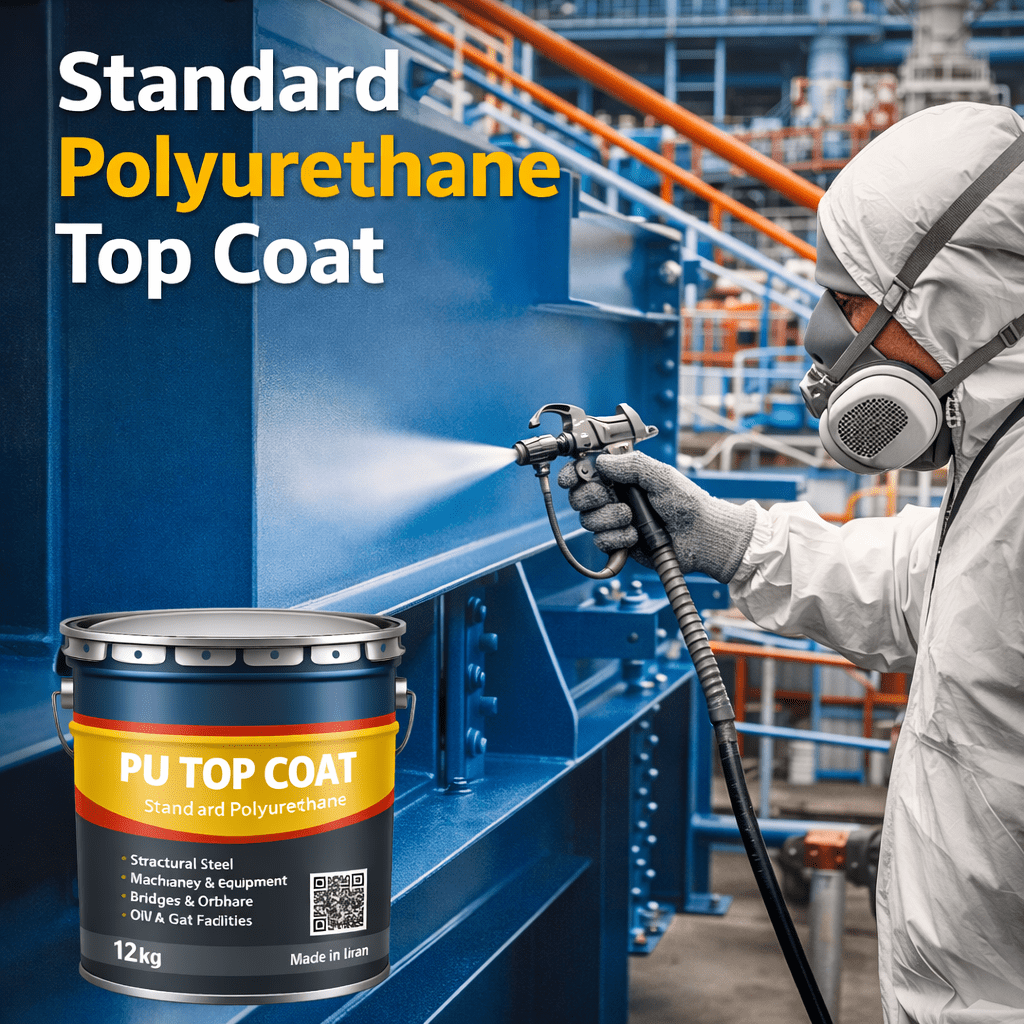
A Standard Polyurethane Top Coat is the most commonly specified finishing coat for industrial protective coating systems. It is designed to provide an excellent balance of weather resistance, gloss retention, color stability, mechanical durability, and cost-effectiveness.
Most standard polyurethane top coats are supplied as two-component (2K) systems consisting of a polyol base and an aliphatic isocyanate hardener.
They are widely used because they perform well in a broad range of environments without the higher cost associated with specialized formulations.
Main Features
- Excellent UV resistance
- High gloss retention
- Good color stability
- Strong adhesion over epoxy primers
- Good chemical resistance
- Excellent outdoor durability
- Decorative appearance
- Long service life
Typical Applications
- Structural steel
- Industrial buildings
- Machinery
- Pipelines
- Storage tanks
- Agricultural equipment
- Commercial buildings
- Manufacturing plants
- Steel fabrication
- General industrial maintenance
Advantages
✓ Cost-effective
✓ Easy application
✓ Wide color availability
✓ Excellent appearance
✓ Proven long-term performance
Limitations
Not recommended where extremely high chemical resistance or exceptional abrasion resistance is required.
- Polyester Polyurethane Top Coat
What Is Polyester Polyurethane?
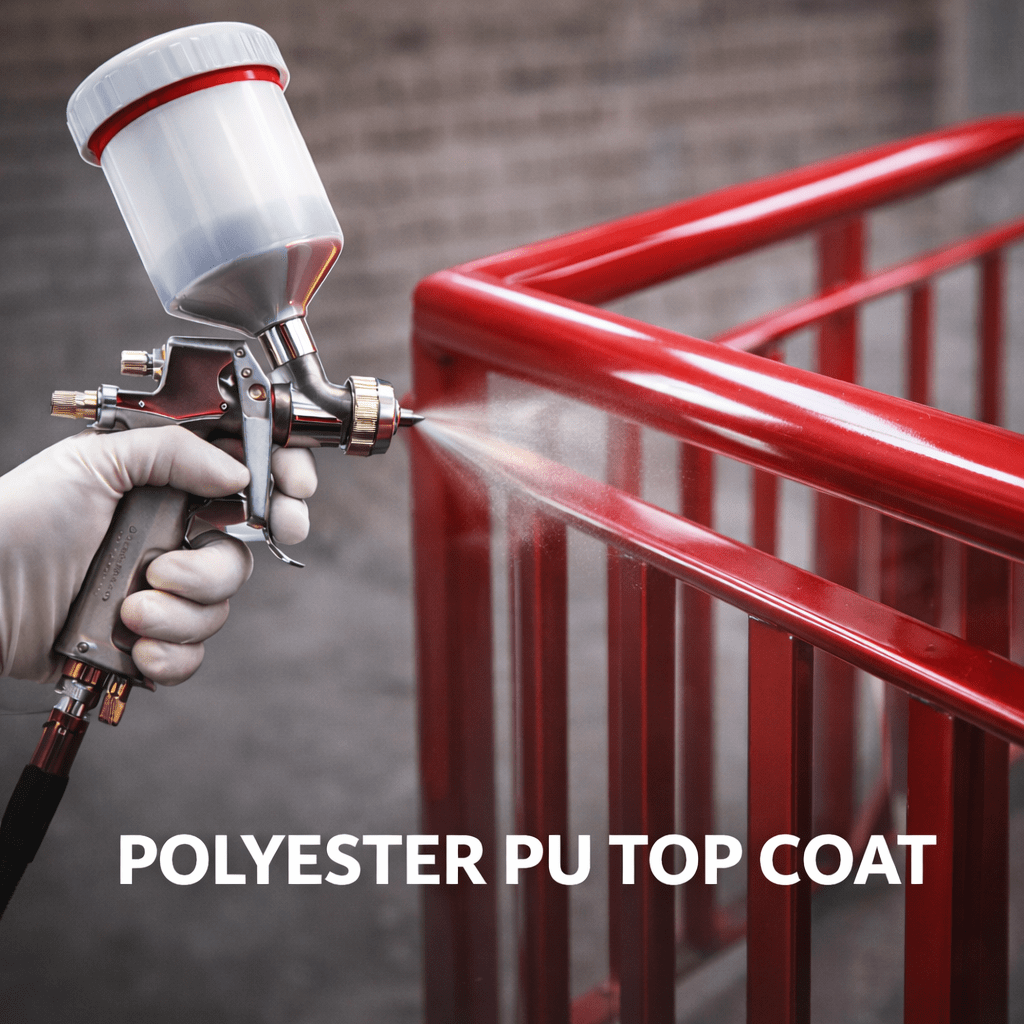
Polyester polyurethane uses polyester polyols as the resin component.
This chemistry produces a harder coating with excellent solvent resistance and outstanding mechanical strength.
Compared with polyether systems, polyester polyurethane generally offers:
- Higher hardness
- Better scratch resistance
- Better solvent resistance
- Better fuel resistance
- Better chemical resistance
Performance Characteristics
One of the biggest advantages of polyester polyurethane is its excellent balance between decorative appearance and industrial durability.
Typical properties include:
- Excellent gloss retention
- Excellent hardness
- Outstanding abrasion resistance
- Superior solvent resistance
- High tensile strength
- Excellent adhesion
Recommended Industries
Oil & Gas
Excellent resistance to fuels and hydrocarbons.
Industrial Plants
Withstands heavy industrial environments.
Heavy Equipment
Excellent resistance to scratches and impact.
Steel Structures
Long outdoor service life.
Bridges
Excellent weather durability.
Advantages
- Higher hardness than polyether systems
- Better solvent resistance
- Better chemical resistance
- Excellent UV stability
- Superior abrasion resistance
Limitations
Slightly lower hydrolysis resistance than polyether polyurethane.
Ideal Buyer
Buy polyester polyurethane if your project requires:
- High mechanical durability
- Industrial environments
- Solvent exposure
- Fuel exposure
- Outdoor weather resistance
- Polyether Polyurethane Top Coat
Overview
Polyether polyurethane uses polyether polyols rather than polyester polyols.
This small chemical difference dramatically changes coating performance.
Instead of maximizing hardness, polyether polyurethane emphasizes:
- Flexibility
- Water resistance
- Humidity resistance
- Hydrolysis resistance
Why Hydrolysis Resistance Matters
Hydrolysis is the gradual degradation of certain polymers caused by long-term water exposure.
Polyether polyurethane resists hydrolysis significantly better than polyester polyurethane.
This makes it ideal for:
- Coastal environments
- Marine equipment
- Water treatment plants
- Humid climates
- High-condensation environments
Main Benefits
- Excellent water resistance
- Superior hydrolysis resistance
- Better flexibility
- Excellent weather resistance
- Outstanding UV resistance
- Long service life
Recommended Applications
- Marine structures
- Offshore platforms
- Ships
- Water tanks
- Wastewater plants
- Coastal steel
- Bridges near the sea
- Swimming pool facilities
- High-humidity factories
Advantages
✓ Better moisture resistance
✓ Better flexibility
✓ Excellent outdoor durability
✓ Better crack resistance
Limitations
Slightly lower hardness than polyester polyurethane.
Buyer Recommendation
Choose polyether polyurethane if your coating will experience:
- Continuous humidity
- Frequent rain
- Coastal exposure
- Salt spray
- Condensation
- Marine service
Polyester vs Polyether Polyurethane
| Property | Polyester PU | Polyether PU |
| Hardness | ★★★★★ | ★★★★☆ |
| Water Resistance | ★★★★☆ | ★★★★★ |
| Hydrolysis Resistance | ★★★☆☆ | ★★★★★ |
| Chemical Resistance | ★★★★★ | ★★★★☆ |
| Solvent Resistance | ★★★★★ | ★★★★☆ |
| Flexibility | ★★★★☆ | ★★★★★ |
| Marine Applications | Good | Excellent |
| Industrial Equipment | Excellent | Very Good |
- High Solid Polyurethane Top Coat
What Does “High Solid” Mean?
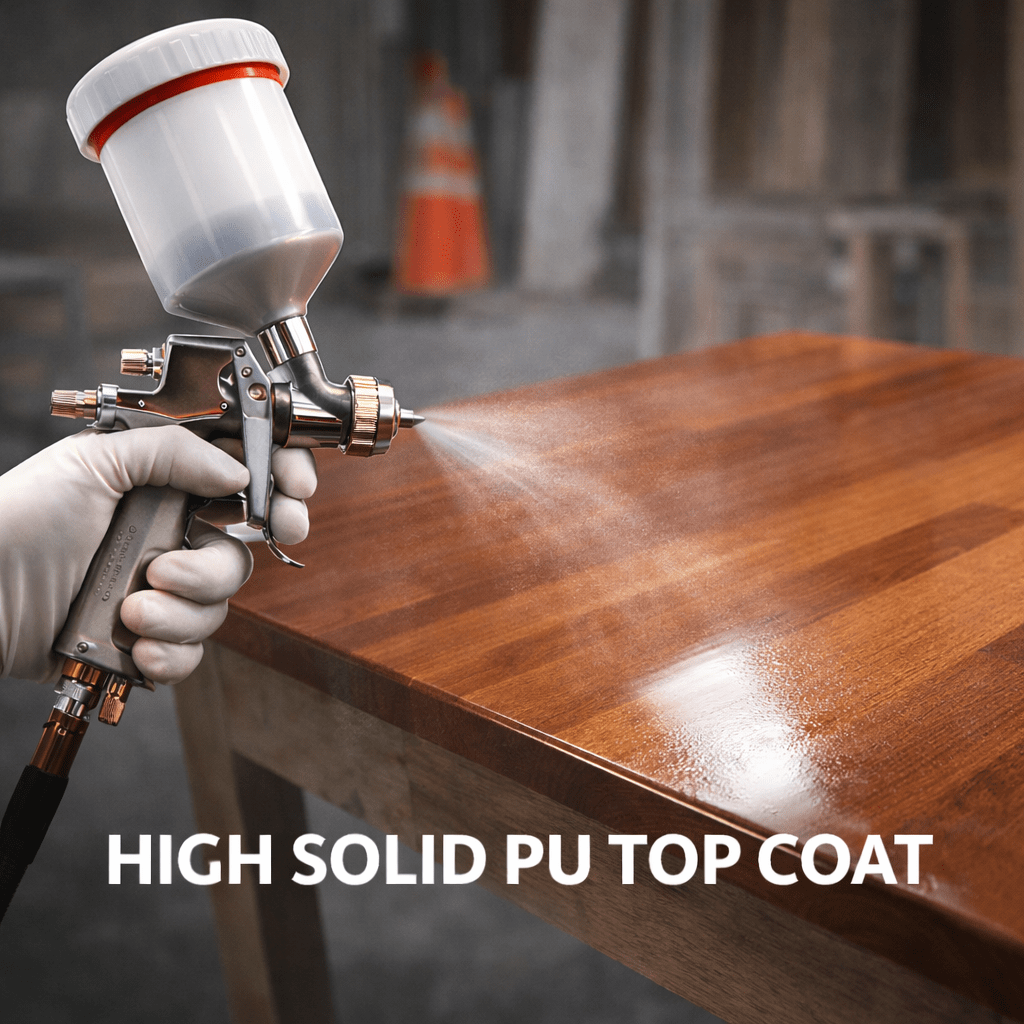
A high solid polyurethane contains a significantly higher percentage of solid material than conventional coatings.
Typical solid content:
Standard PU:
55–65%
High Solid PU:
70–85%
Some premium formulations exceed 90% solids.
Why High Solids Matter
Higher solid content means:
- Less solvent evaporation
- Lower VOC emissions
- Thicker dry film
- Better coverage
- Fewer application coats
This reduces both labor and material costs.
Main Benefits
- Lower VOC
- Higher productivity
- Thicker protective film
- Faster project completion
- Reduced overspray
- Better edge protection
Typical Applications
- Bridges
- Offshore platforms
- Chemical plants
- Large storage tanks
- Steel fabrication
- Shipyards
- Wind towers
- Power plants
Advantages
✓ Lower environmental impact
✓ Higher build per coat
✓ Better corrosion protection
✓ Lower total project cost
Limitations
Requires experienced applicators because viscosity is generally higher.
Buyer Recommendation
High Solid Polyurethane is ideal for projects requiring:
- Reduced VOC
- Faster construction schedules
- Large steel structures
- Heavy-duty corrosion protection
Standard vs High Solid Polyurethane
| Property | Standard PU | High Solid PU |
| Solid Content | 55–65% | 70–85% |
| VOC | Medium | Low |
| Film Thickness | Standard | High |
| Number of Coats | More | Fewer |
| Coverage | Standard | Better |
| Productivity | Good | Excellent |
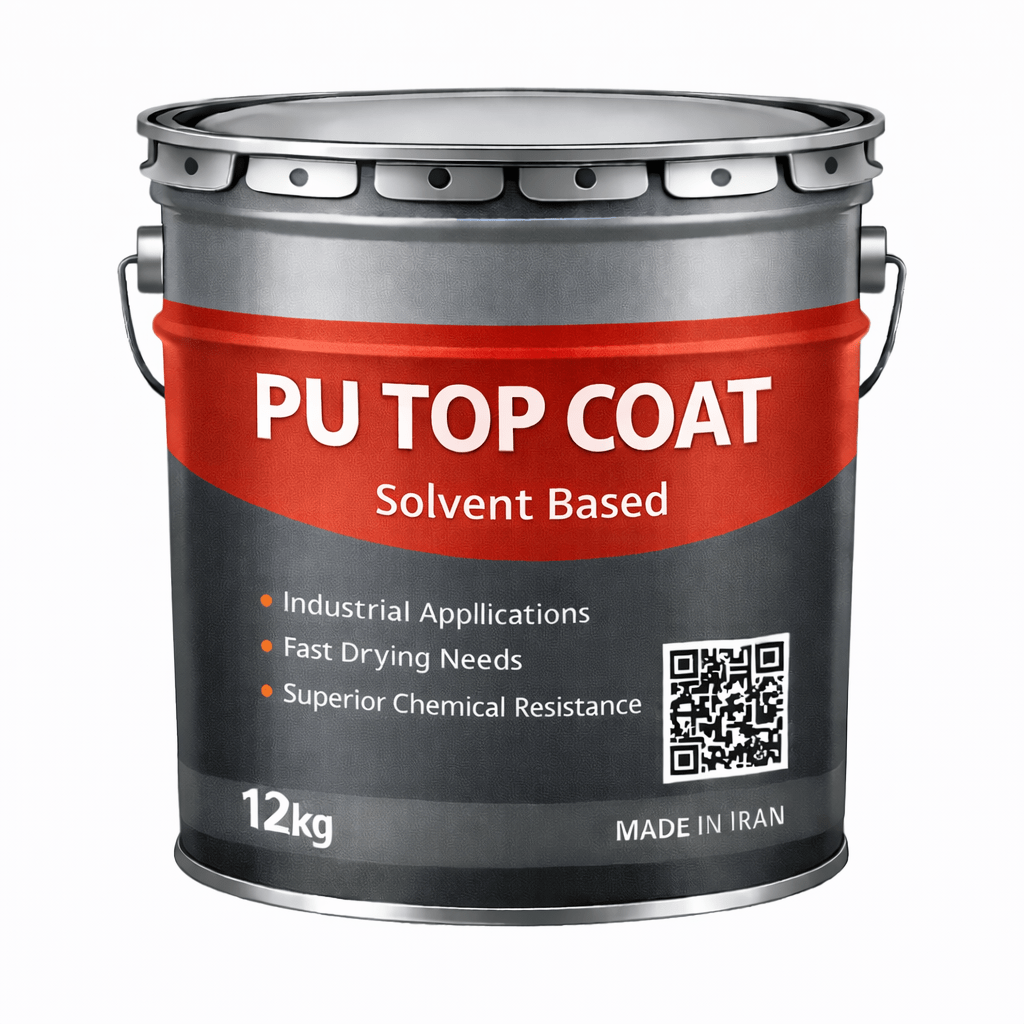
- Solvent-Based Polyurethane Top Coat
Overview
Solvent-based polyurethane remains one of the most widely used protective coatings worldwide.
The resin is dissolved in organic solvents, which evaporate during curing.
Why It Is Still Popular
Despite growing environmental regulations, solvent-based polyurethane continues to dominate many industrial sectors because of its:
- Excellent flow
- Smooth finish
- Easy spraying
- Strong adhesion
- Wide application window
- Proven performance
Main Benefits
- Excellent leveling
- Outstanding gloss
- Easy application
- High durability
- Reliable curing under varied conditions
Typical Industries
- Heavy industry
- Steel fabrication
- Construction
- Automotive
- Marine
- Oil & gas
- Machinery manufacturing
Advantages
✓ Excellent appearance
✓ Reliable performance
✓ Mature technology
✓ Available worldwide
Limitations
Higher VOC emissions than water-based systems.
May require explosion-proof application equipment.
Buyer Recommendation
Choose solvent-based polyurethane if:
- Maximum appearance is required.
- Environmental regulations permit solvent use.
- Industrial durability is the priority.
- Water-Based Polyurethane Top Coat
Market Trend
Water-based polyurethane represents one of the fastest-growing segments of the coating industry.
Increasing environmental regulations have accelerated its adoption worldwide.
What Makes It Different?
Instead of organic solvents, water serves as the primary carrier.
Advantages include:
- Lower VOC
- Reduced odor
- Improved worker safety
- Easier cleanup
- Reduced environmental impact
Typical Performance
Modern waterborne polyurethane coatings now provide performance approaching many solvent-based products.
Recent technological advances have significantly improved:
- UV resistance
- Gloss retention
- Chemical resistance
- Mechanical strength
- Weather durability
Main Advantages
✓ Eco-friendly
✓ Low odor
✓ Low VOC
✓ Safer storage
✓ Easier transportation
✓ Better workplace conditions
Typical Applications
- Hospitals
- Schools
- Commercial buildings
- Food processing facilities
- Pharmaceutical plants
- Interior steel
- Public infrastructure
- Green construction projects
Limitations
Some formulations may require more controlled application conditions, particularly regarding temperature and humidity.
Performance can vary more noticeably than solvent-based systems in cold or damp environments if application guidelines are not followed.
Solvent-Based vs Water-Based Polyurethane
| Property | Solvent-Based | Water-Based |
| VOC | High | Low |
| Odor | High | Very Low |
| Environmental Impact | Moderate | Excellent |
| Cleanup | Solvent | Water |
| Outdoor Durability | Excellent | Excellent |
| UV Resistance | Excellent | Excellent |
| Chemical Resistance | Excellent | Very Good to Excellent |
| Application Safety | Moderate | High |
Which of These Six Types Should You Choose?
| If You Need… | Recommended Product |
| General industrial coating | Standard PU Top Coat |
| Maximum hardness | Polyester PU Top Coat |
| Marine or humid environments | Polyether PU Top Coat |
| Lower VOC with thick films | High Solid PU Top Coat |
| Proven industrial performance | Solvent-Based PU Top Coat |
| Eco-friendly projects | Water-Based PU Top Coat |
Summary
The six polyurethane technologies covered in this section represent the foundation of most industrial coating systems. Each offers a unique balance of durability, environmental performance, and application characteristics:
- Standard Polyurethane provides reliable all-around performance.
- Polyester Polyurethane excels in hardness, abrasion resistance, and chemical durability.
- Polyether Polyurethane is the preferred choice for humid and marine environments.
- High Solid Polyurethane delivers thicker films with fewer coats and lower VOC emissions.
- Solvent-Based Polyurethane remains the benchmark for industrial durability and finish quality.
- Water-Based Polyurethane meets modern environmental requirements while offering excellent weatherability.
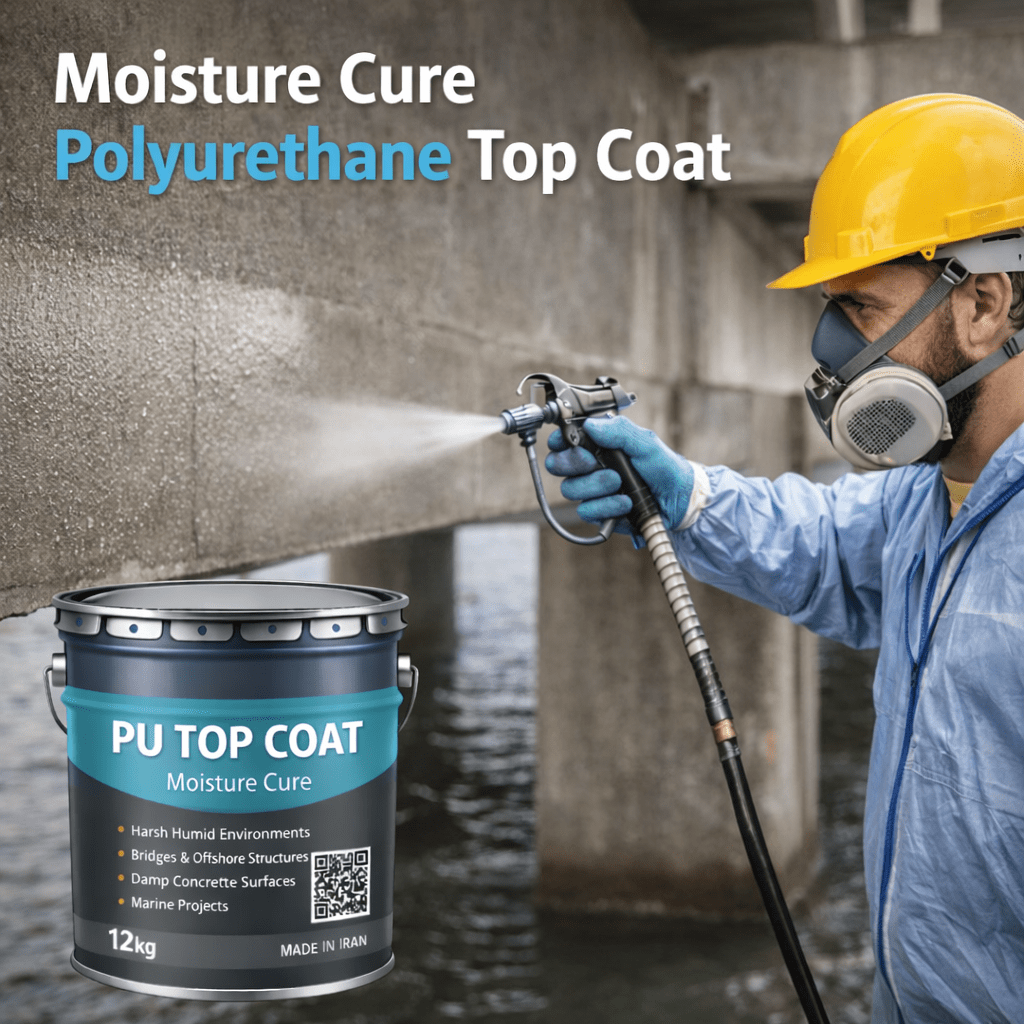
- Moisture Cure Polyurethane Top Coat
What Is Moisture Cure Polyurethane?
Unlike conventional two-component polyurethane coatings that require mixing a resin and hardener before application, Moisture Cure Polyurethane (MCU) is typically a single-component (1K) coating that cures by reacting with moisture naturally present in the atmosphere.
As soon as the coating is exposed to air, atmospheric humidity initiates the curing process.
This eliminates the need for mixing equipment while simplifying application.
How Moisture Cure Technology Works
Traditional polyurethane:
Polyol + Isocyanate → Polyurethane Film
Moisture Cure Polyurethane:
Moisture in Air + Isocyanate → Polyurethane Film
Because curing depends on atmospheric moisture, no separate hardener is required.
Major Advantages
Easy Application
No mixing ratio.
No induction time.
No risk of incorrect mixing.
Less application waste.
Faster Maintenance
Moisture cure systems are especially useful during maintenance shutdowns where speed is critical.
Industrial facilities often prefer MCU coatings because maintenance crews can:
- Open the container
- Apply immediately
- Return equipment to service quickly
Excellent Adhesion
MCU coatings adhere well to:
- Properly prepared steel
- Existing compatible coatings
- Galvanized steel
- Industrial equipment
Good Weather Resistance
Modern moisture cure formulations provide excellent resistance to:
- UV radiation
- Rain
- Humidity
- Snow
- Industrial weathering
Typical Applications
Moisture cure polyurethane is commonly specified for:
- Pipelines
- Steel bridges
- Structural steel
- Transmission towers
- Marine equipment
- Heavy machinery
- Industrial maintenance
- Construction equipment
- Offshore structures
Advantages
✓ Single component
✓ Easy application
✓ No mixing errors
✓ Excellent weather resistance
✓ Excellent maintenance coating
Limitations
Because curing depends on atmospheric moisture:
- Extremely dry climates may slow curing.
- Once the container is opened, the remaining product has a shorter shelf life due to moisture exposure.
- Anti-Graffiti Polyurethane Top Coat
Why Anti-Graffiti Coatings Matter
Graffiti removal is a major maintenance expense for municipalities, transportation authorities, schools, commercial buildings, and public infrastructure.
Removing graffiti from ordinary paint often requires:
- Abrasive cleaning
- Solvents
- Repainting
- Labor-intensive maintenance
These processes increase operational costs while shortening the service life of painted surfaces.
Anti-graffiti polyurethane coatings provide a protective barrier that prevents spray paint, markers, and inks from penetrating the coating.
How Anti-Graffiti PU Works
The cured polyurethane film forms an extremely smooth and chemically resistant surface with very low surface energy.
Graffiti materials have difficulty bonding permanently to the coating.
As a result, most graffiti can be removed using approved cleaning agents without damaging the underlying finish.
Main Performance Characteristics
- Excellent stain resistance
- Excellent marker resistance
- Excellent spray paint resistance
- Easy cleaning
- Excellent UV resistance
- Long gloss retention
- Outstanding weather durability
Typical Applications
- Railway stations
- Airports
- Metro systems
- Schools
- Hospitals
- Commercial buildings
- Shopping centers
- Public monuments
- Bridges
- Highway sound barriers
Advantages
✓ Reduced maintenance cost
✓ Easy graffiti removal
✓ Long-term appearance
✓ Excellent UV stability
✓ Excellent weather resistance
Buyer Recommendation
Anti-graffiti polyurethane is ideal wherever painted surfaces are accessible to the public and frequent vandalism is expected.
- Chemical Resistant Polyurethane Top Coat
Overview
Many industrial environments expose coatings to aggressive chemicals every day.
Examples include:
- Acids
- Alkalis
- Solvents
- Cleaning chemicals
- Industrial oils
- Hydraulic fluids
- Fuels
- Salt solutions
Standard decorative coatings cannot withstand these conditions for extended periods.
Chemical resistant polyurethane is specifically formulated to provide long-term protection against chemical attack while maintaining its mechanical and decorative properties.
Why Chemical Resistance Matters
Chemical attack may cause:
- Softening
- Swelling
- Discoloration
- Gloss loss
- Cracking
- Delamination
- Corrosion beneath the coating
A chemically resistant polyurethane significantly delays these failures.
Typical Industries
Chemical Plants
Chemical reactors
Storage vessels
Pipe racks
Oil & Gas
Refineries
Processing units
Storage tanks
Food Processing
Cleaning chemicals
Sanitation systems
Pharmaceutical Plants
Chemical cleaning agents
Disinfectants
Manufacturing Facilities
Industrial chemicals
Lubricants
Coolants
Major Advantages
✓ Excellent solvent resistance
✓ Excellent oil resistance
✓ Excellent fuel resistance
✓ Excellent salt resistance
✓ Outstanding industrial durability
Limitations
Although highly resistant to many industrial chemicals, no coating is resistant to every chemical at every concentration and temperature. Buyers should always verify compatibility with the specific service environment before selecting a product.
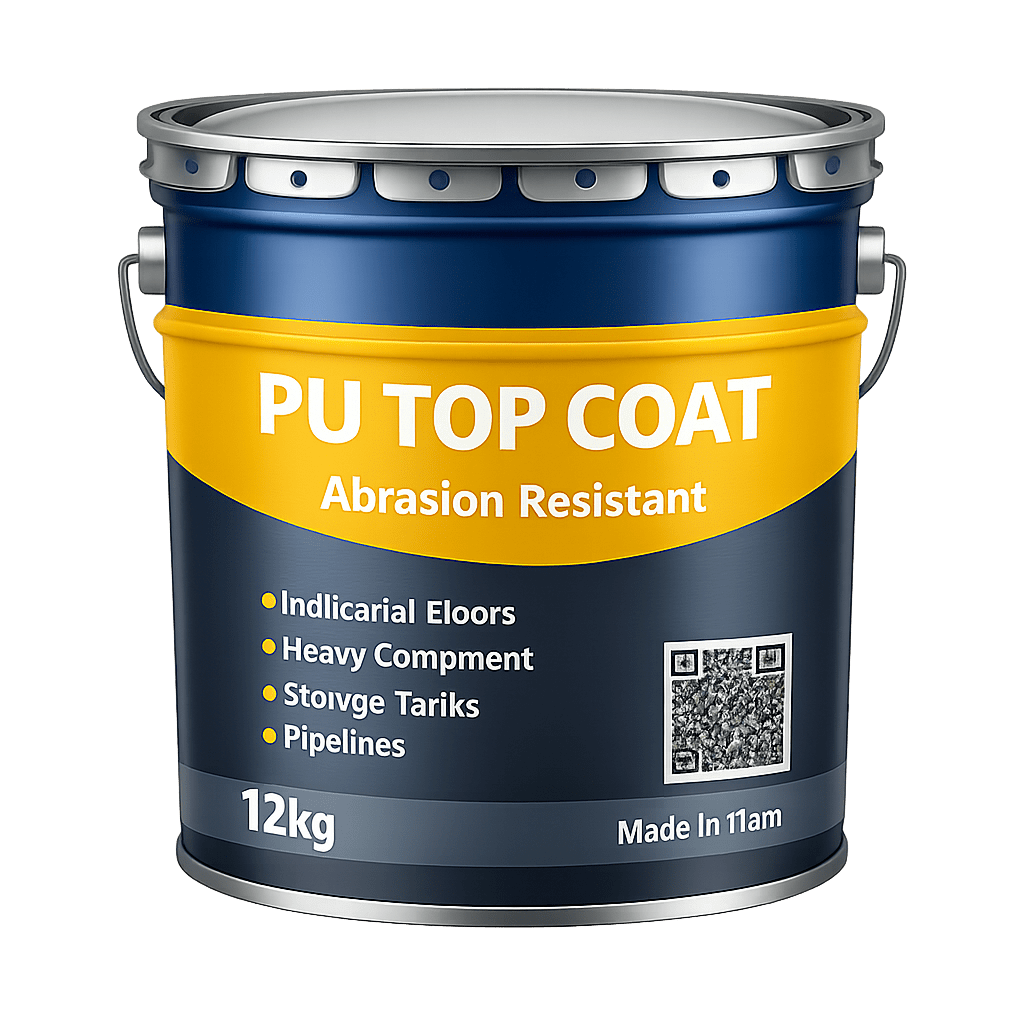
- Abrasion Resistant Polyurethane Top Coat
Why Abrasion Resistance Is Important
Mechanical wear is one of the leading causes of coating failure.
Daily exposure to:
- Forklifts
- Vehicles
- Foot traffic
- Conveyor systems
- Sliding equipment
- Sand
- Dust
- Aggregate
gradually wears away conventional coatings.
Abrasion-resistant polyurethane is formulated to maximize wear resistance without sacrificing flexibility or weatherability.
Performance Characteristics
Compared with standard polyurethane, abrasion-resistant grades provide:
- Higher scratch resistance
- Better impact resistance
- Higher hardness
- Longer service life
- Reduced maintenance frequency
Common Applications
Industrial Floors
Forklift traffic
Warehouse floors
Mining Equipment
Excavators
Crushers
Hoppers
Marine Equipment
Loading areas
Deck machinery
Heavy Machinery
Construction equipment
Agricultural machinery
Transportation
Railcars
Cargo handling equipment
Advantages
✓ Excellent wear resistance
✓ High impact resistance
✓ Longer maintenance intervals
✓ Reduced lifecycle cost
- High Build Polyurethane Top Coat
What Is High Build PU?
High Build Polyurethane is engineered to produce a much thicker dry film in a single application than conventional polyurethane coatings.
Typical Dry Film Thickness (DFT):
Standard PU:
40–60 μm
High Build PU:
80–150 μm
Some specialized systems exceed 200 μm depending on the formulation and application method.
Why Higher Film Thickness Matters
A thicker coating generally provides:
- Better barrier protection
- Improved edge coverage
- Longer corrosion resistance
- Fewer application coats
- Lower labor costs
- Reduced project time
Industries That Prefer High Build Systems
- Offshore platforms
- Bridges
- Steel fabrication
- Marine structures
- Wind towers
- Power plants
- Water treatment facilities
- Oil & gas facilities
Main Advantages
✓ Excellent corrosion protection
✓ Fewer coats required
✓ Faster application
✓ Lower labor cost
✓ Long service life
Limitations
High Build formulations typically have higher viscosity and may require airless spray equipment and careful application to achieve a uniform finish without sagging.
Comparison of Specialty Polyurethane Top Coats
| Type | Primary Advantage | Best Applications |
| Moisture Cure PU | Single-component, easy maintenance | Pipelines, maintenance, structural steel |
| Anti-Graffiti PU | Easy graffiti removal | Public infrastructure, schools, transportation |
| Chemical Resistant PU | Superior resistance to chemicals | Chemical plants, refineries, storage tanks |
| Abrasion Resistant PU | High wear resistance | Industrial floors, mining, heavy machinery |
| High Build PU | Thick protective film | Bridges, offshore, marine, steel structures |
Complete Comparison of All Polyurethane Top Coat Types
| Product Type | UV Resistance | Chemical Resistance | Abrasion Resistance | Water Resistance | Typical DFT |
| Standard PU | ★★★★★ | ★★★★☆ | ★★★★☆ | ★★★★☆ | 40–60 μm |
| Polyester PU | ★★★★★ | ★★★★★ | ★★★★★ | ★★★★☆ | 40–60 μm |
| Polyether PU | ★★★★★ | ★★★★☆ | ★★★★☆ | ★★★★★ | 40–60 μm |
| High Solid PU | ★★★★★ | ★★★★★ | ★★★★★ | ★★★★★ | 60–120 μm |
| Solvent-Based PU | ★★★★★ | ★★★★★ | ★★★★★ | ★★★★☆ | 40–60 μm |
| Water-Based PU | ★★★★★ | ★★★★☆ | ★★★★☆ | ★★★★★ | 30–50 μm |
| Moisture Cure PU | ★★★★★ | ★★★★☆ | ★★★★☆ | ★★★★★ | 40–75 μm |
| Anti-Graffiti PU | ★★★★★ | ★★★★★ | ★★★★☆ | ★★★★★ | 40–60 μm |
| Chemical Resistant PU | ★★★★★ | ★★★★★ | ★★★★☆ | ★★★★☆ | 50–75 μm |
| Abrasion Resistant PU | ★★★★★ | ★★★★☆ | ★★★★★ | ★★★★☆ | 50–75 μm |
| High Build PU | ★★★★★ | ★★★★★ | ★★★★★ | ★★★★★ | 80–150 μm |
How to Select the Right Specialty PU Top Coat
| If your project requires… | Choose… |
| Fast maintenance without mixing | Moisture Cure Polyurethane |
| Protection against vandalism | Anti-Graffiti Polyurethane |
| Resistance to harsh chemicals | Chemical Resistant Polyurethane |
| High wear resistance | Abrasion Resistant Polyurethane |
| Thicker protective films with fewer coats | High Build Polyurethane |
| General industrial durability | Standard or High Solid Polyurethane |
Why Choosing the Right PU Top Coat Matters
Many coating failures are not caused by poor manufacturing quality—they result from selecting the wrong coating system for the operating environment.
For example, using a standard polyurethane top coat in a highly acidic chemical plant or specifying a solvent-based coating where strict VOC regulations apply can significantly reduce coating life and increase maintenance costs.
Selecting the right polyurethane top coat requires evaluating several technical and environmental factors together rather than focusing on a single property.
The following sections provide a practical framework for making the right choice.
Step 1 – Identify the Service Environment
The first and most important step is understanding where the coating will operate.
Ask the following questions:
- Is the structure indoors or outdoors?
- Will it be exposed to direct sunlight?
- Is it located in a coastal or marine environment?
- Will it be exposed to chemicals?
- Will it experience heavy mechanical wear?
- Is there frequent contact with water or humidity?
- Are there strict environmental regulations regarding VOC emissions?
Different environments require different polyurethane technologies.
Outdoor Exposure
Outdoor structures are continuously exposed to:
- Ultraviolet radiation
- Rain
- Snow
- Wind
- Dust
- Temperature fluctuations
For these conditions, coatings should offer:
- Excellent UV resistance
- Long-term gloss retention
- Superior weatherability
- Good flexibility
Recommended products:
- Standard Polyurethane Top Coat
- Polyester Polyurethane Top Coat
- High Solid Polyurethane Top Coat
Marine Environment
Marine structures face one of the harshest operating environments due to:
- Salt spray
- High humidity
- Continuous wetting and drying cycles
- Strong UV exposure
Recommended products:
- Polyether Polyurethane Top Coat
- High Build Polyurethane Top Coat
- Moisture Cure Polyurethane Top Coat
These systems provide superior resistance to moisture and hydrolysis while maintaining excellent durability.
Chemical Plants
Chemical facilities expose coatings to:
- Acids
- Alkalis
- Solvents
- Oils
- Cleaning agents
- Process chemicals
Recommended product:
- Chemical Resistant Polyurethane Top Coat
This formulation offers enhanced resistance to chemical attack while maintaining excellent adhesion and appearance.
Public Infrastructure
Public assets such as railway stations, schools, airports, and bridges are often vulnerable to graffiti.
Recommended product:
- Anti-Graffiti Polyurethane Top Coat
Its low-surface-energy finish allows most graffiti to be removed without damaging the coating.
Heavy Mechanical Wear
Industrial floors, mining equipment, and material handling systems experience constant abrasion and impact.
Recommended products:
- Abrasion Resistant Polyurethane Top Coat
- High Build Polyurethane Top Coat
These coatings provide increased wear resistance and longer maintenance intervals.
Step 2 – Evaluate the Substrate
The type of substrate affects both coating selection and surface preparation.
Common substrates include:
- Carbon steel
- Stainless steel
- Galvanized steel
- Aluminum
- Concrete
- Previously painted surfaces
Each substrate requires a compatible primer to ensure proper adhesion and long-term performance.
For example, polyurethane top coats are most commonly applied over epoxy primers rather than directly onto bare steel.
Step 3 – Determine Required Service Life
Project owners often specify an expected coating life before major maintenance is required.
Typical durability expectations include:
| Expected Service Life | Typical Applications |
| 5–7 Years | Light industrial equipment |
| 10–15 Years | Commercial buildings, structural steel |
| 15–20 Years | Bridges, offshore facilities, power plants |
| 20+ Years | High-performance protective coating systems with proper maintenance |
Longer service life generally requires:
- Better surface preparation
- Higher-quality primers
- Premium polyurethane top coats
- Correct application procedures
Step 4 – Evaluate UV Exposure
Ultraviolet radiation is one of the primary causes of coating degradation.
Poor UV resistance may lead to:
- Chalking
- Fading
- Gloss loss
- Surface degradation
Aliphatic polyurethane top coats provide excellent UV stability and are preferred for exterior applications where appearance and long-term color retention are critical.
Step 5 – Consider Chemical Exposure
Not all chemicals affect coatings in the same way.
When selecting a polyurethane top coat, buyers should consider:
- Type of chemical
- Concentration
- Contact duration
- Operating temperature
- Frequency of exposure
For highly aggressive environments, always verify chemical compatibility with the coating manufacturer.
Step 6 – Evaluate Mechanical Stress
Mechanical damage can occur through:
- Forklift traffic
- Falling tools
- Dragging equipment
- Sand abrasion
- Conveyor systems
- Heavy pedestrian traffic
If mechanical wear is a major concern, select coatings specifically formulated for abrasion resistance.
Recommended products:
- Abrasion Resistant PU
- Polyester PU
- High Build PU
Step 7 – Check Environmental Regulations
Many countries regulate volatile organic compound (VOC) emissions.
Projects with strict environmental requirements may require:
- Low-VOC coatings
- High-solid formulations
- Water-based polyurethane systems
Typical recommendations include:
| Requirement | Recommended Product |
| Lowest VOC | Water-Based PU |
| Reduced VOC | High Solid PU |
| Maximum Industrial Performance | Solvent-Based PU |
Step 8 – Select the Appropriate Finish
Polyurethane top coats are available in several finish options.
High Gloss
Advantages:
- Attractive appearance
- Easy cleaning
- Maximum color depth
- Excellent architectural aesthetics
Applications:
- Commercial buildings
- Machinery
- Automotive equipment
- Architectural steel
Semi-Gloss
Advantages:
- Balanced appearance
- Reduced glare
- Easier maintenance than matte finishes
Applications:
- Industrial facilities
- Warehouses
- Manufacturing plants
Satin
Advantages:
- Elegant appearance
- Reduced reflection
- Good hiding of minor surface imperfections
Applications:
- Architectural projects
- Decorative steel structures
Matte
Advantages:
- Minimal glare
- Modern appearance
- Suitable for military or industrial applications where low reflectivity is required
Surface Preparation
Even the highest-quality polyurethane top coat cannot compensate for poor surface preparation.
Surface preparation has a greater influence on coating life than almost any other factor.
Common preparation methods include:
Abrasive Blast Cleaning
The preferred method for new steel.
Benefits:
- Removes rust
- Removes mill scale
- Creates an ideal anchor profile
- Maximizes adhesion
Power Tool Cleaning
Used for maintenance projects where abrasive blasting is impractical.
Solvent Cleaning
Removes:
- Oil
- Grease
- Wax
- Surface contaminants
before priming.
Recommended Coating System
A typical heavy-duty protective coating system consists of:
Surface Preparation
↓
Zinc Rich Epoxy Primer
↓
Epoxy Intermediate Coat
↓
Polyurethane Top Coat
This combination provides excellent corrosion protection, mechanical durability, and long-term weather resistance.
Application Methods
Polyurethane top coats can be applied using several techniques.
Airless Spray
Preferred for:
- Large industrial projects
- Bridges
- Storage tanks
- Structural steel
Advantages:
- High productivity
- Uniform film thickness
- Reduced overspray
Conventional Spray
Suitable for:
- Machinery
- Small fabricated components
- Architectural steel
Produces an excellent decorative finish.
Brush Application
Typically used for:
- Repairs
- Touch-up work
- Small areas
Roller Application
Appropriate for:
- Floors
- Large flat surfaces
- Maintenance projects
Common Application Mistakes
Many coating failures can be traced to preventable application errors.
Common mistakes include:
- Incorrect mixing ratio
- Inadequate surface preparation
- Applying over contaminated surfaces
- Applying outside recommended temperature or humidity ranges
- Insufficient dry film thickness
- Excessive film thickness leading to sagging
- Inadequate curing time between coats
- Using incompatible primers or thinners
Following the manufacturer’s technical data sheet (TDS) and application guidelines is essential for achieving the expected performance.
Inspection and Quality Control
Quality control during application helps ensure long-term coating performance.
Common inspection activities include:
- Surface cleanliness inspection
- Surface profile measurement
- Wet film thickness (WFT) measurement
- Dry film thickness (DFT) measurement
- Adhesion testing
- Visual inspection for defects such as runs, pinholes, blistering, or dry spray
Regular inspections reduce the risk of premature coating failure and costly rework.
Maintenance Recommendations
Even high-performance polyurethane top coats benefit from routine maintenance.
Best practices include:
- Wash coated surfaces periodically to remove dirt, salts, and industrial pollutants.
- Inspect for scratches, chips, or localized damage and repair them promptly.
- Avoid prolonged exposure to chemicals beyond the coating’s rated resistance.
- Follow the manufacturer’s recommendations for cleaning agents and maintenance intervals.
Proper maintenance can significantly extend the service life of the coating system.
Procurement Checklist
Before purchasing a polyurethane top coat, confirm the following:
- Required service environment
- Expected service life
- UV exposure level
- Chemical exposure
- Abrasion or impact requirements
- VOC regulations
- Required finish (gloss, satin, matte)
- Application method
- Compatible primer system
- Desired dry film thickness (DFT)
- Packaging size
- Color requirements (RAL or custom)
- Compliance with applicable standards and project specifications
Frequently Asked Questions (FAQ)
- What is a polyurethane top coat?
A polyurethane top coat is a protective finishing coating applied as the final layer of a coating system. It provides UV resistance, weather protection, color retention, gloss retention, abrasion resistance, and chemical resistance while improving the appearance of the coated surface.
- What is the difference between polyurethane and epoxy coatings?
Epoxy coatings primarily provide corrosion protection and strong adhesion but tend to chalk and discolor under prolonged UV exposure.
Polyurethane top coats are designed to withstand sunlight, retain their color and gloss, and provide superior weather resistance. For this reason, polyurethane is commonly used as the finishing coat over epoxy primers and intermediate coats.
- Can polyurethane top coats be applied directly to steel?
Generally, no.
For optimum corrosion protection, polyurethane top coats should be applied over a compatible primer, such as:
- Zinc Rich Epoxy Primer
- Epoxy Primer
- Epoxy Intermediate Coat
Direct application to bare steel is not recommended unless specifically approved by the manufacturer.
- Which polyurethane top coat offers the best UV resistance?
Aliphatic polyurethane coatings provide the highest level of UV resistance and are widely used for outdoor applications where long-term color and gloss retention are important.
- Which polyurethane coating is best for marine environments?
Polyether Polyurethane Top Coat is generally preferred because of its excellent resistance to moisture, hydrolysis, and saltwater exposure.
- What is the difference between polyester and polyether polyurethane?
Polyester polyurethane offers:
- Higher hardness
- Better solvent resistance
- Better abrasion resistance
Polyether polyurethane provides:
- Better flexibility
- Superior water resistance
- Better hydrolysis resistance
- Better performance in humid environments
- What is High Solid Polyurethane?
High Solid Polyurethane contains a higher percentage of solids and less solvent than conventional formulations. It provides thicker dry film thickness per coat while reducing VOC emissions and improving application efficiency.
- When should Water-Based Polyurethane be selected?
Water-based polyurethane is ideal for projects requiring:
- Low VOC
- Low odor
- Environmentally friendly coatings
- Safer indoor application
- Easier cleanup
- Is solvent-based polyurethane still widely used?
Yes.
Despite stricter environmental regulations in many countries, solvent-based polyurethane remains a popular choice for heavy industrial applications because of its proven durability, excellent flow, and high-quality finish.
- What is Moisture Cure Polyurethane?
Moisture Cure Polyurethane is typically a single-component coating that cures by reacting with moisture in the air. It eliminates the need for mixing a separate hardener and is often used for maintenance and field applications.
- What is the purpose of an Anti-Graffiti Polyurethane Top Coat?
It forms a durable protective surface that allows graffiti from spray paints, markers, and inks to be removed more easily without damaging the underlying coating.
- Which polyurethane top coat is best for chemical plants?
Chemical Resistant Polyurethane Top Coat is specifically formulated to withstand exposure to many industrial chemicals, oils, fuels, and cleaning agents.
- Which polyurethane coating provides the highest abrasion resistance?
Abrasion Resistant Polyurethane Top Coat and Polyester Polyurethane Top Coat are excellent choices for environments with heavy mechanical wear.
- What does “High Build” mean?
A High Build Polyurethane Top Coat is formulated to achieve a greater dry film thickness (DFT) in a single coat, reducing the number of coats required and improving barrier protection.
- How long does a polyurethane top coat last?
The service life depends on:
- Surface preparation
- Application quality
- Environmental conditions
- Maintenance
Properly applied polyurethane systems can provide 10–20 years of service, and premium heavy-duty systems may last even longer.
- Can polyurethane top coats be used on concrete?
Yes.
When applied over a properly prepared and primed concrete surface, polyurethane top coats offer excellent abrasion resistance, stain resistance, and long-term durability.
- Are polyurethane top coats resistant to fuels and oils?
Most industrial polyurethane top coats provide very good resistance to:
- Diesel fuel
- Gasoline
- Lubricants
- Hydraulic oils
- Mineral oils
For continuous chemical exposure, a Chemical Resistant PU Top Coat is recommended.
- Which application method is best?
Airless spray is generally preferred for large industrial projects because it provides:
- Uniform film thickness
- High productivity
- Efficient coverage
Brushes and rollers are mainly used for repairs and small areas.
- What finish options are available?
Common finish options include:
- High Gloss
- Semi-Gloss
- Satin
- Matte
Some manufacturers also offer textured finishes for specialized applications.
- Are custom colors available?
Yes.
Most manufacturers can produce polyurethane top coats in:
- RAL colors
- Pantone colors
- Custom project-specific colors
subject to minimum order quantities.
- What packaging sizes are typically available?
Packaging varies by manufacturer but commonly includes:
- 1 L
- 4 L
- 5 L
- 20 L
- 25 L
- 200 L drums for industrial users
Custom packaging may also be available for export orders.
- What standards are commonly referenced for polyurethane top coats?
Depending on the product and application, manufacturers may test or certify their coatings according to standards such as:
- ASTM D3359 (Adhesion)
- ASTM D4060 (Abrasion Resistance)
- ASTM D2244 (Color Measurement)
- ASTM D523 (Gloss)
- ISO 12944 (Corrosion Protection of Steel Structures)
- ISO 2812 (Chemical Resistance)
Buyers should confirm which standards apply to the specific product being evaluated.
- What information should buyers request before ordering?
Request the following documents:
- Technical Data Sheet (TDS)
- Safety Data Sheet (SDS)
- Product Data Sheet (PDS), if available
- Color chart (RAL/Pantone options)
- Recommended application guide
- Mixing instructions
- Storage recommendations
- Packaging details
- Quality certificates, if applicable
- How should polyurethane top coats be stored?
Store containers in a cool, dry, well-ventilated area away from direct sunlight and sources of heat. Always follow the storage conditions and shelf-life recommendations provided by the manufacturer.
- Can polyurethane top coats be exported internationally?
Yes.
Polyurethane top coats are widely traded internationally and are exported in accordance with applicable packaging, labeling, and transportation regulations. Buyers should verify import requirements and documentation for their destination country.
Why Source Polyurethane Top Coats from Iran?
Iran has developed a strong manufacturing base for industrial coatings, supplying products to domestic industries and export markets across the Middle East, Central Asia, Africa, and neighboring regions.
Key advantages include:
Competitive Pricing
Lower production costs can provide attractive pricing for bulk buyers.
Access to Petrochemical Raw Materials
Iran’s petrochemical industry supplies many of the raw materials used in coating production, supporting stable manufacturing.
Flexible Manufacturing
Many manufacturers offer:
- OEM production
- Private labeling
- Custom formulations
- Custom packaging
- RAL color matching
Export Experience
Iranian manufacturers have experience serving industrial buyers in sectors such as construction, oil & gas, infrastructure, marine, and manufacturing.
Why Buy Through Irancorps?
Finding a reliable supplier can be just as important as selecting the right product.
Irancorps simplifies international sourcing by connecting buyers with evaluated Iranian manufacturers and exporters.
Benefits include:
- Access to multiple manufacturers through one platform
- Assistance with supplier identification
- Support for OEM and private-label projects
- RFQ submission for bulk inquiries
- Export-oriented communication
- Opportunities to compare quotations from different suppliers
This streamlined sourcing process can save buyers time while improving supplier selection.
How to Submit an Effective RFQ (Request for Quotation)
Providing complete project information helps suppliers prepare accurate quotations.
Include the following details whenever possible:
Product Requirements
- Type of polyurethane top coat
- Required finish (Gloss, Satin, Matte)
- Color (RAL or custom)
- Required dry film thickness (DFT)
Project Information
- Application (Bridge, Tank, Machinery, Building, etc.)
- Indoor or outdoor service
- Expected environmental exposure
- Chemical exposure, if any
- Abrasion requirements
Quantity
Specify:
- Number of liters or kilograms
- Number of containers
- Estimated annual demand
Packaging
Examples:
- 5 L
- 20 L
- 200 L drum
- Custom packaging
Destination
Include:
- Country
- Port of destination
- Preferred Incoterms (e.g., EXW, FOB, CFR, CIF)
Documentation
If required, request:
- TDS
- SDS
- Certificate of Analysis (COA), if available
- Packing list
- Commercial invoice
- Certificate of Origin, when needed
Providing complete information reduces quotation time and helps suppliers recommend the most appropriate product.
Final Thoughts
Polyurethane top coats remain one of the most versatile and dependable finishing coatings available for industrial, commercial, marine, and infrastructure applications. Their ability to combine long-term weather resistance, UV stability, mechanical durability, and aesthetic performance makes them a preferred choice across many industries.
The key to a successful coating system is selecting the formulation that matches the intended service environment. Standard polyurethane coatings meet the needs of many general applications, while specialized products—such as polyester, polyether, high-solid, water-based, moisture-cure, anti-graffiti, chemical-resistant, abrasion-resistant, and high-build systems—offer enhanced performance for specific challenges.
In addition to selecting the correct top coat, long-term performance depends on proper surface preparation, compatible primers, correct application techniques, and routine inspection and maintenance. Considering the full lifecycle cost rather than the initial purchase price often results in greater value and longer service life.
Whether you are sourcing coatings for bridges, offshore platforms, industrial machinery, storage tanks, commercial buildings, or public infrastructure, understanding the differences between polyurethane technologies enables more informed purchasing decisions and better project outcomes.