

 Arabic
shop
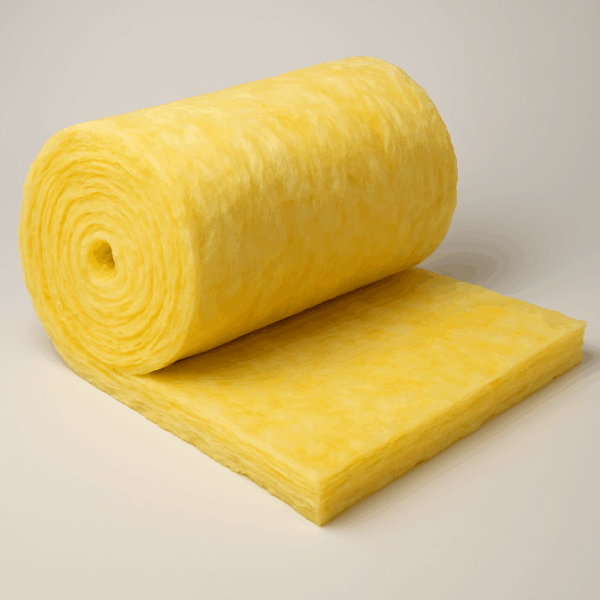
Glass Wool Roll
In building construction, Glass Wool Rolls are widely used to improve the energy efficiency of walls, roofs, ceilings, partitions, and other parts of the building envelope by reducing unwanted heat transfer between indoor and outdoor spaces. Their flexibility makes them particularly practical for installation between structural members, around irregular surfaces, and in areas where rigid insulation boards may be difficult to fit. Glass wool is also extensively used in HVAC and air-conditioning systems, where it can be applied to ductwork and associated components to help reduce heat loss or heat gain and control condensation when the appropriate facing and installation system are used. From an acoustic perspective, the open fibrous structure of glass wool provides effective sound absorption and can help reduce airborne noise in partitions, suspended ceilings, equipment rooms, mechanical rooms, and other building service areas. Industrial grades can be used for the insulation of ducts, tanks, equipment, ventilation systems, and other applications where a lightweight and flexible mineral-fiber insulation material is required. Available commercial grades can differ significantly in density, thermal conductivity, thickness, facing, fire performance, and mechanical characteristics, so the appropriate specification should be selected according to the project design and applicable technical requirements. Typical commercial thicknesses include approximately 25 mm, 50 mm, 75 mm, and 100 mm, while thicker or customized products can also be manufactured for specific applications. Higher-density products may be selected where improved dimensional stability or acoustic performance is required, while lighter grades are commonly used where flexibility and easy installation are the main priorities.
Glass Wool Rolls are normally compressed and rolled to reduce their transportation and storage volume before being enclosed in protective polyethylene or other suitable packaging materials. Compression packaging allows a larger quantity of insulation material to be transported within a limited shipping volume, while the rolls are designed to recover their specified thickness after unpacking and installation when handled and stored correctly. Depending on the supplier and purchasing requirements, rolls can be supplied individually, in multiple-roll packs, or palletized and protected with stretch film or additional outer packaging for easier warehouse handling and transportation. Faced products should be packaged in a manner that protects the facing from tearing, moisture, and mechanical damage, while all glass wool products should generally be stored in a dry and protected environment away from direct water exposure. Commercial specifications can be customized according to roll width, roll length, thickness, density, facing type, packaging configuration, and required thermal or acoustic performance. Because product performance and available dimensions vary between manufacturers, buyers should confirm the technical data sheet and applicable standards before placing large-volume orders. With its combination of low weight, flexibility, thermal resistance, sound absorption, practical installation, and versatile commercial configurations, Glass Wool Rolls remain an effective insulation solution for construction companies, HVAC contractors, industrial users, insulation installers, distributors, and wholesale buyers seeking reliable thermal and acoustic insulation materials.
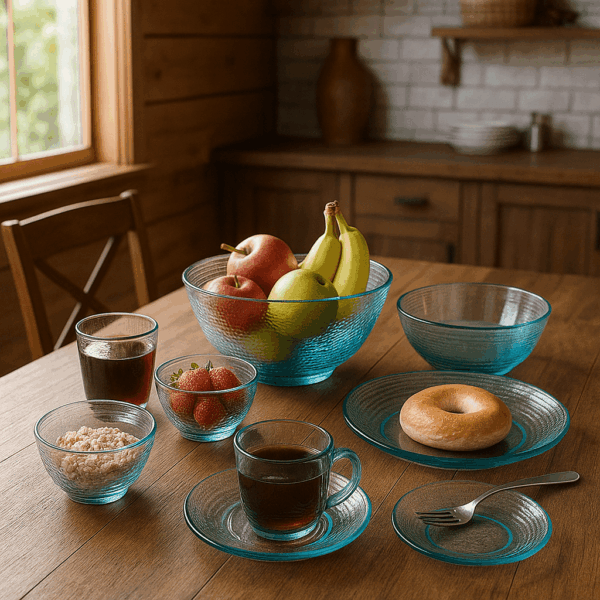
Glassware Tableware
The different types of glass used in glass tableware can be
- Vitrified Glass: This is typically opaque and virtually indestructible. It can survive a fall even on the hardest floors.
- Tempered Glass: This is compressed glass layers. This type of glass ensures your dinnerware is durable, chip resistant, and microwave-safe.
- Borosilicate Glass: This type of glass is made using silica and boron trioxide. This special ingredient gives it resistance against extreme temperature changes.
- Crystal Glass: It contains lead, making it more long-lasting than standard glasses. Because of its exceptional clarity and brilliance, crystal glass dinnerware is suitable for high-end occasions.
Glassware tableware are:
- Very durable
- Chip- and crack-resistant
- Microwave and dishwasher-safe
- Eco-friendly and non-toxic
- Aesthetically pleasing
- Affordable
- Ideal for a family environment

Gloss Spray Paint
Its mirror-like appearance enhances surface aesthetics while offering reliable protection. Gloss Spray Paint is available in a wide range of standard and customized colors based on international RAL color systems, including popular options such as RAL 9005 Gloss Black, RAL 9016 Gloss White, RAL 3020 Gloss Red, RAL 5010 Gloss Blue, RAL 1023 Gloss Yellow, and RAL 6002 Gloss Green. It is widely used for automotive refinishing, metal fabrication, machinery parts, household appliances, wood furniture, plastics, signage, and decorative projects. The formulation typically includes high-quality acrylic or alkyd resins, premium pigments, gloss-enhancing additives, solvents, and a balanced propellant system. Key technical features include high gloss level, excellent opacity, smooth flow and leveling, strong adhesion to various substrates, and good resistance to weathering, moisture, and abrasion.
Gloss Spray Paint is supplied in convenient aerosol packages, commonly in 400 ml and 500 ml cans, with options for custom branding, private labeling, and bulk supply. It offers easy, uniform application without the need for specialized equipment, making it suitable for industrial users and DIY consumers. With its extensive RAL color range, long-lasting shine, and consistent quality, Gloss Spray Paint is an ideal coating solution for achieving professional-grade finishes across a wide range of applications.
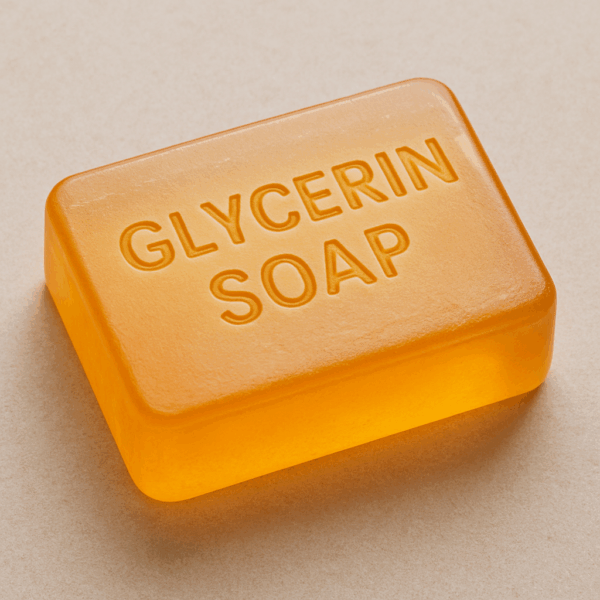
Glycerin Soap
Pure glycerin soap is all-natural. It doesn’t contain alcohol, fragrances, or other chemical-based ingredients that could irritate human skin. This makes glycerin soap vegan-friendly and a great option for people with sensitive skin.
Glycerin Soap easily penetrates the skin and fills in fine lines and promotes skin regeneration, resulting in a more supple, youthful, and radiant complexion. Glycerin soaps are suitable for mature, oily, and acne-prone skin types, and are especially effective on dry and sensitive skin.
Your skin’s natural oils are often stripped during the bathing process, whether from hot water or harsh products. Glycerin can help lock in your skin’s natural moisture and prevent over-drying.

Glycerol
Glycerol has a broad range of commercial applications because its combination of moisture retention, solvency, viscosity and chemical functionality makes it suitable for both finished products and industrial formulations. In the food industry, food grade glycerol is commonly used as a humectant, moisture-retaining agent, solvent and texture modifier in products such as confectionery, bakery products, fillings, processed foods and other formulations where maintaining moisture and improving consistency are important. Pharmaceutical manufacturers use high-purity glycerol in syrups, liquid formulations, capsules, topical products and other pharmaceutical preparations because it provides useful solvent, humectant and viscosity-modifying properties. In cosmetics and personal care products, glycerol is one of the most widely used moisturizing ingredients and can be found in creams, lotions, soaps, shampoos, toothpaste, skin-care products and other formulations where moisture retention and a smooth product texture are required. Glycerol is also an important raw material and chemical intermediate for producing glycerol derivatives, esters, ethers, polyols and other specialty chemicals, while its multifunctional hydroxyl groups make it useful in the manufacture of alkyd resins, polyurethanes and other polymeric materials. Technical grade glycerol is generally selected for industrial applications where extremely high purity is not essential, whereas refined, food and pharmaceutical grades are preferred for applications requiring tighter specifications and controlled impurity levels. Crude glycerol can also be utilized in selected industrial processes, but its suitability depends on its composition and the levels of methanol, salts, soaps, water and other components present in the material. For B2B purchasing, the required glycerol grade should therefore be determined according to the final application, required purity, processing conditions and applicable quality specifications.
Commercial glycerol is supplied in different packaging formats to accommodate the requirements of manufacturers, distributors and large-volume industrial buyers, with common options including HDPE drums, plastic drums, intermediate bulk containers and bulk tank trucks.

Goat Intestine
Industrial goat intestine is available in several grades, including salted goat casings, dry casings, cleaned wet intestines, collagen-rich sections, and raw trimmings for gelatin, peptone, and enzymatic production. Natural goat casings are especially used for traditional and regional sausages due to their firmness and distinctive bite quality. Collagen extracted from goat intestines finds applications in cosmetic creams, nutraceutical powders, edible films, and medical devices such as absorbable sutures. Biotechnology companies rely on goat-intestine-derived enzymes for fermentation media, laboratory processes, and specialty biochemical formulations. The material is also used in pet food production, organic fertilizers, and artisanal crafts such as instrument strings. Consistent sizing, high tensile strength, and efficient cleaning technologies enhance its industrial suitability and export value.
The excellent durability, uniform texture, and cost-effectiveness of Goat Intestine make it a preferred choice for B2B buyers in global markets. Packaging formats include salted barrels, vacuum-sealed food-grade bags, frozen blocks, and bulk containers designed for long-distance export. Standard packaging sizes range from 10 kg and 25 kg to 50 kg and 100 kg, with options for private labeling and OEM branding. With stable supply chains, competitive pricing, and strict quality-control systems, goat intestine remains a reliable raw material for global B2B industries. Buyers benefit from flexible procurement options and consistent product quality suitable for large-scale industrial operations.

Gold Effect Spray Paint
With smooth spraying and fast drying performance, gold effect spray paint provides professional results with ease of use. Gold Effect Spray Paint is available in a variety of gold metallic shades inspired by RAL and decorative metallic standards, including Classic Gold, Rich Gold, Bright Gold, Antique Gold, and Champagne Gold, comparable to metallic tones around RAL 1036 and other custom gold finishes. It is widely used for furniture restoration, decorative objects, picture frames, architectural elements, automotive trim, crafts, signage, and interior design projects. The formulation typically consists of high-quality acrylic or alkyd resins, fine metallic gold pigments, special effect additives, solvents, and a balanced propellant system. Key technical properties include excellent metallic brilliance, good opacity, smooth leveling, fast surface drying, strong adhesion to metal, wood, plastic, and plaster, and good resistance to aging under indoor and moderate outdoor conditions.
Gold Effect Spray Paint is supplied in standard aerosol packaging, most commonly in 400 ml and 500 ml cans, with options for customized shades, private labeling, and bulk supply. It allows easy application without specialized equipment and can be sealed with a clear protective topcoat for enhanced durability. With its elegant metallic appearance, wide application range, and consistent quality, Gold Effect Spray Paint is an ideal choice for creating high-end decorative finishes with reliable performance.

Golden Metallic Pigment
Golden Metallic Pigment is widely used in manufacturing industries where an attractive gold appearance, durability, and premium visual effect are required. In the paint and coating industry, different grades are applied in architectural coatings, industrial paints, powder coatings, automotive coatings, and protective finishes to create metallic and luxurious surfaces. In the plastic industry, heat-resistant grades are used for coloring plastic products, masterbatch production, injection molding, and decorative plastic components. Printing ink grades are designed for gravure printing, flexographic printing, screen printing, packaging materials, labels, and security printing. Cosmetic grades are manufactured with controlled purity and particle characteristics for applications such as makeup products, nail polish, and personal care formulations. Other applications include leather finishing, textile printing, ceramic decoration, artificial stone, handicrafts, gift packaging, and premium consumer products where a gold metallic effect is required.
Golden Metallic Pigment is valued for its excellent brightness, uniform dispersion, strong color stability, high decorative performance, and compatibility with various resin systems. Depending on the required performance, manufacturers can select grades with different levels of gloss, transparency, covering power, chemical resistance, weather resistance, and temperature stability. High-quality Golden Metallic Pigment provides consistent golden shades, good adhesion, excellent processing performance, and long-lasting visual effects in indoor and outdoor applications. Export-quality grades are available according to international industrial requirements and can be customized based on particle size distribution, surface treatment, application method, and customer specifications. These advantages make Golden Metallic Pigment an ideal choice for manufacturers looking for reliable metallic effects in paints, coatings, plastics, inks, cosmetics, and decorative industries.
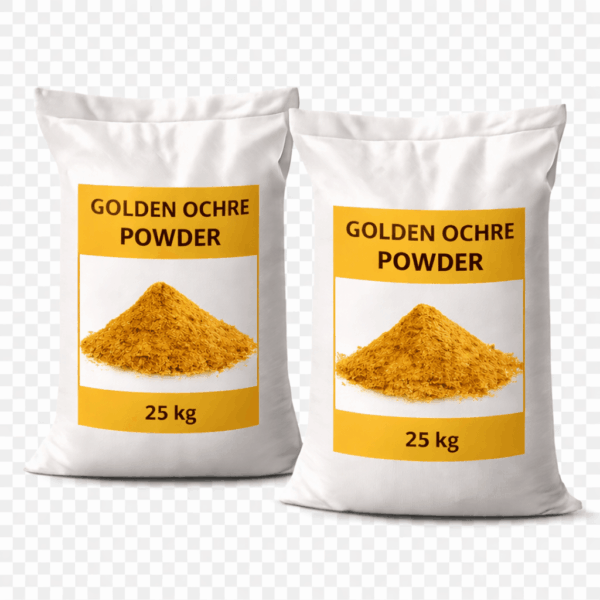
Golden Ochre Powder
Commercial golden ochre is available in several grades and varieties, including Natural Golden Ochre, Light Golden Ochre, Deep Golden Ochre, and High-Purity Golden Ochre, differentiated by iron oxide content, brightness level, and degree of refinement. These grades allow precise color control from soft honey-yellow hues to rich, warm golden tones.
Golden ochre powder is widely used in architectural and industrial paints, decorative coatings, cement and concrete coloring, plasters, mortars, bricks, tiles, ceramics, putties, asphalt, plastics, and rubber compounds. Its natural stability and aesthetic appeal make it especially suitable for exterior finishes and traditional or rustic design applications.
Key properties of golden ochre include excellent lightfastness, high UV and alkali resistance, thermal stability, low oil absorption, and good dispensability in both water-based and solvent-based systems. Commercial particle sizes are typically supplied as fine grades below 10 µm for paints and coatings, standard grades of 10–45 µm for construction materials and plastics, and coarser grades above 45 µm for textured plasters and decorative surfaces. Supplied in bags or bulk packaging, golden ochre powder is a cost-effective, environmentally friendly pigment solution for manufacturers seeking natural golden shades, consistent quality, and durable earth-tone performance.

Gouache Art Paints
The pigments used in a paint can be derived from natural sources, such as minerals and plants, or they can be synthesized chemically in a laboratory. The binder holds the pigments together to help the paint adhere to the painted surface. Other ingredients, such as solvents that adjust the paint’s consistency or additives that improve its performance or durability, may also be added to the mixture. Gouache paint is an opaque watercolor with a higher pigment load and a matte finish. It is often used for illustrations, design work, and more traditionally acceptable art applications.
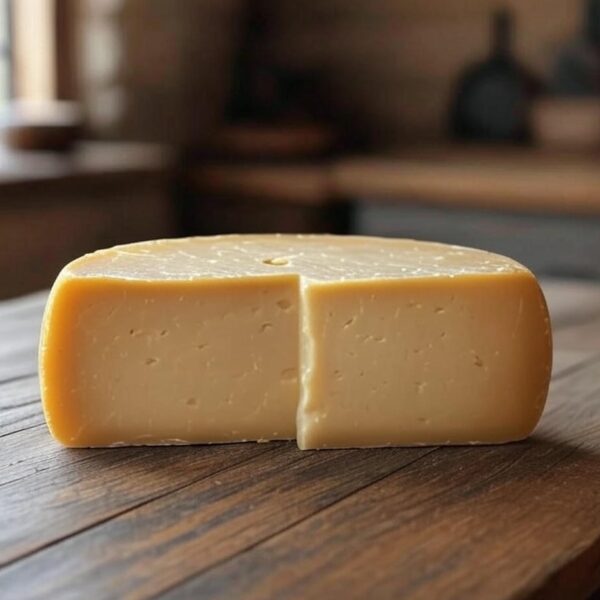
Gouda Cheese
A semi-hard to hard cheese with a smooth flavor, Gouda comes in several types, depending on its age. Gouda can be grated, sliced, cubed and melted. It is Yellow with wax coating and A popular mild cheese, eaten as is for snacks, also in cooked foods, salads and sandwiches.
Made from pasteurized or unpasteurized cow’s, goat’s or sheep’s milk and the cheese originated from Netherlands and varieties are semi – hard , hard , smoked Gouda .

Granit Marble
Granit Marble production process begins with the extraction of large natural stone blocks from carefully selected quarry faces using controlled cutting and separation techniques designed to preserve block integrity and minimize unnecessary damage. After extraction, the blocks are transported to processing facilities where they are inspected, classified, and sawn into slabs or smaller pieces according to customer and project requirements. Depending on the desired finish, the stone may undergo calibration, grinding, polishing, honing, brushing, flaming, or other surface treatments to achieve the required appearance and performance characteristics. The finished material is then accurately cut, inspected for dimensional consistency and visible defects, and prepared for commercial packing and shipment. Available types can include polished slabs for countertops and interior surfaces, honed or matte finishes for contemporary architectural applications, textured finishes for exterior areas, tiles for floors and walls, and cut-to-size products for customized construction projects.
One of the major advantages of Granit Marble is its combination of natural aesthetics and practical performance, providing architects, contractors, distributors, and stone fabricators with a versatile material for residential, commercial, hospitality, landscaping, and infrastructure projects. Its good resistance to wear, appropriate durability, ease of maintenance after proper finishing, and wide range of natural visual characteristics make it suitable for flooring, façades, wall coverings, kitchen and bathroom surfaces, staircases, entrance areas, hotel interiors, commercial buildings, monuments, landscaping features, and other decorative or structural applications. Granit Marble can be supplied in different slab thicknesses, tile dimensions, surface finishes, packing configurations, and customized sizes depending on production capabilities and project specifications. Proper selection should consider the stone’s technical properties, intended environment, finish, thickness, dimensions, and installation requirements to ensure reliable long-term performance.