

 Arabic
shop
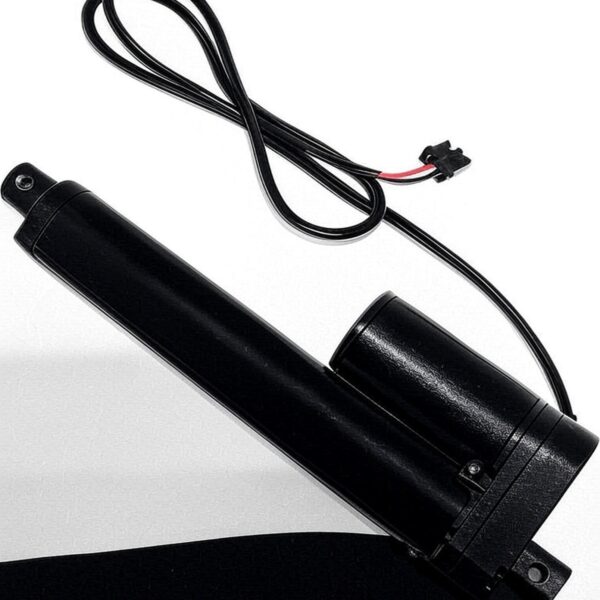
Electric Motor (Linear)
Many designs have been put forward for linear motors, falling into two major categories, low-acceleration and high-acceleration linear motors. In a linear motor. The rotor with permanent magnets becomes the stationary part of the linear motor (also called the secondary, or magnet plate), and the stator, which contains the coil windings, becomes the moving part (also called the primary, or coil unit). to direct and improve the magnetic flux interaction between the primary and secondary components ,Magnetic Tracks will be sued .
Different linear motors can be constructed for wide applications , these liner motors are :
– Low Acceleration Linear Motors
– High Acceleration Linear Motors
– Synchronous linear motors
– Induction linear motors
– Homopolar linear motors
– Tubular linear motors.
– Piezoelectric linear motors
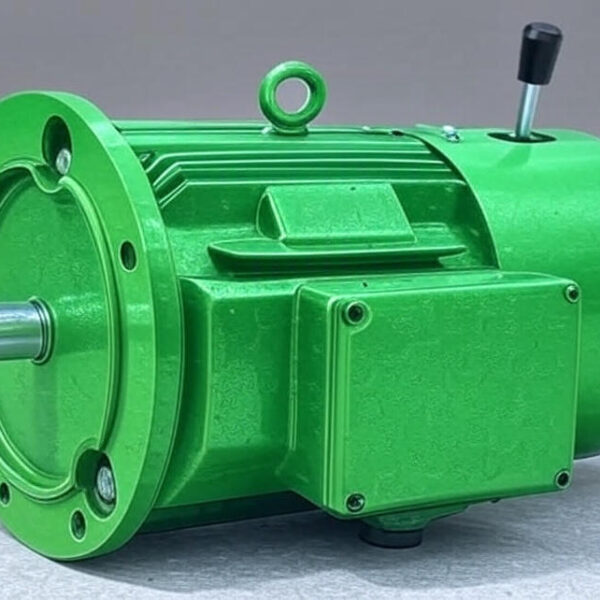
Electric Motor (Permanent Magnet DC )
In PMDC motors, the armature rotates due to a mechanical force induced by the magnetic field when current flows through its windings, according to Fleming’s left-hand rule.
The PMDC motor features a simple design with a stator that houses permanent magnets and an armature with windings and a commutator.
PMDC motors are efficient and cost-effective as they require no external power for field excitation and have fewer parts, making them compact.
These motors are ideal for low-power applications where complex speed controls are unnecessary, such as in toys ,commonly used as a starter motor in automobiles, windshield wipers, washers, blowers used in heaters and air conditioners ,computer disc drives and in many more.
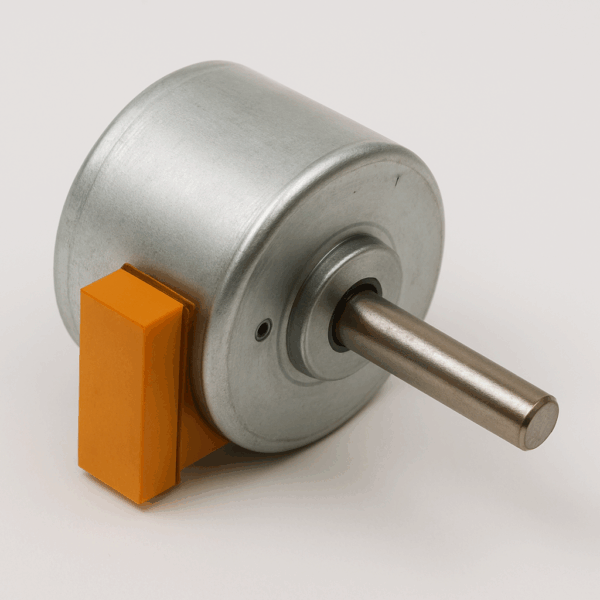
Electric Motor (Piezoelectric)
Conversely, the application of an electric field enables certain materials to alter their shape or size. Piezoelectric motors utilize this dynamic ability to generate motion. piezoelectric motors generate motion through the physical deformation of piezoelectric materials. Due to their one-of-a-kind operation, piezoelectric motors are optimal for applications that require precise positional control since they are able to produce motion that is both very precise and controllable at a smaller scale.
Materials such as quartz, Rochelle salt, and synthetic crystals such as lead zirconate titanate (PZT) are used to manufacture piezoelectric elements, which are the fundamental components of piezoelectric motors. These elements, when exposed to an electric voltage, undergo controlled deformation, enabling them to convert electrical energy directly into mechanical energy.
Piezoelectric motors stand out for their ability to maintain their position even in the absence of power, only using energy when necessary for movement.
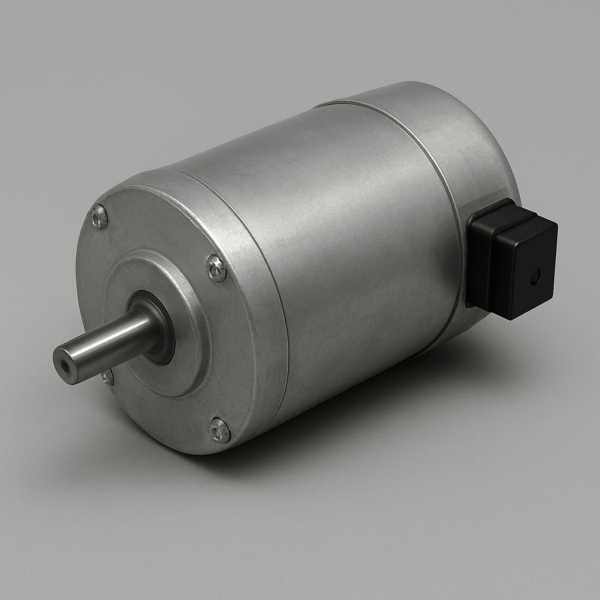
Electric Motor (Self-Excited DC )
Series Wound DC Motor
In series-wound DC motors, the field winding and the armature coil are connected in series to the power supply. This means the same current flows through the coil and armature. Since these types of motors can work both with DC and AC, they are also called universal motors. Series motors always rotate in the same direction, and their speed depends on the mechanical load. Series-wound motors are used in electric locomotives, electric trams, hoists, cranes, and other applications where high torque at low speeds is required
Electric Motor (Separately Excited DC )
The armature winding is powered by DC voltage V via a commutator and brushes, which causes the flow of current I. As a result of the magnetic field and the current, a force is acting on the armature, which starts rotating. The purpose of the commutator is to ensure the current flow through the relevant parts of the armature windings, so that the force acting on the armature is maximum.
Separately Excited Dc Motors have a broad range of output voltage and can function in stable conditions with any field excitation.
Electric Motor (Series Wound DC )
Characteristics of Series Wound DC Motors are high starting torque , simple in construction , cost effective and high power density .
Applications of Series Wound DC Model Motors:
- Electric Vehicles: Electric scooters, golf carts, and light rail vehicles due to their high starting torque.
- Construction Equipment: Due to their ability to handle, Cranes, hoists, and winches utilizes series wound motors.
- Trains: Series wound motors make them a common choice for powering model train locomotives due to their cost effective and simplicity.
- Power Tools: Grinders or uses series DC motor which provides high starting torque.
- Elevators: Series wound DC motor also plays a role in elevators.
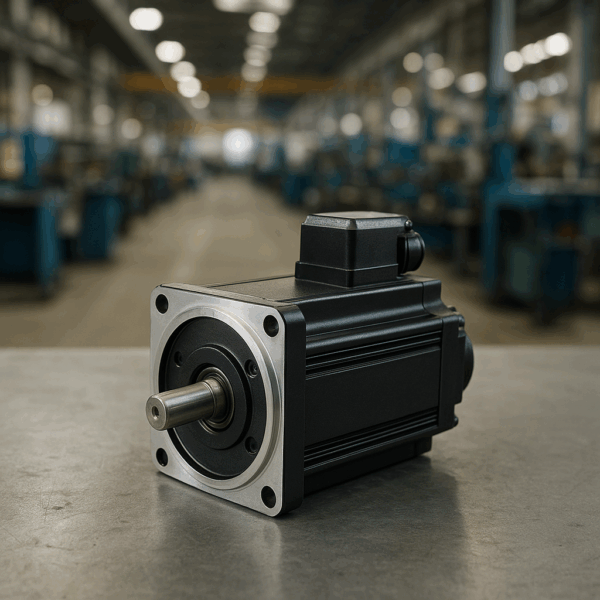
Electric Motor (Servo)
Servo motors are categorized based on their current supply, construction, and specific application requirements. Available types of Servomotors are : AC Servo Motors , DC Servo Motors , Brushed Servo Motors , Brushless Servo Motors ,Synchronous Motors , Asynchronous Motors , Linear Servo Motors , Iron-Core Linear Servo Motor.
Advantages of Servo Motors: High Efficiency , Exceptional Control Precision , High Output Power , Rapid Response to Starting / Stopping, Low Maintenance , Integration with Sophisticated Control Systems , High Torque at Low Speeds , Reduced Heat Generation and associated components.
Application :
- Robotics: The continuous rotation servo is used in building of robotic arms for precise control of movement and position, and it’s essential for assembly lines and surgical robots.
- Manufacturing: Employed in CNC machines to produce detailed and precise cuts and engravings in materials.
- Aerospace: Integral in controlling the position of aircraft components such as flaps, rudders, and other control surfaces.
- Automotive: Utilized in the production line for assembling parts with high precision to ensure the quality and reliability of the automotive components.
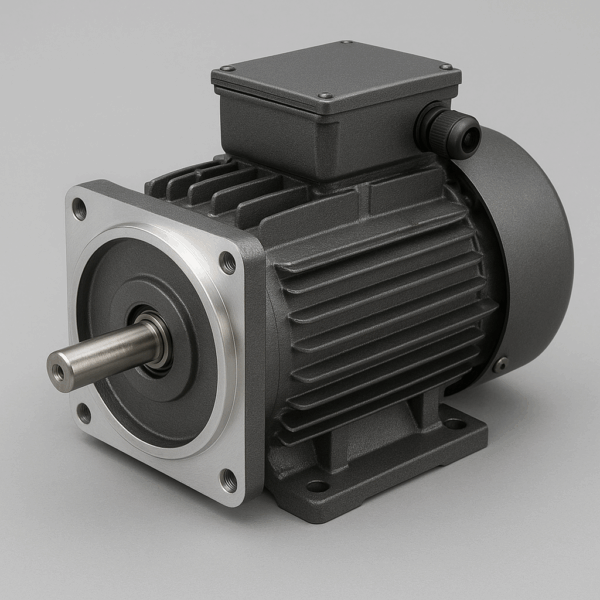
Electric Motor (Switched Reluctance SRM )
The categorization of switched reluctance motor can be done based on the construction that are linear SRM and rotary SRM.
Advantages :
- These motors are very simple
- The rotors in this motor are extremely strong
- Doesn’t use any additional ventilation system
- These are less expensive
- Fault tolerance is high and
- Phase losses do not change the operation of the motor.
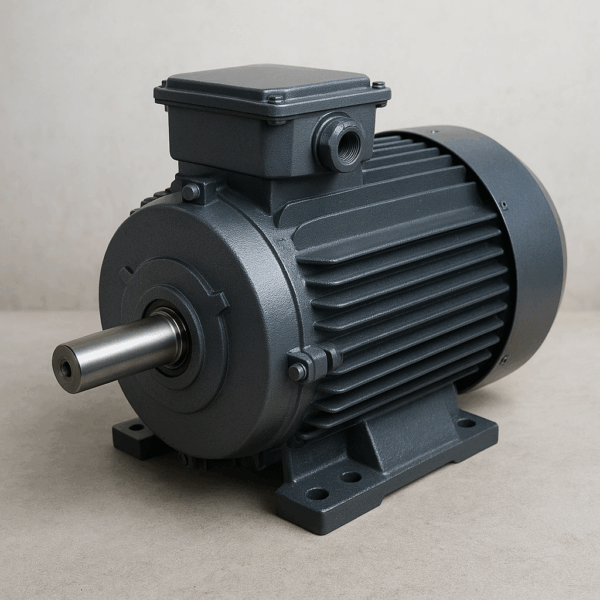
Electric Motor (Synchronous )
Synchronous motors are used in many different applications because of their special qualities and accurate control. The following are a few typical uses for synchronous motors:
- Electric generators often utilize synchronous motors in power plants to convert mechanical energy into electrical energy.
- Synchronous motors are used in many industrial machinery because of their efficiency and capacity to operate at constant speeds.
- Synchronous motors are often utilized to power pumps in chemical processing facilities, where the production procedure requires a constant speed.
- As synchronous motors operate at a constant speed; they are a reliable and efficient choice for large-scale air conditioning systems.
- Synchronous motors are used in communication networks to synchronize timing mechanisms, among other uses for them.
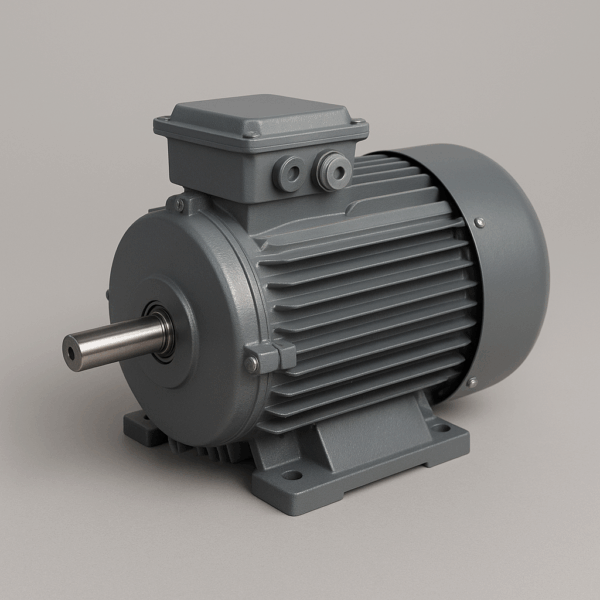
Electric Motor (Universal)
Most of the universal motors are meant to operate at speeds as high as 3500 RPM. These motors run at a higher speed on DC supply than they run on AC supply of the same voltage.
Following are the distinctive properties of the universal motor:
- They run at high speed.
- They have high starting torque.
- Compact size and are lightweight.
- They are noisy because of the commutator and brushes.
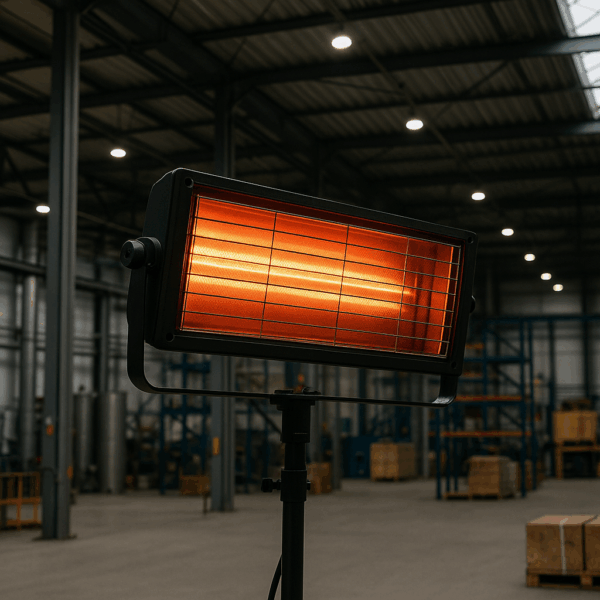
Electric Radiant Heater
A radiant floor heating system warms a place by directly heating the floor rather than warming the air in the room, using thermal radiation and electromagnetic waves and floor radiates up which will be absorbed by other items in the room, thus warming the whole space.
Benefits of Radiant Heaters:
- Radiant heaters allow livable areas with invisible hardware.
- They are cost-effective and energy-efficient.
- They are compatible with smart thermostats.
- There are fewer restrictions on interior design.
- Electric radiant floor heating systems don’t need to be serviced or maintained regularly.
- Radiant heaters are suitable for any flooring.
- Installation is easy when new flooring is placed; electric-based radiant floor heating systems are simple to install.
- Regarding air quality, radiant heat is a far superior option.
Applications of Radiant Heaters:
- Inside big plants
- Inside garages and loading docks
- Heating tight warehouse aisles
- Heating hoppers and dry paint
- Preventing pipes and valves from freezing
- Radiant flat panel heaters are used in space heating, drying and curing, water evaporation, and food processing
- Used in addition to sterilization, material preparation, bonding and joining, and industrial manufacture and production
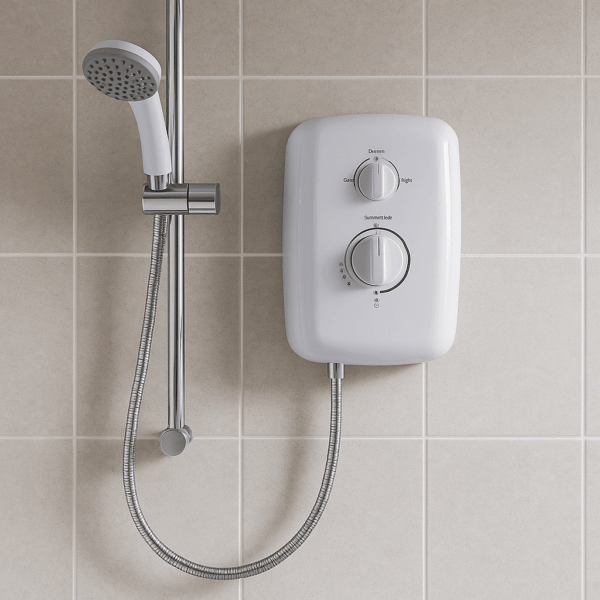
Electric Shower
Electric showers primarily come in two main types: standard electric showers which heat cold water directly using an internal heating element, and thermostatic electric showers that maintain a consistent temperature by regulating the water flow based on the incoming cold water supply, offering a more controlled showering experience. Unlike mixer showers, electric showers only use a cold water supply and heat it within the shower unit using an electrical element. Since they heat the water directly, electric showers can function well even with low water pressure.