

 Arabic
H

Built-In Gas Fireplace Heater
You get conventionally designed built-in gas fireplaces that resemble natural wood logs. They are available in diverse sizes with different colours and textures. You can use stones, rocks and multi coloured glass stones for a contemporary look. These Modern gas fireplaces are perfect combination of visual appeal and heating efficiency , they are clean-burning, safe and far more energy efficient. Type of ignition of the fireplace can be electric ignition that uses a spark created by electricity to ignite the flame or A standing pilot ignition that uses a low amount of gas to continually maintain a small flame.
About this item
- Up to 20, 000 BTU’s/hr heats up to 700 sq. Ft
- Thermostat control knob automatically maintains your ideal heat level
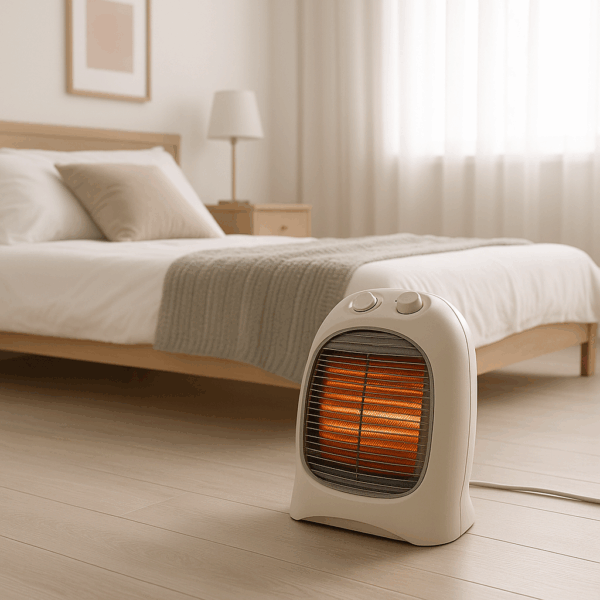
Electric Fan Heater For Home
A Fan Heater is the cheapest type of heating device. Electric fan heaters essentially combines a heating element and a fan that optionally can be placed in a plastic or metal case.A stream of air is produced by the fan, and as it passes past the heating components, it is heated and spread evenly throughout the space.
Electric fan heaters are lightweight, compact , portable and can be fixed be on floor, wall, table and ceiling or be permanently installed .
Advantages :
-
Heats up a room fast.
-
Affordable and easy to use.
-
Good for spot heating (directing heat where you need it).
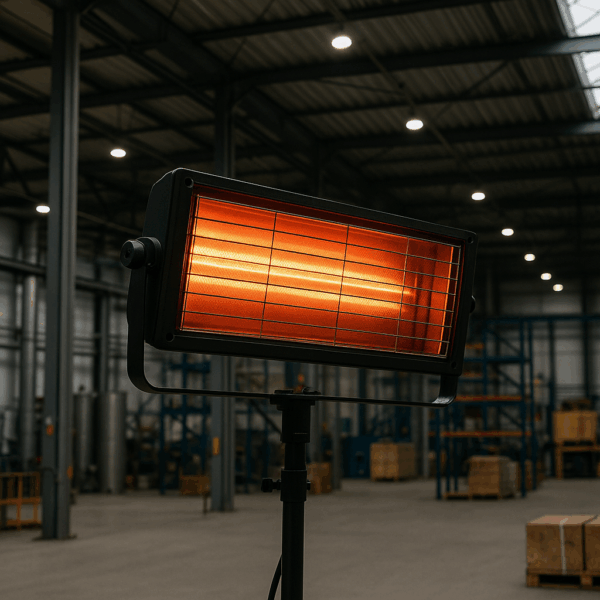
Electric Radiant Heater
A radiant floor heating system warms a place by directly heating the floor rather than warming the air in the room, using thermal radiation and electromagnetic waves and floor radiates up which will be absorbed by other items in the room, thus warming the whole space.
Benefits of Radiant Heaters:
- Radiant heaters allow livable areas with invisible hardware.
- They are cost-effective and energy-efficient.
- They are compatible with smart thermostats.
- There are fewer restrictions on interior design.
- Electric radiant floor heating systems don’t need to be serviced or maintained regularly.
- Radiant heaters are suitable for any flooring.
- Installation is easy when new flooring is placed; electric-based radiant floor heating systems are simple to install.
- Regarding air quality, radiant heat is a far superior option.
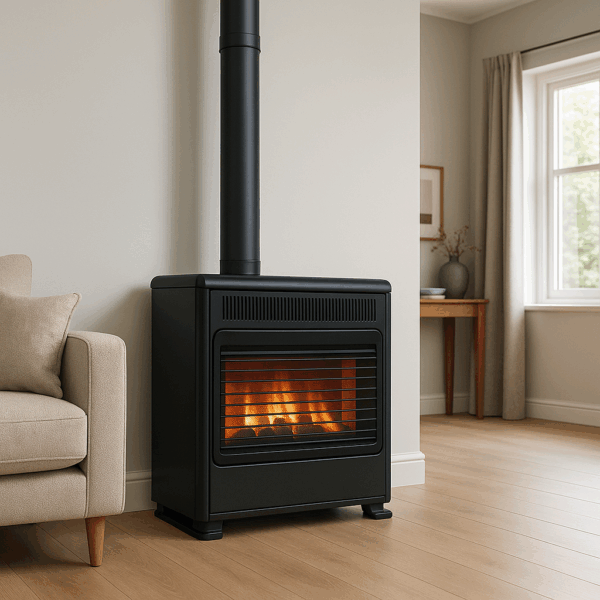
Flued Gas Heaters
The primary components of a flued gas heater include the burner, heat exchanger, and the flue system. The burner ignites the gas to produce heat, which is then transferred to the surrounding air through the heat exchanger. The flue system, comprising pipes or ducts, channels the combustion gases outside, preventing them from accumulating indoors.
Flued gas heaters come in various types, including natural draught, fan-assisted, and balanced flue models. Natural draught heaters rely on the natural flow of air to expel gases, while fan-assisted heaters use a fan to enhance this process. Balanced flue heaters, on the other hand, draw air from outside for combustion, ensuring a sealed and efficient system.
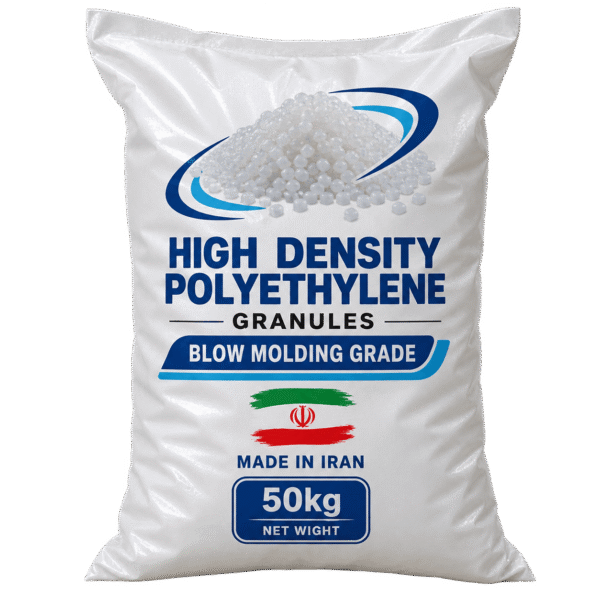
HDPE Blow Molding Grade Granules
Depending on the intended product, manufacturers may select different molecular weight distributions and melt flow characteristics to balance processability with impact strength and wall thickness control. High-quality blow molding grades can provide consistent extrusion behavior, good surface appearance and reliable dimensional stability in mass production. Typical applications include HDPE bottles, detergent containers, chemical containers, lubricant bottles, jerry cans, household packaging and industrial hollow containers. The material is valued for its combination of rigidity, impact resistance, chemical resistance and low moisture absorption, making it suitable for packaging products containing detergents, cleaning agents and various industrial liquids. Blow molding manufacturers also benefit from HDPE’s relatively high stiffness, which allows containers to retain their shape during filling, stacking and transportation. Grade selection depends on container volume, wall thickness, extrusion equipment, cycle time, required drop resistance and the chemical compatibility of the finished container with its contents.
HDPE Blow Molding Grade Commercially is supplied as uniform polymer pellets suitable for automatic feeding systems used in industrial blow molding lines. Packaging generally consists of sealed polyethylene-lined bags or multi-layer polymer bags, with 25 kg bags widely used for standard commercial shipments and larger bulk packaging available for high-volume production. Proper packaging prevents dust, moisture and foreign particles from entering the resin during transportation and storage. For demanding applications, manufacturers should evaluate melt flow rate, density, impact performance, stiffness and processing stability using the supplier’s current technical documentation before selecting a grade.
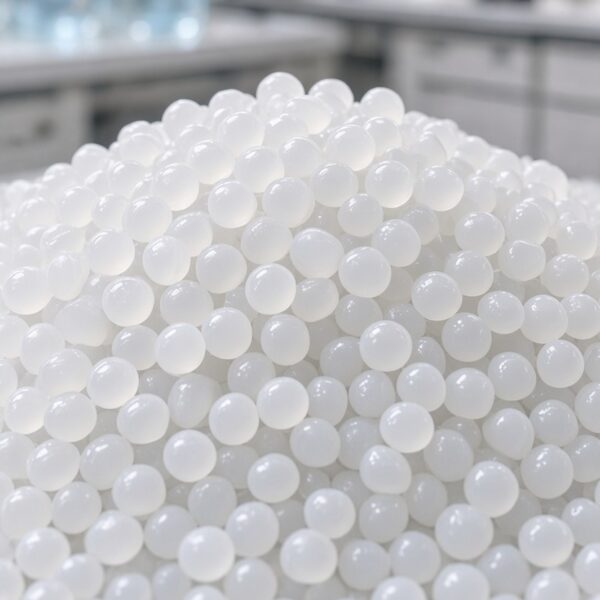
HDPE Cap & Closure Grade Granules
Common applications include beverage and water bottle caps, detergent closures, chemical container caps, household packaging closures and industrial bottle components. HDPE is suitable for these products because it combines low moisture absorption with good chemical resistance and sufficient toughness for repeated handling. Closure manufacturers pay particular attention to stress crack resistance because caps may be exposed to internal pressure, chemical contents and mechanical stresses around threads and hinges. Depending on the design, the grade may be selected to optimize cycle time, stiffness, torque performance, impact resistance and dimensional stability. Proper material selection can also reduce molding defects and improve consistency in automated packaging lines.
HDPE Cap & Closure Grade is normally supplied as clean polymer granules in sealed 25 kg industrial bags or larger packaging formats for high-volume molding operations. The bags should provide effective protection against dust, moisture and foreign particles because contamination can negatively affect high-speed molding processes and closure appearance. For commercial purchasing, manufacturers should compare MFR, density, stiffness, impact resistance and environmental stress crack resistance with the requirements of the specific closure design. Batch-to-batch consistency is particularly important for producers operating automated molding and packaging systems at high production speeds.
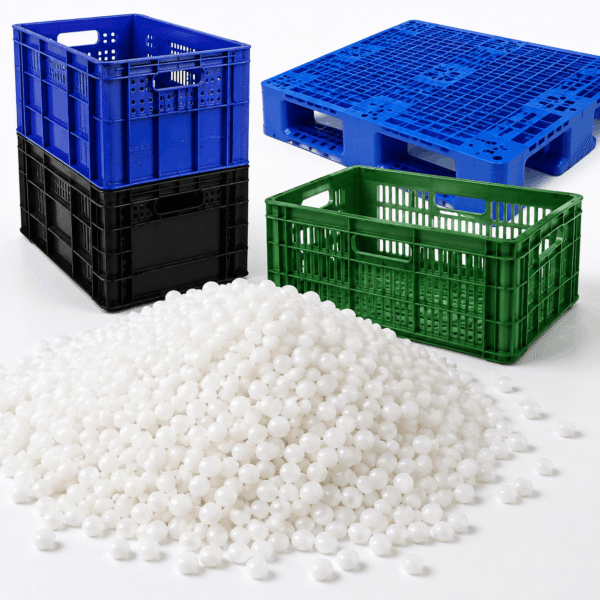
HDPE Crate & Pallet Grade Granules
Typical applications include industrial pallets, warehouse crates, fruit and vegetable crates, beverage crates, storage boxes, logistics containers and reusable distribution packaging. Crate and pallet manufacturers require a balance between rigidity and impact resistance because the products may be stacked, dropped, transported by forklifts and exposed to changing temperatures. HDPE can also be compounded with selected additives or recycled material when the application and product specifications permit. However, for demanding load-bearing applications, the formulation must be carefully controlled to maintain mechanical consistency. Injection molding conditions, mold design, cooling rate and part thickness also influence the dimensional accuracy and final strength of the product.
HDPE Crate & Pallet Grade Granules are generally supplied in 25 kg bags made from durable polymer or multi-layer packaging, with jumbo bags suitable for large-scale molding operations where required. The packaging is designed to minimize contamination during storage and automated feeding. Because crates and pallets are often produced in high-volume cycles, stable MFR and predictable shrinkage are important commercial considerations. Buyers should evaluate density, melt flow rate, impact resistance, stiffness and processing characteristics according to the specific crate or pallet design before selecting the appropriate HDPE grade.
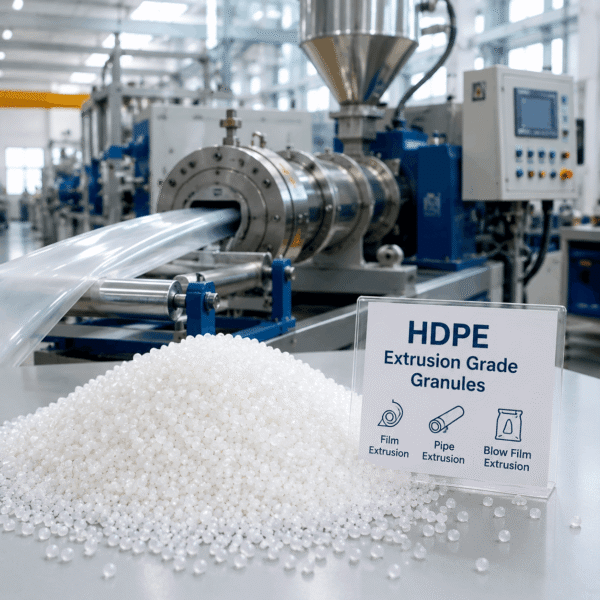
HDPE Extrusion Grade Granules
Applications include extruded sheets, plastic profiles, protective tubes, ducts, liners, industrial components and various custom extrusion products. HDPE provides good chemical resistance, moisture resistance and dimensional stability, making it suitable for components used in industrial, construction, agricultural and commercial environments. Manufacturers can produce products with different thicknesses and geometries by controlling die design, extrusion temperature, screw speed, cooling conditions and haul-off speed. Grade selection should therefore be based on the required melt flow behavior, product thickness, stiffness, impact resistance and operating environment rather than treating all HDPE extrusion materials as interchangeable.
HDPE Extrusion Grade Granules are normally supplied in sealed industrial polymer bags, commonly in 25 kg units, with jumbo bags available for larger production facilities where appropriate. Packaging protects the pellets against dust, moisture and foreign materials that could interfere with continuous extrusion. The material should be stored under controlled warehouse conditions and kept away from excessive heat and direct sunlight. For industrial purchasing, the manufacturer’s TDS and COA should be reviewed for MFR, density, mechanical properties and processing recommendations before the grade is introduced into a continuous extrusion line.
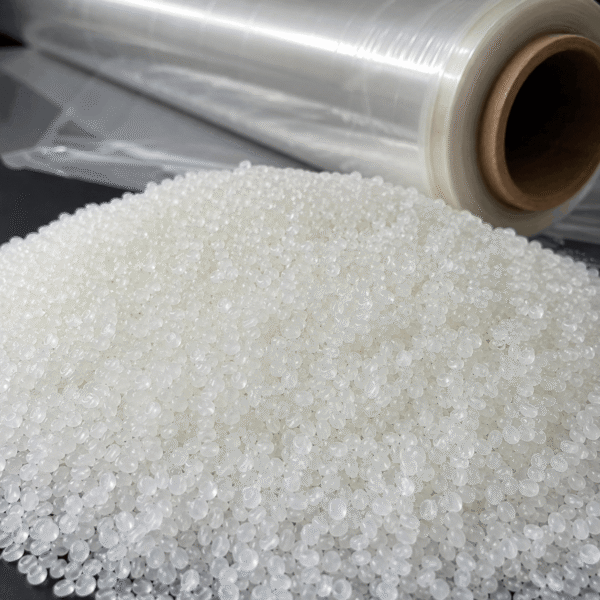
HDPE Film Grade Granules
HDPE Film Grade is widely used for shopping bags, grocery bags, packaging liners, industrial bags, food-related packaging and thin-gauge polyethylene films. Its high strength-to-thickness ratio allows manufacturers to reduce film gauge while maintaining useful mechanical performance, which can improve material efficiency in certain applications. HDPE film also provides good moisture resistance and chemical resistance, making it suitable for packaging products that require protection against humidity and contamination. Film producers select the grade according to extrusion technology, required thickness, bag dimensions, tensile strength, stiffness, tear resistance and sealing requirements. Processing conditions such as melt temperature, die configuration, cooling and draw ratio also have a direct effect on the final film quality.
HDPE Film Grade Granules are commonly packaged in 25 kg polyethylene-lined or multi-layer bags suitable for industrial transportation and storage. For large film manufacturing operations, jumbo bags may be available according to supplier logistics and customer requirements. The resin should be kept in a clean and dry environment and protected from direct sunlight, excessive heat and contamination. For commercial purchasing, manufacturers should check the exact MFR, density, mechanical properties and processing recommendations for the selected grade rather than relying only on the general HDPE classification.
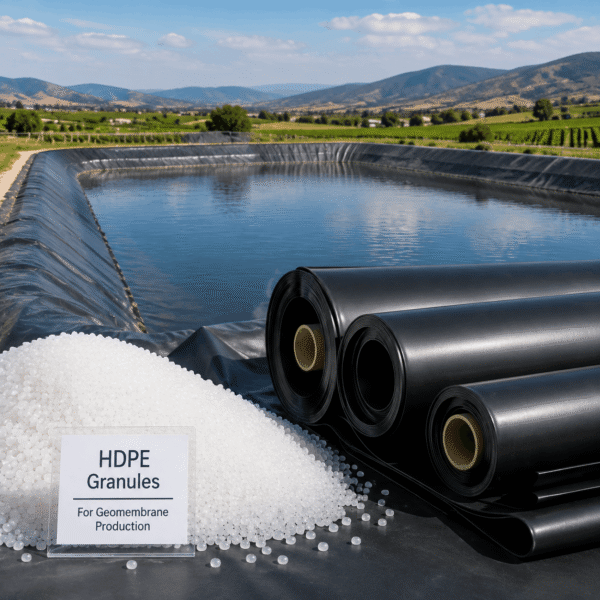
HDPE Geomembrane Grade Granules
HDPE geomembranes are used for landfill liners, wastewater treatment facilities, mining ponds, irrigation reservoirs, aquaculture ponds, industrial containment systems and other waterproofing structures. Their very low permeability makes them effective barriers against the migration of water and many chemical substances. The finished geomembrane can be manufactured in different thicknesses according to hydraulic pressure, substrate conditions, installation method and required service life. Important performance considerations include tensile strength, elongation, tear resistance, puncture resistance, carbon black dispersion and resistance to environmental stress cracking. Manufacturers must therefore select a resin formulation capable of maintaining mechanical and barrier properties throughout the expected operating period.
HDPE Geomembrane Grade is typically supplied as clean polymer pellets in sealed moisture-resistant bags or heavy-duty multi-layer packaging. Standard 25 kg bags are suitable for conventional industrial handling, while jumbo bags can be used for larger sheet and geomembrane manufacturing operations. Packaging should protect the resin from contamination, moisture and excessive heat during storage and transportation. Before commercial production, geomembrane manufacturers should review the resin’s density, MFR, mechanical properties, stabilizer system and other relevant technical data to confirm compatibility with the extrusion line and the required geomembrane performance.
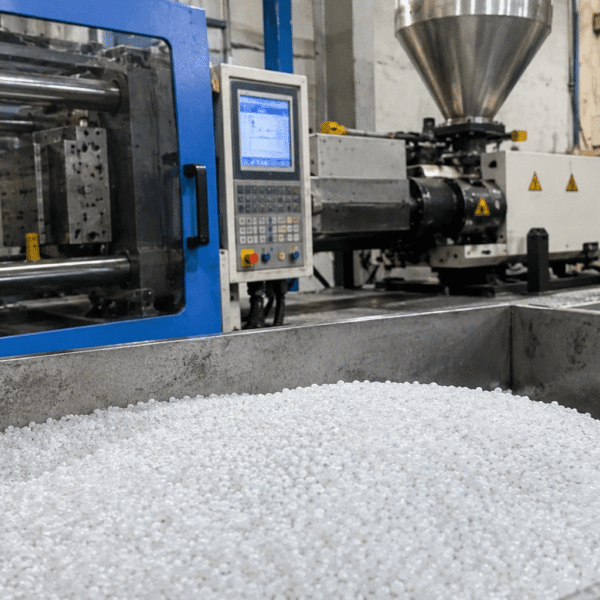
HDPE Injection Molding Grade Granules
HDPE Injection Grade is commonly used for crates, containers, buckets, household products, industrial components, storage boxes, lids, automotive parts and various molded articles. Its combination of stiffness, impact resistance, chemical resistance and relatively low moisture absorption makes it suitable for products exposed to repeated handling and demanding service environments. Injection molding manufacturers can also benefit from HDPE’s ability to produce lightweight components with good rigidity and dimensional consistency. The appropriate grade should be chosen according to mold design, injection speed, melt temperature, cooling cycle, product thickness and required mechanical performance. For high-volume manufacturing, stable MFR and predictable shrinkage are especially important for reducing rejects and maintaining consistent product dimensions.
HDPE Injection Molding Grade Granules are generally delivered in sealed industrial bags designed to protect the resin from contamination during storage and handling. Standard 25 kg packaging is commonly used for commercial orders, while jumbo bags or bulk handling systems may be considered for large-scale injection molding plants. Bags should remain sealed until the material is introduced into the production system, and storage areas should be clean and protected from excessive heat and direct sunlight. Buyers normally review MFR, density, tensile strength, impact resistance and other application-specific data before approving an injection molding grade for production.
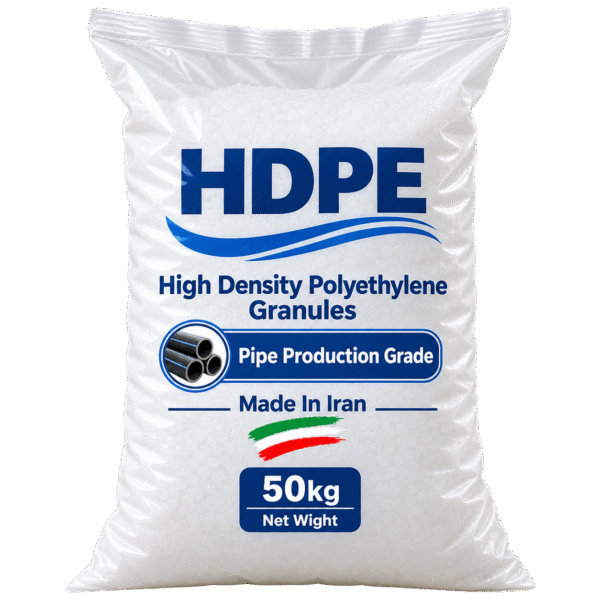
HDPE Pipe Grade Granules
Pressure pipe grades are typically selected according to the required long-term hydrostatic strength, resistance to slow crack growth and operating pressure. The formulation can also incorporate carefully controlled stabilizer packages to improve resistance to thermal degradation during processing. HDPE Pipe Grade is widely used for potable water pipelines, irrigation networks, sewage systems, industrial piping, mining applications and gas distribution pipes. One of its major technical advantages is its resistance to corrosion, chemicals, moisture and many aggressive environments, eliminating many of the corrosion-related problems associated with metallic piping. The material also provides good flexibility and impact resistance, allowing polyethylene pipes to tolerate ground movement and mechanical stresses more effectively than many rigid materials. For pressure applications, manufacturers select the grade according to pipe diameter, wall thickness, pressure class, extrusion conditions and applicable performance requirements. Consistent melt flow, low contamination and stable processing behavior are particularly important for producing pipes with uniform dimensions and reliable mechanical performance.
HDPE Pipe Grade Granules are normally supplied in clean, free-flowing form and packed in moisture-resistant polyethylene-lined bags or heavy-duty multi-layer bags. Standard industrial packaging commonly includes 25 kg bags, while jumbo bags may be supplied for large-volume manufacturing operations depending on production and logistics requirements. During storage, the resin should be protected from contamination, excessive heat and direct sunlight before processing. Each commercial batch should ideally be accompanied by a Technical Data Sheet and Certificate of Analysis covering key parameters such as density, melt flow rate, mechanical properties and other relevant quality characteristics.