

 Arabic
shop

Baby Bottle Normal Type
Normal Type Baby Bottles are available in various sizes including 60 ml, 120 ml, 150 ml, 240 ml, and 300 ml models to meet different stages of infant growth. They can be supplied with silicone nipples, anti-colic systems, standard caps, wide neck designs, and customized branding options. The bottles are manufactured according to international safety requirements with features such as BPA-free materials, high impact resistance, easy sterilization, and leak-proof performance. These products are widely used for infant formula feeding, milk feeding, water feeding, and nutritional supplement delivery for babies. Different commercial types include standard neck baby bottles, wide neck baby bottles, glass baby bottles, PP plastic baby bottles, and OEM customized baby bottles.
Baby Bottle Normal Type offers excellent advantages for manufacturers, wholesalers, and distributors looking for reliable infant care products. These bottles provide safe contact with food, convenient handling, long service life, and compatibility with different feeding accessories. They are suitable for pharmacies, supermarkets, baby product stores, hospitals, and online marketplaces. International suppliers can provide different packaging solutions including individual boxes, bulk cartons, and private label packaging with customer brands. With growing demand for safe infant feeding products worldwide, Normal Type Baby Bottles remain one of the most important products in the baby care industry.

Baby Shampoo
Specially formulated for use on infants and young children by means of substituting chemicals which are purportedly less irritating to the eyes than those commonly found in regular shampoo.
This is accomplished by one or more of the following formulation strategies:
- dilution, in case product comes in contact with eyes after running off the top of the head with minimal further dilution.
- adjusting pH to that of “non-stress tears”, approximately 7, which may be a higher pH than that of shampoos which are pH adjusted for skin or hair effects, and lower than that of shampoo made of soap.
- use of surfactants which, alone or in combination, are less irritating than those used in other shampoos.
Baby Soap
Baby soaps are created to cleanse your baby while preserving the natural moisture and pH balance of their skin.
The benefits of baby safe soap
- Protecting Delicate Skin: Babies have extremely sensitive and delicate skin, which is more prone to irritation, dryness, and allergies. The wrong soap can exacerbate these issues, leading to discomfort for your baby.
- Avoiding Harsh Chemicals: Many standard soaps contain harsh chemicals, fragrances, and additives that can be too harsh for a baby’s skin. These ingredients can cause rashes, redness, and itching.
- Saving Eyes and Noses: Babies are notorious for getting soap in their eyes and nose during bath time. Baby-safe soap formulations are designed to minimize the risk of stinging or discomfort if it comes into contact with these sensitive areas.
- Maintaining pH Balance: Baby skin has a slightly acidic pH, which is essential for protecting against bacteria and other irritants. Baby-safe soaps are formulated to maintain this pH balance, helping to prevent skin issues.
- Suitable for Sensitive Skin: Babies aren’t the only ones with sensitive skin. Many adults also struggle with reactive or eczema prone complexion, and baby safe soap can help alleviate your struggles to find soap that prevents your skin from flaring or becoming irritated.
- Hypoallergenic: Baby-safe soap should be hypoallergenic, meaning it’s less likely to cause allergic reactions. Look for products labelled as such.

Ballet Flat Shoes
Drawing inspiration from the footwear of ballet dancers, ballet flats enchant with their flat soles, rounded toe, and effortless slip-on design. Their comfortable and versatile nature makes them perfectly suitable for casual and formal affairs. From jeans to dresses or skirts, ballet flats effortlessly elevate any ensemble, infusing it with timeless and graceful elegance.

Barium Complex Grease
The primary components of grease are: Lubricating Fluid , Thickeners and Additives . Barium complexes were one of the first multipurpose greases. They are made by reacting barium hydroxide in a crystalline form with a fatty acid, complexing the soap with stabilizing substances and then blending with the desired amount of oil. Barium complex grease is a high-performance grease widely known for its mechanical stability, high-temperature resistance(drop point above 220°C ), ability to withstand heavy loads and high speeds, excellent water tolerance, great oxidation stability, as well as resistance to various chemicals. Barium complex grease is mostly used in demanding, heavy-load applications, such as industrial, aeronautical, marine, and manufacturing applications. barium complex soap based greases shows also excellent performance in combination with hot water and vapour. This makes it a very suitable grease for a vast range of applications.
Applications :
- Water, acids, alkaline bleach pumps
- Extractors and fans in very wet environments (i.e. cooling waters)
- Plain bearings and bearings in the textile and leather industry
- Mechanisms exposed to vapour in the paper industry
- Wheel bearings in all types of vehicles and moving equipment
- Driers in the wood industry
- Chains and roller belts in the packing industry , Spindles , Engines , High speed bearing in wet or chemical ambience and Bearings exposed to vibrations or oscillations in heavy industries
Barium Sulfate
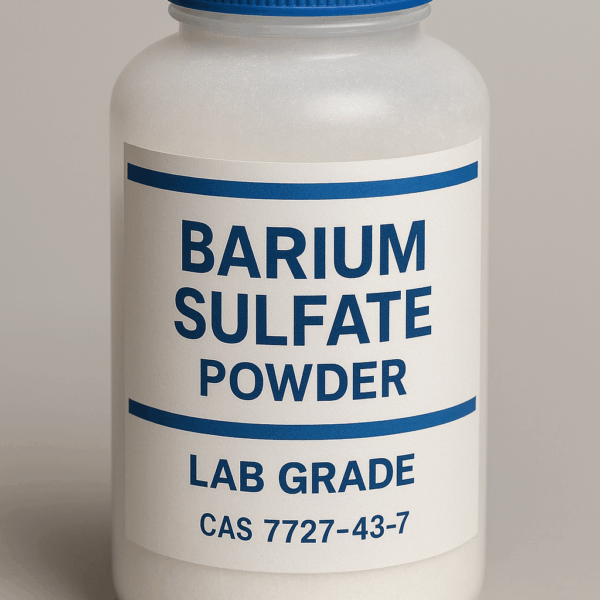
Commercially available Barium Sulfate grades include natural barite powder, precipitated Barium Sulfate, high-purity pharmaceutical grade, industrial grade, coating grade, plastic grade, and drilling grade. Barium Sulfate is highly valued as a functional additive because of its superior opacity, brightness enhancement, dimensional stability, and ability to improve mechanical properties in polymer and coating formulations. In the paint and coating industry, it is used as an extender pigment to improve gloss, durability, corrosion resistance, and surface smoothness while reducing production costs. In plastics and masterbatch production, Barium Sulfate enhances stiffness, density, impact resistance, and processing performance. It is also widely used in rubber compounds, adhesives, sealants, ceramics, glass manufacturing, and as a weighting agent in oil and gas drilling fluids due to its high specific gravity.
Commercial Barium Sulfate is supplied in different particle sizes and purity levels depending on the end-use requirements. Fine and ultra-fine grades are preferred for high-quality coatings, plastics, and advanced polymer applications, while standard industrial grades are commonly used in drilling muds, rubber, and construction products. Medical-grade Barium Sulfate is used as a contrast medium for X-ray and CT imaging because it is insoluble and safe for diagnostic applications. Reliable suppliers provide Barium Sulfate in various packaging options including 25 kg bags, jumbo bags, and customized industrial packaging to meet international B2B trade requirements. IranCorps can assist international buyers in finding qualified Barium Sulfate suppliers and exporters from Iran based on technical specifications, quality requirements, and commercial needs.

Base Oil 100N
The production process of Base Oil 100N includes atmospheric and vacuum distillation of crude oil, solvent extraction, dewaxing, and hydrofinishing treatment to remove unwanted aromatic compounds, sulfur components, and impurities while improving thermal stability and performance characteristics. Depending on the refinery technology, Base Oil 100N can be produced as a Group I base oil with different viscosity and quality grades according to international standards. Commercially available types include SN 100 Base Oil, Low Pour Point SN 100, High Viscosity Index SN 100, and Bright Color SN 100, each selected for different applications. Low pour point grades are preferred for colder climate lubricant formulations, while standard SN 100 grades are widely used in general industrial lubricant production.
Base Oil 100N is mainly applied in the production of engine oils, hydraulic oils, gear oils, compressor oils, metalworking fluids, process oils, greases, transmission fluids, and other industrial lubricants. Its excellent solvency allows efficient blending with additives such as viscosity improvers, detergents, antioxidants, and anti-wear agents. The main advantages of Base Oil 100N include good lubrication performance, stable viscosity, excellent additive compatibility, reliable oxidation resistance, controlled volatility, and cost-effective performance compared with synthetic base stocks. Base Oil 100N is supplied for wholesale export markets in accordance with customer specifications and international lubricant manufacturing requirements.
Base Oil 150N
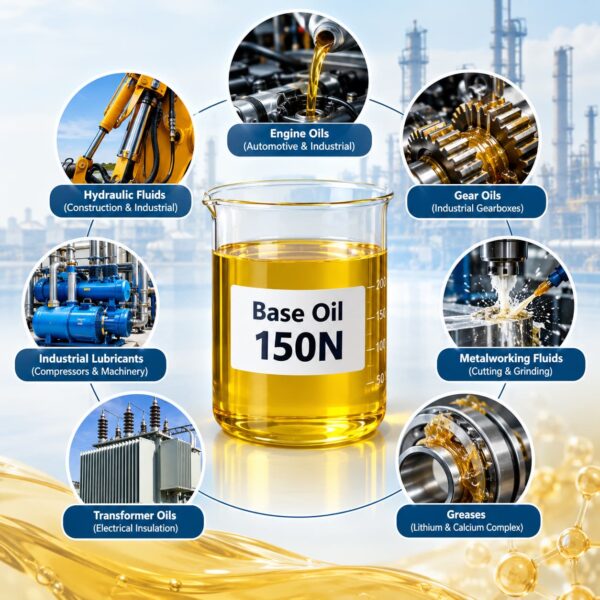
The principal applications of Base Oil 150N are found in the lubricant and petroleum-processing industries, where it functions as a primary blending component rather than a finished lubricant by itself. It is extensively used for manufacturing automotive lubricants, industrial lubricants, hydraulic oils, gear oils, compressor oils, circulating oils, spindle oils, process oils, metalworking fluids, transmission-fluid formulations and general-purpose machinery oils. SN150 can also be blended with higher-viscosity base oils such as SN500, SN600 or Bright Stock to obtain specific viscosity grades required by lubricant manufacturers. In automotive lubricant production, Base Oil 150N can contribute suitable low-temperature fluidity, additive compatibility and balanced viscosity characteristics, while in industrial formulations it provides a stable mineral-oil carrier for additive packages. The commercial types available in the market may differ according to viscosity, viscosity index, sulfur content, pour point, color, refining method and regional specification. Typical products include Group I SN150, conventional Solvent Neutral 150, hydrofinished 150N and refinery-specific 150N grades, while the exact specification should always be confirmed through the supplier’s technical data sheet and certificate of analysis. Base Oil 150N is often selected when manufacturers need an economical mineral base stock with good solvency and blending flexibility. One of its major advantages is its ability to work effectively with additive systems used in conventional lubricant formulations. It also offers good handling characteristics, consistent viscosity and broad availability in international petroleum markets. The product can be combined with other base oils to optimize viscosity, volatility, pour point and finished-lubricant performance. For manufacturers producing automotive and industrial lubricants, selecting a consistent Base Oil 150N source is important because variations in viscosity, sulfur, color, volatility and oxidation stability can influence the final formulation. Therefore, exporters normally provide product specifications, batch information and certificates of analysis to support quality control and international purchasing decisions. Depending on the intended application, buyers may request different technical limits for viscosity at 40°C, viscosity index, flash point, pour point, sulfur and other parameters. Base Oil 150N is therefore a versatile petroleum-derived intermediate suitable for both domestic formulation and large-scale international lubricant manufacturing.
For lubricant manufacturers, its principal commercial advantage is the combination of moderate viscosity, good solvency, reliable blending behavior, broad formulation compatibility and cost-effective performance. It is especially useful when a manufacturer requires a light neutral base oil that can be blended with heavier grades to formulate different lubricant viscosity ranges.
Base Oil 220N
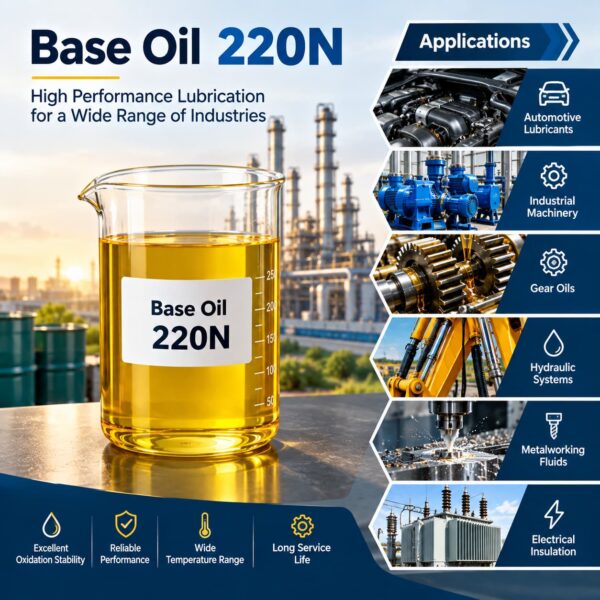
The main applications of Base Oil 220N include production of engine oils, hydraulic oils, gear oils, compressor oils, circulating oils, turbine oils, metalworking fluids, greases, and other industrial lubricant formulations. This base oil provides excellent blending characteristics with additives, allowing lubricant manufacturers to achieve required viscosity, wear protection, thermal stability, and oxidation resistance. Commercially available types of Base Oil 220N may vary according to viscosity index, sulfur content, color, and refining technology, including conventional SN 220, low sulfur SN 220, high viscosity index SN 220, and premium hydrotreated SN 220 grades. Each type is selected according to the final application requirements; for example, standard SN 220 is commonly used for industrial lubricants, while higher quality hydrotreated grades are preferred for advanced automotive and high-performance lubricant formulations.
Base Oil 220N offers several advantages including stable viscosity performance, good low-temperature properties, high flash point, excellent additive compatibility, and reliable lubrication under different operating conditions. Its controlled specifications make it suitable for international lubricant manufacturing industries requiring consistent quality and dependable supply. Export-quality Base Oil SN220 is supplied according to customer requirements and can be customized based on viscosity, packaging, and technical standards. With its wide range of applications and strong performance characteristics, Base Oil 220N remains an important petroleum product for global lubricant producers, blending companies, and industrial users.
Base Oil 4cST
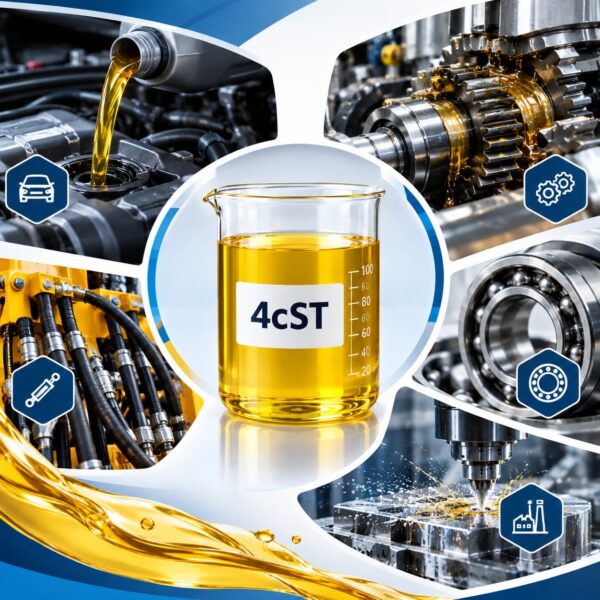
The production process of Base Oil 4cST begins with crude oil atmospheric and vacuum distillation to separate suitable lubricant fractions. The selected vacuum gas oil streams undergo solvent extraction, hydro-treatment, dewaxing, and finishing processes to remove undesirable compounds such as sulfur, nitrogen, aromatics, and wax components. Advanced refining improves color, thermal stability, oxidation resistance, and viscosity performance, resulting in a clean and consistent low-viscosity base oil. Commercially available types include Base Oil 4cST Group I, Group II Base Oil 4 cSt, Light Neutral Base Oil, and specialty low-viscosity lubricant base stocks, which are selected according to the requirements of different lubricant formulations and industrial applications.
Base Oil 4cST is mainly used in the production of automotive lubricants, engine oils, hydraulic fluids, compressor oils, spindle oils, process oils, metalworking fluids, and specialty industrial lubricants. It is also used as a blending component to adjust viscosity, improve low-temperature performance, and achieve specific lubricant specifications. The main advantages of Base Oil 4cST include excellent low-temperature flow, high purity, good oxidation resistance, stable viscosity characteristics, compatibility with additive packages, and reliable performance in high-speed machinery applications. Its consistent quality makes it a preferred choice for manufacturers seeking an efficient and economical lubricant base stock for international markets.

Base Oil 500N
Base Oil 500N is commercially available in different quality grades and formulations depending on the refining technology and customer requirements. The main commercial types include Group I SN 500 Base Oil, which is commonly used for conventional lubricant manufacturing, and higher-quality treated SN 500 grades with improved oxidation stability and lower impurity levels for advanced industrial applications. Base Oil 500N is mainly applied in the production of automotive lubricants such as diesel engine oils, gasoline engine oils, and heavy-duty motor oils, as well as industrial lubricants including hydraulic oils, compressor oils, turbine oils, gear oils, metalworking fluids, and process oils. It is also used as a blending component with additives and other base oils to achieve specific viscosity grades and performance requirements. Due to its excellent solvency, Base Oil SN500 provides effective additive dissolution and helps lubricant manufacturers produce stable and high-performance finished products.
The major advantages of Base Oil 500N include high viscosity index, good lubricating performance, excellent additive compatibility, reliable oxidation resistance, low volatility, and consistent quality for large-scale industrial production. Base Oil SN500 is supplied according to international quality standards with controlled specifications such as viscosity, flash point, pour point, sulfur content, color, and water content. Manufacturers and distributors worldwide prefer SN 500 Base Oil because of its versatility, availability, cost efficiency, and suitability for producing a wide range of lubricant products. Export-quality Base Oil 500N is available in bulk quantities for international buyers, lubricant manufacturers, and industrial users requiring a dependable mineral base stock for their production processes.
Base Oil 6cST
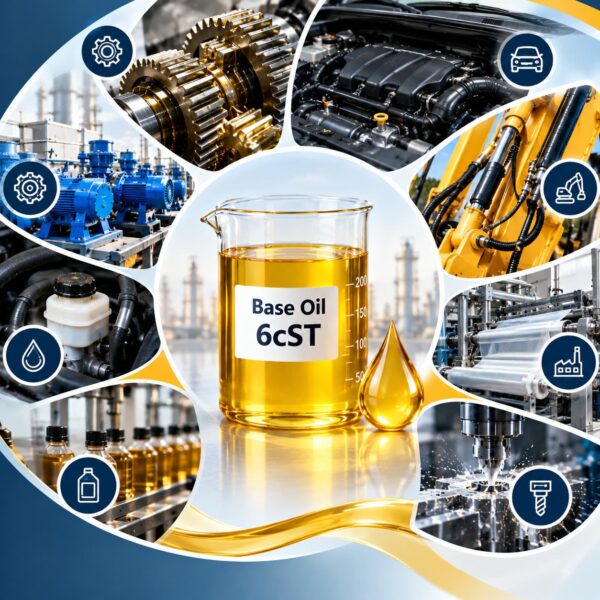
The production process of Base Oil 6cST starts with selected crude oil fractions obtained from vacuum distillation units. The raw petroleum cut undergoes several refining stages including solvent extraction, hydrofinishing, hydrogenation, and advanced purification processes to remove unwanted compounds such as sulfur, nitrogen, aromatics, and impurities. Modern refining technologies improve the stability, purity, and performance characteristics of the final base oil. Commercially available types of 6cST Base Oil may include SN 70, SN 100, Light Neutral Base Oil, Group I 6 cSt Base Oil, and Group II Low Viscosity Base Oil, each designed for different lubricant formulations. These grades are selected according to viscosity requirements, oxidation resistance, operating temperature conditions, and end-use applications.
Base Oil 6cST is widely applied in the manufacturing of engine oils, hydraulic fluids, compressor oils, turbine oils, metalworking fluids, process oils, transmission fluids, and industrial lubricants. Its low viscosity allows excellent flow performance, quick circulation, and efficient lubrication during cold starts and high-speed operations. The main advantages of Base Oil 6cST include excellent thermal stability, good additive compatibility, low evaporation tendency, smooth lubrication performance, and cost efficiency compared with synthetic alternatives. Manufacturers choose this base oil for producing reliable lubricant products that meet international quality standards and satisfy the requirements of automotive, machinery, and industrial sectors worldwide.