

 Arabic
shop
Sodium Hydroxide (Caustic Soda)
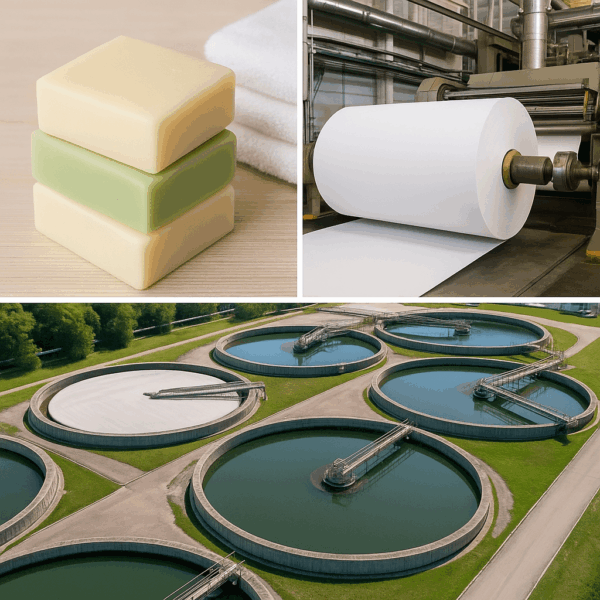
Sodium Hydroxide applications in various types of industries :
- Soap Industry: Sodium hydroxide is an important raw material in the production of various chemical compounds, one of which is soap, detergent, and other cleaning products industry. Sodium hydroxide is used in the saponification process (turning vegetable oil into soap).
- Petrochemical Industry: Sodium hydroxide is used in the process of refining petroleum and natural gas processing. Sodium hydroxide also plays a role in removing odors from hydrogen sulfide (H2S) and mercaptans.
- Pulp & Paper Industry: Sodium hydroxide is used in the process of bleaching pulp and paper making with the aim of removing lignin from wood fibers, process of de-inking scrap paper, and whitening pulp.
- Water Treatment Industry: Sodium hydroxide is used in water treatment as a chemical to neutralize the pH of water and precipitate heavy metals.
- Pharmaceutical Industry: Sodium hydroxide is used in the production of some drugs and other pharmaceutical products (not as an active ingredient).
- Smelting Industry: For example aluminum smelters, sodium hydroxide is used in the process of smelting and refining aluminum from bauxite ore.
Synonyms: Ascarite, Caustic soda, Lye, Soda Lye, Sodium Hydrate, White Caustic.
There are several forms of caustic soda that are available to supply :
- Caustic Soda Flake (NaOH content 98 – 99%)
- Caustic Soda Pearl / Prills (NaOH content 98 – 99%)
- Caustic Soda Pellet (NaOH content 98 – 99%)
- Caustic Soda Liquid (NaOH content 48 – 50%)

Sodium Hypochlorite
Sodium hypochlorite is most often encountered as a pale greenish-yellow dilute solution referred to as chlorine bleach, which is a household chemical widely used as a disinfectant and bleaching agent. Other names for sodium hypochlorite include Clorox , bleach, liquid bleach, sodium oxychloride, Javex, antiformin, showchlon, Chlorox, B-K, Carrel-Dakin Solution, Chloros, Dakin’s Solution, hychlorite, Javelle Water, Mera Industries 2MOm≥B, Milton, modified Dakin’s Solution, Piochlor, and 13% active chlorine. Sodium Hypochlorite is generally used dissolved in water at various concentrations. it is commonly used to purify drinking water and keep swimming pools hygienic.
Sodium hypochlorite is also used to treat sewage and industrial water, eliminating and preventing the spread of bacteria and sludge. Sodium Hypochlorite is also widely used as an irrigation agent in dental treatments, as well as in the health care field to treat different pathologies.
Sodium Lauryl Ether Sulfate ( Texapon )
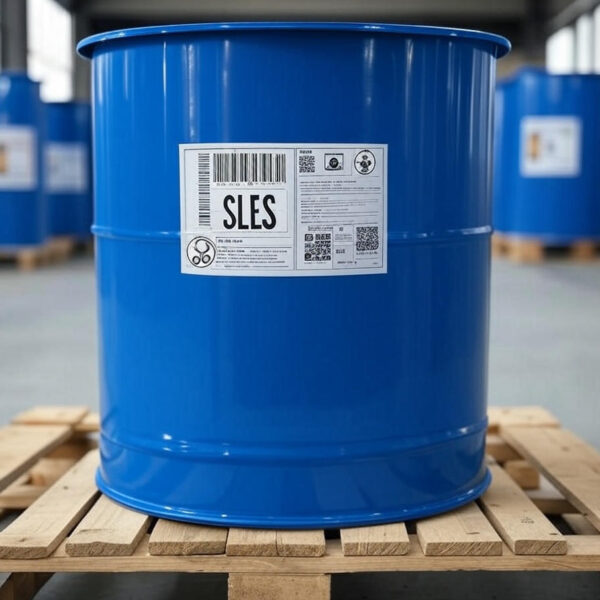
Sodium Lauryl Ether Sulfate SLES is extensively used as a primary or secondary surfactant in personal care formulations because it provides effective removal of oils, dirt, and residues while generating rich and stable foam. In shampoos and hair cleansers, it is commonly combined with co-surfactants, conditioning agents, viscosity modifiers, preservatives, fragrances, and other formulation components. In liquid hand soaps, body washes, shower gels, facial and general cleansing products, SLES contributes to cleansing and foam formation and can be adjusted to achieve the desired formulation viscosity. In household and industrial cleaning products, SLES is used in liquid detergents, dishwashing liquids, multipurpose cleaners, floor cleaners, and other water-based formulations where wetting, detergency, and foaming are required. Commercial SLES is available in different active concentrations and ethoxylation grades to meet different formulation and manufacturing requirements. Common commercial types include SLES 27%, SLES 28%, SLES 70%, SLES 1EO, SLES 2EO, and SLES 3EO, although availability varies by producer and market. SLES 70% is particularly suitable for manufacturers requiring a concentrated raw material for bulk production, while lower-active grades can be convenient for formulations designed around ready-to-use or easily diluted surfactant systems. The material is normally supplied as a white to pale yellow viscous liquid or paste, depending on concentration and temperature, and its viscosity can change considerably with temperature, dilution, electrolyte concentration, and formulation composition.
Sodium Lauryl Ether Sulfate can be offered in packaging formats selected according to active concentration, order volume, storage conditions, and transportation requirements. Common commercial packaging includes plastic drums, HDPE drums, jerry cans, and larger IBC containers, while bulk supply may be available for high-volume industrial customers depending on the producer. SLES 70% is generally handled as a viscous paste and may require appropriate temperature control during storage and transfer to maintain suitable handling characteristics. SLES 27%–28% is normally supplied as a more fluid aqueous material and is easier to pump and process in many liquid formulation systems. Buyers should select the appropriate SLES grade according to the desired active matter, ethoxylation level, foam profile, cleansing performance, viscosity requirements, formulation system, and production process. Properly selected SLES provides an effective combination of detergency, wetting, emulsification, and foam generation, making it an important raw material for personal care, home care, institutional cleaning, and industrial detergent manufacturing. Its broad formulation compatibility and availability in different commercial concentrations make Sodium Lauryl Ether Sulfate a practical surfactant choice for manufacturers purchasing raw materials on a regular or bulk B2B basis.
Sodium Methoxide
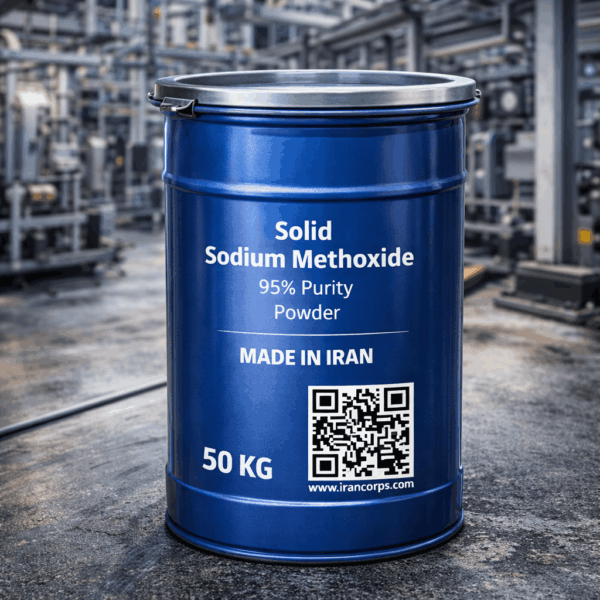
Commercially it is available in both solid and liquid forms to suit different industrial processes and handling preferences but it is supplied mainly as solid sodium methoxide powder or pellets (typically 95–99% purity) and sometimes as a solution in methanol, most commonly at 25%, 30%, and 32% concentrations. The compound consists of sodium ions and methoxide anions (NaOCH₃) and is highly moisture-sensitive, reacting rapidly with water and carbon dioxide. Its primary applications include biodiesel manufacturing as a transesterification catalyst, pharmaceutical API synthesis, agrochemical intermediates, dyes and pigments, specialty polymers, and fine chemical production. Sodium methoxide is also used in Claisen condensations, epoxide ring-opening reactions, and methylation processes, where high reactivity and controlled alkalinity are required. Due to its strong basic nature, it must be handled under controlled, dry conditions with appropriate safety measures.
Sodium methoxide is typically packed in sealed steel drums, HDPE drums, or lined metal containers for solid grades, while liquid methanolic solutions are supplied in 200-liter drums, IBCs, or bulk tankers for large-scale users. Packaging is designed to prevent moisture ingress and ensure product stability during storage and transportation. Key technical parameters include purity, sodium content, methanol percentage, and water content, all of which are critical for process consistency. With reliable performance, scalable supply options, and broad industrial applicability, sodium methoxide remains an essential raw material for chemical manufacturers seeking efficiency, precision, and high reaction yields.

Sodium Nitrate
Sodium Nitrate has a broad range of applications because of its nitrate chemistry, high water solubility, and oxidizing properties. In the glass industry, it can be used as an oxidizing and refining component in appropriate glass formulations, while in chemical manufacturing it serves as a useful nitrate source and raw material for producing various chemical compounds. It is also utilized in selected metallurgical and metal-treatment processes where a nitrate-based oxidizing material is required, as well as in ceramics and other specialized industrial formulations. Agricultural-grade Sodium Nitrate can be used as a source of readily available nitrogen and sodium in suitable fertilizer applications, although the appropriate grade and application should always be determined according to crop requirements, soil conditions, and applicable regulations. Commercially available Sodium Nitrate may therefore include industrial, technical, agricultural, and application-specific grades, with purity, particle size, moisture content, and impurity limits adjusted according to the end use and purchaser specification.
Its major commercial advantages include excellent water solubility, consistent quality, efficient dissolution, convenient handling, versatile industrial functionality, and suitability for continuous manufacturing processes. For international buyers, consistent batch-to-batch quality is especially important, and professional supply programs can provide technical specifications, product documentation, customized particle size, labeling, packaging, and logistics coordination. Sodium Nitrate should be stored in a cool, dry, and well-ventilated location and kept away from incompatible materials and contamination. As an oxidizing nitrate salt, it must be handled, stored, packaged, and transported in accordance with the applicable Safety Data Sheet and relevant national and international transportation requirements.
Sodium Sulfate
Sodium Sulfate has a broad range of industrial applications because of its chemical stability, compatibility with various formulations, and relatively low cost. One of its largest applications is in powder laundry detergents, where it is used as a filler and helps improve powder flow, density, and distribution of active ingredients. In the pulp and paper industry, Sodium Sulfate is an important raw material in the Kraft pulping process, where it contributes to the chemical recovery cycle. It is also used in glass manufacturing, particularly in formulations where it helps remove air bubbles and improve the melting process. In textile manufacturing, Sodium Sulfate can be used in dyeing processes to promote more uniform dye absorption, especially with reactive dyes. Other applications include chemical manufacturing, starch processing, sponge production, water treatment formulations, and selected laboratory and industrial processes. The appropriate Sodium Sulfate grade depends on the intended application, required purity, particle size, moisture level, and processing conditions.
Commercial Sodium Sulfate is commonly supplied as fine powder, crystalline material, or granular product, allowing manufacturers to select a form suitable for their production equipment and formulation requirements. Industrial packaging commonly includes 25 kg and 50 kg polypropylene or polyethylene-lined bags, while larger-volume orders may be supplied in jumbo bags or bulk packaging depending on handling and transportation requirements. For detergent and other high-volume industries, consistent particle size, low moisture, high whiteness, and stable chemical composition are important commercial characteristics. Sodium Sulfate should be stored in a dry, well-ventilated area and protected from excessive moisture because prolonged exposure to humidity can affect its physical condition and handling properties. With its versatile technical characteristics, multiple commercial grades, and wide industrial application range, Sodium Sulfate remains a cost-effective and widely used inorganic chemical for large-scale manufacturing and processing industries.
Sodium Sulfide
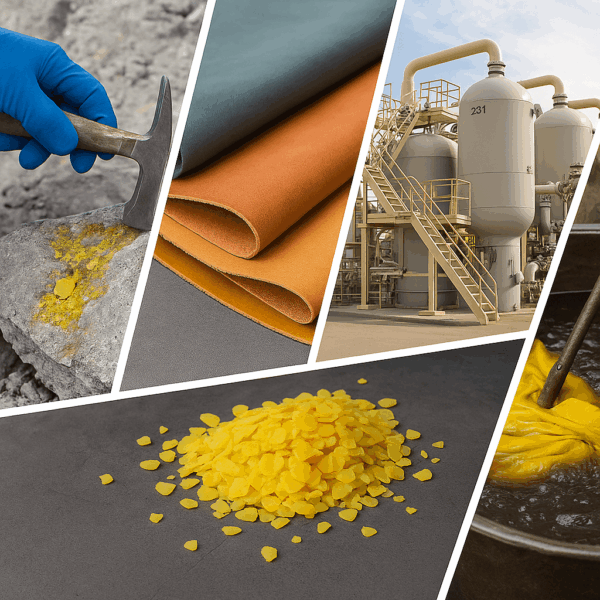
Sodium Sulfide has a broad range of industrial applications, particularly in leather processing, pulp and paper, mining and mineral processing, chemical manufacturing, textile-related processes and wastewater treatment. In the leather industry, Sodium Sulfide is widely used in the unhairing process because it helps break down hair and facilitates efficient hide and skin processing. In pulp and paper manufacturing, sulfide chemistry is associated with kraft pulping operations and contributes to the processing of wood materials. In mining and mineral processing, Sodium Sulfide can be used as a flotation modifier and sulfiding agent, particularly in the treatment and separation of certain metal-containing ores. In chemical manufacturing, it serves as a sulfur source and reducing agent for producing or processing various sulfur-containing compounds. Sodium Sulfide may also be used in wastewater treatment and industrial effluent processing where sulfide-based precipitation or chemical treatment is required. Commercially available types include Sodium Sulfide flakes, Sodium Sulfide lumps, Sodium Sulfide powder and Sodium Sulfide solution, with the appropriate form selected according to handling, dosing and process requirements. Flakes are commonly preferred for bulk industrial transportation and general processing, lumps can be selected for applications requiring slower dissolution or specific handling characteristics, powder is suitable for controlled dosing and certain chemical processes, while liquid Sodium Sulfide solution is useful where direct metering into an industrial process is preferred. The advantages of Sodium Sulfide include high water solubility, strong reducing capability, effective sulfurizing performance, broad industrial compatibility and suitability for large-scale manufacturing processes. Its availability in different concentrations and physical forms also allows buyers to select a product that matches their production technology and logistics requirements.

Sodium Triphosphate
Sodium Triphosphate is available in several grades and physical forms, allowing manufacturers to select the most appropriate product according to their production process and final application. Industrial or technical-grade STPP is commonly supplied for detergent powders, industrial cleaning products, ceramics, pigments, water-treatment formulations and other technical applications, while food-grade Sodium Tripolyphosphate is produced and documented for food-processing applications in accordance with the applicable requirements of the target market. Depending on the customer’s manufacturing process, STPP may be offered as light powder, dense powder or granular material, with physical properties selected to provide the required dissolution, hydration, handling and mixing performance. Detergent manufacturers may require a specific phase composition, hydration behavior and particle-size distribution to ensure optimum performance during formulation and spray-drying or blending operations, whereas ceramic manufacturers generally focus on dispersing efficiency, slurry stability and deflocculation performance. For food-processing applications, particular attention should be given to product purity, regulatory compliance and permitted application levels in the destination market.
The principal advantages of Sodium Tripolyphosphate include excellent water solubility, strong calcium and magnesium sequestration, effective dispersion, buffering capacity, formulation versatility and reliable performance across a broad range of manufacturing processes. These characteristics have made STPP an established phosphate raw material for large-scale industrial production and international trade. For wholesale and export buyers, selecting the appropriate grade is particularly important because differences in purity, phase composition, particle size, hydration rate and bulk density can directly influence the performance of the finished formulation. Buyers can therefore specify their required application, technical parameters, grade and physical form when requesting a quotation, enabling the supplier to provide the most suitable product for their manufacturing requirements. Export shipments can be supplied with appropriate technical documentation, including a Certificate of Analysis (COA), Safety Data Sheet (SDS/MSDS) and product specification, subject to the requirements of the order and destination country.

Solid Copper Wire
Solid Copper Wire is available in multiple standardized types and constructions, most commonly as single-core solid conductors with PVC, XLPE, or LSZH insulation. Common international designations include NYA, THHN/THWN, and building wires compliant with IEC, VDE, BS, and ASTM standards. Wire sizes are specified by cross-sectional area in mm² or by AWG, covering a wide range from small control wiring to heavy-duty power distribution. Solid copper wire is mainly used for permanent installations such as building wiring, lighting circuits, power outlets, control panels, switchboards, grounding systems, and conduit installations. Technically, it offers excellent thermal stability, strong insulation adhesion, low voltage drop, and high resistance to corrosion and oxidation. Compared to stranded conductors, solid copper wire ensures better terminal contact, reduced movement, and higher durability in fixed applications where flexibility is not required.
It is possible to supply solid copper wire in coils, spools, or compact rolls, typically packed in cartons, shrink-wrapped bundles, or wooden drums for larger cross sections. Standard lengths include 50 m, 100 m, 200 m, and customized industrial reels for project supply. With consistent conductivity, precise diameter control, and compliance with electrical safety standards, solid copper wire remains a trusted and cost-effective solution for reliable electrical infrastructure across construction, utilities, and industrial sectors

Solid Sodium Silicate
Low-modulus sodium silicate is particularly suitable for applications requiring higher alkalinity and rapid dissolution, including detergent powders, industrial cleaners, pulp and paper processing, and certain chemical formulations. Medium- and high-modulus grades provide stronger binding and silicate characteristics and are widely used in welding electrodes, refractory materials, foundry binders, construction chemicals, ceramics, mineral processing, and specialized industrial formulations. In detergent manufacturing, sodium silicate functions as an alkalinity source, builder, corrosion inhibitor, and dispersing aid, while in construction it can contribute to hardening, binding, and chemical resistance. In foundry operations, it is used as an inorganic binder for sand molds and cores, and in welding electrode production it improves binding and contributes to the required coating characteristics. Sodium silicate is also used in ceramic production, fire-resistant materials, drilling and mining applications, water treatment formulations, and the manufacture of other silicate-based chemicals. Its versatility, relatively stable storage characteristics in solid form, cost efficiency, and compatibility with numerous industrial formulations make it an important commodity for wholesale chemical distribution and international export. Product specifications can be customized within the manufacturer’s standard production range according to buyer requirements, including modulus, SiO₂ content, Na₂O content, moisture, insoluble matter, particle size, and packaging.

Solution Styrene Butadiene Rubber-SSBR
Our Solution Styrene Butadiene Rubber is commercially available in different grades, including standard SSBR, oil-extended SSBR, functionalized SSBR, and high-performance modified SSBR grades, each developed for specific applications. Standard SSBR grades are mainly used in tire tread compounds, footwear soles, conveyor belts, and general rubber products, while functionalized SSBR grades are designed for advanced tire technologies requiring improved silica compatibility, lower fuel consumption, and enhanced wet traction. Oil-extended SSBR grades provide improved processing properties and flexibility for industrial rubber applications. These products are supplied with different styrene content, vinyl content, molecular weight, and viscosity levels to meet various customer requirements worldwide. SSBR offers excellent mechanical strength, outstanding resistance to wear, low-temperature flexibility, high resilience, and improved fuel efficiency compared with conventional rubber materials.
The product is available for wholesale export in secure industrial packaging options including polyethylene-lined bags, compressed bales, and palletized packages suitable for international transportation and storage. Each batch is carefully tested according to technical specifications to guarantee quality consistency, including Mooney viscosity, styrene content, volatile matter, ash content, and polymer performance characteristics. With its combination of high durability, energy-saving properties, processing advantages, and versatility, Solution Styrene Butadiene Rubber is an ideal choice for tire manufacturers, automotive industries, rubber product producers, and industrial buyers seeking a reliable SSBR supplier for global markets. Through professional supply chain management and export capabilities, customers can access high-quality SSBR products with competitive commercial conditions and dependable delivery services.

Solvent Base Decorative Paint
There are 3 types that we commonly use: exterior paint, interior paint, and primer, which has properties that help make it beautiful, corrosion protection, use to scratch and moisture protection, and finishing the work surface. Solvent-based paints can be thinned with turpentine, white spirit or other thinners as required they have a tough finish, making them easier to clean.
Advantages
- Strong adhesion to surfaces (wood, metal, plaster).
- High gloss and decorative finish.
- Excellent durability and abrasion resistance.
- Resistant to water and some chemicals.
Key Features
- Binder/Resin: Usually alkyd resins, acrylic resins, polyurethane, or oil-based resins.
- Solvent: Organic solvent (not water).
- Finish: Smooth, glossy, and durable appearance.
- Drying: Slower drying than water-based paints, but provides a harder film.
- Durability: Highly resistant to wear, moisture, and stains.