

 Arabic
shop

Aluminum Alloy 7075
Due to its exceptional tensile strength, fatigue resistance, and lightweight structure, Aluminum Alloy 7075 is extensively used in aerospace, defense, automotive, mold manufacturing, and precision engineering industries. It offers excellent machinability, high stress resistance, and good dimensional stability, making it suitable for components that require maximum performance under demanding operating conditions. The alloy is commonly used for aircraft structures, aircraft fittings, gears, shafts, tooling plates, high-performance molds, and racing equipment.
Aluminum Alloy 7075 provides an ideal combination of durability, mechanical strength, and reduced weight compared with many traditional metals. It is available with different surface finishes and can be supplied according to international standards such as ASTM, AMS, and EN specifications. Global buyers can source Aluminum 7075 from reliable suppliers in different forms and dimensions based on project requirements, industrial applications, and export specifications.
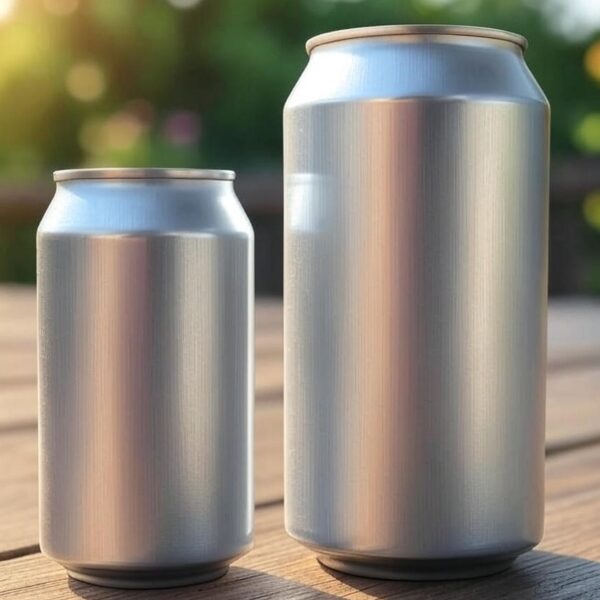
Aluminum Beverage Can
The main materials used for Aluminum Beverage Cans include aluminum alloy sheets such as 3004 and 3104 series, which are specially designed for excellent formability and impact resistance. These cans are available in different commercial sizes and designs, including standard cans, slim cans, sleek cans, and large volume cans. Surface finishing options include printed designs, colored coatings, matte finishes, and customized branding according to customer requirements. The internal coating system helps prevent product interaction with aluminum and maintains beverage quality during storage and transportation.
Aluminum Beverage Cans are widely applied in the food and beverage industry due to their superior packaging advantages, including fast cooling capability, stackability, low transportation cost, and complete recyclability. They are commonly used for beer, soft drinks, sparkling water, energy drinks, sports drinks, iced tea, coffee beverages, and fruit-based drinks. Commercially available options include 250ml, 330ml, 355ml, 440ml, 500ml, and customized sizes with different neck diameters, opening systems, and printing solutions. These cans are suitable for beverage producers, filling companies, private label brands, and international packaging suppliers.

Aluminum Complex Grease
Aluminum Complex Grease is valued for its combination of thermal stability, water resistance, adhesion, and mechanical stability, allowing it to remain effective in equipment exposed to vibration, pressure, moisture, and elevated operating temperatures. Aluminum complex thickener technology can provide a relatively high dropping point compared with many conventional multipurpose greases, although the actual operating temperature range depends on the base oil, additive package, formulation, and equipment design. Typical commercial grades may be formulated for general industrial lubrication, high-temperature bearing lubrication, automotive chassis and wheel-bearing applications, steel and metal-processing equipment, paper and textile machinery, construction machinery, agricultural equipment, electric motors, pumps, conveyors, and other industrial systems. Water-resistant Aluminum Complex Grease is particularly useful in applications exposed to washout or humid environments, while heavy-duty and extreme-pressure grades can be formulated for applications involving high loads, shock loading, or demanding mechanical contact conditions. High-temperature Aluminum Complex Grease may be produced using specially selected base oils and additives to maintain consistency and lubrication performance at elevated temperatures, while synthetic Aluminum Complex Grease can provide improved low-temperature performance, oxidation stability, and service life in specialized applications. The appropriate grade should be selected according to operating temperature, load, speed, water exposure, relubrication interval, bearing or component design, and compatibility with existing lubricants. For reliable industrial performance, buyers should consider consistency, base oil viscosity, dropping point, worked penetration, corrosion protection, water resistance, oxidation stability, and mechanical stability when comparing commercial Aluminum Complex Grease products.
Common packaging options include grease cartridges, plastic or metal cans, pails, buckets, and larger drums, while bulk packaging can be arranged for customers with high-volume industrial consumption. Packaging size can vary according to manufacturer and market requirements, with common commercial formats including 400 g cartridges, 1 kg containers, 5 kg and 15 kg pails, 18 kg or 20 kg industrial pails, and larger 50 kg, 180 kg, or 200 kg drums. Aluminum Complex Grease can be supplied as general-purpose industrial grease or as specialized grades designed for high temperature, heavy load, water resistance, corrosion protection, extreme pressure, or extended service intervals. Its versatility, strong surface adhesion, resistance to water, and reliable mechanical stability make Aluminum Complex Grease an important lubrication solution for industrial equipment operating in demanding environments.
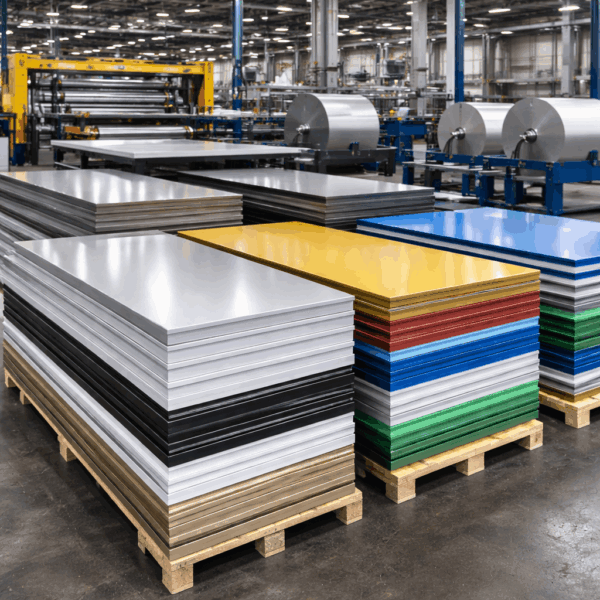
Aluminum Composite Panels
Aluminum composite panels are manufactured using two aluminum sheets bonded to a high-quality core, ensuring excellent rigidity, flatness, and weather resistance. Key features include corrosion resistance, UV stability, thermal insulation, sound dampening, and easy fabrication. ACPs are available in multiple commercial grades such as PE (polyethylene) for interior use, FR (fire-retardant) for regulated buildings, and A2 mineral core for high fire safety requirements. Standard panel sizes include 1220×2440 mm, 1250×3200 mm, and custom dimensions, with thickness options typically ranging from 3 mm to 6 mm and aluminum skin thicknesses from 0.2 mm to 0.5 mm. A wide selection of colors and finishes is available, including solid, metallic, mirror, brushed, wood grain, stone texture, and custom RAL or Pantone shades. Fire performance classes include B1, A2, and non-combustible options, compliant with international fire safety standards. Panels offer excellent bending performance, CNC compatibility, and ease of installation with cassette, tray, or flat mounting systems.
Aluminum composite panels are widely used in building façades, curtain walls, interior wall cladding, ceilings, columns, shop fronts, signage, billboards, and modular structures. They are suitable for commercial buildings, airports, malls, hospitals, hotels, industrial facilities, and residential projects. Technical specifications such as thermal expansion, wind load resistance, coating type (PVDF or polyester), and service temperature are carefully controlled for long-term durability. With low maintenance requirements, recyclability, and consistent quality, aluminum composite panels provide a reliable, modern solution for architects, contractors, and developers seeking performance and design excellence.
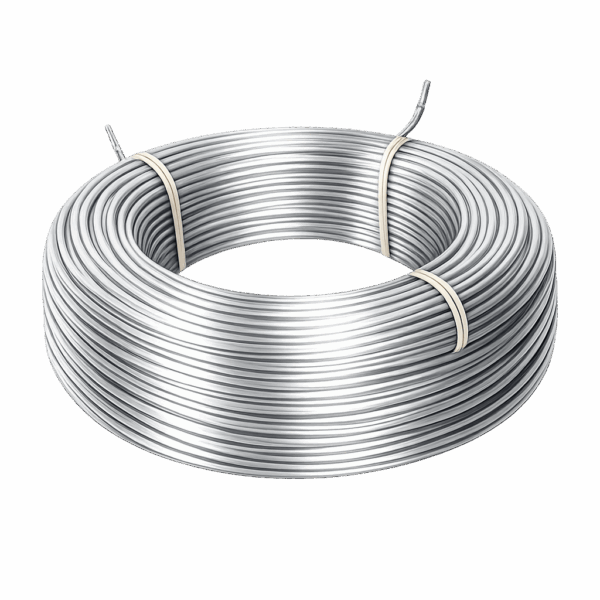
Aluminum Enameled Wire
Manufactured from high-quality aluminum conductor and coated with advanced enamel insulation, aluminum enamelled wire delivers reliable electrical performance and stable insulation characteristics. It is available in commercial grades conforming to IEC, NEMA, JIS, and GB standards, ensuring compatibility with global manufacturing practices. The wire is supplied mainly in round conductors, with available sizes ranging from fine diameters around 0.10 mm up to larger gauges for power windings. Depending on the insulation system, it is offered in temperature classes 130°C, 155°C, 180°C, and higher. Key technical features include low weight, good thermal dissipation, acceptable dielectric strength, smooth enamel surface, uniform insulation thickness, and good winding behavior. Special surface treatments and bonding options are available to enhance mechanical strength and connection reliability.
Aluminum Enameled Wire is widely used in power and distribution transformers, electric motors, generators, inductors, reactors, and household appliances where weight reduction and cost efficiency are critical. It is particularly suitable for large-volume windings and applications requiring lighter components without compromising performance. With its balance of affordability, efficiency, and dependable insulation performance, aluminum enameled wire remains a practical and reliable solution for modern electrical and industrial manufacturing worldwide.
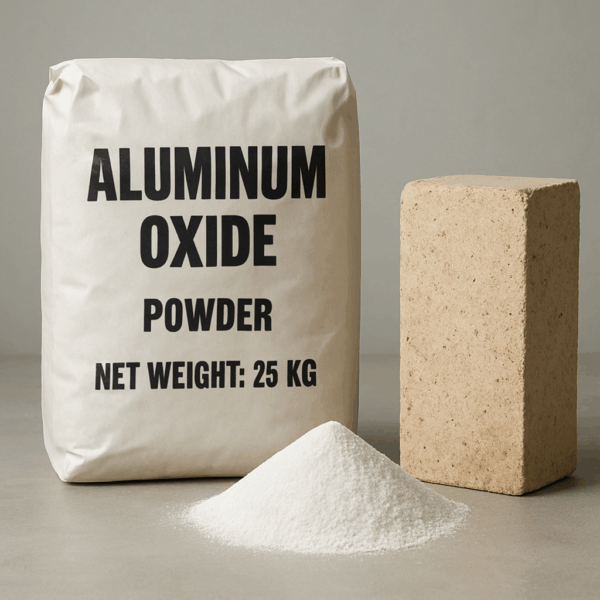
Aluminum Oxide
Aluminum Oxide is most significant use is in the production of aluminum metal, although it is also used as an abrasive due to its hardness and as a refractory material due to its high melting point. The Production of Aluminum Oxide is by first digesting Bauxite ore, containing a maximum of 55% alumina, in a hot sodium hydroxide solution. At temperatures of around 175°C, the aluminum dissolves and forms sodium aluminate. High-purity alumina is filtered from the compound, and the resulting solution is transitioned to a precipitator tank for cooling. As it cools, the solution becomes seeded with extremely fine-grained aluminum hydroxide (Al(OH)3) crystals. These crystals are moved to a kiln for calcination at temperatures approaching 1,260°C, yielding aluminum oxide powder.
High aluminum oxide refractories are a mainstay in petrochemical applications, particularly syngas reactors which have demanding thermochemical and thermomechanical process conditions. Another critical application of Al2O3 ceramics is in autothermal reforming (ATR). By using Aluminum oxide the refractories are an extremely robust, with high hardness, strong resistance to abrasion and high compression strength. It is highly resistant to thermal shock and chemical attack even at raised temperatures. These properties are why aluminum oxide stands out as the material of choice for low-cost production and manufacturing. Large tonnages of aluminium hydroxide, from which alumina is derived, are used in the manufacture of zeolites, coating titania pigments, and as a fire retardant/smoke suppressant. Aluminum oxide is an electrical insulator but has a relatively high thermal conductivity (30Wm−1K−130Wm−1K−1) for a ceramic material. It is thus used as insulating material in power electronics.

Aluminum Paste
Aluminum Paste grades are supplied according to particle size distribution, solid content, solvent compatibility, and application performance. Fine grades with smaller particle sizes such as 5–15 microns are commonly used in automotive paints, high-quality industrial coatings, plastic coatings, and printing inks where a smooth silver appearance and excellent brightness are required. Medium grades such as 15–45 microns are suitable for general industrial coatings, powder coatings, architectural paints, and protective coatings. Coarser grades above 45 microns are mainly used for strong metallic effects in decorative paints, roofing coatings, and special-effect finishes. Aluminum Paste is generally supplied in packaging such as 5 kg, 10 kg, 20 kg, 25 kg metal or plastic containers and customized bulk packaging according to export requirements.
High-quality Aluminum Paste provides excellent metallic appearance, strong light reflection, good covering power, corrosion resistance, and compatibility with different resin systems. It is widely applied in automotive coatings, marine paints, industrial paints, protective coatings, plastic masterbatches, printing inks, aerated concrete panels, decorative finishes, and construction materials. The main advantages of Aluminum Paste include superior brightness, uniform dispersion, controlled particle size, excellent weather resistance, easy processing, and the ability to create premium metallic effects. Manufacturers producing Aluminum Paste for wholesale export usually offer customized grades according to customer requirements, including different shades, particle sizes, solvent systems, and performance characteristics.
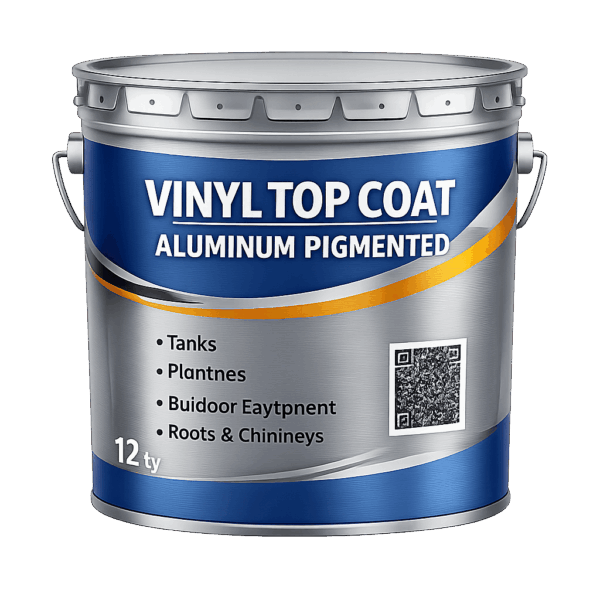
Aluminum Pigmented Vinyl Top Coat
It is widely used where protection against moisture, chemicals, and atmospheric corrosion is required. The metallic pigment structure enhances both protective performance and visual appearance. From a technical standpoint, aluminum pigmented vinyl top coat offers very good adhesion to properly prepared and primed steel and metal substrates. The aluminum flakes align within the film to form an overlapping shield that reduces permeability to water, oxygen, and corrosive agents. This coating provides strong resistance to humidity, salt spray, industrial fumes, and mild chemicals. It also delivers good flexibility and impact resistance, allowing the film to perform under mechanical stress. Smooth application and fast drying make it suitable for spray, roller, and brush application in industrial projects.
Aluminum pigmented vinyl top coats are commonly applied on storage tanks, pipelines, steel structures, marine equipment, and industrial facilities exposed to corrosive environments. They are especially suitable for coastal, marine, and chemical plant applications. The coating helps extend maintenance intervals and reduce long-term protection costs. For export and international supply, this product is available in standard packaging such as 5 L and 20 L metal cans, 18–20 L steel pails, and 200 L drums, suitable for global transportation. Combining barrier protection, corrosion resistance, and metallic finish, aluminum pigmented vinyl top coat remains a reliable choice for heavy-duty industrial coating systems.
For a complete guide on selecting the right vinyl top coat for your project, read our Vinyl Top Coat Selection Guide.
Aluminum Profiles
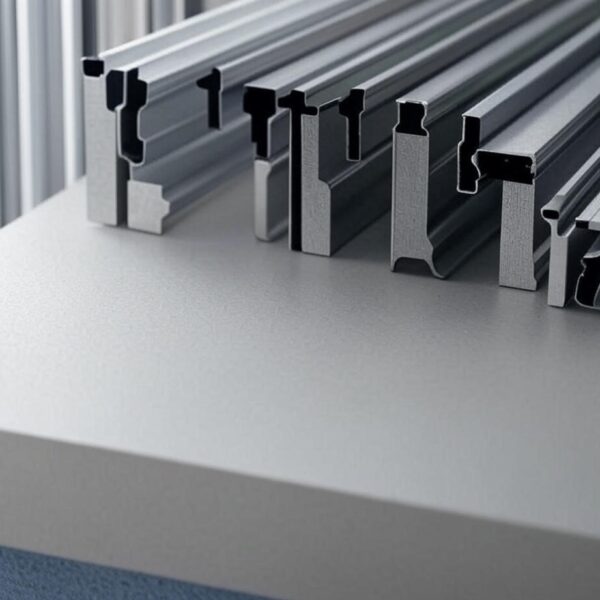
Commonly supplied aluminum profile types include standard profiles, architectural profiles, industrial profiles, structural profiles, T-slot profiles, U-channels, angles, square and rectangular profiles, and customized extrusion profiles. Depending on the application, profiles can be supplied in different aluminum alloys, dimensions, wall thicknesses, surface finishes and packaging formats.
Aluminum profiles offer an excellent combination of low weight, mechanical strength, corrosion resistance and dimensional stability. Their high strength-to-weight ratio makes them suitable for applications where weight reduction and structural performance are important. Aluminum extrusion also allows manufacturers to produce complex geometries with high dimensional accuracy while reducing assembly requirements. Profiles can be supplied with mill finish, anodized, powder-coated, painted, polished or other surface treatments according to project requirements. They can also be cut, drilled, machined, bent and fabricated to meet specific customer specifications. Common alloys include 6063 for architectural applications and 6061 for higher-strength industrial and structural applications, while other aluminum alloys may be selected according to required mechanical and corrosion properties.
Aluminum Sulfate
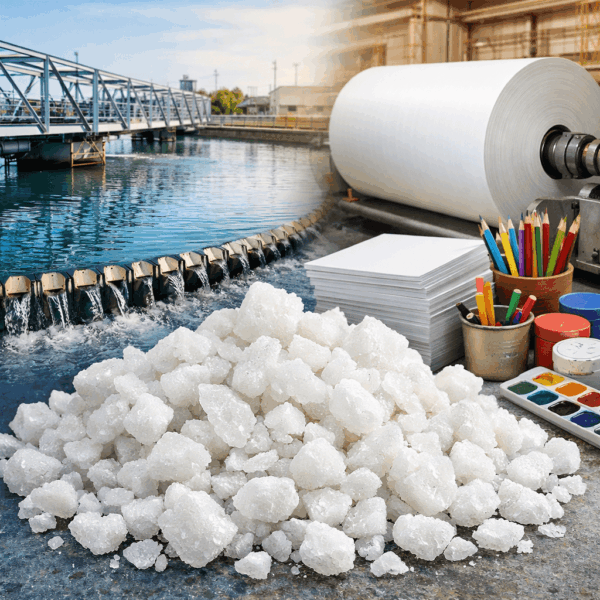
The product is supplied as white to off-white crystals, granules, powder, or clear liquid solutions, formulated mainly from aluminum hydroxide and sulfuric acid. Its primary applications include potable and wastewater treatment as a flocculant, paper sizing and pulp processing, textile dye fixing, concrete acceleration, soil conditioning, and certain food and pharmaceutical auxiliary processes (industrial grades only). Key technical features include fast solubility, controlled iron content, low insoluble matter, stable pH control, and excellent sedimentation behavior.
Aluminum Sulfate is offered in various commercial packages to suit different operational needs, including 25 kg and 50 kg woven bags, big bags (500–1000 kg), drums, IBC tanks, and bulk tanker deliveries for liquid grades. Customized specifications such as low-iron, iron-free, or food-grade compliant variants are also available upon request. With proven performance, scalable supply options, and compliance with international quality standards, Aluminum Sulfate remains a cost-effective and dependable solution for industries seeking consistent chemical performance and optimized process control.

Amdry Powder
Amdry powder is available in a broad range of commercial types, including nickel-based, cobalt-based, aluminum-based, and carbide-reinforced alloys such as NiAl, NiCr, NiCrAlY, CoCrAlY, and tungsten carbide blends. These powders are engineered with controlled chemical composition and particle size distribution to ensure excellent sprayability and coating adhesion. Amdry powder is extensively used in thermal spray processes such as plasma spray, HVOF, flame spray, and arc spray. Typical applications include aerospace engine parts, gas turbines, power generation equipment, oil and gas components, pumps, valves, shafts, and industrial rollers. Key components often include nickel, chromium, cobalt, aluminum, yttrium, and hard carbides to provide oxidation resistance, thermal stability, and wear protection. Various mesh sizes and powder morphologies are available to match specific spraying techniques. Commercial packaging options include sealed 1 kg and 5 kg containers, 25 kg drums, and customized industrial bulk packaging.
From a technical perspective, Amdry powder offers excellent flowability, uniform particle shape, and consistent melting behavior during spraying. The resulting coatings provide strong bond strength, low porosity, and high resistance to corrosion, erosion, and high-temperature oxidation. Each batch is supplied with full technical data sheets and quality documentation to ensure repeatable performance. With reliable supply, flexible packaging, and proven coating performance, Amdry powder is an ideal solution for advanced surface engineering and component life extension.
American Cheese
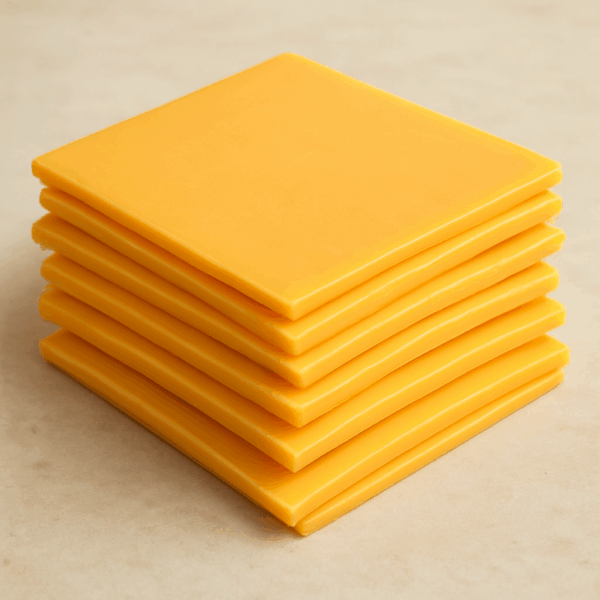
American Cheese is a creamy, smooth cheese made from blending natural cheeses. it comes in several forms including individually wrapped cheese slices, small pre-sliced blocks and large blocks. it melts well. It is a type of processed cheese made from Cheddar, Colby, or similar cheeses, in conjunction with sodium citrate, which permits the cheese to be pasteurized without its components separating.it is mild with a creamy texture and salty flavor, has a medium-firm consistency, and has a low melting point. it is typically yellow or white in color.
American cheese is a common choice for sandwiches because of its versatile nature, pairing with a variety of meats and other ingredients.