

 Arabic
Blog
Introduction
Barite powder, also known as barium sulfate powder (BaSO₄), is one of the most important industrial minerals used across a wide range of industries worldwide. Due to its high density, chemical inertness, excellent stability, and unique physical properties, barite has become an essential raw material for applications including oil and gas drilling, paints and coatings, plastics, rubber, chemicals, glass, ceramics, and many other industrial sectors.
The global demand for barite powder continues to grow because industries require high-performance mineral fillers and functional additives that can improve product quality, durability, density, and stability. Different industries require different grades of barite powder, and selecting the correct grade is a key factor in achieving the desired performance.
A reliable barite powder supplier and exporter must provide consistent quality, accurate technical specifications, proper packaging, and grades suitable for international markets.
This comprehensive guide explains everything about barite powder grades, specifications, applications, production process, and export considerations.
- What is Barite Powder?
Barite is a naturally occurring mineral composed mainly of barium sulfate (BaSO₄). The name “barite” comes from the Greek word barys, meaning heavy, because this mineral has a high specific gravity compared with most other industrial minerals.
After mining and processing, raw barite ore is converted into fine powder through crushing, grinding, purification, and classification processes. The final product is a white or off-white powder with excellent chemical resistance and high density.
Barite powder is widely recognized for the following properties:
- High specific gravity
- Chemical stability
- Low water solubility
- Excellent resistance to acids and alkalis
- Good dispersion characteristics
- High opacity
- Thermal stability
- Non-toxic characteristics in industrial applications
Because of these properties, barite powder is used not only as a filler but also as a functional material that improves the performance of many industrial products.
Chemical Properties of Barite Powder
The primary chemical component of barite is:
Chemical Formula: BaSO₄
Molecular Weight: Approximately 233.39 g/mol
Typical chemical composition:
| Component | Typical Range |
| Barium Sulfate (BaSO₄) | 90–98% |
| Barium Oxide (BaO) | 58–66% |
| Sulfur Trioxide (SO₃) | 30–35% |
| Silica (SiO₂) | Low content |
| Iron Oxide (Fe₂O₃) | Controlled |
The exact composition depends on the origin of the ore and the level of beneficiation and purification.
For export markets, customers usually evaluate:
- BaSO₄ percentage
- Specific gravity
- Whiteness
- Particle size distribution
- Moisture content
- Impurity levels
Physical Characteristics of Barium Sulfate Powder
Barite powder has several physical characteristics that make it valuable for industrial applications.
High Density
One of the most important properties of barite is its high density. With a specific gravity generally between 4.1 and 4.5 g/cm³, barite is significantly heavier than many other mineral fillers.
This makes it ideal for applications where increased weight or density is required.
Examples:
- Drilling fluids
- Radiation shielding materials
- Heavy industrial compounds
Fine Particle Size
Barite powder can be processed into different particle sizes depending on the application.
Typical particle sizes:
- Coarse industrial grade
- Fine powder grade
- Micronized grade
Fine particle sizes improve:
- Dispersion
- Surface smoothness
- Product stability
- Final appearance
Chemical Inertness
Barite is chemically stable and does not easily react with other materials. This property makes it suitable for demanding industrial environments.
Applications benefiting from chemical stability include:
- Paint formulations
- Plastic compounds
- Rubber products
- Chemical manufacturing
- Drilling
- Barite Powder Production Process
Producing high-quality barite powder requires several processing stages. The quality of the final product depends on both the characteristics of the mined ore and the processing technology.
Mining and Extraction
The first stage is extracting barite ore from underground or open-pit mines.
During mining, the ore is separated from surrounding rock materials and transported for processing.
Important factors at this stage include:
- Mineral purity
- Geological characteristics
- Presence of impurities
- Barium sulfate concentration
High-quality deposits generally require less processing and produce better industrial grades.
Crushing and Grinding
After extraction, raw barite rocks are crushed into smaller particles.
The main objectives are:
- Reducing particle size
- Preparing material for further processing
- Improving mineral liberation
Grinding equipment may include:
- Jaw crushers
- Ball mills
- Raymond mills
- Vertical mills
- Micronizers
The grinding process determines the final fineness of the barite powder.
Beneficiation and Purification
Beneficiation improves the quality of barite by removing unwanted minerals and impurities.
Common beneficiation methods include:
- Gravity separation
- Magnetic separation
- Flotation processes
These processes help increase:
- BaSO₄ content
- Whiteness
- Purity
- Industrial performance
For applications such as paints, chemicals, and plastics, higher purification levels are usually required.
Micronization and Packaging
For specialty applications, barite powder may undergo additional micronization to achieve very fine particle sizes.
After final quality inspection, the product is packed according to customer requirements.
Common export packaging:
- 25 kg PP bags
- 25 kg paper bags
- 500 kg jumbo bags
- 1000 kg jumbo bags
- Bulk shipment
Proper packaging protects the product from moisture contamination during transportation.
- Main Grades of Barite Powder
Different industries require different barite specifications. Therefore, barite powder is classified into several commercial grades.
The most common grades include:
- Drilling Grade Barite Powder
- Paint Grade Barite Powder
- Plastic & Rubber Grade Barite Powder
- Chemical Grade Barite Powder
- Industrial Grade Barite Powder
Each grade has different requirements regarding purity, particle size, density, and performance.
3.1 Drilling Grade Barite Powder (API Grade)
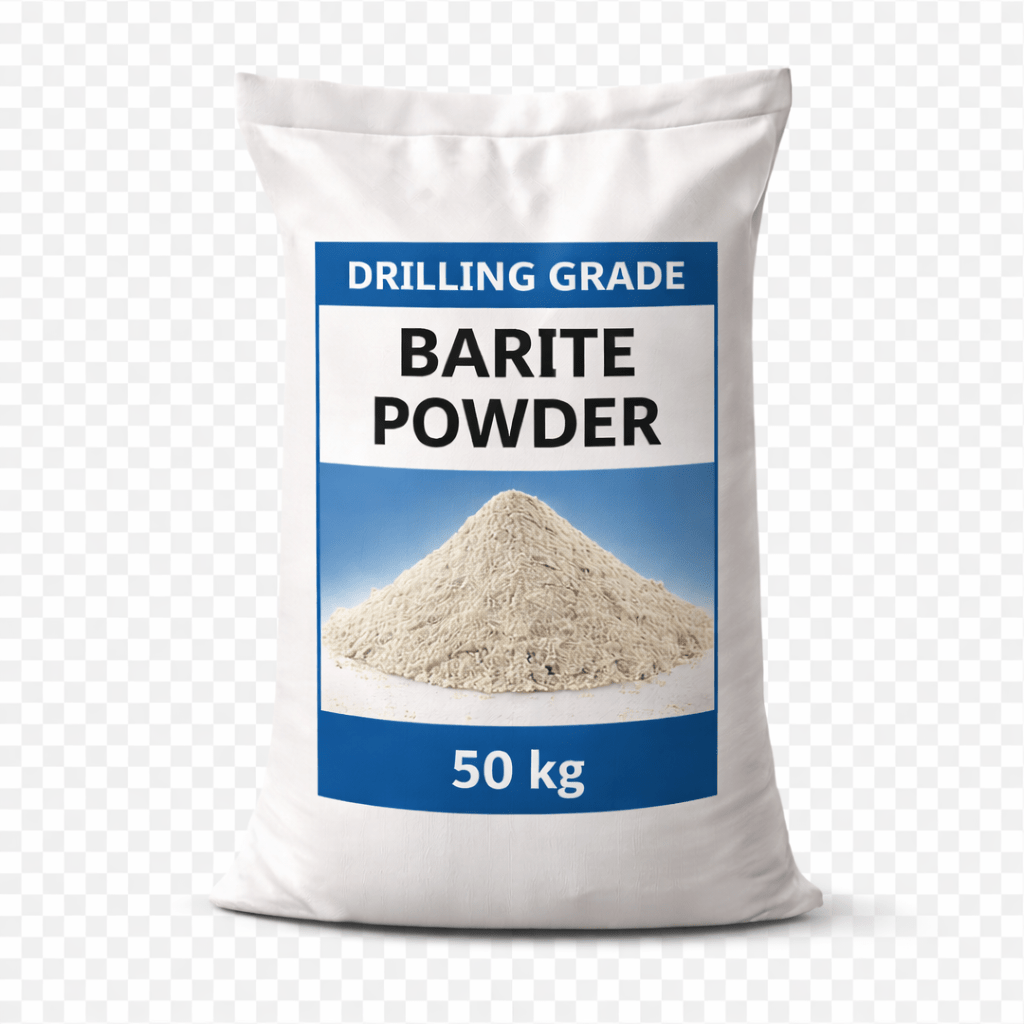
Drilling grade barite is the largest application area for barite worldwide. It is mainly used in oil and gas exploration as a weighting agent in drilling fluids.
During drilling operations, controlling underground pressure is extremely important. Barite increases the density of drilling mud, helping prevent blowouts and maintaining well stability.
Key requirements:
- High specific gravity
- High BaSO₄ content
- Controlled particle size
- Low harmful impurities
- Compliance with API standards
Main applications:
- Oil drilling fluids
- Gas drilling operations
- Offshore drilling projects
- Onshore exploration wells
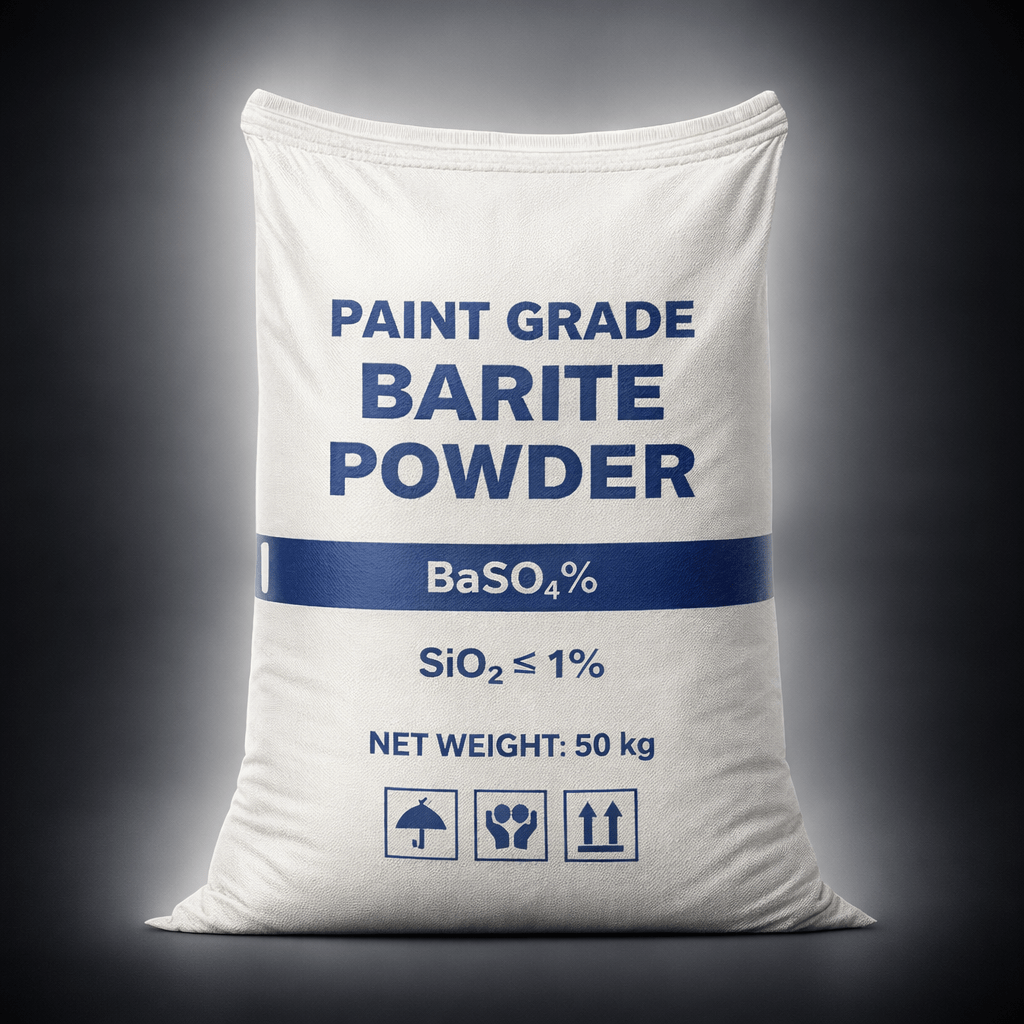
Paint grade barite powder is a high-quality grade of barium sulfate used as a functional extender pigment in the paint and coating industry. Due to its excellent whiteness, high density, chemical stability, and low oil absorption, barite improves the performance and appearance of different coating systems.
Unlike ordinary fillers, high-quality paint grade barite can enhance important coating properties such as smoothness, durability, opacity, and resistance to chemicals.
Key Properties of Paint Grade Barite Powder
Important characteristics required by paint manufacturers include:
- High whiteness
- Fine particle size
- Excellent dispersion
- Low moisture content
- Low oil absorption
- Chemical resistance
- Good compatibility with resins
Applications in Paint Industry
Paint grade barite powder is used in:
- Architectural paints
- Industrial coatings
- Automotive coatings
- Powder coatings
- Anti-corrosion paints
- Primers
- Decorative coatings
Advantages in Paint Formulations
The use of barite powder in paints provides several benefits:
Improved Surface Finish
Fine barite particles help create smoother coating surfaces and improve the final appearance of painted products.
Increased Durability
Barite improves resistance against weathering, chemicals, and abrasion, extending the service life of coatings.
Cost Optimization
As a functional extender, barite can partially replace more expensive pigments while maintaining acceptable performance.
Better Density Control
The high specific gravity of barite allows manufacturers to adjust coating density according to application requirements.
3.3 Plastic & Rubber Grade Barite Powder
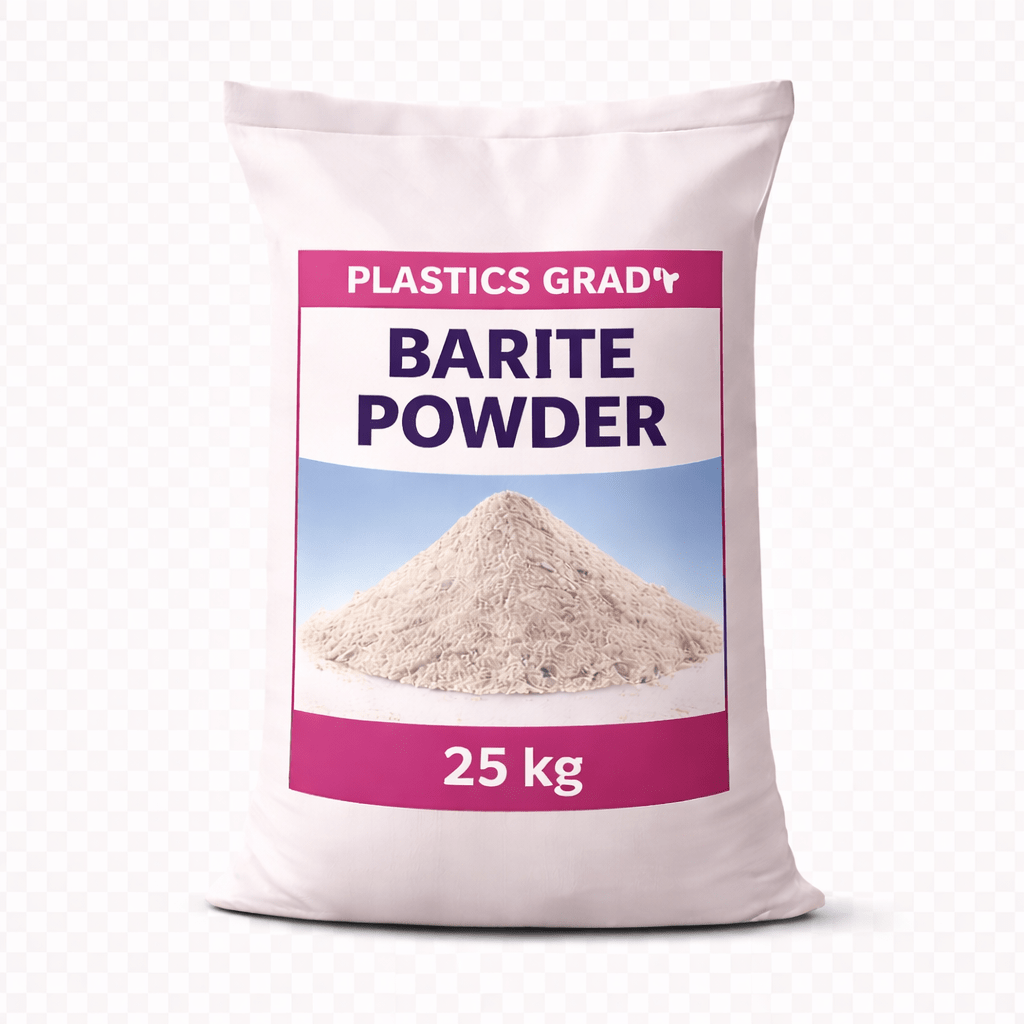
Plastic and rubber grade barite powder is designed for polymer applications where high density, dimensional stability, and improved mechanical properties are required.
Barite acts as a mineral filler in plastic and rubber compounds, improving product performance while helping manufacturers optimize production costs.
Key Requirements for Plastic & Rubber Grade Barite
Important technical parameters include:
- High BaSO₄ content
- Good dispersion
- Controlled particle size
- Low moisture
- Chemical stability
- Compatibility with polymer systems
Applications in Plastic Industry
Barite powder is used in:
- PVC pipes and profiles
- Plastic sheets
- Masterbatch production
- Automotive plastic components
- Engineering plastics
- Heavy-duty plastic products
Applications in Rubber Industry
Common rubber applications include:
- Rubber seals
- Gaskets
- Conveyor belts
- Rubber sheets
- Industrial rubber products
Benefits in Polymer Compounds
Increased Density
Barite significantly increases the density of plastic and rubber products where heavier materials are required.
Improved Dimensional Stability
It reduces shrinkage and improves shape retention during processing.
Enhanced Mechanical Performance
Barite fillers can improve hardness, stiffness, and wear resistance.
Better Processing Properties
Properly processed barite provides excellent dispersion inside polymer matrices.
3.4 Chemical Grade Barite Powder
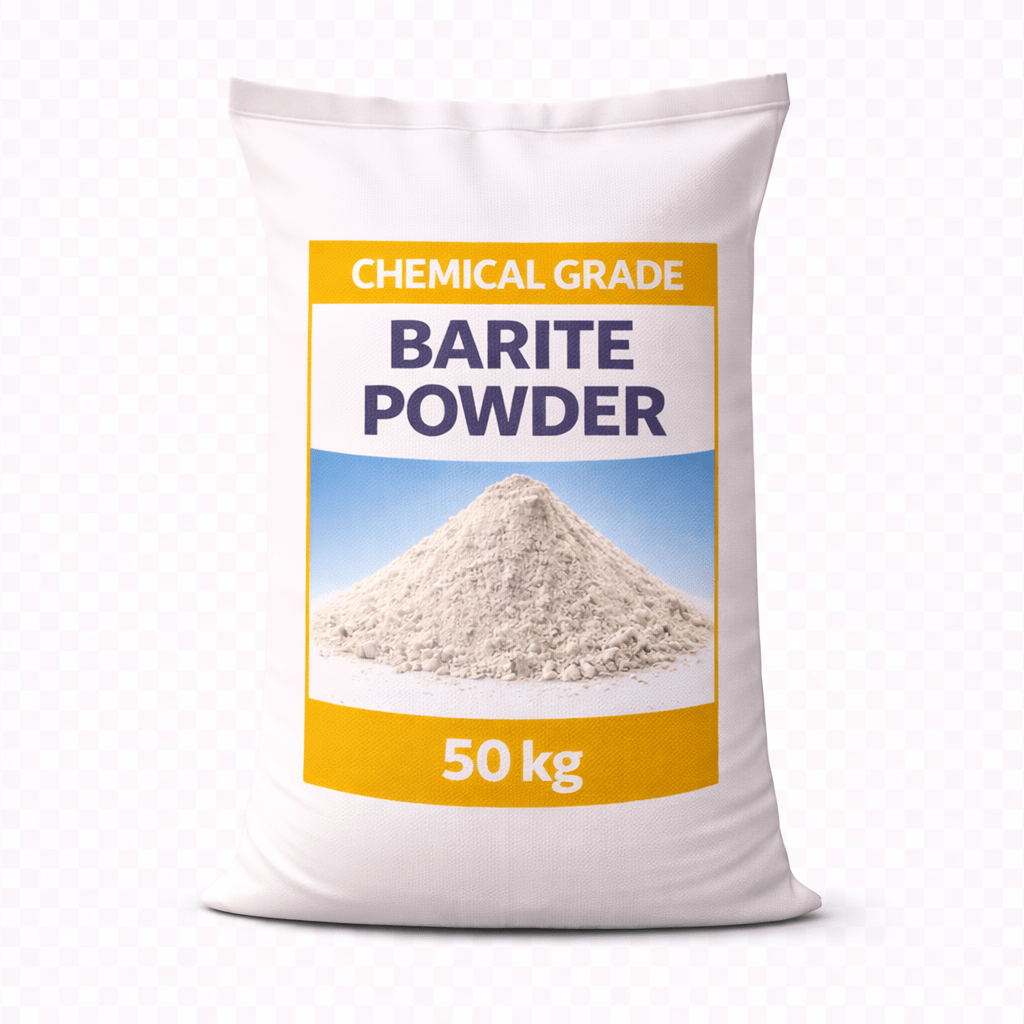
Chemical grade barite powder is a high-purity material used as a raw material in the production of various barium-based chemicals.
This grade requires higher chemical purity and controlled impurity levels compared with general industrial grades.
Main Characteristics
Chemical grade barite typically requires:
- High BaSO₄ content
- Low impurities
- Stable chemical composition
- Controlled moisture
- Suitable particle size
Applications of Chemical Grade Barite
Chemical industries use barite for producing:
- Barium carbonate
- Barium compounds
- Specialty chemicals
- Industrial additives
- Chemical intermediates
Importance of Purity
In chemical manufacturing, even small amounts of impurities can affect the final product quality. Therefore, chemical grade barite suppliers must provide consistent analysis reports and quality documentation.
3.5 Industrial Grade Barite Powder
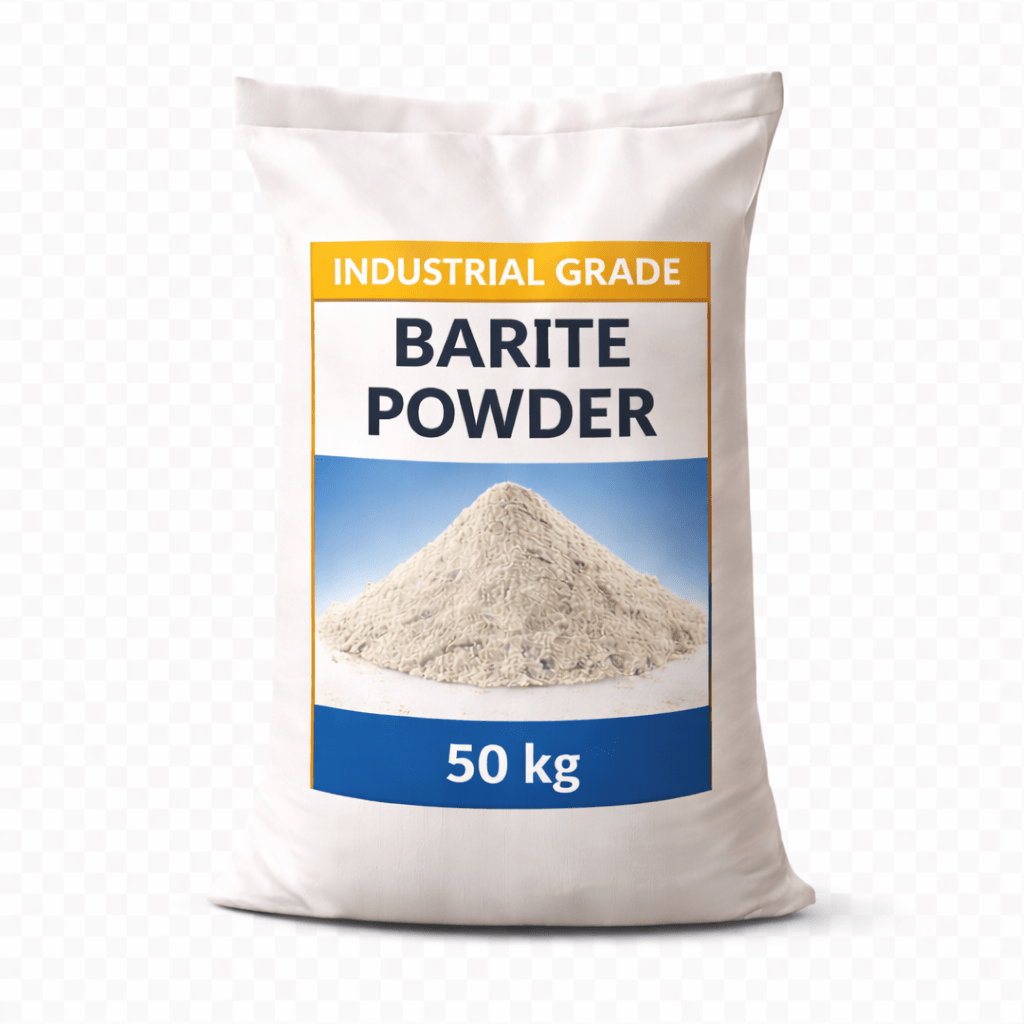
Industrial grade barite powder is a versatile product used in various industries where high density, chemical resistance, and mineral filler properties are required.
This grade is commonly supplied for general industrial applications and can be customized according to customer requirements.
Common Applications
Industrial grade barite is used in:
- Construction materials
- Rubber products
- Plastic compounds
- Paint fillers
- Friction materials
- Glass and ceramic industries
Main Advantages
- High density
- Good chemical stability
- Excellent filler performance
- Cost-effective solution
- Wide industrial usability
- Barite Powder Technical Specifications Comparison
The following table shows general differences between major commercial barite powder grades:
| Property | Drilling Grade | Paint Grade | Plastic & Rubber Grade | Chemical Grade | Industrial Grade |
| Main Component | BaSO₄ | BaSO₄ | BaSO₄ | BaSO₄ | BaSO₄ |
| BaSO₄ Content | ≥92% | 90–95% | 90–95% | ≥95% | 90–95% |
| Specific Gravity | ≥4.10 | 4.2–4.5 | 4.2–4.5 | 4.2–4.5 | 4.1–4.5 |
| Whiteness Importance | Low | High | Medium | High | Medium |
| Particle Size | Fine | Very Fine | Fine | Fine | Fine |
| Moisture | ≤0.5% | ≤0.5% | ≤0.5% | ≤0.5% | ≤0.5% |
| Main Industry | Oil & Gas | Paint & Coating | Plastic & Rubber | Chemical | General Industry |
- Applications of Barite Powder in Different Industries
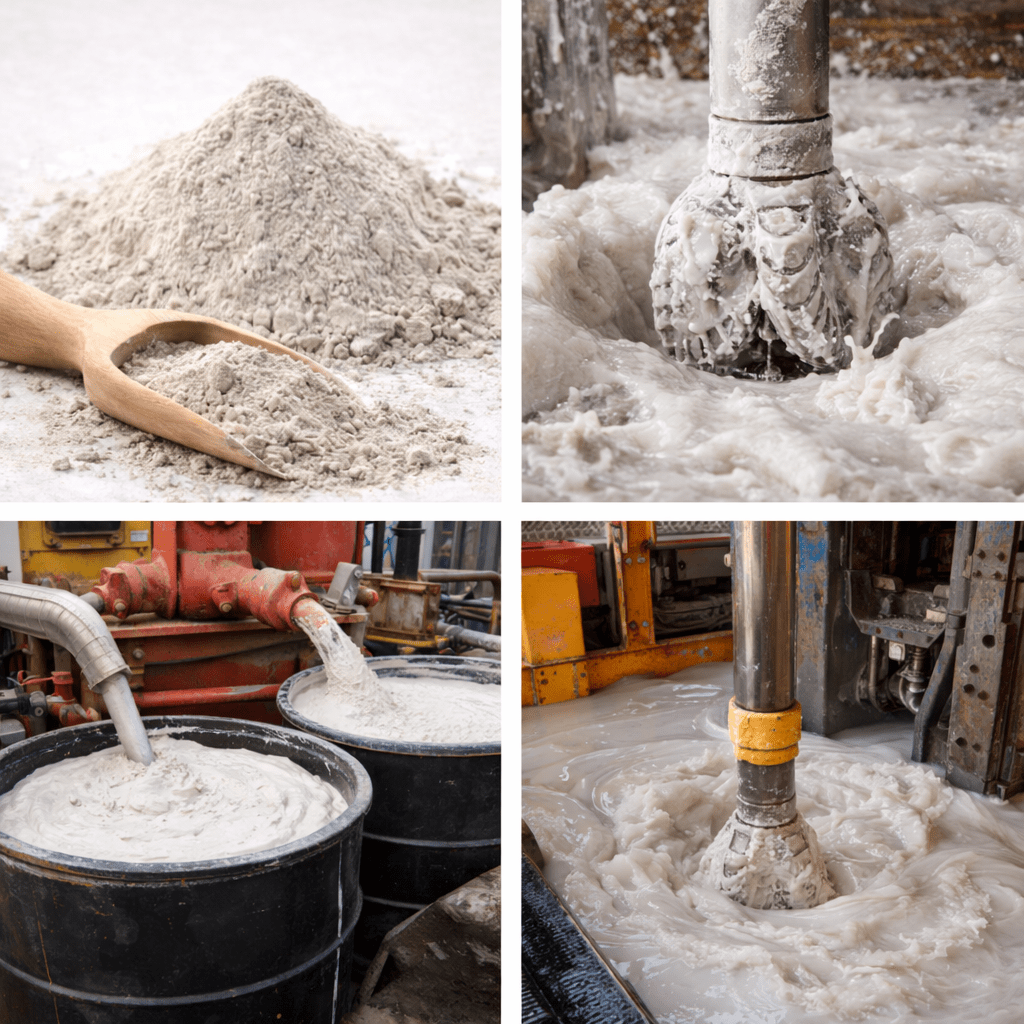
Barite powder has become an important industrial mineral because of its unique combination of density, stability, and performance.
Oil and Gas Drilling Industry
The oil and gas industry is the largest consumer of barite powder globally.
During drilling operations, drilling fluids must maintain sufficient density to control underground pressure. Barite is added because it provides high weight without reacting chemically with drilling fluids.
Main functions:
- Increasing drilling mud density
- Controlling formation pressure
- Preventing well blowouts
- Improving drilling safety
API-certified drilling barite is preferred by international drilling companies because it meets strict quality requirements.
Paint and Coating Industry
In coating formulations, barite works as an extender pigment that improves:
- Opacity
- Surface quality
- Durability
- Chemical resistance
- Product consistency
It is especially valuable in industrial coatings where long-term performance is required.
Plastic Industry
The plastic industry uses barite powder as a functional filler to improve:
- Density
- Rigidity
- Dimensional stability
- Processing performance
It is commonly used in PVC and engineering plastic applications.
Rubber Industry
In rubber manufacturing, barite improves:
- Hardness
- Weight
- Wear resistance
- Product stability
Applications include industrial rubber parts, seals, and vibration-resistant components.
Chemical Industry
High-purity barite serves as a raw material for manufacturing various barium chemicals.
Quality and chemical consistency are critical factors for these applications.
Glass and Ceramic Industry
Barite is also used in glass and ceramic production because barium compounds can improve:
- Optical properties
- Density
- Chemical resistance
- Product quality
- Why Barite Powder is Preferred as an Industrial Filler?
Barite powder is one of the most widely used mineral fillers because it provides a combination of physical and chemical advantages that many other fillers cannot offer.
Unlike some mineral fillers that mainly reduce production costs, barite can actively improve product performance.
6.1 High Density Performance
The most important characteristic of barite is its high specific gravity.
With a density of approximately 4.1–4.5 g/cm³, barite is significantly heavier than common fillers such as calcium carbonate and talc.
This property makes it suitable for applications requiring:
- Increased product weight
- Improved density control
- Radiation shielding
- Heavy-duty industrial products
6.2 Excellent Chemical Stability
Barite is chemically inert and remains stable in many industrial environments.
It provides excellent resistance against:
- Acids
- Alkalis
- Moisture
- Chemical reactions
This makes barite suitable for demanding applications in:
- Coatings
- Plastics
- Rubber compounds
- Chemical industries
6.3 Good Dispersion Properties
High-quality micronized barite powder can disperse easily in different matrices.
Good dispersion improves:
- Product uniformity
- Surface quality
- Mechanical performance
- Processing efficiency
This is especially important in plastic compounds, paints, and coatings.
6.4 Cost-Effective Mineral Solution
Barite is widely used as a functional filler because it provides high performance at a competitive cost.
Manufacturers can optimize formulations by balancing:
- Performance requirements
- Raw material costs
- Product quality
- How to Select the Right Grade of Barite Powder?
Choosing the correct barite powder grade depends on the final application, required performance, and technical specifications.
A buyer should consider several important factors before purchasing.
7.1 Identify the Final Application
The first step is determining where the barite will be used.
Examples:
| Application | Recommended Grade |
| Oil & Gas Drilling | Drilling Grade Barite |
| Paint Production | Paint Grade Barite |
| Plastic Compounds | Plastic Grade Barite |
| Rubber Products | Rubber Grade Barite |
| Chemical Manufacturing | Chemical Grade Barite |
| General Industrial Use | Industrial Grade Barite |
7.2 Check Barium Sulfate Content
BaSO₄ percentage is one of the most important quality indicators.
Higher BaSO₄ content generally means:
- Higher purity
- Better performance
- More suitable for demanding applications
7.3 Evaluate Specific Gravity
Specific gravity is especially important for drilling applications.
For drilling grade barite, international buyers usually require:
- Minimum specific gravity: approximately 4.10 g/cm³
Higher density improves drilling fluid performance.
7.4 Consider Particle Size Distribution
Particle size affects:
- Dispersion
- Surface finish
- Processing behavior
Fine micronized grades are preferred for:
- Paints
- Plastics
- Specialty applications
7.5 Review Quality Certificates
Professional buyers usually request:
- Certificate of Analysis (COA)
- Technical Data Sheet (TDS)
- Safety Data Sheet (SDS)
- Inspection reports
A reliable barite exporter should provide complete technical documentation.
- Barite Powder Export: Packaging, Shipping and International Trade
Barite powder is exported worldwide to industries requiring reliable mineral supply.
A professional export supplier must consider product quality, packaging, logistics, and documentation.
8.1 Common Export Packaging
Barite powder is commonly supplied in:
25 kg Bags
Suitable for:
- Small industrial users
- Chemical industries
- Specialty applications
Jumbo Bags (500–1000 kg)
Suitable for:
- Large factories
- Bulk industrial consumption
Bulk Shipment
Used for:
- Large drilling projects
- High-volume customers
8.2 Export Documents
International buyers commonly require:
- Commercial Invoice
- Packing List
- Certificate of Origin
- Certificate of Analysis (COA)
- Safety Data Sheet (SDS)
- Bill of Lading
Providing accurate documentation helps ensure smooth customs clearance.
8.3 Choosing a Reliable Barite Powder Exporter
A professional supplier should provide:
- Consistent product quality
- Competitive pricing
- Technical support
- Flexible packaging options
- Export experience
- Reliable logistics solutions
For international buyers, supplier reliability is as important as product price.
- Why Choose Iranian Barite Powder?
Iran has significant mineral resources and is considered one of the important producers of industrial minerals, including barite.
Iranian barite powder is known for:
- Good mineral quality
- Competitive pricing
- Availability of different grades
- Suitable export logistics
- Experience in international mineral trade
Iranian suppliers can provide different barite grades for:
- Oil drilling companies
- Paint manufacturers
- Plastic industries
- Chemical producers
- Industrial users
The ability to customize specifications according to customer requirements is an important advantage in international markets.
- Quality Control and Testing of Barite Powder
Quality control is essential to ensure consistent performance.
Professional barite manufacturers perform laboratory tests including:
Chemical Analysis
Testing parameters:
- BaSO₄ content
- BaO content
- SiO₂
- Fe₂O₃
- Calcium content
- Heavy metals
Physical Testing
Important physical tests include:
- Specific gravity
- Particle size distribution
- Moisture content
- Whiteness
- Oil absorption
- pH value
Quality Documentation
Export customers often require:
- Technical Data Sheet (TDS)
- Certificate of Analysis (COA)
- Safety Data Sheet (SDS)
These documents confirm that the product meets customer specifications.
Frequently Asked Questions (FAQ)
- What is barite powder?
Barite powder is a fine mineral powder mainly composed of barium sulfate (BaSO₄). It is used in drilling fluids, paints, plastics, rubber, chemicals, and other industries.
- What are the main grades of barite powder?
The main commercial grades are:
- Drilling Grade Barite
- Paint Grade Barite
- Plastic & Rubber Grade Barite
- Chemical Grade Barite
- Industrial Grade Barite
- Which barite grade is used in oil drilling?
Drilling Grade Barite Powder, especially API-compliant barite, is used as a weighting agent in oil and gas drilling fluids.
- Why is barite used in drilling mud?
Barite increases drilling fluid density, helping control underground pressure and improve drilling safety.
- Can barite powder be used in plastic products?
Yes. Plastic and Rubber Grade Barite improves density, stiffness, dimensional stability, and product performance.
- What is the chemical formula of barite?
The chemical formula of barite is BaSO₄ (Barium Sulfate).
- What packaging options are available for exported barite powder?
Common packaging includes:
- 25 kg bags
- 500 kg jumbo bags
- 1000 kg jumbo bags
- Bulk shipment
- How do I choose the right barite powder supplier?
A reliable supplier should provide:
- Consistent quality
- Technical documents
- Export experience
- Proper packaging
- Competitive pricing
Conclusion
Barite powder is a highly valuable industrial mineral with applications across multiple sectors. Its unique properties, including high density, chemical stability, whiteness, and excellent filler performance, make it an essential raw material for modern industries.
From API drilling grade barite used in oil exploration to high-purity chemical grade and micronized grades for paints, plastics, and rubber, selecting the correct specification is essential for achieving the best results.
For companies looking to purchase barite powder internationally, working with an experienced exporter that can provide consistent quality, technical documentation, and customized solutions is the key to long-term success.
High-quality Barite Powder is not only a mineral product; it is a performance-enhancing industrial material used in some of the world’s most important industries.