

 Arabic
Blog
Introduction
Propylene Glycol Diacetate (PGDA) ! why ? The paints and coatings industry is one of the most solvent-dependent sectors in modern manufacturing. Whether it is architectural coatings, automotive finishes, industrial protective coatings, or printing inks, solvents play a critical role in determining performance, appearance, drying behavior, and environmental compliance. In recent years, the global industry has been shifting away from traditional high-VOC (Volatile Organic Compounds) solvents toward safer, more efficient, and environmentally friendly alternatives. This transition is driven by strict environmental regulations (such as REACH in Europe and EPA standards in the United States), as well as increasing demand for high-performance, low-odor, and low-toxicity formulations. they look for Propylene Glycol Diacetate (PGDA)
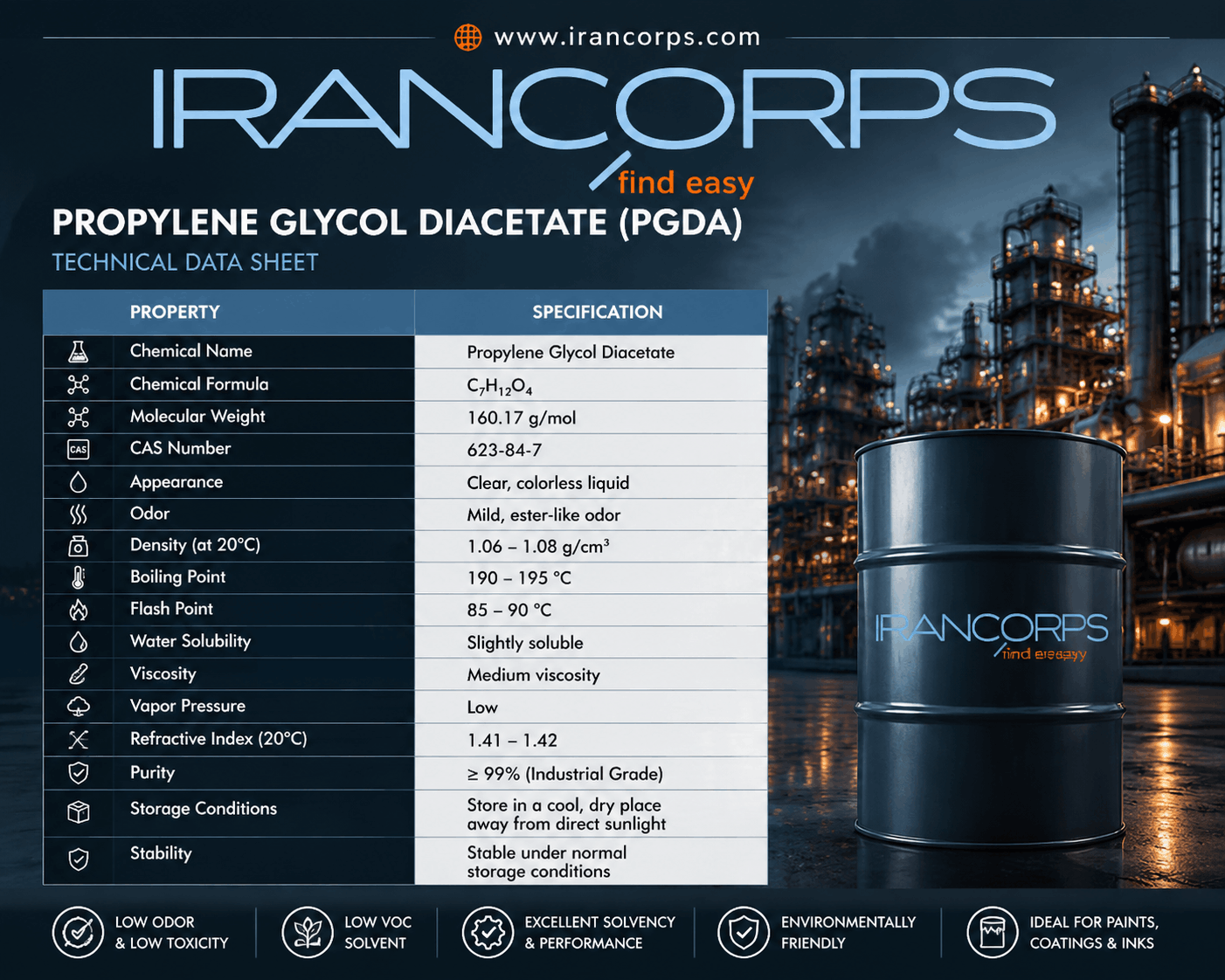
Among the wide range of modern oxygenated solvents, Propylene Glycol Diacetate (PGDA) has emerged as a highly effective and versatile choice. It is increasingly used as a replacement or partial substitute for conventional solvents like aromatic hydrocarbons, glycol ethers, and ketones.
This article explores the best solvents used in paints and coatings and explains in depth why PGDA is considered a smart and future-oriented solution.
🧴 1. Role of Solvents in Paints and Coatings
Solvents are not just “diluents.” They are functional components that directly influence:
- Viscosity control
- Flow and leveling
- Drying time
- Film formation
- Surface appearance
- Pigment dispersion
- Application behavior
Without the right solvent system, even the best resin and pigment combination will fail to produce a high-quality coating.
Key Functions of Solvents:
1.1 Viscosity Adjustment
Solvents reduce the viscosity of resins, making them easier to apply by spray, brush, or roller.
1.2 Film Formation Control
They control how fast or slow a coating dries, which affects surface smoothness and defect formation.
1.3 Solubility of Resins
Different resins (acrylic, alkyd, epoxy, polyurethane) require specific solvency power.
1.4 Pigment Dispersion
Proper solvents help pigments distribute evenly without agglomeration.
1.5 Application Performance
Solvents affect sprayability, leveling, and final gloss.
🧪 2. Types of Solvents Used in Paint Industry
Solvents used in coatings can be divided into several categories:
2.1 Hydrocarbon Solvents (Aromatic & Aliphatic)
Examples:
Advantages:
- Strong solvency
- Low cost
- Widely available
Disadvantages:
- High VOC emissions
- Toxicity concerns
- Strong odor
- Environmental restrictions
👉 These are being phased out in many countries.
2.2 Ketones
Examples:
- MEK (Methyl Ethyl Ketone)
- MIBK (Methyl Isobutyl Ketone)
Advantages:
- Fast evaporation
- Strong solvency
Disadvantages:
- Highly flammable
- Strong odor
- VOC concerns
2.3 Alcohols
Examples:
- Ethanol
- Isopropanol
Advantages:
- Low toxicity
- Fast drying
Disadvantages:
- Limited resin compatibility
- High evaporation rate
2.4 Glycol Ethers
Examples:
- PGMEA
- Butyl glycol
- Ethylene glycol ethers
Advantages:
- Balanced evaporation
- Good solvency
- Widely used in coatings
Disadvantages:
- Some toxicity concerns (ethylene-based)
- Regulatory pressure in EU
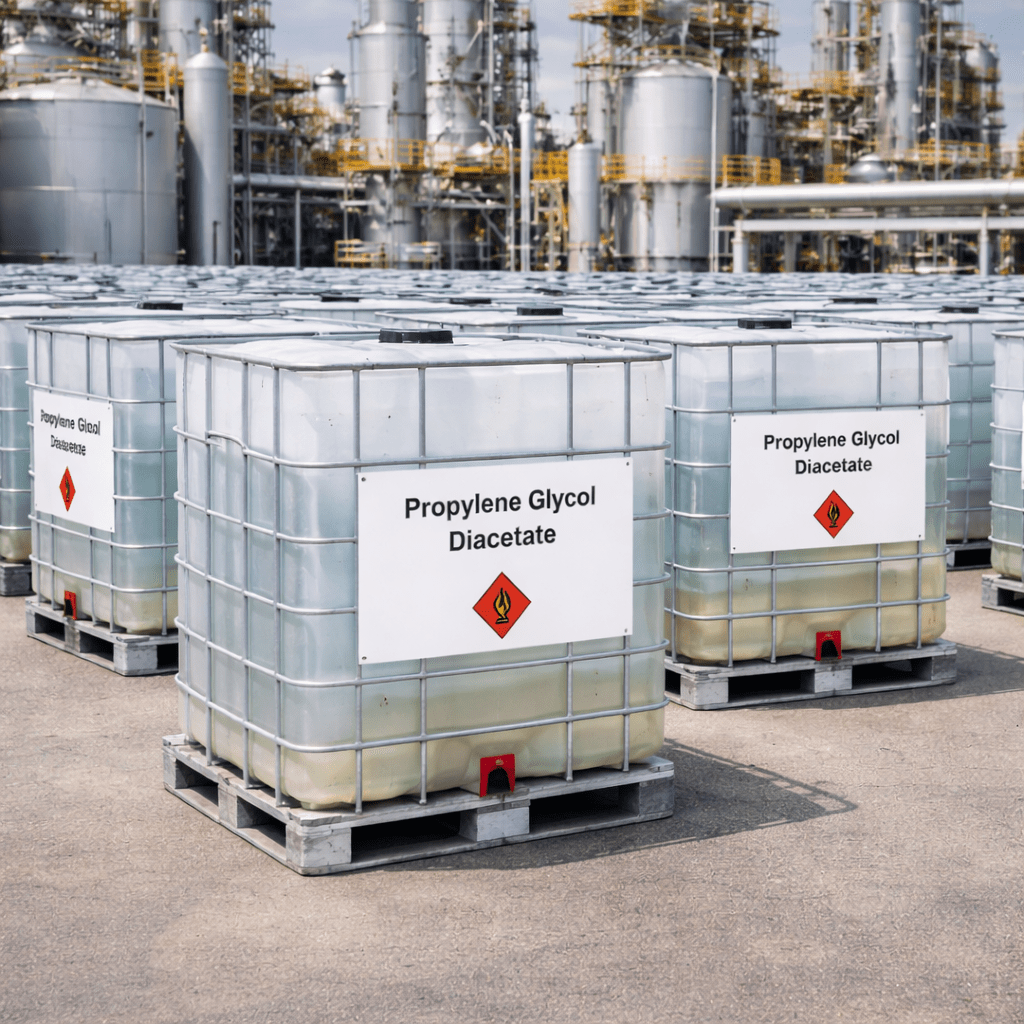
2.5 Ester-Based Oxygenated Solvents (Modern Generation)
Examples:
- Propylene Glycol Diacetate (PGDA)
- Propylene Glycol Monoacetate (PGMEA)
- Dibasic esters (DBE)
Advantages:
- Low odor
- Low toxicity
- Low VOC
- Excellent flow control
- Environmentally friendly profile
👉 This category represents the future of coatings chemistry.
🧪 3. What is Propylene Glycol Diacetate (PGDA)?
Propylene Glycol Diacetate (PGDA) is an oxygenated ester solvent derived from propylene glycol and acetic acid derivatives.
Key Characteristics:
- Clear, colorless liquid
- Mild odor
- Medium evaporation rate
- Low toxicity
- Low VOC profile
- High compatibility with coating systems
It is widely used in:
- Industrial coatings
- Automotive coatings
- Printing inks
- Resin formulations
- Adhesives
⚙️ 4. Technical Advantages of PGDA in Coatings
4.1 Balanced Evaporation Rate
One of PGDA’s strongest advantages is its controlled evaporation behavior.
Unlike fast solvents (ketones) or very slow solvents (heavy glycols), PGDA provides a balanced evaporation profile:
- Prevents surface defects (orange peel, cratering)
- Improves leveling
- Enhances film uniformity
4.2 Excellent Solvency Power
PGDA has strong solvency for:
- Acrylic resins
- Alkyd systems
- Polyurethane formulations
This makes it suitable for a wide range of coatings systems.
4.3 Low VOC and Environmental Compliance
Environmental regulations are tightening globally.
PGDA supports:
- Low VOC formulations
- Eco-friendly coatings
- Compliance with REACH standards
This is a major reason for its increasing demand in Europe and industrial Asia.
4.4 Low Odor Profile
Compared to aromatic solvents like xylene or toluene, PGDA has:
- Very mild odor
- Better workplace safety
- Improved user experience
4.5 Improved Surface Finish
PGDA helps achieve:
- Smooth coating surfaces
- High gloss retention
- Reduced pinholes and craters
4.6 Compatibility with Modern Resin Systems
PGDA works very well with:
- Waterborne hybrid systems
- High-solid coatings
- Industrial protective coatings
🧴 5. PGDA vs Traditional Solvents
5.1 PGDA vs Aromatic Hydrocarbons
| Feature | Aromatics | PGDA |
| VOC Level | High | Low |
| Odor | Strong | Mild |
| Toxicity | Higher | Lower |
| Environmental compliance | Poor | Excellent |
5.2 PGDA vs Ketones
| Feature | Ketones | PGDA |
| Evaporation | Very fast | Controlled |
| Safety | Flammable | Safer |
| Film quality | Risk of defects | Smooth finish |
5.3 PGDA vs PGMEA
| Feature | PGMEA | PGDA |
| Evaporation | Faster | Medium |
| Flow control | Good | Better leveling |
| Application range | Limited | Wider |
🏭 6. Applications of PGDA in Industry
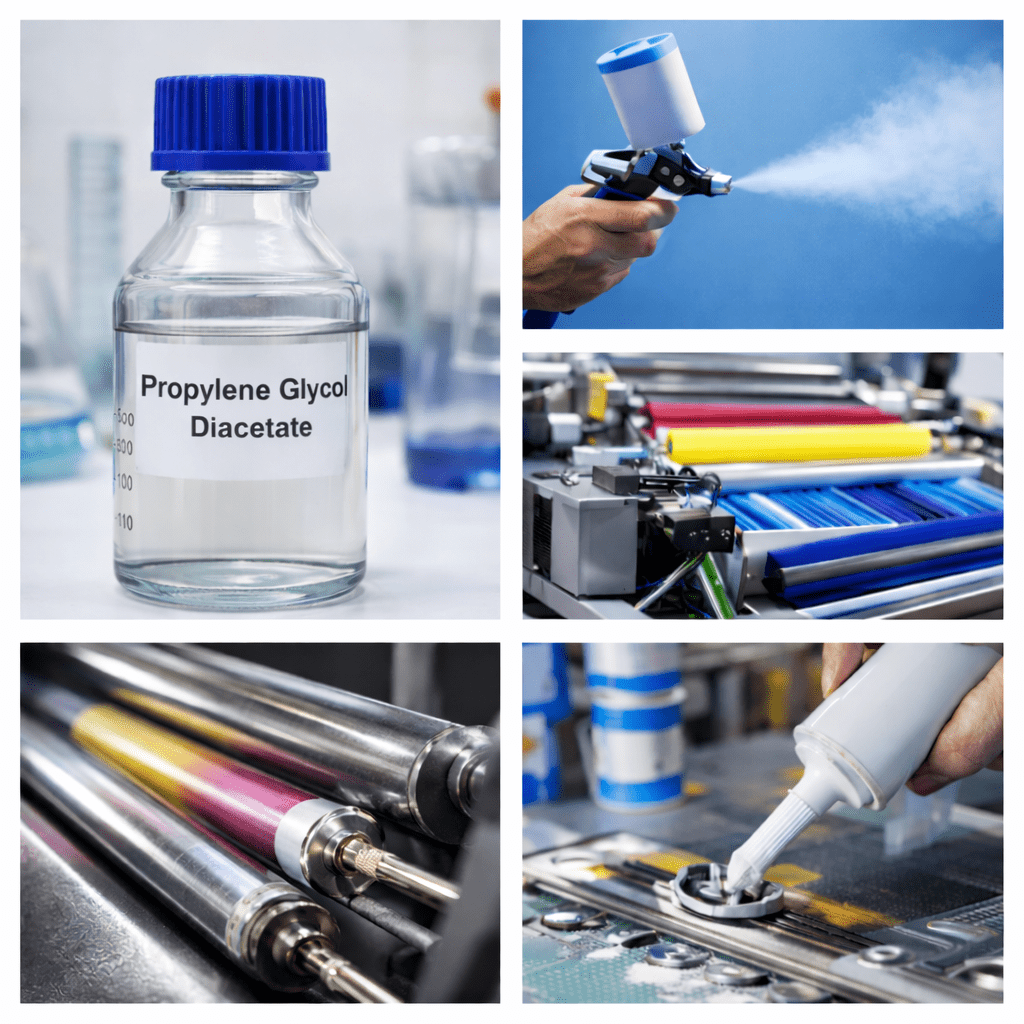
6.1 Industrial Coatings
Used in heavy-duty coatings for machinery, pipelines, and metal structures.
Improves surface finish and gloss in OEM and refinish systems.
6.3 Printing Inks
Enhances pigment dispersion and drying control.
6.4 Wood Coatings
Provides smooth leveling and reduces surface defects.
6.5 Adhesives
Used in formulation of specialty adhesives and sealants.
🌍 7. Market Trend: Why Demand for PGDA is Increasing
The global solvent market is shifting due to:
- Environmental regulations
- Demand for low-VOC coatings
- Industrial safety requirements
- Sustainability goals
As a result:
👉 Demand for oxygenated solvents like PGDA is growing steadily.
Manufacturers are actively replacing:
- Xylene → PGDA blends
- Ketones → ester-based systems
- Ethylene glycol ethers → propylene-based alternatives
📈 8. Why PGDA is a Smart Choice for Manufacturers
PGDA is considered a “smart solvent” because it balances:
- Performance
- Safety
- Environmental compliance
- Application flexibility
In simple terms:
It performs like a high-quality industrial solvent but without the environmental and health drawbacks of older chemicals.
🧪 9. Future of PGDA in Coatings Industry
The future trend is clear:
- Low-VOC coatings will dominate the market
- Regulatory pressure will increase
- Green chemistry will expand
PGDA is well positioned to become:
👉 A standard solvent in modern coating formulations
🧭 Conclusion
Solvents are no longer just supporting materials in paints and coatings—they are strategic performance drivers.
While traditional solvents like aromatics and ketones still exist in many formulations, their usage is steadily declining due to environmental and health regulations.
In this transition, Propylene Glycol Diacetate (PGDA) stands out as a highly efficient, environmentally friendly, and versatile solvent.
It offers:
- Balanced evaporation
- Excellent film formation
- Low odor and toxicity
- Strong solvency power
- Regulatory compliance
For manufacturers aiming to develop modern, high-performance, low-VOC coatings, PGDA is not just an alternative—it is a smart strategic choice.
To buy from Iranian Suppliers please visit: https://irancorps.com