

 Arabic
shop
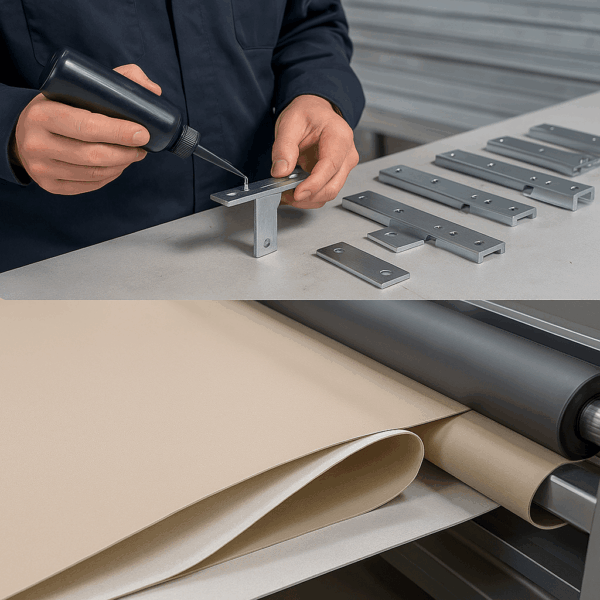
Solvent Based Acrylic Adhesives
Available types include pressure-sensitive acrylic adhesives, structural acrylic adhesives, laminating grades, heat-activated grades, and high-tack universal bonding systems. Specialty grades such as UV-resistant, high-temperature, low-odor, and chemical-resistant acrylic adhesives support demanding end-use sectors where long-term reliability is critical. These versatile solutions are compatible with spray, brush, roll-coat, slot-die, and automated dispensing systems, ensuring broad integration across industrial manufacturing setups. Their fast drying behavior and stable viscosity allow for efficient high-speed production lines in automotive, construction, packaging, and electronics industries.
Key advantages of solvent-based acrylic adhesives include high bonding strength, excellent aging resistance, superior clarity, and outstanding adhesion to low-surface-energy substrates. Their resistance to moisture, heat, oils, and UV exposure makes them ideal for outdoor and high-stress environments. The adhesives provide flexible bonding without brittleness, maintain performance under thermal cycling, and allow consistent film formation for uniform coating layers. With stable storage behavior and wide formulation adjustability, solvent-based acrylic adhesives remain a preferred choice for converters, laminators, OEM manufacturers, and industrial product developers seeking reliable, export-ready adhesive solutions.
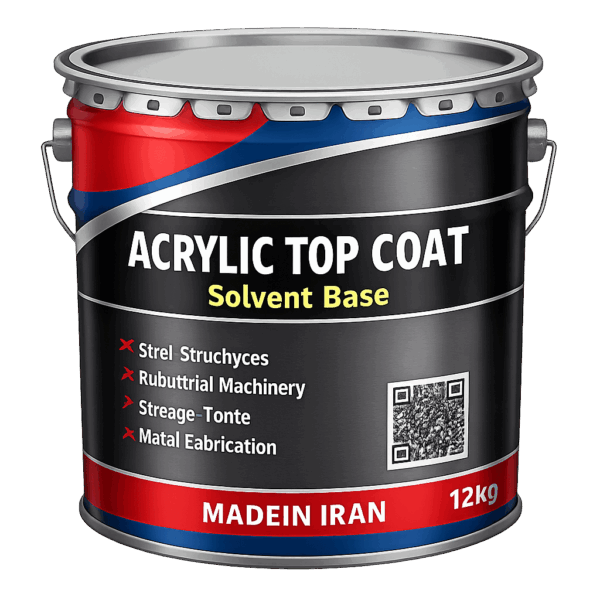
Solvent Based Acrylic Top Coat
Solvent based acrylic top coats exhibit excellent adhesion to a wide range of substrates including steel, aluminum, concrete, and properly primed surfaces. They offer outstanding gloss, smooth leveling, and uniform film build, resulting in an attractive and durable surface. Superior resistance to UV radiation ensures long-term color stability and gloss retention even in outdoor exposure. These coatings also provide strong resistance to moisture, oils, mild chemicals, and atmospheric pollutants. Fast drying and quick recoating properties help reduce downtime and improve productivity on site. They perform reliably in both indoor and outdoor conditions and are compatible with epoxy, alkyd, and zinc-rich primer systems. Easy application by spray, roller, or brush allows flexibility across different projects.
Typical applications include steel structures, machinery, storage tanks, pipelines, industrial equipment, and infrastructure projects. Solvent based acrylic top coats are widely used in factories, warehouses, power plants, and maintenance painting operations. They are especially suitable for harsh climates and heavy-duty service conditions. These coatings provide a durable decorative finish with extended maintenance intervals and consistent performance over time. Available in a wide range of colors and gloss levels, they can be customized to meet specific technical requirements. Solvent based acrylic top coats offer an optimal balance of performance, durability, and cost efficiency. They remain a reliable solution for long-term industrial surface protection.
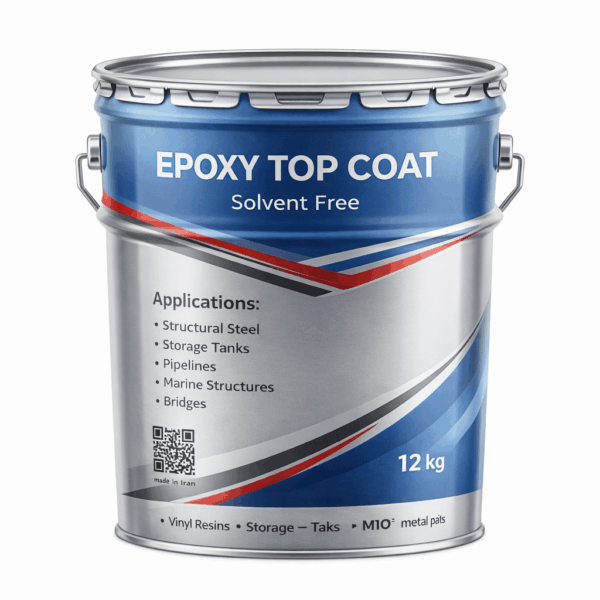
Solvent Free Epoxy Topcoat
Solvent free epoxy topcoats are available in different types and grades, including standard build, high build, abrasion-resistant, chemical-resistant, and potable water-approved grades. Typical specifications include high solids content (≈100%), excellent adhesion, low shrinkage, high film thickness per coat, and resistance to chemicals, seawater, fuels, and oils. These coatings can be applied by airless spray, roller, or trowel, making them suitable for tanks, pipelines, offshore platforms, wastewater treatment units, and industrial floors. Key advantages include zero VOC emission, excellent mechanical strength, outstanding corrosion resistance, long service life, and suitability for confined spaces. Solvent free epoxy topcoats also comply with many international standards such as ISO, NACE, and ASTM depending on formulation.
Solvent free epoxy topcoat paints are supplied in various packaging options including 12 kg and 20 kg metal buckets, dual-component kits, and industrial bulk packaging for large projects. Export packages are palletized, shrink-wrapped, and labeled according to international shipping standards. These coatings are ideal for buyers seeking environmentally friendly, high-spec protective solutions with strong technical performance and reliable global supply for industrial, marine, and infrastructure applications.
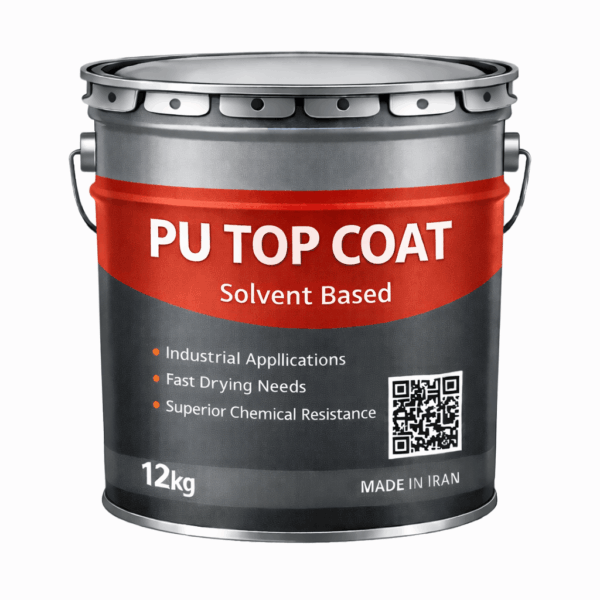
Solvent-Based Polyurethane Top Coat
Solvent Based PU top coats are formulated using high-quality polyurethane resin systems dissolved in selected organic solvents to ensure excellent flow, leveling, and film formation. After curing, the coating exhibits outstanding adhesion, high abrasion resistance, and strong impact tolerance. It provides very good resistance to weathering, UV radiation, moisture, oils, fuels, and many industrial chemicals. The cured film maintains flexibility to accommodate thermal movement while protecting the substrate from corrosion and environmental attack. These top coats are compatible with epoxy and polyurethane primers and interlayers and can be applied by spray, roller, or brush under a wide range of climatic conditions.
Solvent based polyurethane top coats are commonly applied on steel structures, storage tanks, pipelines, industrial machinery, marine equipment, and heavy-duty flooring systems. They perform reliably in both indoor and outdoor environments, including aggressive industrial and coastal areas. The coatings retain long-term gloss and color stability, reducing maintenance frequency and lifecycle costs. For export and international supply, these products are available in standard industrial packaging such as 1 L, 5 L, and 20 L metal cans, 18–20 L steel pails, and 200 L drums, suitable for sea and land transportation. Combining proven performance, application versatility, and durable protection, solvent based PU top coats remain a trusted solution for industrial coating systems.
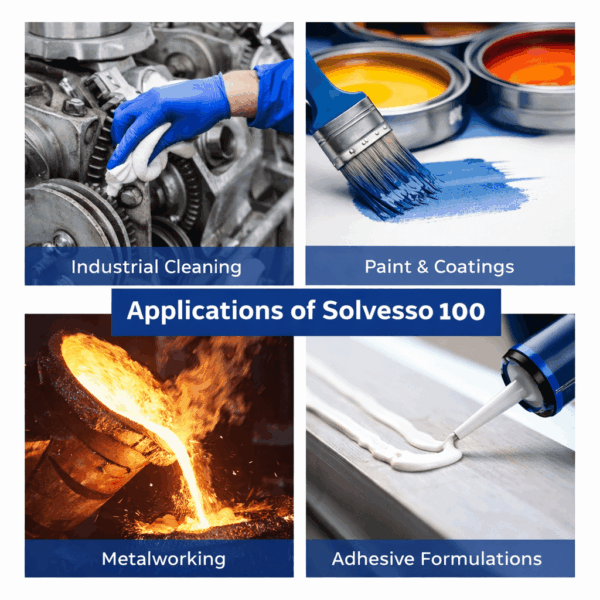
Solvesso 100
It is composed mainly of aromatic hydrocarbons with a narrow boiling range, providing strong solvency for alkyd, acrylic, epoxy, polyurethane, and phenolic resins. Key technical properties include a high flash point, medium evaporation rate, low sulfur content, excellent chemical stability, and good compatibility with other aromatic and aliphatic solvents. These characteristics improve flow, leveling, gloss development, and film formation in coating systems while supporting stable processing and reduced formulation issues.
Solvesso 100 can be supplied in various commercial packaging options to suit different industrial needs, including 200 kg steel drums, 1,000 kg IBC containers, and bulk tanker or ISO tank deliveries. It offers good storage stability when kept in tightly sealed containers under recommended conditions. With its strong solvency strength, versatile application range, and dependable batch consistency, Solvesso 100 remains a preferred aromatic solvent for coatings, inks, adhesives, and specialty chemical industries worldwide.
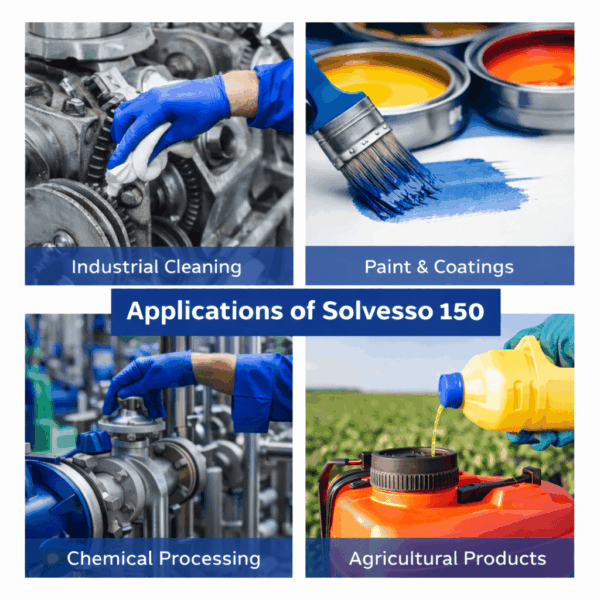
Solvesso 150
It is composed mainly of high-purity aromatic hydrocarbons with a narrow distillation range, offering excellent solvency for alkyd, epoxy, polyurethane, phenolic, and chlorinated rubber resins. Key technical properties include a high flash point, very low volatility, slow evaporation rate, low sulfur content, and excellent thermal and chemical stability. These features contribute to improved leveling, reduced brush and spray marks, enhanced gloss control, and better film integrity in thick or high-solid coating systems.
Solvesso 150 can be supplied in industrial-grade commercial packaging such as 200 kg steel drums, 1,000 kg IBC containers, and bulk tanker or ISO tank deliveries for large-scale users. It offers long storage stability when handled and stored under recommended conditions. With its strong solvency, slow evaporation profile, and proven performance, Solvesso 150 is an ideal solvent choice for coatings, inks, adhesives, and specialty chemical manufacturers seeking durability, control, and consistent formulation quality.
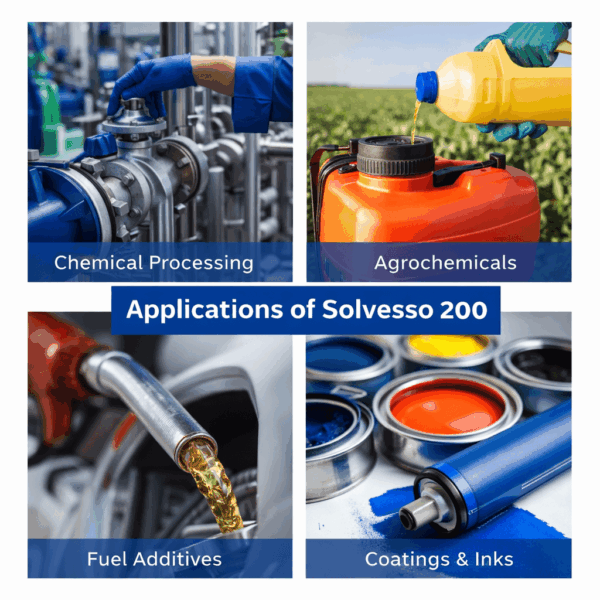
Solvesso 200
With its stable aromatic composition, Solvesso 200 delivers reliable and consistent performance in demanding environments. It is composed mainly of high-purity aromatic hydrocarbons with a very narrow distillation range, providing excellent solvency for alkyd, epoxy, polyurethane, phenolic, chlorinated rubber, and hydrocarbon resins. Key technical properties include a very high flash point, extremely low volatility, slow evaporation rate, low sulfur and impurity content, and excellent thermal and chemical stability. These characteristics help improve flow, leveling, gloss control, and film build while reducing defects such as pinholes and solvent popping in thick coating layers.
Solvesso 200 is supplied in robust commercial packaging options designed for industrial use, including 200 kg steel drums, 1,000 kg IBC containers, and bulk tanker or ISO tank deliveries. It offers excellent storage stability when kept in sealed containers under recommended conditions. With its superior solvency power, extended open time, and dependable quality, Solvesso 200 is an ideal solvent solution for manufacturers of high-performance coatings, inks, adhesives, and specialty chemical products.
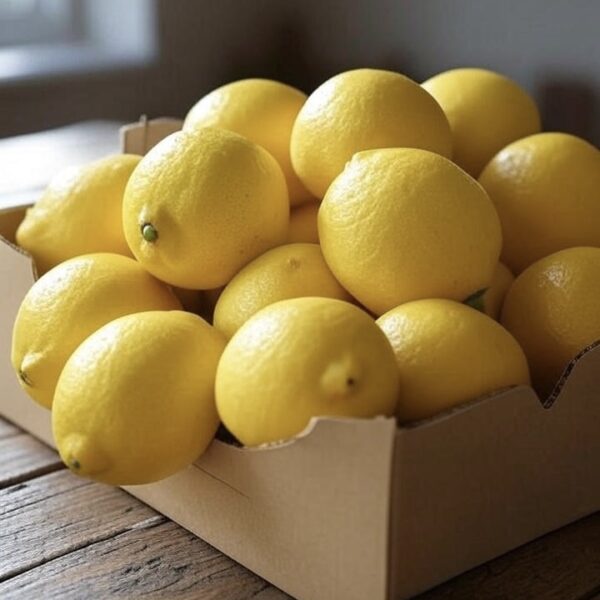
Sour Lemon
While these flavonoids have been shown to stop cell division in many cancer cell lines, they are perhaps most interesting for their antibiotic effects.
you can use it better in your cooking and daily consumption.
Available sour lemon types are :
– Lemon (Lisbon):
This type of lemon is one of the most popular lemons in the market.
it is harvested in Fars and Hormozgan provinces in the cities of Jiroft, Rodan, and Jahrom.
Lisbon lemon has a yellow color with a large size and an oval shape that has protrusions on both sides of the fruit. Its pleasant taste and low sourness have made it widely used in the cooking and pastry industry to prepare all kinds of desserts, sauces, drinks, jams, etc.
– Persian Lime:
This type of lemon is smaller than the Lisbon lemon and has a thin green skin .This lemon is mostly consumed green. Persian lime is used to flavor fish, meat, and chicken in cooking.
Soybean Oil Fatty Acids
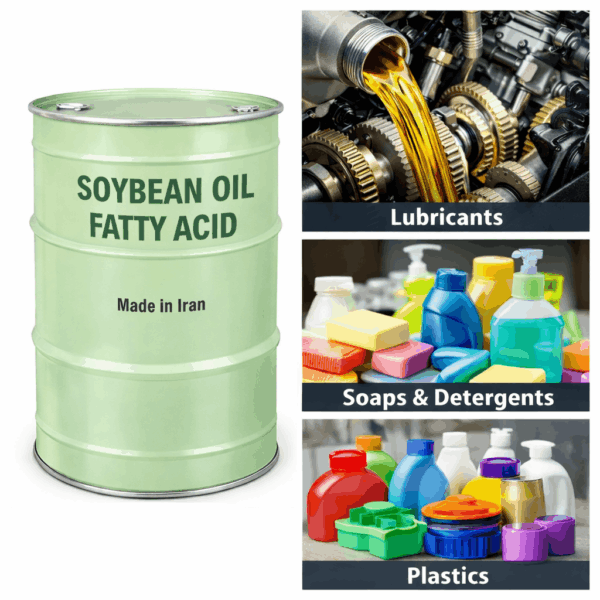
The versatility of Soybean Oil Fatty Acids makes them a key ingredient in modern chemical formulations and are available in refined, distilled, and technical grades, including options with controlled linoleic and oleic content to meet specific formulation needs. Key features include good oxidative stability, low sulfur content, excellent emulsifying properties, and high compatibility with surfactants, resins, and additives. Typical technical specifications include acid value, iodine value, saponification value, moisture content, and color (APHA), ensuring consistent quality and process efficiency. These fatty acids perform effectively in esterification, saponification, and neutralization reactions, making them suitable for a wide range of chemical processes. Their biodegradable and plant-based nature supports compliance with environmental and regulatory standards. Products are supplied in drums, IBCs, flexitanks, and bulk tankers to support global distribution.
Soybean Oil Fatty Acids are widely used in soaps and detergents, cosmetics and personal care products, lubricants and metalworking fluids, rubber and plastic additives, alkyd resins, coatings, and chemical intermediates. They are also applied in agricultural chemicals and specialty industrial formulations. With stable global availability, competitive pricing, and broad application flexibility, Soybean Oil Fatty Acids remain a preferred solution for manufacturers looking for reliable, sustainable, and high-performance fatty acid raw materials.
Spherical Aluminum Powder
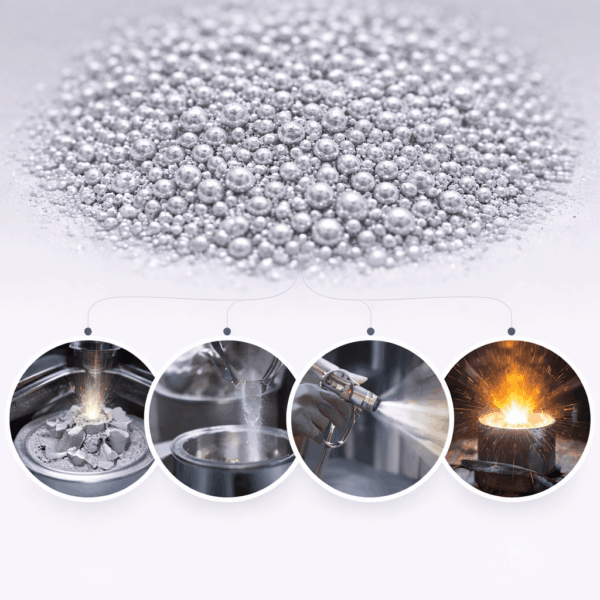
With a bright silver appearance and controlled particle size, spherical aluminum powder is widely trusted across metallurgy, manufacturing, and high-tech industries. Spherical aluminum powder is available in fine, medium, and coarse particle size ranges, typically from 5 to 150 microns, to meet diverse processing requirements. Standard aluminum purity levels range from 99.5% to 99.9% Al, with optional surface treatments to enhance oxidation resistance and storage stability. Major applications include powder metallurgy, metal additive manufacturing (3D printing), thermal spraying, metal injection molding, conductive and functional fillers, and selected energetic and welding formulations. Thanks to its spherical geometry, this powder offers excellent flow rate, low dust formation, high tap density, and uniform melting behavior, ensuring repeatable results in automated and precision processes.
Packages of spherical aluminum powder are packed in sealed aluminum bags, fiber drums, or steel drums, commonly offered in 1 kg, 5 kg, 10 kg, 25 kg, and bulk industrial packages. Technically, it features controlled bulk density, narrow particle size distribution, and low moisture content for safe and efficient use. Easy to dose, blend, and process, spherical aluminum powder helps optimize production efficiency while maintaining high-quality output. As a reliable, high-performance raw material, it plays a vital role in modern manufacturing, advanced coatings, and next-generation metal technologies.
Spot Blender
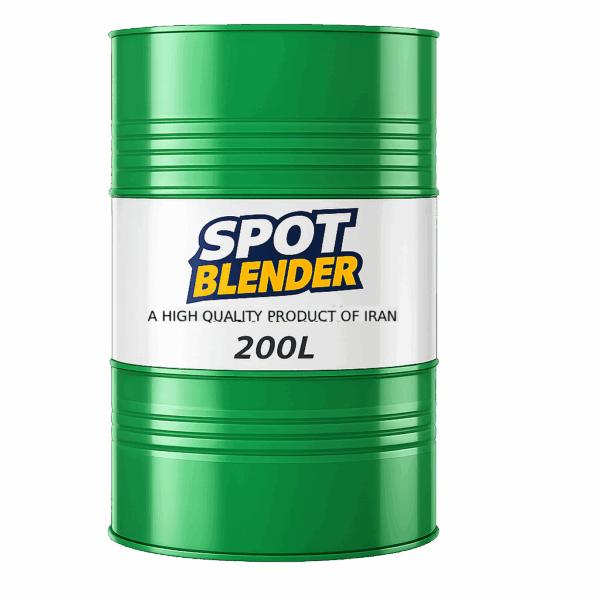
Spot Blender is formulated with fast-evaporating solvents that temporarily reflow the surface of fresh coatings without attacking fully cured paint layers. It helps level dry spray areas and blend repair zones seamlessly into the surrounding surface. Spot blender is compatible with most solvent-based automotive and industrial top coats, including polyurethane and acrylic systems. Its controlled evaporation rate allows precise application and minimizes surface defects. Easy to apply, it supports spray application during final finishing stages. The product improves repair efficiency while maintaining coating integrity.
Spot Blender is commonly used in automotive body shops, industrial maintenance, machinery refinishing, and localized coating repairs. It reduces rework time and improves the visual quality of spot repairs. By achieving seamless blending, it enhances customer satisfaction and professional results. Spot blender is an essential accessory for high-quality refinishing processes. It supports faster job completion and consistent surface appearance. Ideal for repair and refinishing professionals, it delivers reliable blending performance in demanding applications.

Spray Art Paint
The pigments used in a paint can be derived from natural sources, such as minerals and plants, or they can be synthesized chemically in a laboratory. The binder holds the pigments together to help the paint adhere to the painted surface. Other ingredients, such as solvents that adjust the paint’s consistency or additives that improve its performance or durability, may also be added to the mixture. Spray paint is a type of paint that is applied to a surface using a can fitted with a spray nozzle. It is known for its quick drying and even application, making it a popular choice for murals, graffiti, and other types of street art.