

 Arabic
shop
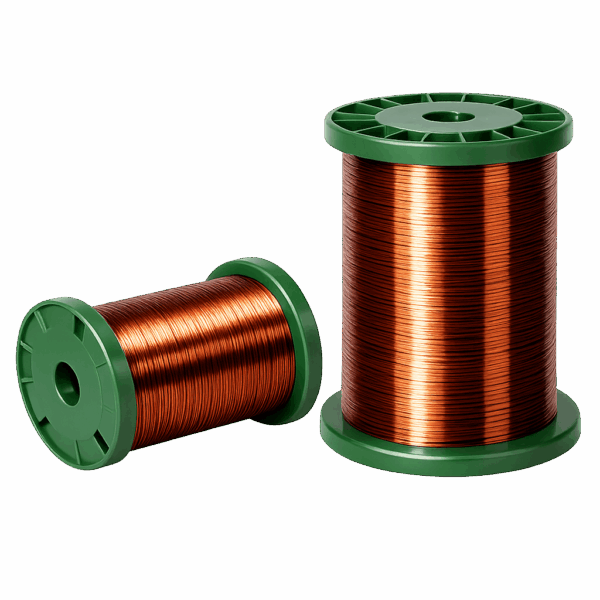
Polyester Base Enameled Copper Wire
Produced from electrolytic grade copper and coated with high-quality polyester enamel, this wire offers excellent electrical insulation, smooth surface finish, and uniform enamel thickness. It is available in commercial grades compliant with IEC, NEMA, JIS, and GB standards, ensuring global acceptance and easy integration into existing designs. Polyester base enamelled copper wire is typically supplied in round cross-sections, with a broad size range from fine gauges (approximately 0.04 mm) to larger diameters suitable for power applications. The wire is commonly offered in temperature class 130°C, providing dependable thermal endurance for continuous operation. Key technical features include good dielectric strength, reliable mechanical flexibility, consistent winding behavior, and resistance to common winding stresses. Its balanced properties make it ideal for high-speed winding processes and mass production environments.
Polyester Base Enameled Copper Wire is widely used in electric motors, transformers, fan motors, generators, relays, contactors, coils, and general-purpose electrical windings. It is especially suitable for applications where stable insulation performance and economical design are essential. With proven durability, dependable electrical characteristics, and competitive pricing, this enameled copper wire remains a trusted solution for manufacturers serving industrial, commercial, and household electrical markets worldwide.
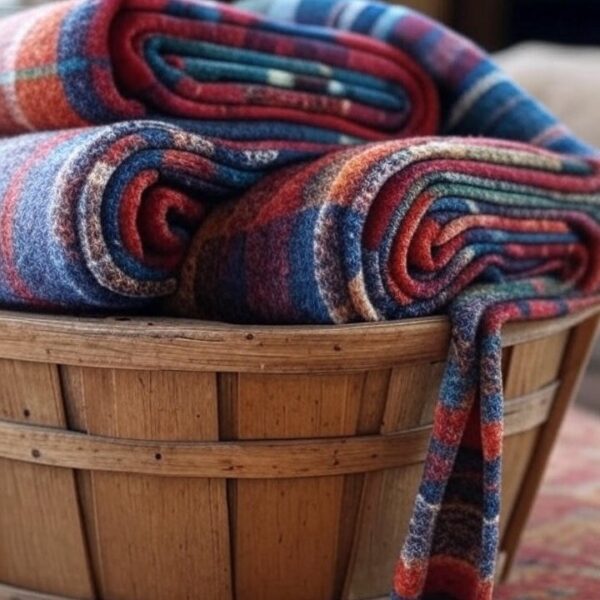
Polyester Blanket
Commercially available polyester blankets include polar fleece blankets, microfiber polyester blankets, sherpa polyester blankets, printed polyester blankets, solid color blankets, lightweight travel blankets, and heavy-duty thermal blankets. Depending on customer requirements, they can be supplied in different sizes, weights, GSM ranges, colors, patterns, and packaging options. Polyester blankets are available in standard retail packaging as well as customized packaging with private labels for international buyers and distributors. Their excellent color retention, quick-drying properties, resistance to shrinkage, and easy maintenance make them a preferred choice compared with many natural fiber blankets.
Polyester blankets offer excellent durability, abrasion resistance, and dimensional stability while maintaining softness and comfort. They are suitable for cold weather conditions, outdoor activities, emergency relief programs, hotels, airlines, hospitals, and household use. The products can be customized according to market requirements, including fabric density, fiber quality, finishing treatments, anti-pilling properties, and branding options. Reliable suppliers can provide polyester blankets with consistent quality, competitive pricing, and export-ready packaging for global B2B trade.
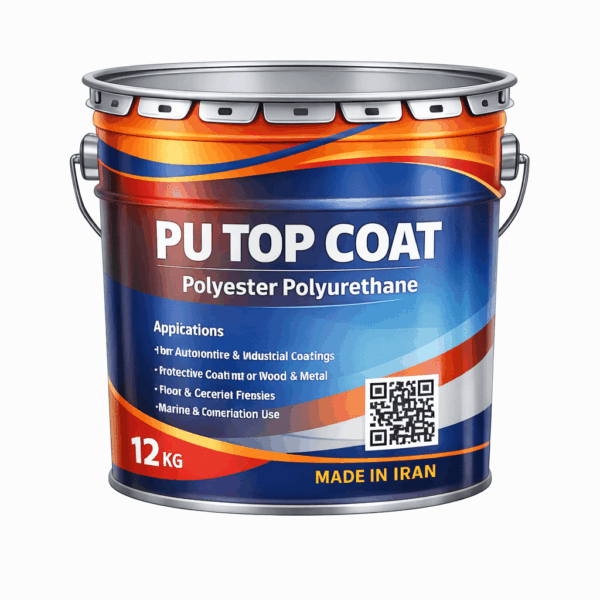
Polyester Polyurethane Top Coat
Polyester PU top coats are formulated using polyester-based polyurethane resin systems that deliver high hardness, strong adhesion, and excellent abrasion resistance. After curing, the coating forms a tough film with very good resistance to weathering, UV radiation, oils, fuels, and a wide range of industrial chemicals. Compared to polyether systems, polyester PU top coats offer higher surface hardness and improved scratch resistance. They maintain good flexibility to accommodate normal thermal movement while ensuring long-term film integrity. Smooth flow and leveling properties provide uniform, high-gloss or semi-gloss finishes. These coatings can be applied by spray, roller, or brush over properly prepared and primed substrates. Combining strength, durability, and high-quality appearance, polyester PU top coats remain a trusted solution for industrial finishing systems.
Polyester polyurethane top coats are commonly applied on steel structures, industrial machinery, equipment housings, pipelines, storage tanks, and flooring systems where mechanical durability and visual quality are critical. They perform reliably in both indoor and outdoor environments with moderate to severe service conditions. The coatings help extend maintenance intervals and reduce lifecycle costs. For export and international supply, polyester PU top coats are available in standard packaging such as 1 L, 5 L, and 20 L metal cans, 18–20 L steel pails, and 200 L drums, suitable for global transportation and long-distance shipping.
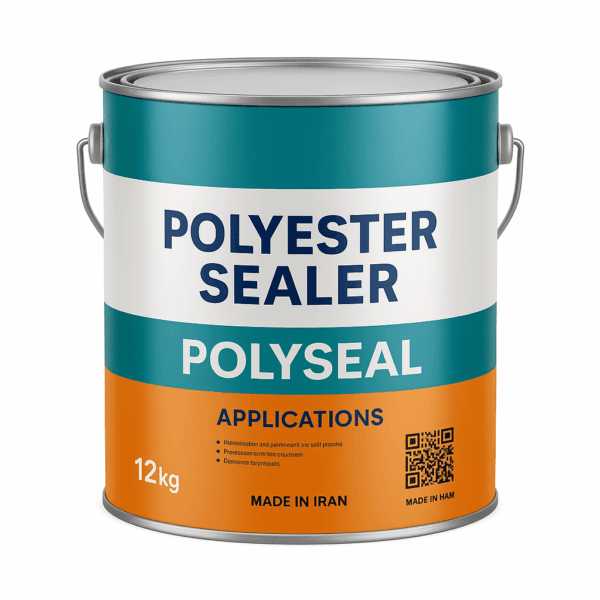
Polyester Sealer
Polyester sealers are available in unsaturated polyester sealer, pre-accelerated polyester sealer, and low-styrene or styrene-free grades, depending on environmental and performance requirements. Typical applications include wood furniture, MDF panels, kitchen cabinets, doors, musical instruments, and decorative wooden products, as well as selected composite and engineered boards. The main ingredients generally include unsaturated polyester resins, styrene or alternative reactive diluents, fillers, flow modifiers, accelerators, and organic peroxide catalysts used during curing. Key advantages of polyester sealers are high solid content, excellent pore filling, rapid curing, good hardness development, and superior sandability, which significantly reduce production time in industrial finishing lines.
In terms of properties, polyester sealers offer high build per coat, low shrinkage, smooth surface leveling, and strong adhesion to wood and MDF substrates, making them ideal for high-quality finishing systems. They are compatible with polyester, polyurethane, and acrylic topcoats, providing flexibility for different coating systems. Polyester sealers are supplied in various industrial packaging formats, including metal cans, 12–25 kg buckets, 200–220 kg drums, and IBC containers for bulk users, meeting the needs of both small workshops and large-scale manufacturers.
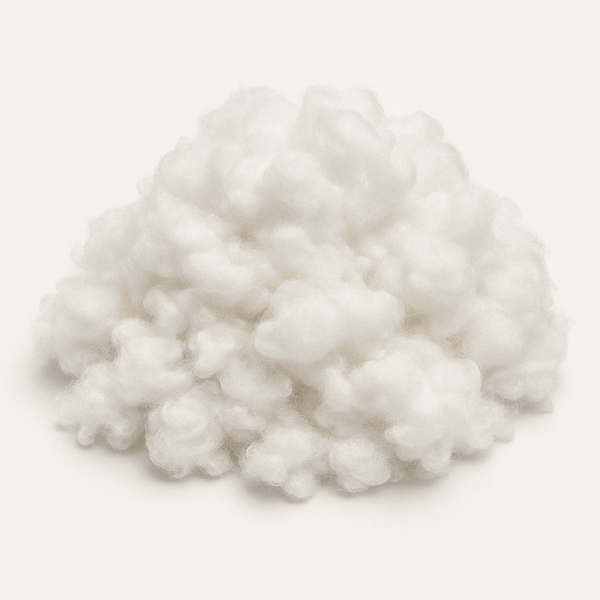
Polyester Staple Fiber (PSF)
PSF can come in various lengths, typically ranging from 10mm to 120mm, depending on the intended end-use. Varieties of the PSF are available, it can be produced in different deniers , linear density , and is either hollow or solid. The fiber can also be siliconized to give it a smooth feel or remain non-siliconized. Both hollow and solid PSF are available to supply , in Hollows PSF there is more space in the fiber, giving a fluffy and light appearance. In Solid PSF (microfiber) – the fibers have tiny diameters with no space between them. These look thinner and finer. Some chemicals are used to treat the two types of fiber. The treatment gives them various properties. These are fire-resistant, non-static, non-shrinking, anti-fungal, conjugated, siliconized, and non-siliconized.
Based on the source of raw materials , polyester staple fiber (PSF), can be categorized into two main types that are recycled staple fiber and virgin staple fiber. Recycled Staple Fiber is Derived from post-consumer or post-industrial recycled materials, most commonly from recycled PET bottles or old polyester garments and the Virgin Staple Fiber is Produced directly from raw materials, PTA, and MEG.
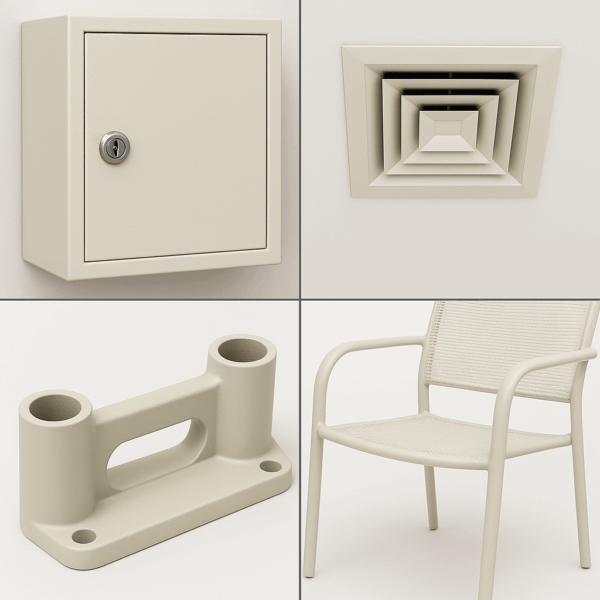
Polyester–Epoxy Hybrid Powder Coating
This coating ensures excellent flow, surface leveling, and gloss uniformity, making it ideal for a variety of metal substrates and interior manufacturing uses. Typical applications of Polyester–Epoxy Hybrid Powder Coating include office furniture, home appliances, lighting fixtures, HVAC components, indoor machinery frames, electrical enclosures, shelving units, metal cabinets, decorative hardware, industrial tools, automotive interior parts, and general consumer goods. With strong impact resistance and durable film thickness consistency, hybrid systems outperform conventional epoxy coatings in aesthetics while offering better yellowing resistance and improved cost-to-performance ratio. Ingredients & formulation include polyester resin, epoxy resin (in tailored ratios like 50/50 or 60/40), curing agents, flow modifiers, degassing agents, pigments, fillers, and stabilizing additives.
Epoxy – Polyester Hybrid Powder Coatings are available in matte, gloss, semi-gloss, metallic, hammer-tone, texture, and custom RAL-matched formulas, Polyester–Epoxy Hybrid coatings are a cost-efficient interior finishing solution for global OEMs and industrial buyers that provide smooth surface finish, high coverage efficiency, and reduced VOC emissions, aligning with green manufacturing requirements.
Key advantages:
- improved flexibility compared to pure epoxies
- excellent abrasion resistance
- enhanced flow and leveling
- consistent gloss finish
- great chemical resistance & lower baking temperatures (160–180°C).
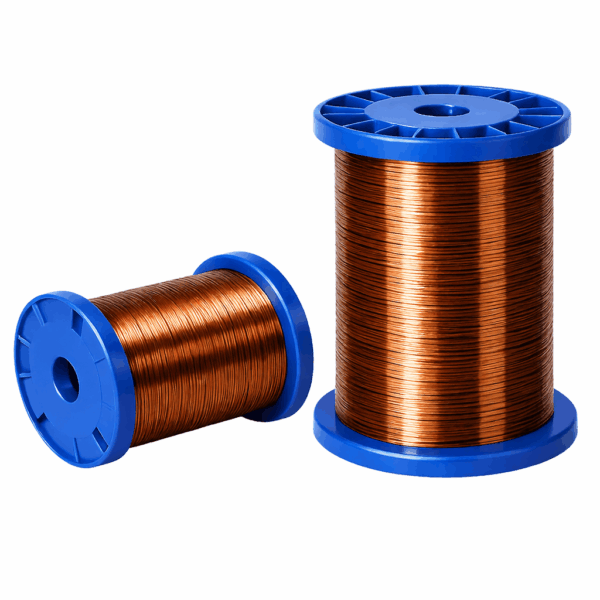
Polyesterimide Base Enameled Copper Wire
Manufactured from high-purity electrolytic copper and coated with advanced polyesterimide enamel, this wire delivers excellent thermal endurance and mechanical strength. It is commonly available in commercial grades compliant with IEC, NEMA, JIS, and GB standards, ensuring global usability and consistent quality. Polyesterimide enamelled copper wire is supplied mainly in round cross-sections, with size ranges from fine diameters around 0.04 mm up to heavy gauges suitable for high-power windings. The wire is typically offered in temperature classes 180°C and 200°C, making it suitable for continuous operation under elevated thermal stress. Key technical features include high dielectric strength, superior resistance to abrasion and chemicals, uniform enamel thickness, excellent winding performance, and strong resistance to thermal aging. These characteristics ensure reliable insulation integrity even in compact, high-speed winding designs.
Polyesterimide Base Enameled Copper Wire is extensively used in electric motors, generators, transformers, compressors, pumps, automotive motors, and industrial coils where higher thermal classes are required. It is especially suitable for applications involving frequent temperature fluctuations and long-duty cycles. With its proven durability, high heat resistance, and consistent electrical performance, this enamelled copper wire provides a dependable and cost-efficient solution for manufacturers serving industrial, automotive, and heavy-duty electrical markets worldwide.
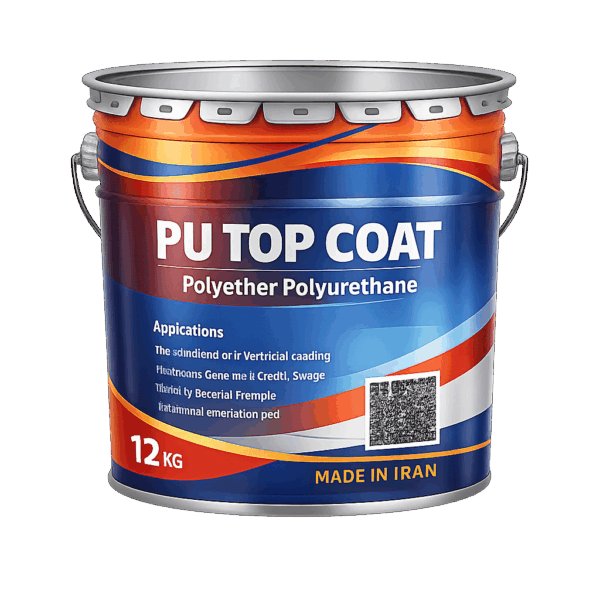
Polyether PU Top Coat
Polyether PU top coats are formulated using polyether-based polyurethane resin systems that provide superior resistance to hydrolysis compared to polyester-based systems. After curing, the coating exhibits excellent adhesion, high elasticity, and strong impact resistance, allowing it to withstand mechanical stress, vibration, and thermal movement without cracking. Polyether PU top coats show very good resistance to water, moisture, oils, fuels, and many industrial chemicals. They also provide good abrasion resistance and stable performance in both indoor and outdoor exposure. Smooth flow and leveling ensure uniform coverage when applied by spray, roller, or brush over properly prepared and primed substrates. Combining moisture resistance, flexibility, and durability, polyether PU top coats offer a reliable solution for heavy-duty industrial protection systems.
Polyether polyurethane top coats are widely used on pipelines, storage tanks, marine and offshore equipment, wastewater treatment facilities, industrial machinery, and steel structures exposed to high humidity or immersion conditions. They are ideal for environments where moisture resistance and flexibility are critical for long service life. The coatings maintain film integrity and protective performance over extended periods, reducing maintenance requirements. For export and international supply, polyether PU top coats are available in standard industrial packaging such as 5 L and 20 L metal cans, 18–20 L steel pails, and 200 L drums, suitable for safe handling and global transportation.
Polyethylene Compounds
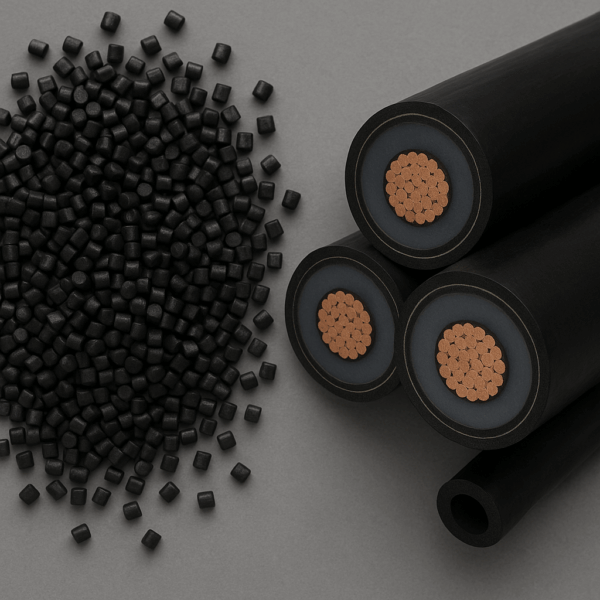
In the compounding process, the polymer is physically and chemically modified by incorporating various additives. The selection of additives and of compounding conditions depends on the end application of the compounded product. It is possible to modify PE with the following additives and are also able to make additives that are not listed here.
- Mineral Filled (Talc and CaCo3): 20% to 50%
- Glassfiber Reinforced: 20% to 50%
- Impact Modified
- Flame Retardant: Halogen and Halogen free systems
- UV and Heat stabilized options
- Various colours available
Polyethylene (PE) compounds can be produced in both low-density and high-density versions with different colors , according to the intended industry it will be used in. PE compounds can be sued in producing pipes , Solid Insulation Compounds for Telecommunications , HDPE for Defense application field wire , Power cable sheathing applications , films and sheets and steel pipe coating ..
Polyethylene Wax
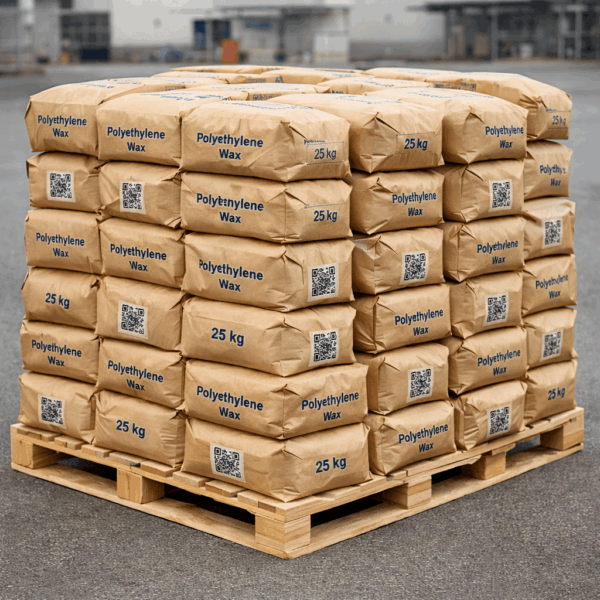
Polyethylene wax is available in several types including oxidized polyethylene wax, non-oxidized (homopolymer) PE wax, micronized polyethylene wax, low-molecular-weight PE wax, and modified polyethylene wax. These grades differ in melting point, acid value, molecular weight, and particle size to meet specific application requirements. PE Wax is widely applied as an internal and external lubricant in PVC processing, a slip and anti-scratch additive in masterbatches, a dispersion aid in color concentrates, and a matting or rub-resistance agent in coatings and printing inks. In rubber and tire manufacturing, it improves mold release and surface smoothness, while in hot-melt adhesives it enhances flow and thermal stability. Typical technical characteristics include controlled melting range (90–140°C), low penetration, excellent hardness, and outstanding compatibility with polymers, resins, and solvents.
Polyethylene Wax is commonly supplied in flakes, pastilles, powders, granules, or micronized forms, allowing easy handling and precise dosing in production lines. Standard commercial packaging that are available includes 25 kg kraft bags, polyethylene-lined bags, jumbo bags, and customized bulk solutions for large-scale consumers. With long shelf life, consistent quality, and global availability, PE Wax supports cost-effective manufacturing and reliable end-product performance. Whether used in plastics, paints, inks, adhesives, or rubber compounds, polyethylene wax remains a key functional additive that delivers efficiency, protection, and superior surface properties for industrial formulations worldwide.
Polymethyl Methacrylate (PMMA)
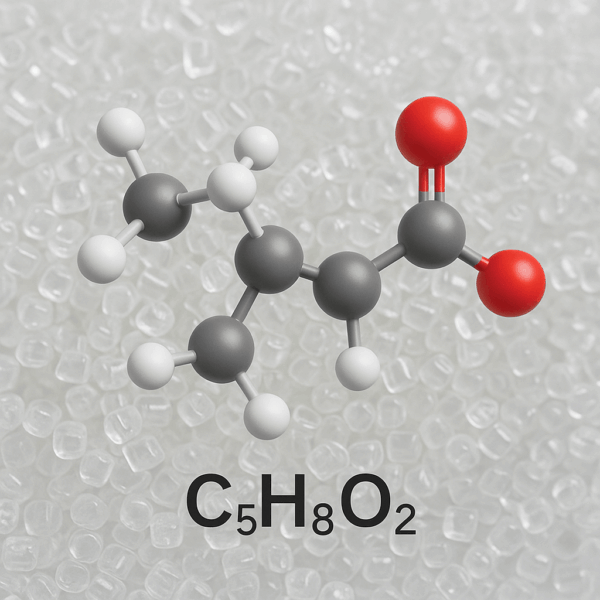
Polymethyl Methacrylate is extensively used in a wide range of industries including automotive, construction, electronics, lighting, medical equipment, optical products and advertising materials. Transparent PMMA sheets are commonly used for windows, partitions, skylights, displays and architectural applications, while PMMA pellets are widely used for injection molding of automotive parts, electronic components, optical lenses and consumer products. Modified impact-resistant PMMA grades are developed for applications requiring higher mechanical strength, while UV-resistant and weatherable grades are preferred for outdoor applications such as signs, outdoor displays and protective covers. Specialty PMMA grades with enhanced optical properties are used in LED lighting, light guides, medical devices and precision optical components due to their excellent light transmission and surface finish.
PMMA offers several advantages including high transparency, excellent surface hardness, low density compared with glass, good chemical resistance, easy processing and long-term color stability. The material is available in various commercial grades according to viscosity, molecular weight, impact resistance, optical performance and processing method. Standard PMMA grades are suitable for general-purpose applications, extrusion grades are used for continuous profiles and sheets, injection molding grades are used for complex molded parts, and optical grades are designed for high-precision applications.
Polyolefin Based Hot Melt Adhesives
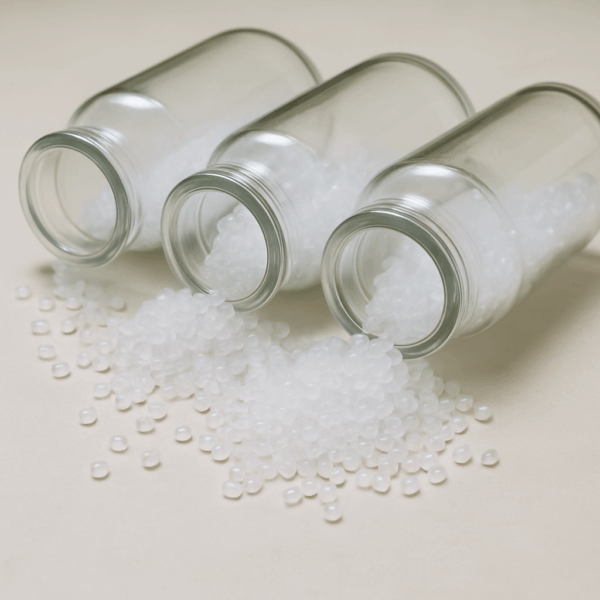
APAO/ Polyolefin based: low odor, safe in operation, low density and dosage- saving, cold& heat resistant, excellent bonding on low polarity materials. MPO based: low odor, safe in operation, low density and dosage- saving , best thermal stability among all types of hot melt adhesives. polyolefin based hot melt adhesives are applied in film attached packaging, straw attachment, hygiene material lamination, furniture assembly, household sanitary & cleaning products, insect/ rat glues traps.
Compared to EVA hot melts, polyolefin hot melt adhesives offer a wider application range, higher heat stability, as well as improved adhesion at cold temperatures. Depending on the formulation, open times can be set from less than one second to almost one minute, or even offer an unlimited open time as a semi-adhesive. Polyolefin base (PO) melt hotmelts are generally known because they offer very good thermo-stability and a wider bonding range, offering a higher temperature resistance and a more flexible glue connection with cold properties. Depending on the composition of the hot melt, it is possible to vary in viscosity, open time and adhesion properties. PO hot melts with a long open time can also be used for spraying adhesives.