

 Arabic
Blog
Introduction to Ochre Powder
Ochre Powder is one of the oldest natural mineral pigments known worldwide. For thousands of years, ochre has been used as a natural coloring material in paintings, construction, ceramics, and decorative applications. Today, with advances in mineral processing technology, ochre powder has become an important industrial pigment used in paints, coatings, plastics, rubber, construction materials, and many other industries.
Ochre is a naturally occurring earth pigment mainly composed of iron oxides and clay minerals. The color of ochre depends on the type and concentration of iron oxide minerals present in the raw material.
The most common commercial types of ochre powder include:
- Yellow Ochre Powder
- Red Ochre Powder
- Brown Ochre Powder
- Golden Ochre Powder
Each type has different chemical characteristics, color shades, and industrial applications.
Choosing the correct ochre grade is essential because different industries require specific properties such as:
- Iron oxide content
- Color strength
- Particle size
- Moisture content
- Oil absorption
- Chemical stability
- Heavy metal content
What Is Ochre Powder?
Ochre Powder is a natural mineral pigment obtained from iron-rich earth deposits. The main coloring component is iron oxide, while silica and clay minerals act as supporting components.
The general chemical composition of ochre includes:
| Component | Typical Range |
| Iron Oxide (Fe₂O₃) | 40–80% |
| Silica (SiO₂) | Variable |
| Clay Minerals | Variable |
| Moisture | 1–3% |
Natural ochre is valued because it provides:
- Excellent color stability
- High UV resistance
- Good chemical resistance
- Natural appearance
- Low toxicity compared with many synthetic pigments
Types of Ochre Powder
- Yellow Ochre Powder
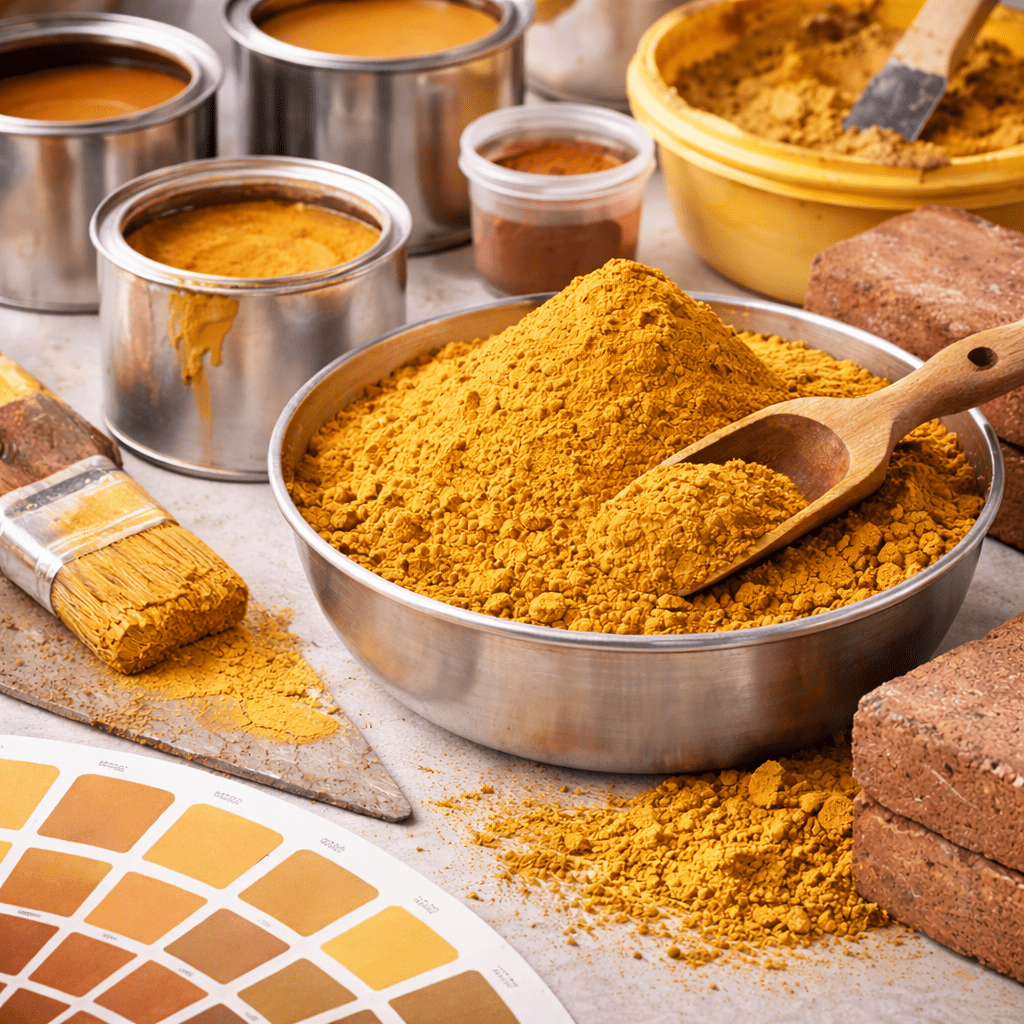
Yellow Ochre is one of the most widely used natural pigments. Its yellow color mainly comes from hydrated iron oxide minerals such as goethite.
Typical Technical Specifications of Yellow Ochre Powder
| Parameter | Specification |
| Appearance | Fine Yellow Powder |
| Chemical Composition | Hydrated Iron Oxide with Clay Minerals |
| Fe₂O₃ Content | 40–70% |
| Moisture Content | Max. 1–3% |
| Color Shade | Yellow / Golden Yellow |
| Particle Size | 325 Mesh or Customized |
| Oil Absorption | 20–35 g/100g |
| pH Value | 6–8 |
| Heavy Metals | According to International Standards |
| Applications | Paints, Coatings, Ceramics, Construction, Plastics |
Industrial Applications of Yellow Ochre Powder
- Paint and Coating Industry
Yellow Ochre is widely used in architectural paints, industrial coatings, and decorative coatings because of:
- Natural yellow color
- Excellent weather resistance
- Long-term color stability
For exterior paints, the required specifications usually include:
- High UV resistance
- Low moisture content
- Fine particle size
- Stable color shade
- Construction Materials
Yellow ochre is used for coloring:
- Concrete blocks
- Cement products
- Decorative stones
- Floor tiles
For construction applications, important properties are:
- Good dispersion
- High alkali resistance
- Stable pigment performance
- Ceramic Industry
Ceramic manufacturers use yellow ochre to produce:
- Tiles
- Artistic ceramics
- Decorative products
Required specifications:
- Controlled particle size
- Low impurities
- Stable firing color
- Red Ochre Powder
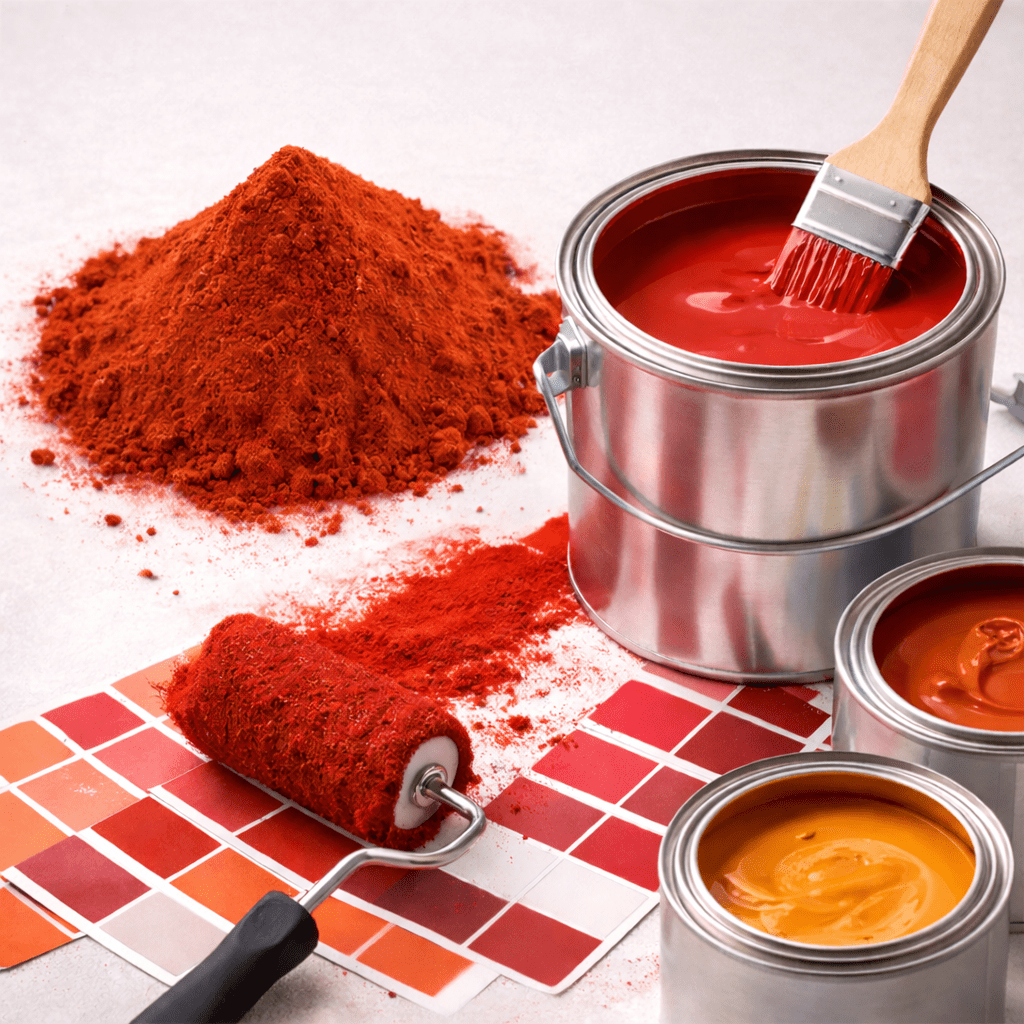
Red Ochre is a natural red pigment mainly produced by iron oxide minerals. Its red color is caused by hematite (Fe₂O₃).
Typical Technical Specifications of Red Ochre Powder
| Parameter | Specification |
| Appearance | Fine Red Powder |
| Chemical Composition | Natural Iron Oxide with Clay Minerals |
| Fe₂O₃ Content | 50–80% |
| Moisture Content | Max. 1–3% |
| Color Shade | Red / Dark Red |
| Particle Size | 325 Mesh or Customized |
| Oil Absorption | 20–35 g/100g |
| pH Value | 6–8 |
| Heavy Metals | According to International Standards |
| Applications | Paints, Plastics, Rubber, Concrete, Ceramics |
Applications of Red Ochre Powder
Paint Industry
Red ochre is highly popular in:
- Anti-corrosion coatings
- Decorative paints
- Industrial coatings
For anti-corrosion applications, important properties include:
- High iron oxide content
- Chemical resistance
- Excellent adhesion
Concrete and Cement Products
Red ochre is used to produce:
- Red paving blocks
- Colored concrete
- Architectural concrete
Required characteristics:
- Alkali resistance
- Strong coloring power
- Good dispersion
Rubber and Plastic Industry
Red ochre can be used as a coloring pigment in:
- Rubber products
- Plastic compounds
- Masterbatch production
Required specifications:
- Fine particle size
- Low moisture
- Good thermal stability
- Brown Ochre Powder
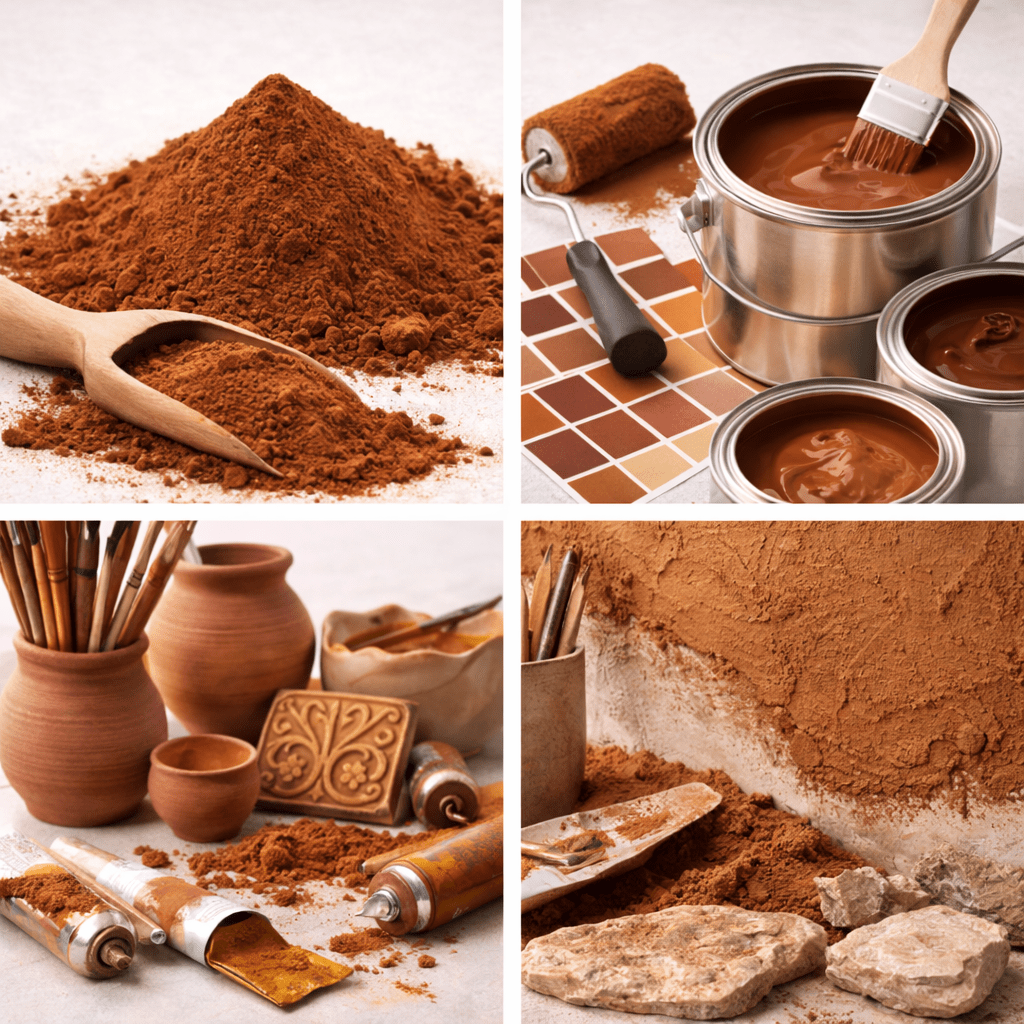
Brown Ochre is a natural earth pigment with a warm brown color produced from a mixture of iron oxides, manganese compounds, and clay minerals. It is widely used where a natural earthy tone, excellent durability, and weather resistance are required.
Brown Ochre is especially popular in decorative coatings, construction materials, artistic pigments, and ceramic applications.
Typical Technical Specifications of Brown Ochre Powder
| Parameter | Specification |
| Appearance | Fine Brown Powder |
| Chemical Composition | Natural Iron Oxide with Clay Minerals |
| Fe₂O₃ Content | 40–70% |
| Moisture Content | Max. 1–3% |
| Color Shade | Brown / Reddish Brown |
| Particle Size | 325 Mesh or Customized |
| Oil Absorption | 20–35 g/100g |
| pH Value | 6–8 |
| Heavy Metals | According to International Standards |
| Applications | Paints, Coatings, Plastics, Ceramics, Construction |
Applications of Brown Ochre Powder
- Architectural Paints and Decorative Coatings
Brown Ochre is widely used for producing natural-looking colors in:
- Exterior wall paints
- Interior decorative coatings
- Wood-effect coatings
- Textured paints
For paint applications, important specifications are:
- High color stability
- Good dispersion
- Low moisture content
- Controlled particle size
A finer particle size improves:
- Smoothness of coating
- Color uniformity
- Pigment distribution
- Construction Industry
Brown Ochre is used for coloring:
- Concrete products
- Cement tiles
- Artificial stones
- Decorative surfaces
The required characteristics for construction applications include:
| Required Property | Reason |
| Alkali Resistance | Compatibility with cement materials |
| UV Resistance | Preventing fading outdoors |
| Stable Color | Maintaining appearance over years |
| Good Dispersion | Uniform color distribution |
- Ceramic Applications
Brown Ochre can be used in:
- Ceramic tiles
- Artistic ceramics
- Decorative pottery
Ceramic producers usually require:
- Low impurity level
- Controlled mineral composition
- Stable color after firing
- Golden Ochre Powder
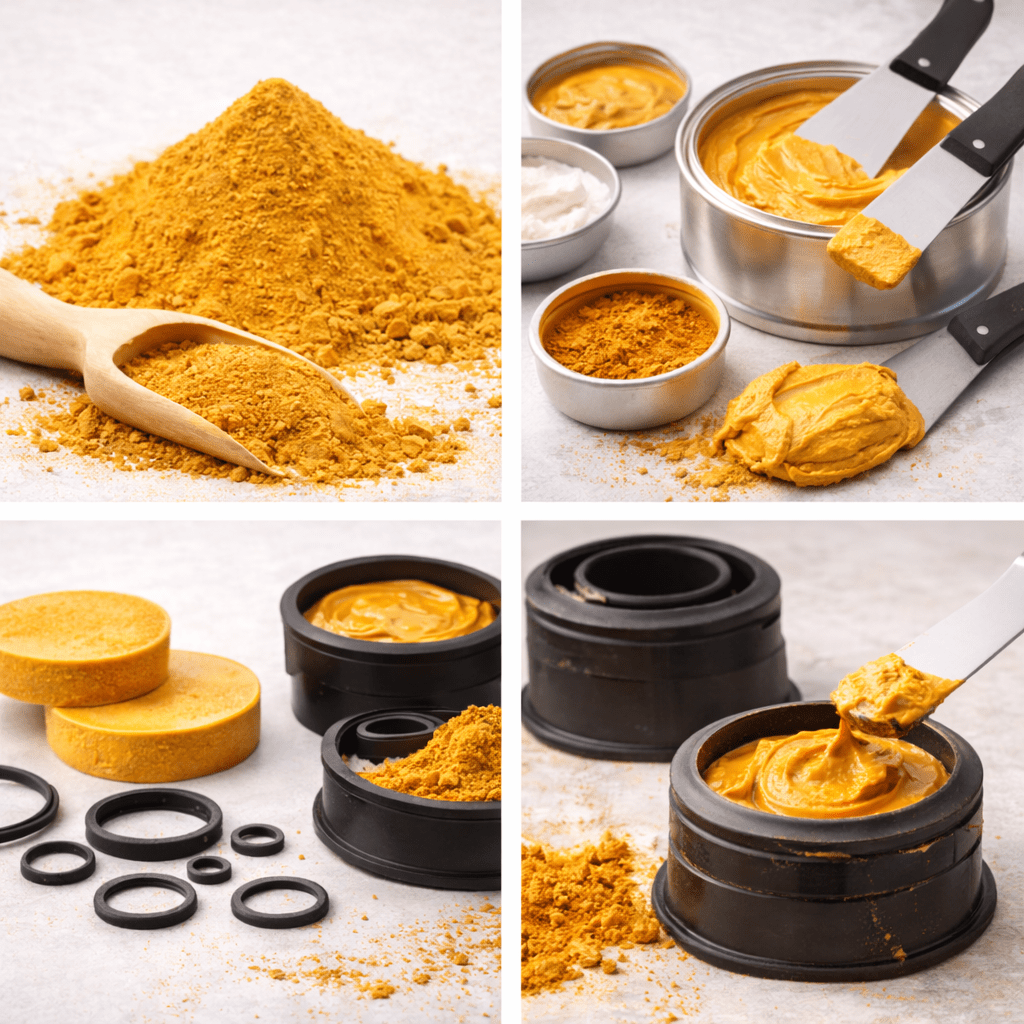
Golden Ochre is a bright natural yellow-orange pigment with a warm golden shade. It is commonly selected for decorative applications where a premium natural color appearance is required.
Typical Technical Specifications of Golden Ochre Powder
| Parameter | Specification |
| Appearance | Fine Golden Yellow Powder |
| Chemical Composition | Natural Iron Oxide with Clay Minerals |
| Fe₂O₃ Content | 40–70% |
| Moisture Content | Max. 1–3% |
| Color Shade | Golden Yellow |
| Particle Size | 325 Mesh or Customized |
| Oil Absorption | 20–35 g/100g |
| pH Value | 6–8 |
| Heavy Metals | According to International Standards |
| Applications | Paints, Ceramics, Construction, Plastics |
Applications of Golden Ochre Powder
Decorative and Architectural Coatings
Golden Ochre is preferred for:
- Premium wall coatings
- Decorative finishes
- Natural stone effects
Important specifications:
- Strong color intensity
- Uniform particle distribution
- Good weather resistance
Artistic Pigments
Because of its natural appearance, Golden Ochre has been used historically in:
- Fine art pigments
- Traditional paintings
- Restoration projects
Required properties:
- Natural color appearance
- Long-term stability
- Low chemical reactivity
Technical Specifications Required by Different Industries
Different industries do not require the same quality of ochre powder. Selecting the correct grade is important for achieving the desired performance.
Ochre Powder Requirements for Paint Industry
The paint industry is one of the largest consumers of ochre pigments.
Recommended Specifications:
| Parameter | Recommended Value |
| Fe₂O₃ Content | High (50%+) |
| Moisture | Max. 1–2% |
| Particle Size | 325 Mesh or Finer |
| Oil Absorption | Controlled |
| Color Strength | High |
| Weather Resistance | Excellent |
Why These Specifications Matter?
Paint manufacturers need pigments that:
- Mix easily with binders
- Maintain color outdoors
- Provide uniform coverage
- Resist fading from sunlight
Ochre Powder Requirements for Construction Industry
For concrete and cement applications, chemical stability is more important than extremely fine particles.
Recommended Specifications:
| Parameter | Recommended Value |
| Alkali Resistance | Excellent |
| Moisture | Low |
| Particle Size | 200–325 Mesh |
| Color Stability | High |
| Chemical Stability | Excellent |
Applications include:
- Colored concrete
- Paving blocks
- Cement tiles
- Artificial stone
Ochre Powder Requirements for Plastic Industry
Plastic manufacturers require pigments that can withstand processing temperatures.
Recommended Specifications:
| Parameter | Recommended Value |
| Thermal Stability | High |
| Moisture | Max. 1% |
| Particle Size | Fine Powder |
| Heavy Metals | Controlled |
| Dispersion | Excellent |
Used in:
- Plastic pipes
- Plastic sheets
- Masterbatch production
Ochre Powder Requirements for Ceramic Industry
Ceramic applications require pigments that maintain their color during firing.
Recommended Specifications:
| Parameter | Recommended Value |
| Mineral Purity | High |
| Impurities | Low |
| Particle Size | Controlled |
| Firing Stability | Excellent |
Applications:
- Ceramic tiles
- Decorative ceramics
- Pottery
Comparison Between Different Types of Ochre Powder
| Type | Main Color | Main Component | Common Applications |
| Yellow Ochre | Yellow | Hydrated Iron Oxide | Paint, Ceramic, Construction |
| Red Ochre | Red | Hematite Iron Oxide | Coatings, Concrete, Plastics |
| Brown Ochre | Brown | Iron Oxide + Minerals | Decorative Paint, Ceramic |
| Golden Ochre | Golden Yellow | Iron Oxide Minerals | Premium Decorative Applications |
How to Choose the Right Ochre Powder Grade for Your Application?
Selecting the correct Ochre Powder grade is an important factor for achieving the desired color, performance, and cost efficiency in industrial applications. Although all ochre products are based on natural iron oxide minerals, their properties can vary depending on the mining source, mineral composition, processing method, and particle size.
Before purchasing ochre powder, buyers should evaluate several technical factors.
- Iron Oxide (Fe₂O₃) Content
Iron oxide is the main component responsible for the color intensity and performance of ochre pigments.
Higher Fe₂O₃ content generally provides:
- Stronger coloring power
- Better pigment performance
- More stable color appearance
Recommended Fe₂O₃ Level by Application
| Application | Recommended Fe₂O₃ Content |
| Premium Paints & Coatings | 50–80% |
| Construction Materials | 40–70% |
| Ceramics | Depending on firing requirements |
| Artistic Pigments | Natural color preference |
For applications where strong coloration is required, such as industrial coatings and high-quality paints, higher iron oxide content is usually preferred.
- Particle Size and Fineness
Particle size has a direct effect on pigment performance.
Fine ochre powder provides:
- Better dispersion
- Smoother surface finish
- More uniform color
- Improved mixing with binders
Typical industrial grades:
| Particle Size | Common Application |
| 200 Mesh | Construction Materials |
| 325 Mesh | Paints, Coatings, Ceramics |
| Customized Fine Grades | Special Industrial Applications |
For high-quality paints, a finer particle size is generally recommended.
- Moisture Content
Moisture content affects storage, handling, and mixing performance.
Low moisture ochre powder provides:
- Better flowability
- Longer shelf life
- Easier transportation
- Improved dispersion
Typical commercial requirement:
Moisture: Maximum 1–3%
For plastic and masterbatch industries, lower moisture levels are usually preferred.
- Oil Absorption Value
Oil absorption indicates how much binder or oil is required to properly disperse the pigment.
This parameter is especially important in:
- Paint manufacturing
- Coating production
- Printing inks
Typical range:
20–35 g/100g pigment
Lower oil absorption may help reduce formulation costs, while controlled absorption improves coating performance.
- Color Consistency and Shade Control
Since ochre is a natural mineral pigment, color variation can occur between different mines.
Professional suppliers usually control:
- Color shade
- Brightness
- Color strength
- Batch consistency
For industrial customers, maintaining consistent color between shipments is extremely important.
Ochre Powder Packaging and Export Considerations
For international trade, proper packaging ensures product quality during transportation and storage.
Common packaging options include:
25 kg Paper Bags
Suitable for:
- Small industrial orders
- Pigment distributors
- Laboratory applications
500 kg – 1000 kg Jumbo Bags
Suitable for:
- Large industrial consumers
- Paint manufacturers
- Construction companies
Advantages:
- Lower packaging cost
- Easier handling
- Suitable for container shipments
Storage Conditions for Ochre Powder
To maintain product quality, ochre powder should be stored:
- In a dry warehouse
- Away from direct moisture
- Protected from contamination
- In sealed packaging
Although ochre is chemically stable, exposure to humidity may affect handling properties.
Why Choose Natural Ochre Powder?
Natural ochre pigments offer several advantages compared with synthetic alternatives:
Excellent Weather Resistance
Ochre pigments maintain their color under:
- Sunlight exposure
- Outdoor conditions
- Temperature changes
Environmentally Friendly Pigment
Natural ochre is considered a sustainable mineral pigment because it is:
- Naturally occurring
- Long-lasting
- Low in chemical additives
Wide Industrial Applications
Ochre powder can be used across many industries:
- Paints
- Coatings
- Construction
- Ceramics
- Plastics
- Rubber
- Artistic materials
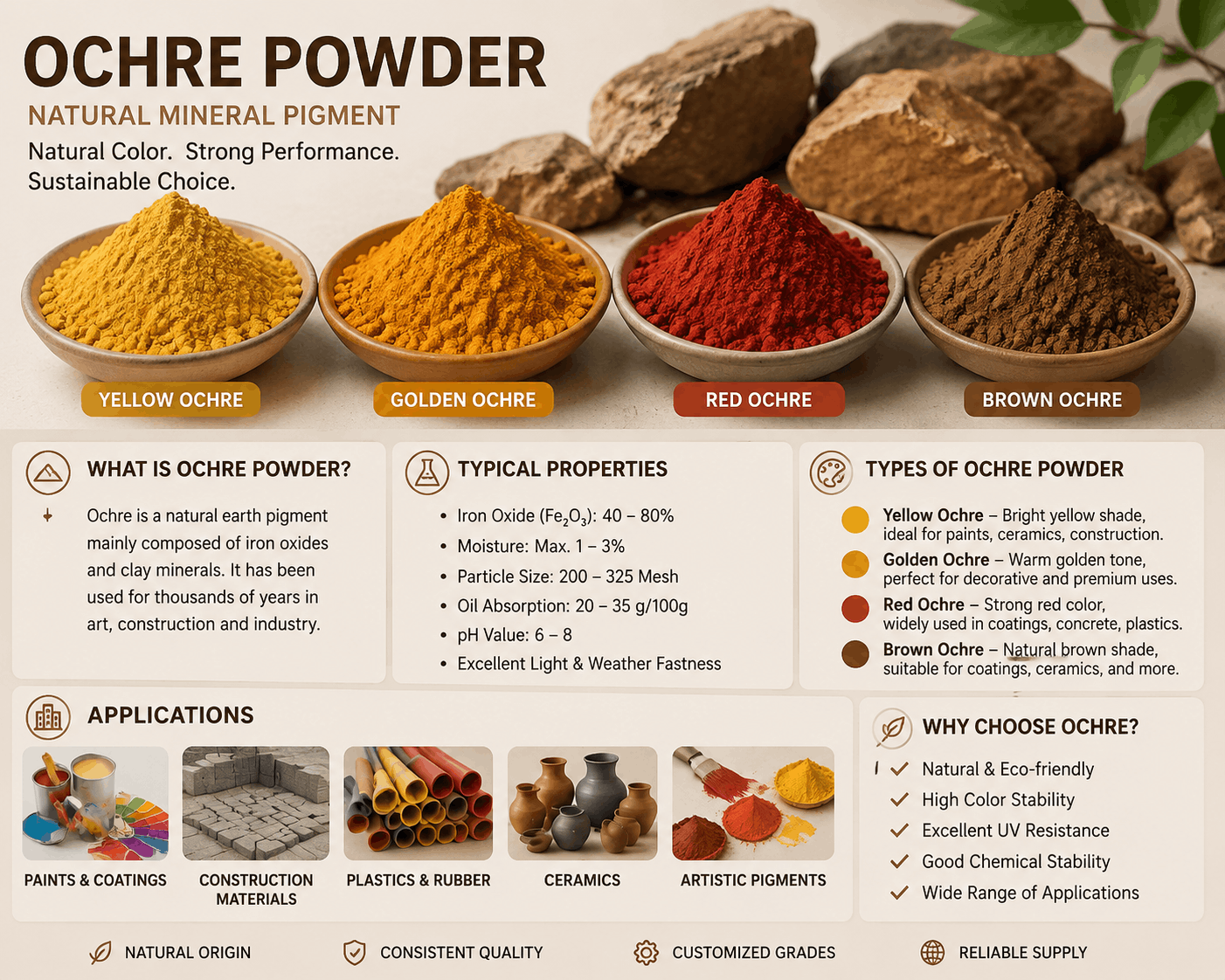
Common Questions About Ochre Powder (FAQ)
What is Ochre Powder used for?
Ochre Powder is mainly used as a natural mineral pigment in paints, coatings, construction materials, ceramics, plastics, rubber products, and artistic applications.
What are the main types of Ochre Powder?
The four main commercial types are:
- Yellow Ochre Powder
- Red Ochre Powder
- Brown Ochre Powder
- Golden Ochre Powder
Each type has a different color shade and application area.
Is Ochre Powder the same as Iron Oxide Pigment?
Ochre contains iron oxide, but it is a natural mineral pigment that also includes clay minerals and other natural components. Synthetic iron oxide pigments usually have higher purity and more controlled properties.
Which Ochre Powder is best for paint production?
For paint production, grades with:
- High Fe₂O₃ content
- Fine particle size
- Low moisture
- Good dispersion properties
are generally preferred.
Which Ochre Powder is suitable for concrete coloring?
Red Ochre and Yellow Ochre are commonly used for concrete and cement products because they provide stable colors and good resistance to alkaline environments.
What mesh size is recommended for industrial Ochre Powder?
The most common industrial grade is:
325 Mesh
However, the ideal particle size depends on the final application.
Does Ochre Powder fade outdoors?
High-quality natural ochre has excellent UV resistance and can maintain its color for long periods, especially when used in construction and exterior coatings.
Conclusion: Choosing the Right Ochre Powder Supplier
Ochre Powder is a versatile natural pigment with applications across multiple industries. Selecting the correct type and grade depends on factors such as:
- Color requirement
- Iron oxide content
- Particle size
- Moisture level
- Industrial application
Whether the requirement is for Yellow Ochre, Red Ochre, Brown Ochre, or Golden Ochre, understanding technical specifications helps buyers select the most suitable product for their manufacturing process.
For industrial and export buyers, working with a reliable ochre powder supplier ensures:
- Consistent quality
- Stable color performance
- Proper packaging
- Technical support
- Reliable international supply
A well-selected Ochre Powder grade can improve product quality, reduce production problems, and provide long-term performance in various industrial applications.