

 Arabic
Blog
Limonite Powder: From Mine to Final Application – Everything You Need to Know
The Ultimate Guide to Limonite Mining, Processing, Powder Production, Types, Applications, and Export Packaging
Introduction
Limonite is one of the world’s most valuable naturally occurring iron-bearing minerals. Although often overlooked compared to hematite and magnetite, limonite plays a critical role in numerous industries, ranging from metallurgy and construction to pigments, ceramics, agriculture, water treatment, and advanced industrial fillers.
As global demand for natural mineral products continues to increase, limonite powder has become an increasingly important industrial raw material. Manufacturers appreciate its excellent chemical stability, high iron oxide content, natural color, environmental friendliness, and cost-effectiveness. Depending on its processing method, limonite can be supplied as raw powder, micronized powder, calcined powder, pigment-grade material, metallurgical feedstock, or industrial filler.
Countries with significant limonite reserves have become strategic suppliers for international markets. Iran, with its abundant iron ore deposits and well-developed mining in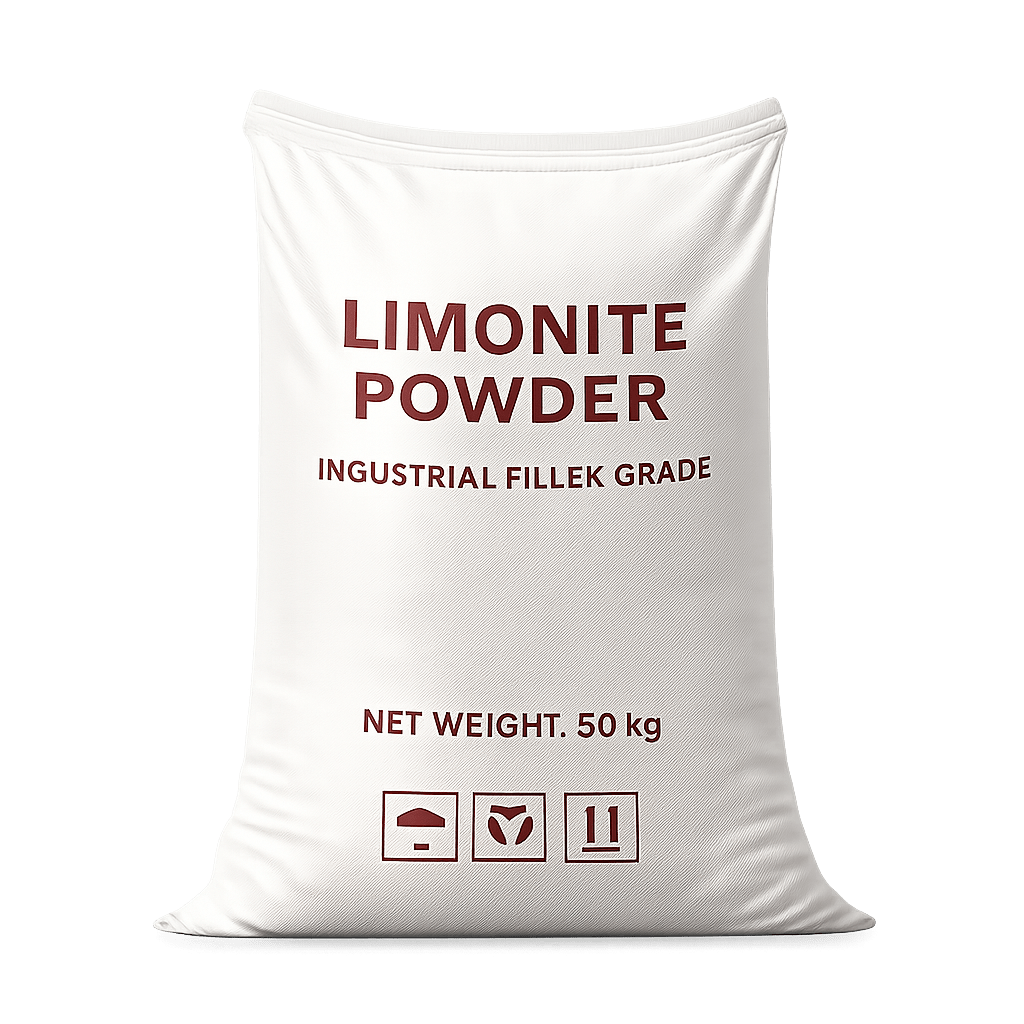 frastructure, is among the emerging exporters capable of supplying high-quality limonite powder for customers worldwide.
This comprehensive guide explains everything about limonite—from its geological formation and mining to beneficiation, grinding, calcination, industrial applications, export packaging, and quality control.
What Is Limonite?
Limonite is a naturally occurring hydrated iron oxide mineral composed primarily of hydrated iron oxyhydroxides. Unlike hematite or magnetite, limonite is not considered a single mineral species but rather a mixture of several iron-bearing minerals, mainly:
- Goethite (FeO(OH))
- Lepidocrocite (γ-FeO(OH))
- Jarosite (in some deposits)
- Minor clay minerals
- Silica impurities
- Aluminum-bearing minerals
Because limonite contains chemically bound water, its composition can vary considerably from one deposit to another.
The general chemical representation is:
FeO(OH)·nH₂O
where n varies depending on the degree of hydration.
Physical Properties of Limonite
Limonite exhibits distinctive physical characteristics that make it valuable across multiple industries.
| Property | Typical Value |
| Color | Yellow, Brown, Dark Brown |
| Streak | Yellowish Brown |
| Hardness | 4–5.5 Mohs |
| Specific Gravity | 2.7–4.3 g/cm³ |
| Crystal System | Amorphous to Microcrystalline |
| Luster | Earthy to Submetallic |
| Magnetism | Weak |
| Solubility | Insoluble in Water |
Fresh limonite typically appears yellowish-brown, while weathered deposits may exhibit darker reddish tones due to partial dehydration.
Chemical Composition
The chemical composition depends largely on the mining location and beneficiation process.
Typical industrial limonite contains:
| Component | Typical Range |
| Fe₂O₃ | 45–70% |
| Total Iron (Fe) | 35–60% |
| SiO₂ | 3–20% |
| Al₂O₃ | 1–10% |
| CaO | 0.2–3% |
| MgO | 0.1–2% |
| TiO₂ | 0.1–1% |
| MnO | 0.1–1% |
| Loss on Ignition | 8–15% |
Higher-grade deposits undergo beneficiation to reduce silica and alumina while increasing iron concentration.
Geological Formation of Limonite
Limonite forms primarily through the weathering and oxidation of iron-rich minerals over millions of years.
Common parent minerals include:
- Pyrite
- Siderite
- Magnetite
- Hematite
- Iron-rich silicates
Rainwater, oxygen, groundwater, and biological activity gradually transform these minerals into hydrated iron oxides.
Because of this weathering process, limonite commonly occurs near the Earth’s surface, making it relatively economical to mine.
Types of Limonite Deposits
Several geological environments produce limonite deposits.
Residual Deposits
Produced by prolonged weathering of iron-bearing rocks.
Characteristics:
- High purity
- Near surface
- Easy mining
- Low stripping ratio
Bog Iron Deposits
Form in wetlands where iron precipitates from groundwater.
Characteristics:
- Renewable over geological time
- High moisture
- Fine particle size
Lateritic Deposits
Common in tropical climates.
These deposits often contain:
- Iron
- Nickel
- Cobalt
- Manganese
They are important sources of both iron and battery metals.
Gossan Deposits
These are oxidized caps above sulfide ore bodies.
Besides iron, they may contain:
- Copper
- Gold
- Silver
- Zinc
making them economically attractive exploration targets.
Global Distribution of Limonite
Commercial limonite deposits are found across many countries.
Major producers include:
- Australia
- Brazil
- China
- India
- Iran
- South Africa
- Russia
- Kazakhstan
- Turkey
- Mexico
Iran possesses extensive limonite resources associated with its large iron ore provinces, offering excellent opportunities for export.
Limonite Mining
Mining operations generally begin with geological exploration.
Modern exploration includes:
- Geological mapping
- Satellite imaging
- Drone surveys
- Geophysical studies
- Core drilling
- Chemical sampling
These methods help estimate ore reserves, iron grade, impurity levels, and economic feasibility.
Open-Pit Mining
Since limonite occurs near the surface, open-pit mining is the preferred extraction method.
Typical mining sequence includes:
- Vegetation removal
- Overburden stripping
- Bench development
- Controlled blasting (when necessary)
- Excavation
- Loading
- Haulage to the processing plant
Large hydraulic excavators and wheel loaders are commonly used to load ore into dump trucks.
Open-pit mining offers several advantages:
- Lower production cost
- Higher recovery
- Better safety
- Easier grade control
- Higher productivity
Underground Mining
Although uncommon, underground mining may be required when limonite occurs beneath thick rock formations.
Methods include:
- Room and pillar
- Cut and fill
- Drift mining
However, underground production costs are significantly higher than surface mining.
Ore Transportation
After extraction, the ore is transported to the processing plant.
Transportation methods include:
- Dump trucks
- Conveyor belts
- Rail systems
- Slurry pipelines (in specific operations)
Large mining companies often use automated conveyor systems to reduce transportation costs and environmental impact.
Primary Crushing
Large limonite rocks cannot be processed directly.
The first stage involves primary crushing using:
- Jaw crushers
- Gyratory crushers
- Impact crushers
The objective is reducing rock size from several hundred millimeters to approximately 100–150 mm.
Secondary Crushing
Secondary crushing further reduces particle size.
Equipment includes:
- Cone crushers
- Hammer crushers
- Impact crushers
Typical output size:
10–40 mm
Uniform feed size improves downstream grinding efficiency.
Screening
Crushed ore passes through vibrating screens.
Screening separates material into different size fractions.
Oversized particles return for additional crushing while properly sized material proceeds to beneficiation.
This closed-loop system improves plant efficiency and reduces energy consumption.
Washing and Desliming
Many limonite ores contain clay and fine impurities.
High-pressure washing removes:
- Clay
- Dust
- Fine silica
- Organic matter
Benefits include:
- Higher iron grade
- Lower moisture
- Better grinding efficiency
- Improved product quality
Rotary scrubbers and log washers are commonly used in this stage.
Beneficiation of Limonite
Not all mined limonite is suitable for industrial use in its natural state. Beneficiation is the process of upgrading the ore by removing unwanted impurities and increasing the concentration of valuable iron-bearing minerals.
The choice of beneficiation method depends on several factors, including:
- Iron content
- Silica level
- Clay content
- Particle size
- Intended end use
- Customer specifications
Common beneficiation techniques include gravity separation, magnetic separation, washing, classification, and selective grinding.
High-quality beneficiation improves product consistency, increases commercial value, and expands the range of industrial applications.
Why Processing Matters
Proper processing transforms raw limonite into a versatile industrial material capable of meeting the demanding requirements of manufacturers in sectors such as paints, construction, ceramics, metallurgy, and advanced mineral fillers.
The next stages—fine grinding, micronization, calcination, particle size classification, and quality control—determine the final performance of limonite powder in industrial applications.
Fine Grinding of Limonite
After beneficiation, limonite is transformed into powder through a carefully controlled grinding process. The objective is to produce particles with a consistent size distribution that meets the performance requirements of different industries. Particle size has a direct impact on surface area, dispersion, color intensity, packing density, and chemical reactivity.
The grinding circuit is selected according to the desired fineness, production capacity, and end-use application.
Primary Grinding
The first grinding stage reduces crushed limonite to a medium-sized powder suitable for further milling.
Typical equipment includes:
- Ball Mills
- Rod Mills
- Vertical Roller Mills
- Raymond Mills
At this stage, the material is usually ground to a particle size ranging from 100 to 500 microns.
Fine Grinding
For industrial applications such as construction materials, ceramics, rubber, and plastics, the powder is ground to finer particle sizes.
Typical fineness:
- 100 Mesh (150 µm)
- 200 Mesh (75 µm)
- 325 Mesh (45 µm)
These particle sizes provide an excellent balance between processing cost and industrial performance.
Ultra-Fine Grinding
High-value applications require much finer powders.
Modern grinding technologies include:
- Jet Mills
- Ring Roller Mills
- Vertical Air Classifier Mills
- High-Speed Impact Mills
These systems can produce:
- D50 = 20 µm
- D50 = 10 µm
- D50 = 5 µm
- D97 below 10 µm
Ultra-fine limonite powder exhibits a significantly higher specific surface area, improving dispersion, filling efficiency, and chemical activity.
Air Classification
Grinding alone cannot ensure a uniform particle size distribution. Air classifiers are therefore used to separate coarse particles from fine powder.
The classifier works by balancing centrifugal force against airflow, allowing only particles below a specified size to pass into the final product.
Benefits include:
- Narrow particle size distribution
- Better consistency
- Improved product quality
- Reduced oversize particles
- Higher customer satisfaction
Drying Process
Moisture content is a critical quality parameter, especially for export-grade limonite powder.
After grinding, the material is dried using:
- Rotary Dryers
- Flash Dryers
- Fluidized Bed Dryers
Typical export specification:
| Property | Value |
| Moisture | Less than 1% |
| Premium Grade | Less than 0.5% |
Low moisture improves storage stability, prevents caking, and reduces transportation weight.
Calcination of Limonite
One of the most important value-added processing methods is calcination.
Calcination is a thermal treatment process in which limonite is heated to high temperatures under controlled conditions.
Typical calcination temperature:
400°C–900°C
During calcination, chemically bound water is removed from the mineral structure.
The main reaction is:
2FeO(OH) → Fe₂O₃ + H₂O
This transformation converts hydrated iron oxyhydroxide into hematite-rich material with significantly different physical and chemical properties.
Why Calcine Limonite?
Calcination provides several important advantages:
- Higher iron oxide concentration
- Reduced moisture
- Lower Loss on Ignition (LOI)
- Improved hardness
- Better color consistency
- Enhanced thermal stability
- Higher density
- Increased weather resistance
- Improved grinding performance
As a result, calcined limonite commands a higher market value than raw limonite.
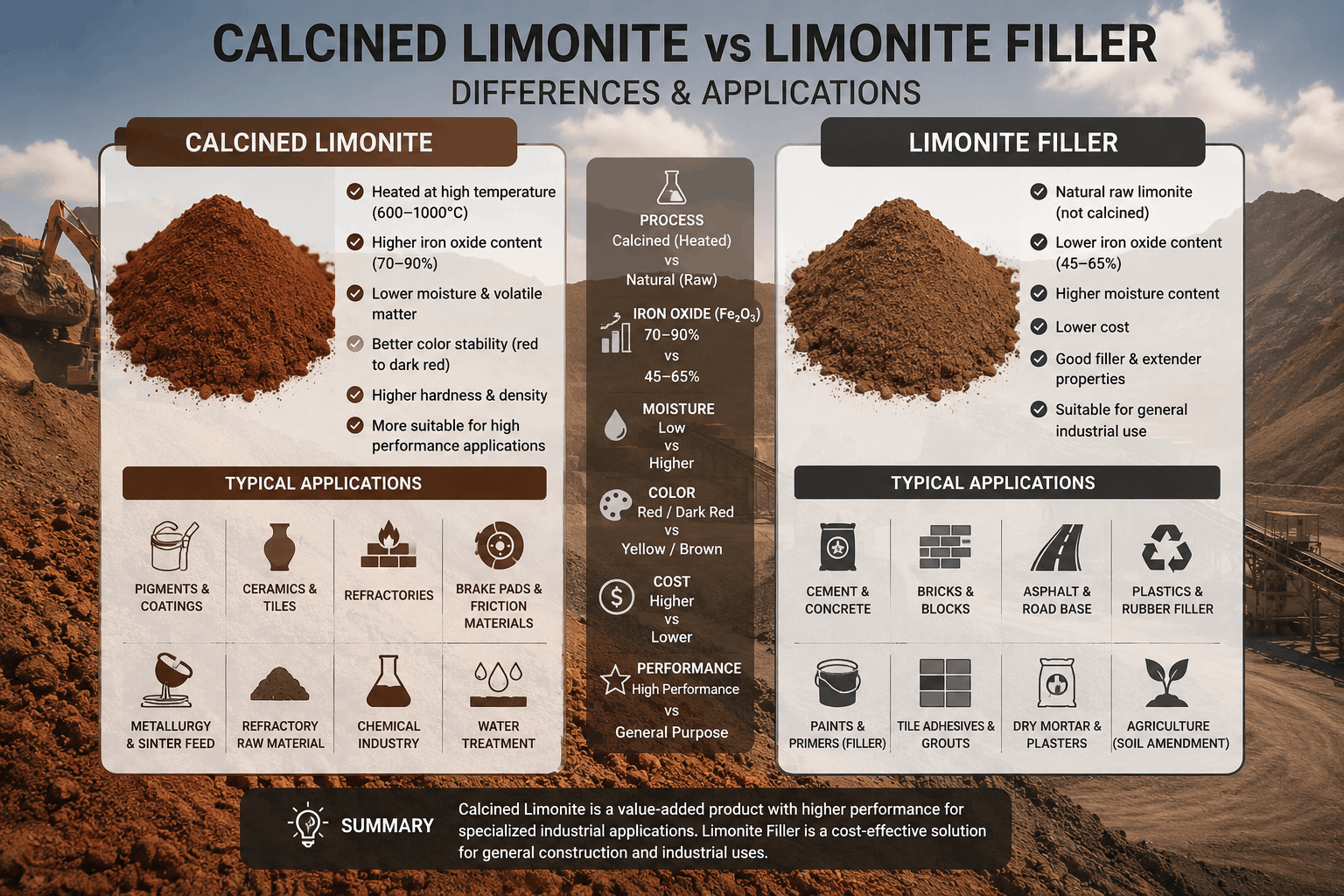
Changes During Calcination
| Property | Raw Limonite | Calcined Limonite |
| Color | Yellow-Brown | Dark Red |
| Iron Oxide | Moderate | High |
| Moisture | Higher | Very Low |
| LOI | High | Low |
| Hardness | Moderate | Higher |
| Density | Lower | Higher |
| Stability | Good | Excellent |
Calcination Equipment
Industrial calcination is performed using:
- Rotary Kilns
- Shaft Furnaces
- Fluidized Bed Furnaces
- Tunnel Kilns
Modern rotary kilns provide:
- Uniform heating
- Continuous production
- Excellent temperature control
- High production capacity
- Lower fuel consumption
Types of Limonite Powder
Different industries require different grades of limonite powder.
The most common commercial products include:
- Raw Limonite Powder
This is the simplest processed product.
Production steps:
Mining → Crushing → Grinding → Screening
Characteristics:
- Natural hydration
- Yellow-brown color
- Economical
- Suitable for general industrial use
Applications:
- Cement
- Construction
- Bricks
- Agriculture
- Soil improvement
- Industrial Filler Grade Limonite
Industrial filler grade is manufactured under tighter quality control.
Important characteristics include:
- Controlled particle size
- Consistent chemistry
- Low moisture
- Excellent dispersion
- Stable color
Applications include:
- Rubber compounds
- Plastic compounds
- Construction materials
- Asphalt
- Adhesives
- Sealants
- Composite materials
Advantages:
- Cost-effective
- High filling efficiency
- Improved mechanical properties
- Reduced production cost
- Micronized Limonite Powder
Micronized limonite undergoes additional grinding and air classification.
Typical particle sizes:
| Grade | D50 |
| Standard | 20 µm |
| Fine | 10 µm |
| Ultra Fine | 5 µm |
Benefits:
- Excellent dispersion
- High surface area
- Better particle packing
- Smoother surface finish
- Improved color uniformity
Applications:
- Premium paints
- Decorative coatings
- High-performance ceramics
- Polymer composites
- Industrial pigments
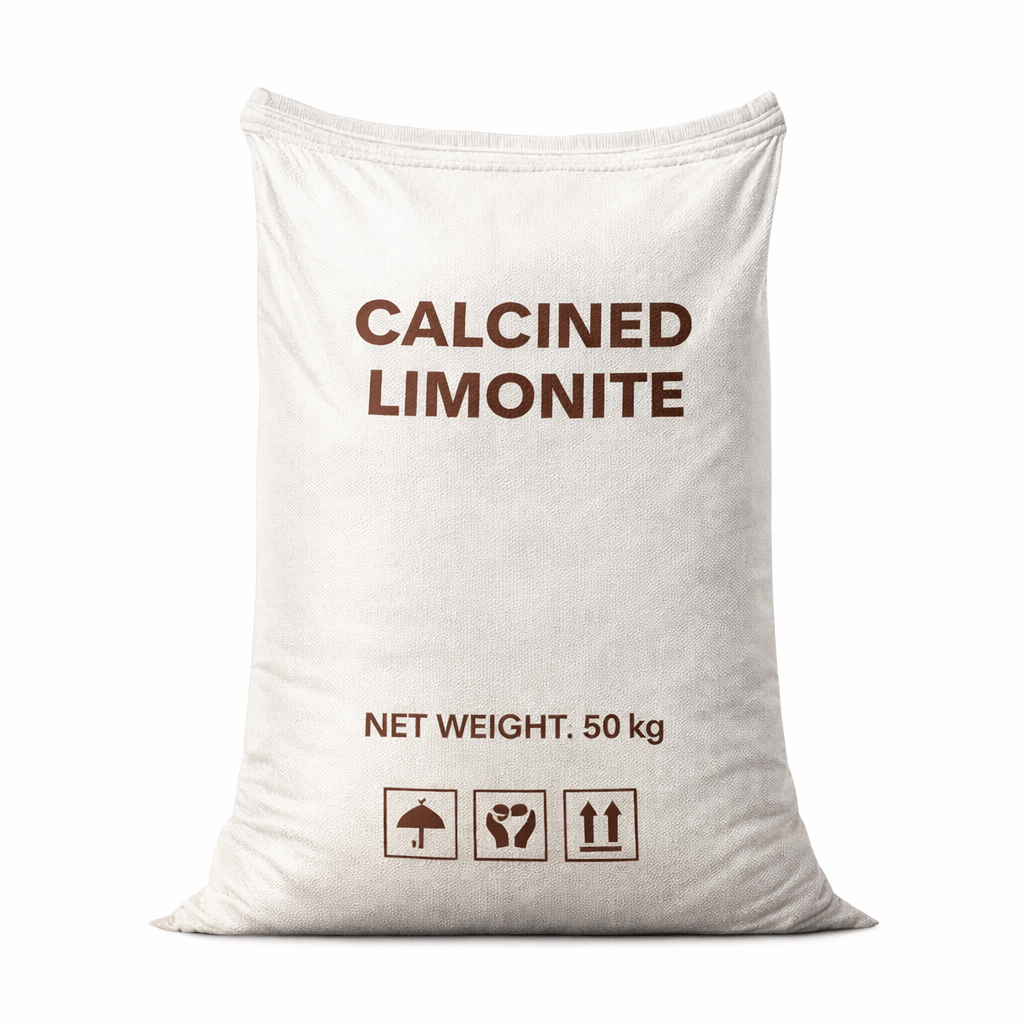
- Calcined Limonite Powder
Calcined limonite is one of the highest-value products.
Characteristics:
- High Fe₂O₃
- Low LOI
- Dark reddish color
- Excellent thermal resistance
- Stable chemistry
Applications:
- Ceramic pigments
- Refractories
- High-temperature coatings
- Friction materials
- Iron oxide feedstock
- Advanced construction materials
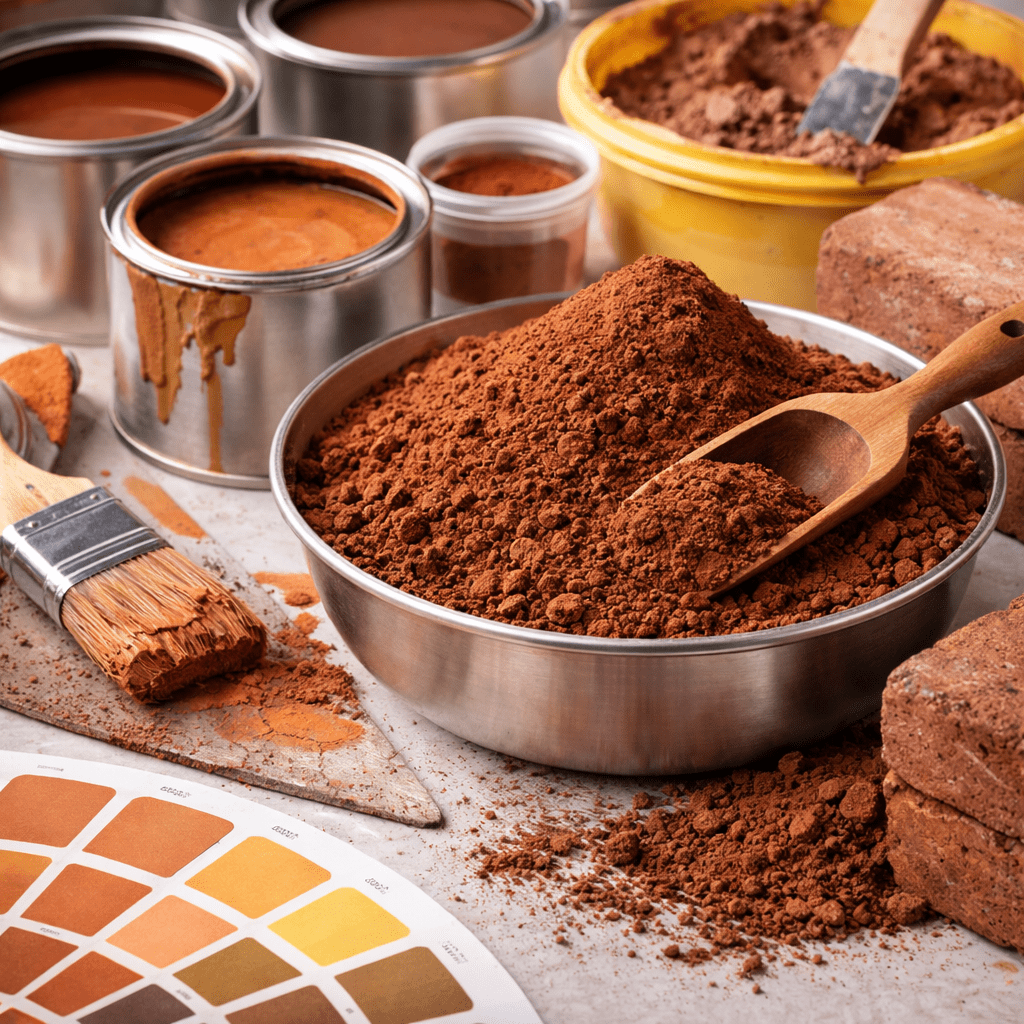
- Pigment Grade Limonite
Pigment-grade material is manufactured under strict quality requirements.
Requirements include:
- Uniform color
- Very fine particle size
- Excellent opacity
- Low impurities
- Stable mineralogy
Applications:
- Architectural coatings
- Decorative paints
- Colored concrete
- Ceramic glazes
- Artistic pigments
- Metallurgical Grade Limonite
This grade is produced for iron-making and metallurgical applications.
Important characteristics:
- High iron content
- Low silica
- Low phosphorus
- Low sulfur
- Controlled moisture
Applications:
- Iron production
- Steel industry
- Sinter plants
- Blast furnaces
- Direct reduction processes
Comparison of Commercial Grades
| Property | Raw | Micronized | Calcined | Filler Grade |
| Moisture | High | Low | Very Low | Low |
| Iron Content | Medium | Medium | High | Medium |
| Color | Brown | Brown | Red | Brown |
| Cost | Low | Medium | High | Medium |
| Particle Size | Standard | Very Fine | Fine | Controlled |
| Industrial Value | Medium | High | Very High | High |
Quality Control During Production
Every batch of export-grade limonite powder undergoes rigorous quality testing.
Typical quality control procedures include:
Chemical Analysis
Performed using:
- XRF (X-Ray Fluorescence)
- Wet Chemical Analysis
- ICP Spectrometry
Measured parameters include:
- Fe₂O₃
- SiO₂
- Al₂O₃
- CaO
- MgO
- TiO₂
- MnO
- Phosphorus
- Sulfur
Particle Size Analysis
Measured using:
- Laser Particle Size Analyzer
- Air Jet Sieves
- Vibratory Sieves
Typical export specifications include:
- 100 Mesh
- 200 Mesh
- 325 Mesh
- Custom D50 values
Moisture Testing
Moisture is determined using controlled oven drying methods to ensure compliance with export requirements.
Target moisture:
≤1.0%
Premium grades:
≤0.5%
Bulk Density
Bulk density affects:
- Transportation efficiency
- Storage capacity
- Packaging weight
- Industrial performance
Typical range:
1.2–2.5 g/cm³
depending on particle size and processing method.
Color Consistency
Color variation is particularly important for pigment and filler applications.
Modern plants use spectrophotometers to maintain batch-to-batch consistency.
Certificate of Analysis (COA)
Every export shipment should be accompanied by a Certificate of Analysis including:
- Chemical composition
- Moisture
- Particle size distribution
- Bulk density
- LOI
- Production batch number
- Manufacturing date
- Inspection results
A complete COA increases buyer confidence and facilitates customs clearance in international trade.
Environmental Considerations
Modern limonite processing plants aim to minimize their environmental footprint through:
- Dust collection systems
- Closed-loop water recycling
- Energy-efficient grinding equipment
- Wastewater treatment
- Noise reduction measures
- Recycling of oversize particles back into the production process
These practices improve sustainability while reducing operating costs and ensuring compliance with environmental regulations.
Adding Value Through Processing
The commercial value of limonite increases significantly as it progresses from raw ore to specialized powder products. Advanced processing enhances purity, controls particle size, improves physical properties, and tailors the material for demanding industrial applications. As a result, manufacturers can select a limonite grade that precisely matches their technical requirements, whether for construction, metallurgy, ceramics, pigments, or high-performance composite materials.
Industrial Applications of Limonite Powder
Limonite powder is a highly versatile mineral used in a wide range of industries due to its iron oxide content, natural color, chemical stability, and cost-effectiveness. Depending on its particle size, purity, and processing method, it can function as a pigment, mineral filler, metallurgical raw material, or specialty industrial additive.
Below are the major industries where limonite powder plays an important role.
- Cement Industry
The cement industry is one of the largest consumers of limonite powder.
Limonite supplies iron oxide, which acts as a corrective raw material during clinker production. It helps balance the chemical composition of the raw mix and contributes to the formation of clinker minerals.
Benefits
- Improves clinker chemistry
- Enhances kiln efficiency
- Stabilizes cement quality
- Cost-effective iron source
- Consistent mineral composition
Typical particle size:
- 100–325 Mesh
- Concrete and Construction Materials
Limonite is widely used in concrete products, paving stones, decorative blocks, and precast components.
Its natural iron oxide improves both appearance and durability.
Applications include:
- Decorative concrete
- Colored paving blocks
- Architectural panels
- Concrete bricks
- Dry mortar
- Tile adhesives
Advantages:
- Natural coloration
- UV resistance
- Weather resistance
- Long-term color stability
- Reduced production cost
- Paint and Coating Industry
Natural limonite provides an environmentally friendly alternative to synthetic iron oxide pigments in many coating systems.
It is used in:
- Industrial primers
- Protective coatings
- Decorative paints
- Powder coatings
- Water-based paints
- Solvent-based paints
Advantages include:
- Excellent hiding power
- Good UV stability
- Natural earth-tone shades
- Low toxicity
- High weather resistance
Micronized and pigment-grade limonite are preferred for these applications.
- Ceramic Industry
Ceramic manufacturers use limonite as both a coloring agent and a source of iron oxide.
Applications include:
- Ceramic tiles
- Roof tiles
- Porcelain
- Sanitary ware
- Ceramic glazes
- Tableware
Calcined limonite is often selected because of its stable red color and low volatile content.
Benefits:
- Uniform coloration
- Excellent firing stability
- Reduced glaze defects
- Improved product consistency
- Brick Manufacturing
Many brick producers incorporate limonite powder into clay mixtures to achieve attractive red, brown, or buff colors after firing.
Benefits include:
- Consistent appearance
- Lower pigment cost
- Improved firing performance
- Enhanced product value
- Refractory Industry
Calcined limonite is suitable for refractory formulations due to its thermal stability.
Typical products include:
- Refractory bricks
- Furnace linings
- Castables
- High-temperature mortars
Advantages:
- High-temperature resistance
- Low moisture
- Stable mineralogy
- Excellent thermal durability
- Rubber Industry
In rubber manufacturing, limonite functions as a mineral filler that improves mechanical properties while reducing production costs.
Applications:
- Conveyor belts
- Industrial hoses
- Rubber mats
- Molded rubber parts
- Automotive components
Benefits:
- Better hardness
- Improved wear resistance
- Lower compound cost
- Enhanced dimensional stability
- Plastic Industry
Limonite powder is increasingly used as a functional filler in plastic compounds.
Applications include:
- PVC
- Polyethylene
- Polypropylene
- Engineering plastics
- Masterbatch formulations
Advantages:
- Reduced raw material cost
- Improved stiffness
- Better dimensional stability
- Natural coloration
- Increased density where required
- Friction Materials
The friction industry relies on calcined limonite because of its hardness and thermal stability.
Typical products:
- Brake pads
- Clutch facings
- Industrial braking systems
- Railway brake components
Benefits:
- Stable friction coefficient
- High heat resistance
- Good wear performance
- Improved service life
- Foundry Industry
Foundries use limonite powder in molding sands and specialty casting applications.
Advantages:
- Improved mold strength
- Better casting finish
- Reduced casting defects
- Enhanced dimensional accuracy
- Metallurgical Industry
High-grade limonite is an important iron-bearing raw material for metallurgical processes.
Applications include:
- Iron ore blending
- Sinter plants
- Blast furnace feed
- Direct reduction processes
- Steelmaking
Desired characteristics:
- High Fe₂O₃
- Low silica
- Low sulfur
- Low phosphorus
- Controlled moisture
- Pigment Manufacturing
Natural iron oxide pigments continue to gain popularity due to growing environmental awareness.
Limonite-based pigments are used in:
- Decorative paints
- Artist colors
- Wood coatings
- Decorative plaster
- Cement pigments
Natural pigments provide excellent resistance to UV light, weathering, and alkali attack.
- Water Treatment
Specially processed limonite has adsorption properties that make it useful in environmental applications.
It can assist in removing:
- Arsenic
- Lead
- Cadmium
- Chromium
- Phosphates
- Certain organic contaminants
These properties make limonite attractive for industrial wastewater treatment systems.
- Agriculture
Limonite contributes iron to agricultural formulations where iron deficiency affects crop productivity.
Applications include:
- Soil conditioners
- Micronutrient fertilizers
- Mineral amendments
- Horticultural products
Benefits:
- Natural iron source
- Long-lasting availability
- Environmentally friendly
- Oil and Gas Industry
Finely ground iron-bearing minerals, including selected limonite grades, are used in specialty drilling and cementing formulations.
Applications include:
- Oil well cement
- Weighting materials
- Specialized drilling additives
- Asphalt Industry
Mineral fillers are essential components of asphalt mixtures.
Limonite powder improves:
- Mechanical strength
- Wear resistance
- Surface durability
- Long-term performance
Export Packaging
Proper packaging is essential for protecting limonite powder during storage and international transportation.
The packaging method depends on customer requirements, shipment size, and destination.
25 kg Bags
Suitable for:
- Retail distribution
- Small industrial users
- Laboratory applications
Usually packed in:
- Laminated PP bags
- Kraft paper bags with PE liner
Advantages:
- Easy handling
- Convenient palletizing
- Reduced product loss
50 kg Bags
One of the most common industrial packaging options.
Suitable for:
- Construction companies
- Ceramic manufacturers
- Paint factories
These bags offer an economical balance between handling efficiency and transportation cost.
Jumbo Bags (FIBC)
Bulk customers generally prefer Flexible Intermediate Bulk Containers (FIBC).
Typical capacities:
- 500 kg
- 1000 kg
- 1250 kg
- 1500 kg
Benefits:
- Lower packaging cost
- Faster loading
- Reduced labor
- Efficient container utilization
Bulk Shipment
Large cement plants and steel manufacturers may purchase limonite in bulk.
Transportation methods include:
- Bulk trucks
- Rail wagons
- Bulk vessels
Bulk shipping minimizes packaging waste and lowers transportation costs for high-volume orders.
Moisture Protection
Although limonite is chemically stable, excessive moisture during transportation can lead to:
- Caking
- Reduced flowability
- Increased shipping weight
- Handling difficulties
To prevent these issues, export packaging should include:
- Moisture-resistant liners
- Heat-sealed bags
- Stretch wrapping
- Protective pallet covers
Palletizing
Palletized shipments improve handling efficiency and reduce the risk of damage.
Standard pallet options include:
- Wooden pallets
- Plastic pallets
- Heat-treated export pallets (ISPM 15 compliant)
Stretch film and corner protectors help secure the load during transportation.
Container Loading
Proper container loading ensures safe delivery and optimal freight efficiency.
Common container types:
- 20-foot container
- 40-foot container
- High Cube container (for lighter cargo)
General loading guidelines:
- Distribute weight evenly.
- Prevent bag movement with dunnage or airbags.
- Keep bags away from container walls to reduce condensation effects.
- Use desiccant bags when shipping to humid climates.
- Inspect the container for leaks, odors, and contamination before loading.
Shipping Documentation
Professional exporters typically provide:
- Commercial Invoice
- Packing List
- Certificate of Origin
- Certificate of Analysis (COA)
- Bill of Lading
- Inspection Certificate (if required)
- Fumigation Certificate for wooden pallets (when applicable)
Complete documentation helps ensure smooth customs clearance and reduces the risk of delays.
Storage Recommendations
To maintain product quality, limonite powder should be stored under appropriate conditions.
Recommended practices include:
- Store in a dry, covered warehouse.
- Protect from rain and direct sunlight.
- Keep bags sealed until use.
- Avoid contact with chemicals that may contaminate the product.
- Stack pallets safely to prevent bag damage.
- Rotate stock using the First-In, First-Out (FIFO) principle.
Proper storage preserves particle flowability, minimizes moisture absorption, and maintains consistent product performance over extended periods.
How to Select the Right Limonite Grade
Selecting the correct grade depends on the intended application and required performance characteristics.
| Application | Recommended Grade |
| Cement & Concrete | Raw or Filler Grade |
| Construction Products | Filler Grade |
| Paints & Coatings | Micronized or Pigment Grade |
| Ceramics | Calcined Grade |
| Rubber | Industrial Filler Grade |
| Plastics | Micronized Grade |
| Metallurgy | Metallurgical Grade |
| Refractories | Calcined Grade |
| Friction Materials | Calcined Grade |
| Water Treatment | Specialized Processed Grade |
When choosing a supplier, buyers should evaluate not only price but also consistency, technical support, quality documentation, and the ability to customize particle size and chemical composition for specific industrial needs.
Buyer’s Guide: How to Choose the Right Limonite Powder
Selecting the right limonite powder is one of the most important decisions for manufacturers and importers. While price is always an important factor, purchasing based solely on cost can lead to inconsistent product quality, production issues, and increased long-term expenses.
A reliable supplier should be able to provide consistent quality, complete technical documentation, flexible production capabilities, and dependable export services.
Before placing an order, buyers should carefully evaluate the following factors.
- Iron Oxide Content
The Fe₂O₃ content directly affects the performance of limonite in many industrial applications.
Typical commercial grades include:
| Grade | Fe₂O₃ |
| Standard | 45–55% |
| Medium Grade | 55–65% |
| High Grade | 65–75% |
| Calcined Grade | 75–90% |
Higher iron oxide content generally results in improved performance for pigments, ceramics, and metallurgical applications.
- Particle Size Distribution
Particle size significantly influences:
- Dispersion
- Surface finish
- Packing density
- Mixing efficiency
- Product appearance
- Mechanical performance
Common specifications include:
- 100 Mesh
- 200 Mesh
- 325 Mesh
- D50 20 µm
- D50 10 µm
- D50 5 µm
The required particle size depends entirely on the final application.
- Moisture Content
Excess moisture can create several problems during storage and processing.
High-quality export-grade limonite should have:
- Moisture ≤1.0%
- Premium grades ≤0.5%
Low moisture minimizes caking and improves shelf life.
- Chemical Impurities
In addition to iron oxide, buyers should review the levels of:
- SiO₂
- Al₂O₃
- CaO
- MgO
- MnO
- TiO₂
- Sulfur
- Phosphorus
The acceptable limits vary depending on the intended industrial use.
- Color Consistency
For pigment, ceramic, and decorative applications, batch-to-batch color consistency is essential.
Professional suppliers routinely monitor color using spectrophotometers to ensure consistent appearance across shipments.
- Technical Documentation
A reputable supplier should provide:
- Certificate of Analysis (COA)
- Safety Data Sheet (SDS)
- Technical Data Sheet (TDS)
- Packing List
- Commercial Invoice
- Certificate of Origin
- Inspection Certificate (if requested)
These documents support quality assurance and facilitate international trade.
Factors Affecting the Price of Limonite Powder
The market price of limonite powder is influenced by several variables:
- Iron oxide content
- Particle size
- Grinding fineness
- Calcination process
- Moisture level
- Packaging type
- Order quantity
- Transportation costs
- Shipping destination
- Global demand
- Energy prices
- Mining costs
Generally, calcined, micronized, and pigment-grade limonite command higher prices than raw industrial grades due to their additional processing and tighter quality control.
International Quality Standards
Leading manufacturers implement comprehensive quality management systems to ensure consistent product performance.
Common standards include:
- ISO 9001 – Quality Management
- ISO 14001 – Environmental Management
- ISO 45001 – Occupational Health & Safety
In addition, export shipments may undergo independent inspection by internationally recognized organizations before loading.
Quality Control Tests
Each production batch should be evaluated through laboratory testing to verify compliance with customer specifications.
Typical tests include:
- XRF Chemical Analysis
- Laser Particle Size Distribution
- Moisture Content
- Loss on Ignition (LOI)
- Bulk Density
- Color Measurement
- Sieve Analysis
- pH Value
- Specific Gravity
Maintaining strict quality control ensures reliable performance in downstream manufacturing processes.
Advantages of Choosing a Reliable Supplier
Working with an experienced limonite supplier offers several benefits:
- Consistent chemical composition
- Uniform particle size distribution
- Reliable delivery schedules
- Customized specifications
- Export-ready packaging
- Comprehensive technical support
- Competitive pricing
- Long-term supply capability
These factors help reduce production risks and improve overall manufacturing efficiency.
Frequently Asked Questions (FAQ)
- What is limonite powder?
Limonite powder is a finely ground natural iron oxide mineral primarily composed of hydrated iron oxyhydroxides. It is widely used in construction, metallurgy, ceramics, paints, pigments, and industrial fillers.
- Is limonite the same as hematite?
No. Limonite is a hydrated iron oxide, while hematite is an anhydrous iron oxide (Fe₂O₃). Calcination of limonite removes chemically bound water and converts much of it into hematite.
- What is calcined limonite?
Calcined limonite is produced by heating raw limonite at elevated temperatures to remove structural water, resulting in a more stable, iron-rich material with improved physical properties.
- Which industries use limonite powder?
Limonite is used in cement, concrete, ceramics, paints, coatings, pigments, rubber, plastics, metallurgy, water treatment, refractories, friction materials, and agriculture.
- What particle sizes are available?
Common commercial grades include 100 Mesh, 200 Mesh, 325 Mesh, and micronized powders with D50 values of 20 µm, 10 µm, and 5 µm.
- Can particle size be customized?
Yes. Most professional manufacturers can tailor particle size distribution to meet specific customer requirements.
- What is the moisture content of export-grade limonite?
High-quality export-grade limonite typically contains less than 1.0% moisture, while premium grades may contain less than 0.5%.
- Why is calcined limonite more expensive?
Calcination requires additional energy, specialized equipment, and quality control, resulting in a higher-value product with superior performance.
- What packaging options are available?
Standard packaging includes 25 kg bags, 50 kg bags, and 500–1500 kg FIBC jumbo bags. Bulk shipments are also available for large-volume customers.
- How should limonite powder be stored?
Store in a dry, covered warehouse away from moisture and contaminants. Keep bags sealed until use and protect pallets from direct exposure to rain or sunlight.
- Is limonite environmentally friendly?
Yes. As a naturally occurring mineral, limonite is generally considered environmentally friendly when responsibly mined and processed.
- Does limonite contain hazardous chemicals?
Commercial limonite is primarily composed of iron oxides and naturally occurring minerals. Material Safety Data Sheets (SDS) should always be consulted for safe handling recommendations.
- Can limonite replace synthetic iron oxide pigments?
In many applications, natural limonite can serve as a cost-effective and sustainable alternative, particularly where earth-tone colors are desired.
- What is Loss on Ignition (LOI)?
LOI measures the weight loss of a sample when heated, primarily due to the release of chemically bound water and volatile substances.
- Which limonite grade is best for ceramics?
Calcined limonite is generally preferred because of its stable color, low moisture content, and improved thermal behavior during firing.
- Is limonite suitable for water treatment?
Specially processed limonite can be used as an adsorbent for certain heavy metals and contaminants in industrial wastewater treatment systems.
- Can limonite be used in plastics and rubber?
Yes. Industrial filler grade limonite enhances stiffness, dimensional stability, and wear resistance while helping reduce formulation costs.
- Which countries produce limonite?
Major producers include Australia, Brazil, China, India, Iran, South Africa, Russia, Kazakhstan, Turkey, and Mexico.
- What documents should accompany an export shipment?
A complete export package typically includes a Commercial Invoice, Packing List, Certificate of Analysis (COA), Certificate of Origin, and Bill of Lading.
- Why is consistent quality important?
Consistent quality minimizes production variability, reduces waste, improves product performance, and strengthens long-term customer confidence.
Conclusion
Limonite powder is a highly versatile industrial mineral that supports a broad range of applications, from construction and metallurgy to ceramics, pigments, plastics, rubber, and environmental technologies. Through modern mining, beneficiation, micronization, and calcination processes, raw limonite can be transformed into specialized products that meet the demanding requirements of global industries.
When selecting a limonite supplier, buyers should consider more than just price. Factors such as chemical consistency, particle size control, moisture content, quality documentation, export packaging, and technical support play a crucial role in ensuring reliable product performance and long-term value.
With abundant mineral resources, advanced processing capabilities, and flexible production options, reliable manufacturers can supply customized limonite powder for industrial customers around the world. Whether the requirement is raw limonite, micronized powder, industrial filler grade, pigment grade, or calcined limonite, choosing a trusted supplier is essential for achieving consistent quality and efficient production.
As industries continue to prioritize sustainable, high-performance, and cost-effective mineral materials, limonite powder will remain an important raw material with expanding opportunities in both established and emerging markets.