

 Arabic
Blog
Introduction – Why Fuel Quality Depends on Oxygenate Octane Boosters
Fuel quality is no longer just a refinery parameter—it is a critical performance factor for modern internal combustion engines. With the rise of turbocharged engines, direct injection systems, and stricter emission regulations, gasoline must meet higher standards than ever before.
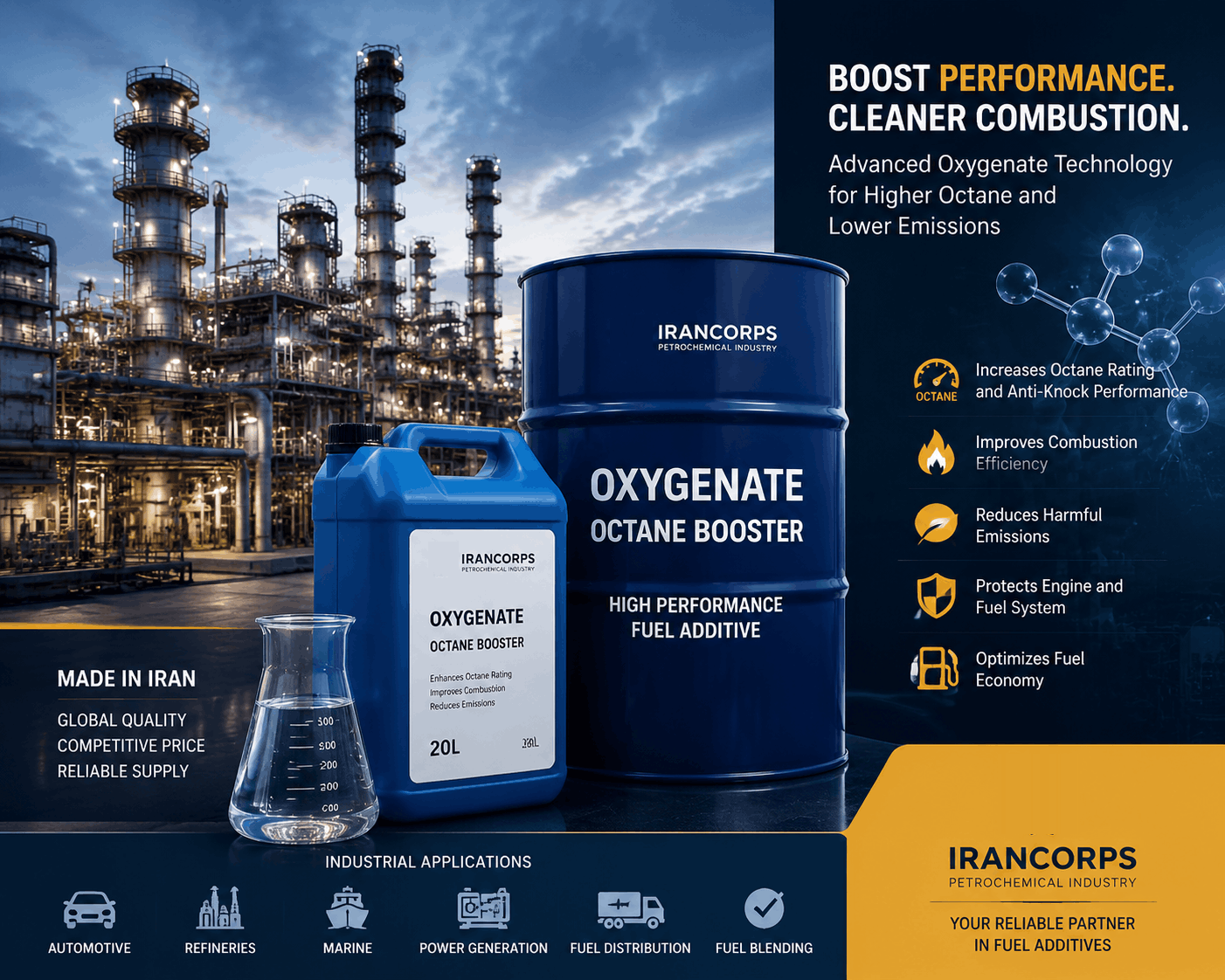
One of the most important solutions used globally to improve fuel performance is the:
This additive plays a dual role:
- Increasing octane number (anti-knock performance)
- Improving combustion efficiency through oxygen enrichment
However, in recent years, global fuel additive markets have shifted due to cost, raw material availability, and petrochemical supply chain changes.
This has made countries with strong petrochemical infrastructure—especially Iran—strategically important suppliers of oxygenate-based octane boosters.
What is Oxygenate Octane Booster? (Technical Definition)
An Oxygenate Octane Booster is a fuel additive formulated from oxygen-containing organic compounds designed to:
- Increase gasoline octane rating
- Reduce engine knocking (detonation)
- Improve combustion completeness
- Lower emissions (CO, unburned hydrocarbons)
- Enhance thermal efficiency
What does “oxygenate” mean in fuel chemistry?
Oxygenates are chemical compounds that contain oxygen atoms in their molecular structure. Common oxygenates include:
- Alcohols (Methanol, Ethanol, Isopropanol derivatives)
- Ethers (MTBE, ETBE, TAME)
- Oxygenated hydrocarbons (special blended formulations)
These compounds are blended into gasoline to introduce additional oxygen molecules into the combustion process.
The Science Behind Octane Rating and Knock Resistance
To understand oxygenate octane boosters, we must first understand octane number.
What is Octane Number?
Octane number measures a fuel’s ability to resist auto-ignition under pressure.
- High octane → controlled combustion
- Low octane → premature ignition (knocking)
Knocking occurs when fuel ignites before the spark plug fires properly, causing:
- Pressure spikes
- Engine vibration
- Long-term engine damage
Why modern engines need higher octane fuel
Modern engines have:
- Higher compression ratios
- Turbocharging systems
- Lean burn strategies
- Direct fuel injection
These systems improve efficiency but increase the risk of knocking.
Therefore, fuel must be chemically stabilized using additives like oxygenate octane boosters.
How Oxygenate Octane Boosters Work (Mechanism Explained)
Oxygenate octane boosters operate through three scientific mechanisms:
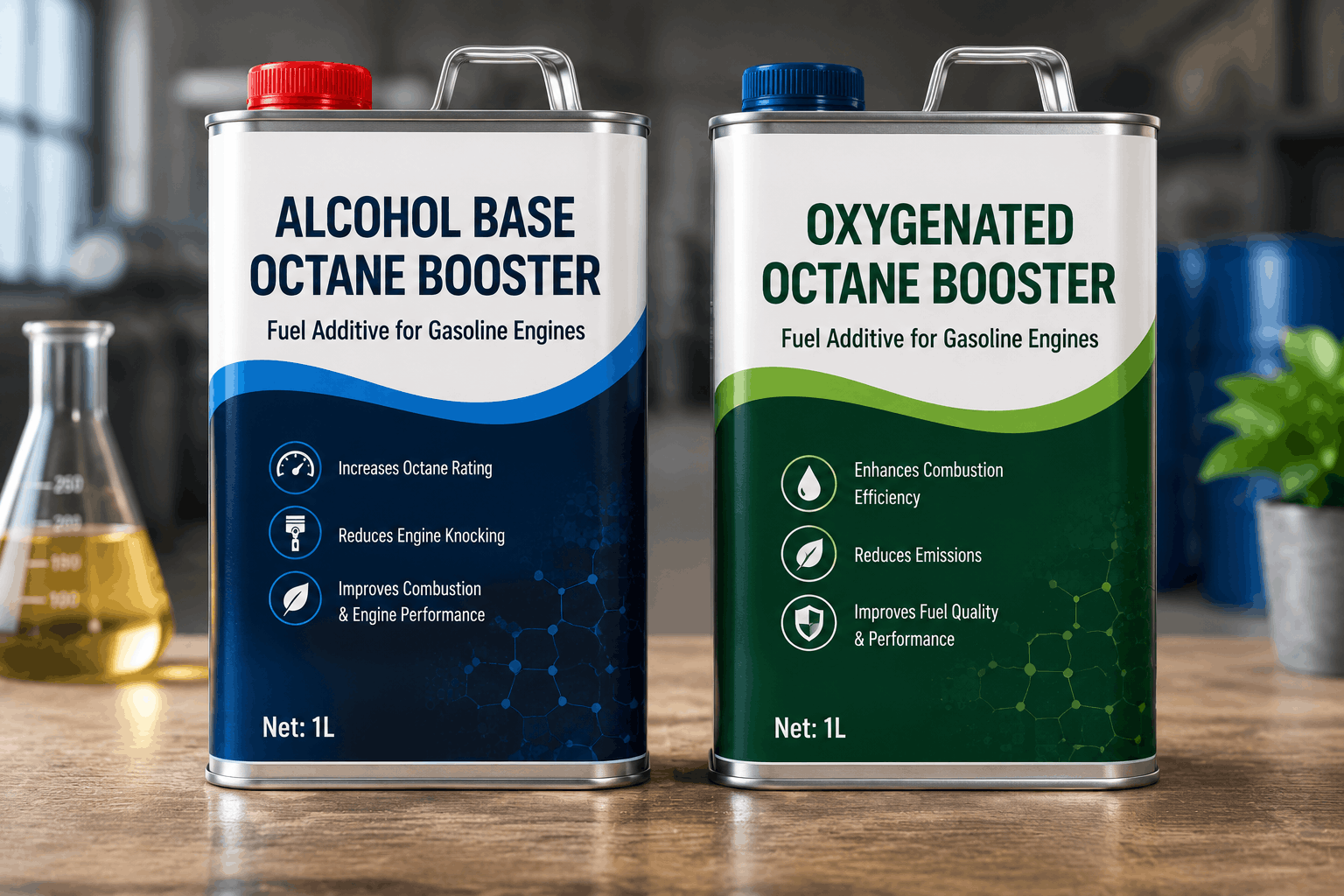
- Oxygen Enrichment of Fuel Mixture
The oxygen atom in oxygenates increases the local oxygen availability during combustion.
This leads to:
- More complete fuel oxidation
- Reduced carbon monoxide (CO)
- Lower soot formation
- Reduction of Pre-Ignition Sensitivity
Oxygenated compounds have:
- Lower boiling points
- Faster evaporation rates
- More stable combustion pathways
This reduces the likelihood of uncontrolled ignition.
- Flame Speed Stabilization
Oxygenates modify flame propagation speed inside the combustion chamber.
Result:
- Smoother pressure rise
- Reduced shock waves
- Improved engine refinement
Common Types of Oxygenate Octane Boosters
- MTBE (Methyl Tertiary Butyl Ether)
- One of the most widely used oxygenates globally
- High octane improvement capability
- Excellent blending characteristics
⚠️ However, environmental concerns have restricted its use in some regions.
- ETBE (Ethyl Tertiary Butyl Ether)
- Derived partly from bioethanol
- Lower environmental impact
- Used in Europe and regulated markets
- TAME (Tertiary Amyl Methyl Ether)
- Good volatility control
- Used in reformulated gasoline
- Alcohol-Based Oxygenates
- Ethanol and methanol derivatives
- Renewable source compatibility
- Widely used in biofuel blending
Industrial Benefits of Oxygenate Octane Boosters
- Improved Engine Performance
- Higher horsepower output
- Better throttle response
- Reduced engine hesitation
- Fuel Efficiency Optimization
Because combustion is more complete:
- Less fuel waste
- Higher energy extraction
- Improved mileage under load conditions
- Emission Reduction
Oxygenates significantly reduce:
- Carbon monoxide (CO)
- Hydrocarbons (HC)
- Particulate matter (PM)
This makes them essential in meeting Euro emission standards.
- Engine Cleanliness
Oxygenate boosters reduce:
- Carbon deposits in injectors
- Combustion chamber fouling
- Valve contamination
Oxygenate Octane Booster in Fuel Blending Industry
In refinery and fuel blending operations, oxygenate octane boosters are used to:
- Adjust gasoline octane rating to market specifications
- Replace lead-based additives (historically used TEL)
- Stabilize fuel quality across batches
They are especially important in:
- Reformulated gasoline (RFG)
- Export gasoline blending
- Aviation fuel pre-treatment systems
Global Market Demand for Oxygenate Octane Boosters
The global demand is increasing due to:
- Stricter emission regulations (Euro 6/7, EPA standards)
- Growth of turbocharged engines
- Phase-out of leaded gasoline worldwide
- Expansion of automotive markets in Asia and Africa
This creates a strong demand for cost-efficient oxygenate suppliers.
Why Buying Oxygenate Octane Booster from Iran is a Strategic Advantage
Now we move to the most important part: sourcing strategy
Iran has become a significant player in the global fuel additive supply chain.
- Strong Petrochemical Feedstock Availability
Iran has direct access to:
- Methanol production (one of the largest globally)
- Natural gas liquids (NGLs)
- Hydrocarbon streams from refineries
This gives Iranian producers a raw material cost advantage.
- Integrated Petrochemical Industry
Unlike many countries that import intermediates, Iran has:
- Upstream methanol production
- Downstream etherification units
- Integrated blending facilities
This reduces:
- Production cost
- Supply chain delays
- Import dependency
- Competitive Export Pricing
Because of local feedstock availability:
- Lower CAPEX per unit product
- Reduced logistics cost
- Economies of scale in petrochemical zones
This results in highly competitive FOB pricing for international buyers.
- Large-Scale Production Capacity
Iran’s petrochemical hubs can support:
- Bulk industrial orders
- Continuous production cycles
- Stable long-term contracts
This is critical for fuel distributors and refiners.
- Strategic Geographic Position
Iran is located between:
- Central Asia
- Middle East
- Eastern Europe
- South Asia
This enables:
- Lower shipping time
- Multi-port export access
- Flexible logistics routes (land + sea)
- Experience in Fuel Additives Export
Iranian producers already export:
- Methanol
- MTBE
- Solvents
- Refinery additives
So compliance with:
- International packaging standards
- MSDS documentation
- Export logistics
is already well established.
- Flexibility in Product Customization
Iranian manufacturers often provide:
- Custom octane blend formulations
- Variable oxygen content adjustment
- Different volatility grades
This is important for buyers in different climates (hot/cold regions).
Quality Considerations When Buying from Iran
A professional buyer should evaluate:
- Purity level
- Typically 95%–99% depending on product type
- Oxygen content ratio
- Determines combustion efficiency
- Stability index
- Shelf life under storage conditions
- Compatibility with gasoline standards
- Euro, ASTM, or regional specifications
Applications Across Industries
Automotive fuel blending
Oil refineries
Fuel distribution terminals
Motorsport fuel optimization
Generator fuel enhancement systems
Future of Oxygenate Octane Boosters
The market is moving toward:
- Bio-based oxygenates (renewable feedstocks)
- Lower toxicity formulations
- Higher efficiency blending systems
- Carbon-reduction fuel additives
Iran’s petrochemical sector is actively investing in these directions.
Conclusion
An Oxygenate Octane Booster is not just a fuel additive—it is a critical performance enhancer for modern gasoline engines. By increasing octane rating and introducing oxygen into combustion, it ensures:
- Better engine performance
- Lower emissions
- Improved fuel efficiency
- Reduced engine wear
From a sourcing perspective, Iran has become an increasingly important global supplier due to:
- Strong petrochemical infrastructure
- Low production costs
- Strategic export location
- Large-scale production capabilities
For international fuel distributors, refinery operators, and chemical traders, sourcing oxygenate octane boosters from Iran can provide a strong balance between quality, price, and supply stability.