

 Arabic
Blog
Octane boosters are fuel additives designed to improve the octane rating of gasoline, enhance engine performance, and reduce knocking. Among the most common types in the market are Alcohol Based Octane Boosters and Oxygenated Octane Boosters.
Although these two categories are closely related and sometimes overlap, they have important differences in formulation, performance behavior, and environmental impact. Understanding these differences is essential for fuel distributors, automotive industries, and end users.
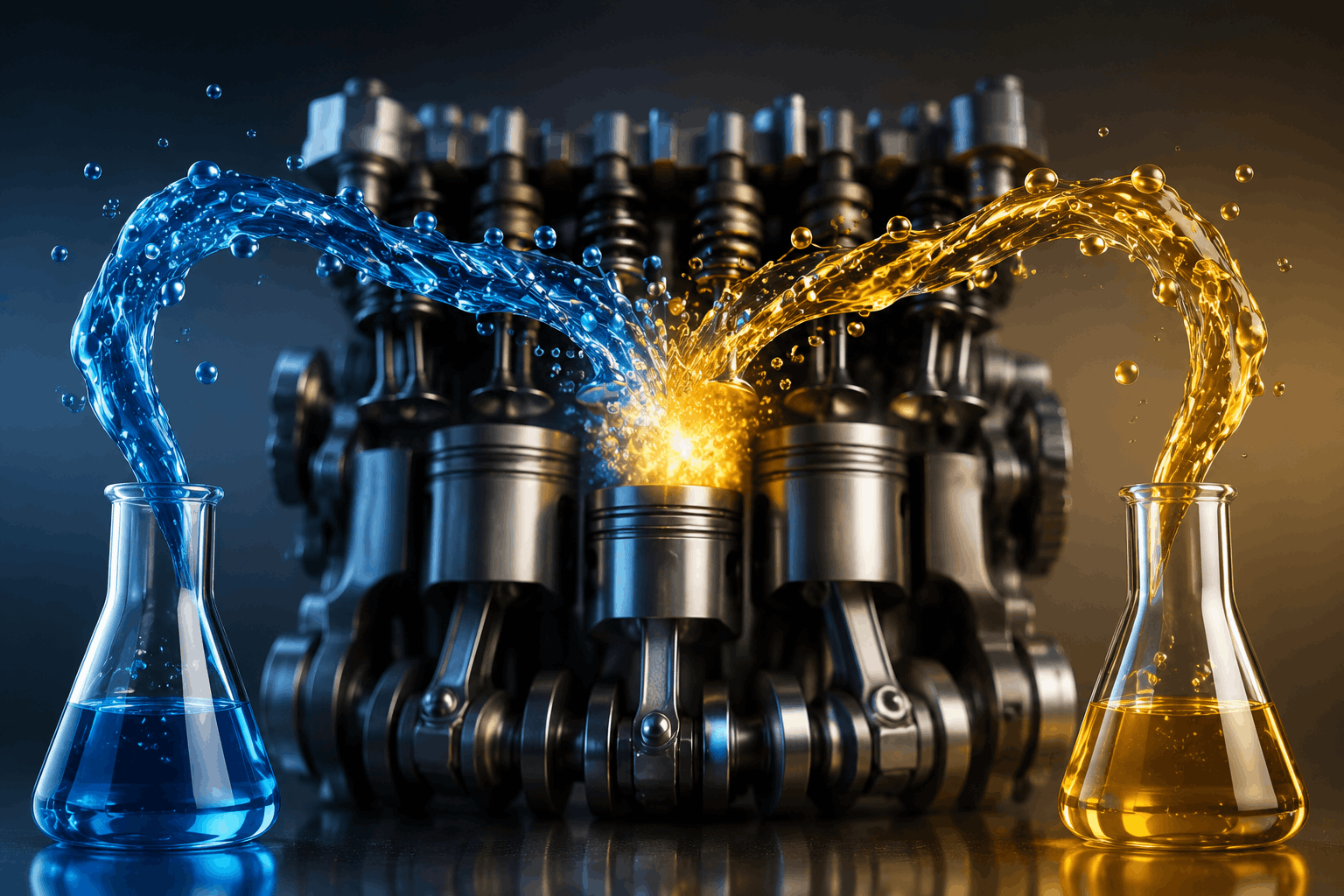
What Is Alcohol Based Octane Booster?
Alcohol Based Octane Boosters are formulated using alcohol compounds such as ethanol, methanol, or blended alcohol derivatives. These substances improve fuel combustion by increasing oxygen content and enhancing flame propagation inside the combustion chamber.
They are widely used because they:
- Increase octane rating
- Improve combustion efficiency
- Reduce engine knocking
- Support cleaner burning fuel
Alcohol-based formulations are often considered more environmentally friendly compared to traditional metallic additives.
What Is Oxygenated Octane Booster?
Oxygenated Octane Boosters are fuel additives that contain oxygen-rich compounds designed to improve combustion efficiency. While alcohol-based additives are one type of oxygenated fuel, the broader category includes additional chemical families such as ethers (e.g., MTBE, ETBE) and other oxygen-bearing hydrocarbons.
Their main goal is to introduce oxygen into the fuel mixture, which helps gasoline burn more completely.
Key benefits include:
- Improved combustion efficiency
- Reduced carbon monoxide emissions
- Enhanced fuel stability in some formulations
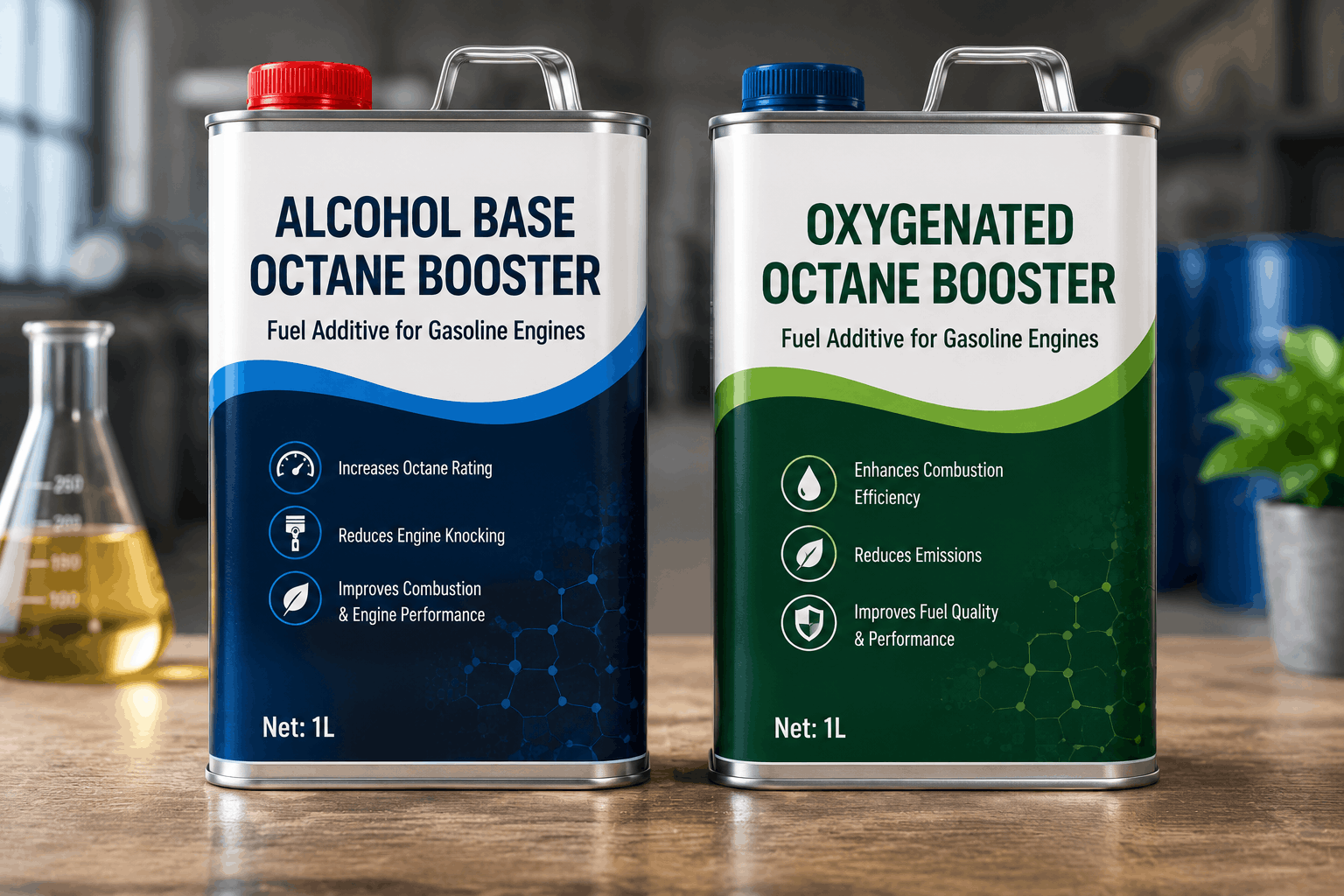
Key Differences Between Alcohol Based and Oxygenated Octane Boosters
Although both improve fuel performance, they differ in composition and behavior.
- Chemical Composition
- Alcohol Based: Mainly ethanol, methanol, or blended alcohols
- Oxygenated: Includes alcohols, ethers, and other oxygen-containing compounds
- Combustion Behavior
Alcohol-based boosters provide faster and cleaner combustion due to high oxygen content and volatility. Oxygenated boosters vary depending on the compound used.
- Environmental Impact
Alcohol-based additives generally produce cleaner emissions, while some oxygenated compounds (like certain ethers) may have environmental restrictions in some regions.
- Octane Improvement Level
Both types improve octane rating, but oxygenated formulations may offer more stability in long-term fuel storage depending on the blend.
- Cost and Availability
Alcohol-based products are often more cost-effective and widely available, especially in regions with strong petrochemical production.
Comparison Table
| Feature | Alcohol Based Octane Booster | Oxygenated Octane Booster |
| Main Ingredients | Ethanol, Methanol | Alcohols, Ethers, Oxygenates |
| Combustion Quality | High efficiency | Moderate to high |
| Emissions | Lower emissions | Depends on formulation |
| Octane Boost | Good | Good to very good |
| Cost | Lower | Moderate to high |
| Environmental Profile | Generally cleaner | Varies by compound |
| Availability | Widely available | Depends on region |
Applications
Both types are used in similar industries, including:
- Passenger vehicles
- Racing engines
- Marine gasoline engines
- Fuel blending industries
- Automotive performance tuning
- Industrial gasoline systems
However, alcohol-based boosters are more commonly used in bulk fuel blending due to cost and availability advantages.
Which One Is Better?
There is no absolute “better” option; the choice depends on the application:
- If the goal is cost-effective octane improvement with cleaner combustion, Alcohol Based Octane Booster is usually preferred.
- If the goal is fuel formulation flexibility and long-term stability, Oxygenated Octane Boosters may offer advantages depending on composition.
For most commercial and export-oriented fuel applications, alcohol-based formulations are the more practical solution.
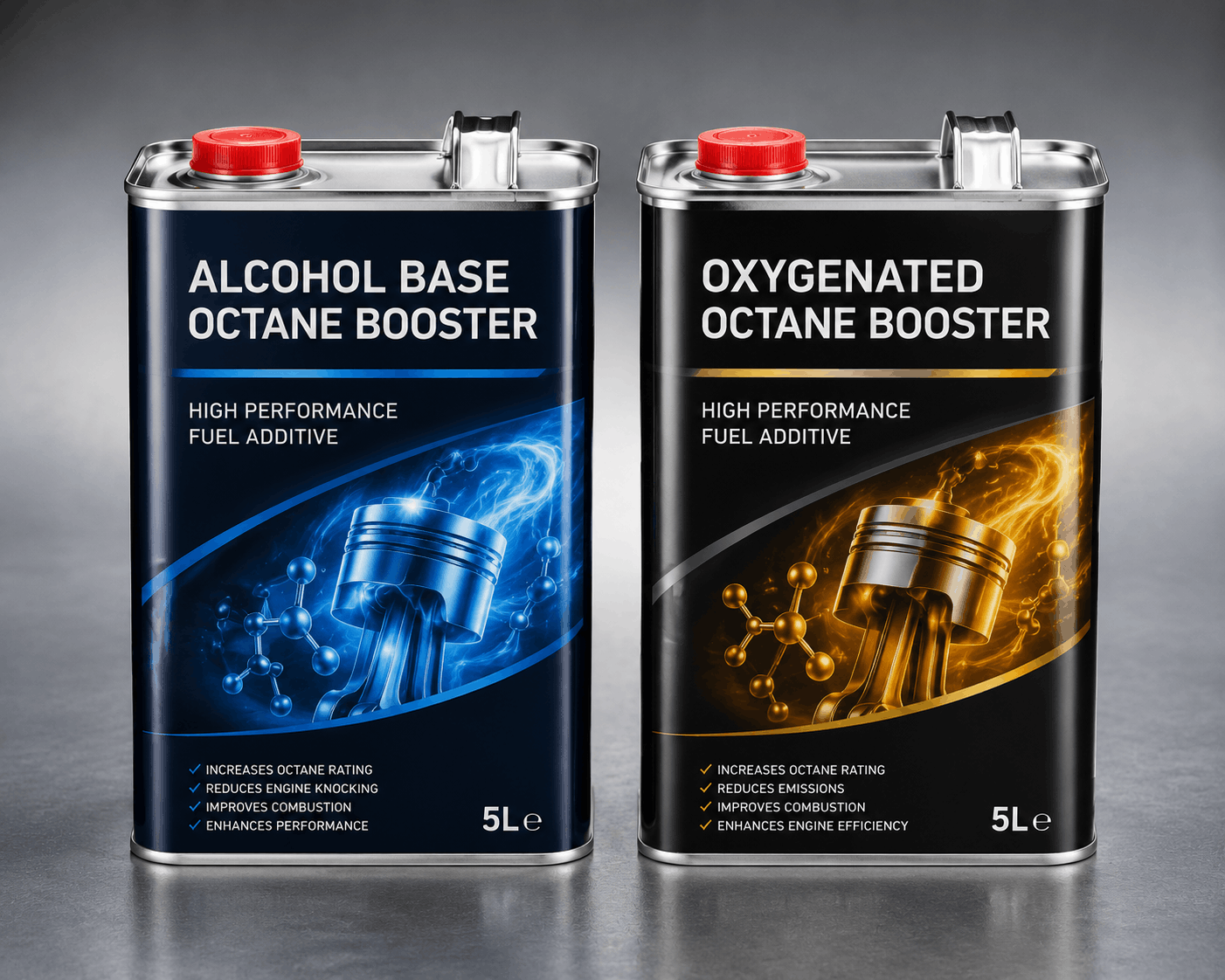
Why Alcohol Based Octane Booster Is More Popular
In global markets, alcohol-based products dominate because:
- They are easier to produce at scale
- They are compatible with many fuel systems
- They offer good balance between performance and cost
- They align with cleaner fuel regulations in many countries
This makes them especially attractive for exporters and chemical suppliers like Iranian petrochemical companies.
Frequently Asked Questions
Is alcohol based octane booster a type of oxygenated fuel?
Yes. Alcohol-based boosters are a subset of oxygenated fuel additives.
Which one increases octane more?
Both can increase octane, but effectiveness depends on formulation and dosage.
Are oxygenated boosters safe for engines?
Yes, when used correctly and in approved formulations.
Can both be used in all gasoline engines?
Most modern gasoline engines can use them, but always follow manufacturer guidelines.
Conclusion
Alcohol Based Octane Boosters and Oxygenated Octane Boosters both play an important role in improving gasoline performance. While they share similar goals, their chemical structures and performance characteristics differ.
For most industrial and commercial applications, alcohol-based formulations offer a more cost-effective and environmentally friendly solution, making them widely preferred in fuel additive markets.
View more products at : https://irancorps.com