

 Arabic
shop
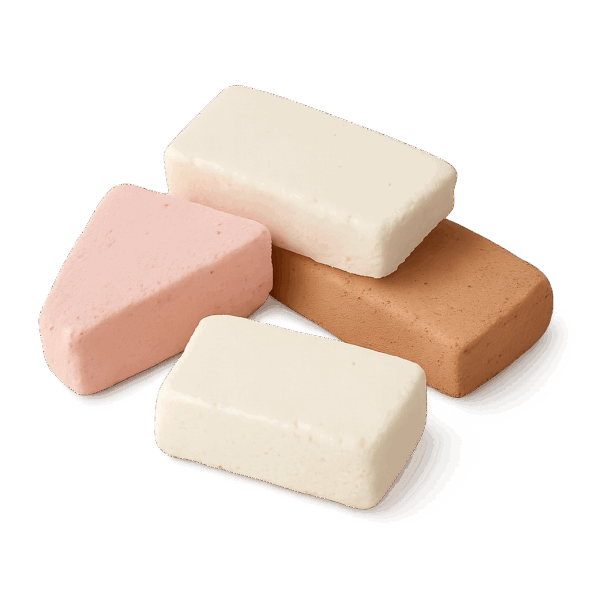
Dried Ice Cream
Freeze drying (or lyophilization) removes water from the ice cream by lowering the air pressure to a point where ice sublimates directly from a solid to a gas. The ice cream is first placed in a vacuum chamber and frozen until any remaining water crystallizes. The air pressure is then lowered below water’s triple point, creating a partial vacuum, forcing air out of the chamber; next heat is applied, sublimating the ice; finally a freezing coil traps and turns the vaporized water into ice. This process continues for hours, resulting in a freeze-dried ice cream slice.
Although different and modernized ice creams are available , However, Top Ice-cream Flavors in Trends are:
- Vanilla
- Banana
- Chocolate
- Cookies & Cream
- Mint Chocolate Chip
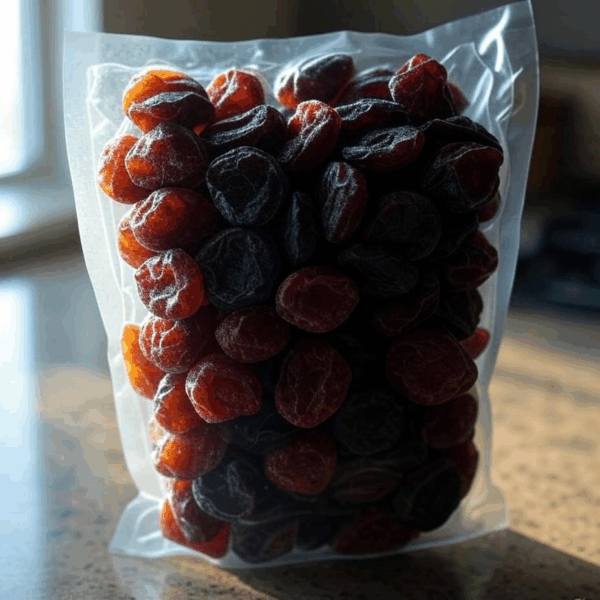
Dried Plums
Commercial Dried Plums are available in several forms to meet different food industry and retail requirements, including whole dried plums with pits, whole pitted dried plums, soft dried plums, semi-dried plums, naturally dried plums, and industrial-grade dried plums for further processing. Pitted Dried Plums are particularly suitable for ready-to-eat products, snack mixes, bakery products, confectionery, breakfast foods, and foodservice applications because they can be used directly without removing the pit. Whole dried plums with pits may be preferred in certain traditional markets and retail applications where the natural form of the fruit is desired. Dried Plums are widely used as a convenient snack and as an ingredient in bakery products, cakes, cookies, cereal bars, granola, chocolate products, confectionery, desserts, sauces, fillings, jams, compotes, and fruit-based formulations. Food manufacturers can also use diced, sliced, chopped, or processed dried plums in composite products where uniform particle size is required. For B2B purchasing, size grading can be specified according to fruit diameter, count per kilogram, or customer-defined size categories. Packaging options may include bulk cartons, polyethylene-lined cartons, food-grade bags, vacuum packs, pouches, retail bags, and customized industrial packaging. Bulk packaging is commonly selected by food manufacturers and distributors, while smaller retail packs are suitable for supermarkets, specialty food stores, and consumer markets. Packaging selection depends on the required shelf life, transportation conditions, storage environment, and final sales channel.
The quality of Dried Plums is strongly influenced by raw fruit maturity, plum variety, drying conditions, moisture control, sorting, storage temperature, and packaging technology. High-quality commercial products should have a consistent appearance, characteristic plum flavor, acceptable softness, and minimal levels of mold, fermentation, insect damage, foreign materials, and excessive discoloration. Depending on the intended application, buyers may specify different moisture ranges, pit-free requirements, size grades, sweetness levels, color characteristics, and tolerance limits for damaged or broken fruit. Dried Plums should be stored in a cool, dry, clean environment away from direct sunlight, excessive heat, and high humidity to preserve product quality during storage and distribution. For international B2B trade, suppliers can offer different grades based on the requirements of importers, distributors, food processors, wholesalers, and retail brands. Customized sorting, pitting, sizing, cutting, and packaging can also be arranged for suitable commercial quantities. With their long shelf life, convenient handling, concentrated flavor, and versatility across food applications, Dried Plums are an attractive ingredient and finished food product for wholesalers, food manufacturers, retailers, snack producers, bakery companies, confectionery manufacturers, and international food distributors.
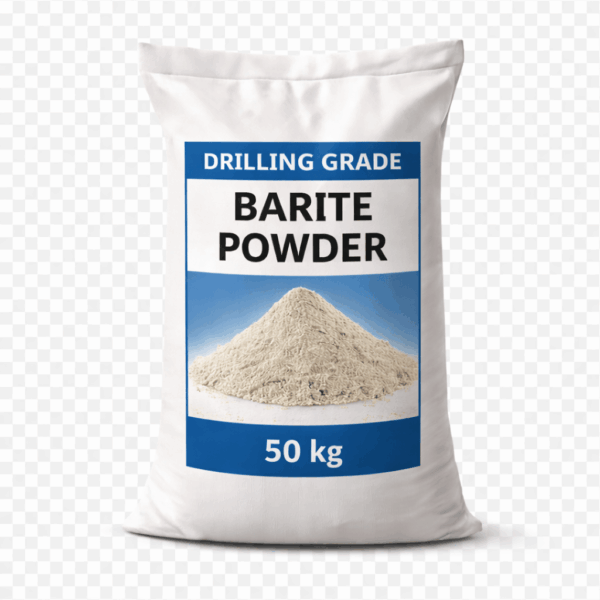
Drilling Grade Barite Powder
Drilling grade barite is supplied in accordance with API and OCMA specifications, with common varieties including API 13A Barite, OCMA Grade Barite, and High-Purity Drilling Barite, differentiated by specific gravity, BaSO₄ content, and impurity limits. These grades are designed to meet the demanding requirements of onshore and offshore drilling environments. This grade of barite powder is primarily used as a weighting material in drilling fluids, helping to prevent blowouts, control formation pressure, reduce gas migration, and improve wellbore stability during drilling operations. Its high specific gravity and chemical inertness make it ideal for deep wells and high-pressure formations.
Key properties of drilling grade barite include high specific gravity (typically 4.1–4.2), low water solubility, chemical stability, low abrasiveness, and excellent compatibility with drilling additives. Commercial particle sizes are most commonly supplied as 200 mesh and 325 mesh, ensuring proper suspension and uniform dispersion in drilling muds. Drilling grade barite powder is typically packed in 25 kg and 50 kg polypropylene bags, 1-ton jumbo bags, or supplied in bulk shipments for large-scale oilfield operations, offering a cost-effective and reliable solution for drilling contractors and mud engineers worldwide.
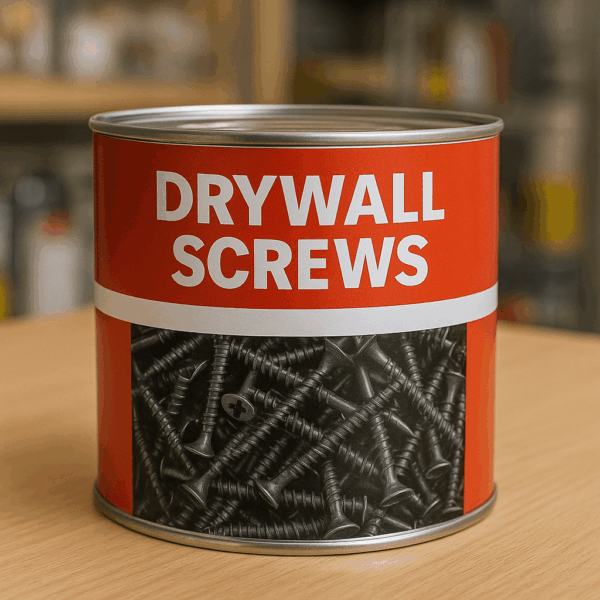
Drywall Screw
You can find them with either coarse threads suited for wood studs or fine threads made specifically for metal studs. There are two types of Drywall Screws , “W” drywall screws that Generally, this type of screw is used in woodwork. They are designed with wide coarse threads which can be easily installed on wood materials and the second one is “S” drywall screw that it is usually used to secure drywall screw on steel materials. They have a sharp head that makes it easier to pass through hard materials. The thread pattern of drywall screws is typically coarse. The coarse threads are designed to provide optimum grip and holding force in drywall and framing material.

Duplex Head Nail
Nail size is determined by both length and gauge. Nail length is indicated by the letter “d,” which is a system of measurement that dates back to old England and originally represented the word “pennies.” Nails come in many lengths ranging from 2d all the way to 50d with corresponding lengths. Nails must be of suitable strength, with a shank that is long enough to provide an appropriate attachment.
Duplex head nails have two nail heads, one on top, and another slightly lower. Duplex nails are used for temporary construction, such as formwork for pouring concrete or attaching temporary cleats during roofing. The nail is driven until the lower head is flush with the wood.
Dyna Bolt
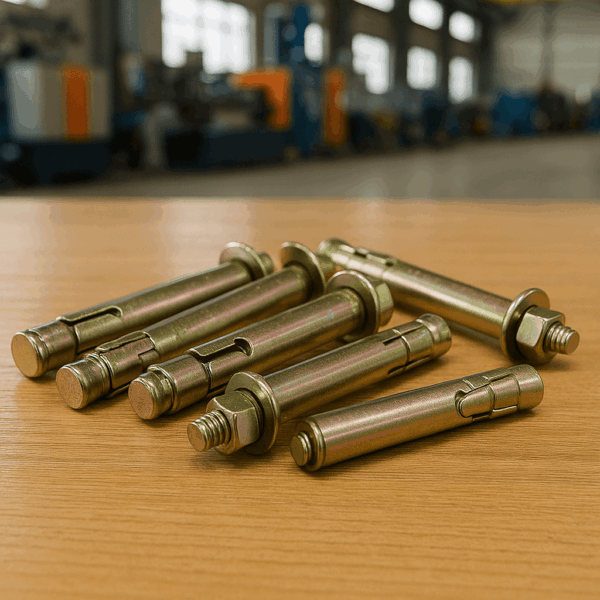
Dyna Bolt features a split expansion sleeve over a threaded stud bolt body and integral expander, nut and washer. In order to anchor it to the base material, torque is applied at the nut or screw of the dyna bolt, where an internal expander causes the expansion sleeve to expand & grip the hole tightly.

Dyneema Glove
It is extremely durable — 15 times stronger than steel and 40% stronger than aramids. It offers UV resistance and superior protection against heat and cold. Dyneema is rated A5 by the ANSI.
Dyneema is an ultra-lightweight fiber, allowing for gloves that provide superb cut protection, increased abrasion resistance, durability, and natural hand movement.

Earthenware Dinnerware
A complete set of dinnerware typically includes dinner plates, salad plates (or side plates), soup bowls, dessert plates, cups, saucers, and may also include additional serving pieces like platters, serving bowls, and sometimes bread and butter plates depending on the set’s size and style. Earthenware is generally the most affordable option for ceramic dinnerware types. It’s made from normal clay and is fired at relatively low temperatures—between 1000℃ and 1150℃. Earthenware is glazed or unglazed nonvitreous pottery and the design and look could work well with certain hospitality aesthetics.
The best dinnerware material is hard, brittle, and slightly porous, so it cannot be used to contain liquids unless treated. Typically, this involves glazing or going through a second round of firing in the kiln to eliminate its remaining porosity. However, once it’s been through this process, most earthenware pieces become dishwasher and microwave safe. Aesthetically, these dishes bring a rustic feeling to your table, they’re thick, heavy, usually brown or red, and have hand-painted designs since their porosity levels require them to be glazed.
Eastern Ceramic Toilets – Squatting Pan
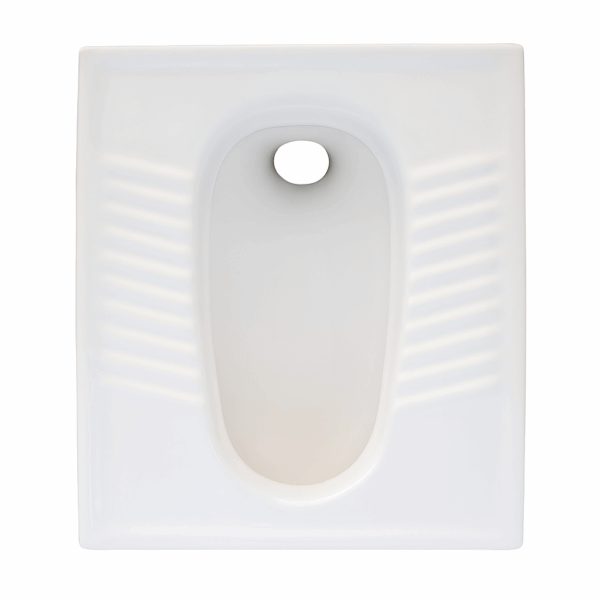
Ceramic Squatting Pans are available in different designs, sizes, colors, and installation models to meet various construction requirements. Commercially available types include Eastern ceramic floor mounted squatting pans, Indian style squatting toilets, Asian style squat pans, deep and flat squatting pans, anti-slip surface models, and water-saving flushing designs. These products are suitable for bathrooms, schools, mosques, hospitals, hotels, factories, public buildings, and residential projects where durability and hygiene are essential factors.
Eastern Ceramic Toilets – Squatting Pan offer excellent advantages including long service life, low maintenance requirements, superior glaze quality, resistance against bacteria accumulation, and compatibility with modern plumbing systems. They are produced according to international sanitary ware standards and can be supplied in different packaging options for export markets. Available commercial options include OEM production, private label supply, customized designs, and bulk quantities for distributors, wholesalers, construction companies, and sanitary ware importers worldwide.
Easy Open End (EOE)
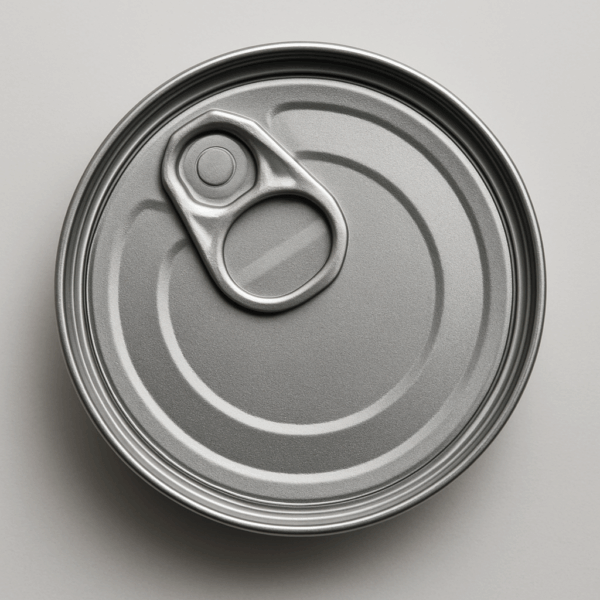
Different types of EOE include peel-off ends, stay-on tabs, and full aperture options depending on the desired opening size and product consistency are available .
Types of Easy Open Ends:
Peel-off end (POE): The entire lid can be peeled off, providing full access to the contents.
Stay-on tab (SOT): A tab remains attached to the lid after opening, reducing litter.
Full aperture (FA): Creates a large opening for easy pouring or scooping.
The material can be tinplate , Aluminum and tin free steel and complete range of shapes can be produced including round, quarter club, oval, pear .
Ends suitable for pasteurization / sterilization / retorting are available. Supplies are made conforming to customer request for client specific usage.
Outside of the EOE can be gold lacquered or clear lacquered. It is also possible for us to supply EZO that are printed with opening instructions or customer LOGO.
Inside of the Easy Open Covers are usually lacquered. The type of internal lacquer can be epoxy phenolic, organosol or aluminized as per customer request and end application. The color of internal lacquer can be Gold or Clear. Various sizes that are produced for regular round shapes EOE for food and non food products are from 50mm to 153 mm .

Electric Bike Tire
Manufactured using high-strength rubber compounds and reinforced sidewalls, these tires resist punctures, wear, and deformation caused by the extra torque of electric motors. Available in commuter, touring, and off-road types, each is optimized for specific use—from city streets to hilly trails. The production process combines precision molding, vulcanization, and quality testing to ensure balance, resilience, and consistent performance. Their reflective sidewalls and low rolling resistance designs enhance both safety and riding range, making them ideal for daily commuting and long-distance travel.

Electric Fan Heater For Home
A Fan Heater is the cheapest type of heating device. Electric fan heaters essentially combines a heating element and a fan that optionally can be placed in a plastic or metal case.A stream of air is produced by the fan, and as it passes past the heating components, it is heated and spread evenly throughout the space.
This device quickly distributes warm air throughout the room and they are convenient for small and medium rooms .Fan heaters are divided into two large groups according to the type of electric heating element, it can be a spiral or ceramic plates. Electric fan heaters are lightweight, compact , portable and can be fixed be on floor, wall, table and ceiling or be permanently installed .
Advantages :
-
Heats up a room fast.
-
Affordable and easy to use.
-
Good for spot heating (directing heat where you need it).