Your gateway to numerous Iranian top exporters

Create one request and get multiple quotes from verified suppliers. 100% free.

Paraformaldehyde

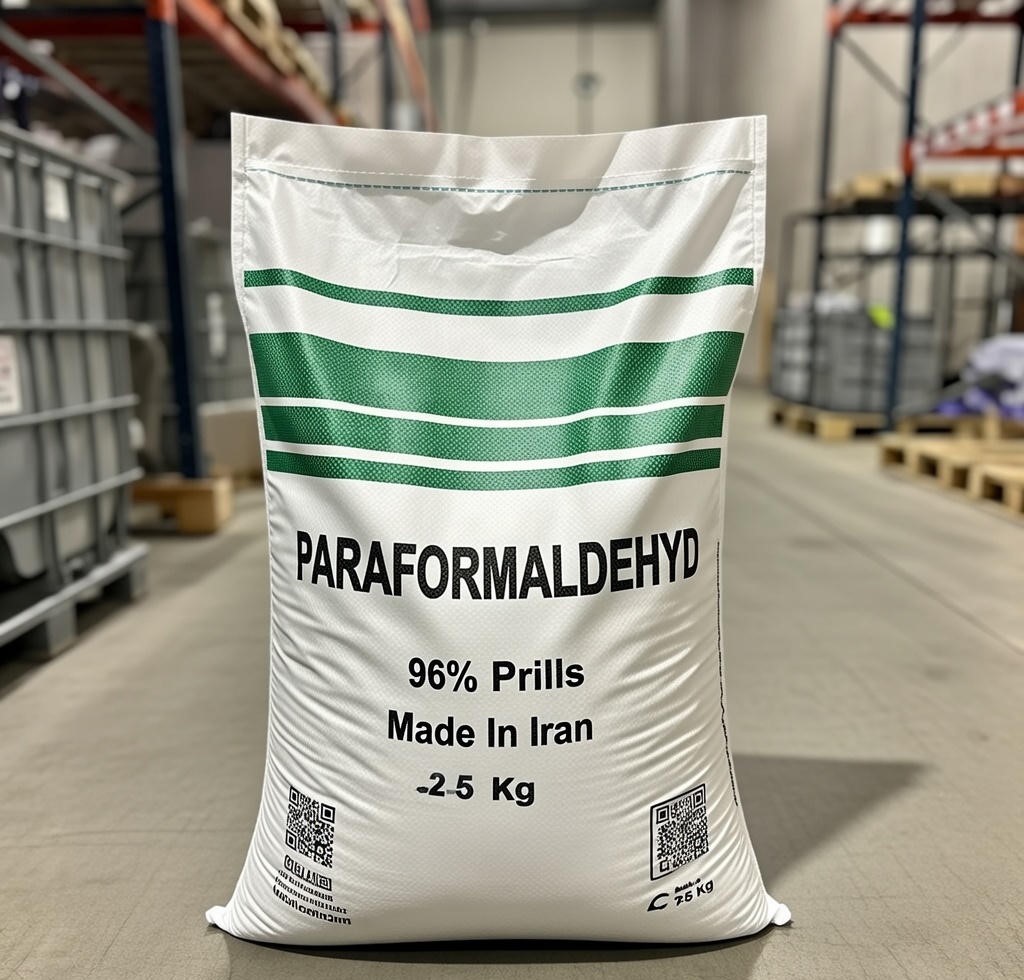
Paraformaldehyde is a white to off-white solid polymer of formaldehyde and is widely traded as a high-purity industrial chemical for applications where a convenient, concentrated and stable source of formaldehyde is required. It is commonly known as Paraformaldehyde, Paraform, Polyoxymethylene, Formaldehyde Polymer, Polymeric Formaldehyde and is also described technically as a polymerized formaldehyde product with the general repeating structure of –(CH₂O)n–. Paraformaldehyde is valued because it releases formaldehyde when heated or dissolved under appropriate conditions, making it useful in chemical synthesis and industrial manufacturing. Commercial paraformaldehyde is normally supplied as a free-flowing white powder, granules or prills with different formaldehyde concentrations and physical characteristics according to the intended application. The product is manufactured by concentrating aqueous formaldehyde solution and subsequently removing water under controlled conditions, allowing formaldehyde molecules to polymerize into a solid material. Industrial production requires careful control of concentration, temperature, residence time and drying conditions to obtain consistent polymerization and product quality. Depending on the production technology and grade, the final material can be processed into different particle sizes and purity levels to meet the requirements of chemical, resin, adhesive, agricultural and other industrial applications. Paraformaldehyde is particularly attractive for international trade because its solid form offers a high active formaldehyde content in a relatively compact material compared with aqueous formaldehyde solutions, supporting efficient storage, handling and transportation when properly packaged and handled according to applicable safety requirements.

Paraformaldehyde grades are generally differentiated according to formaldehyde content, purity, particle size and intended end use. High-formaldehyde-content grades are commonly selected for resin production and chemical synthesis, while standard industrial grades are widely used as a formaldehyde source in manufacturing processes. Fine-powder grades can be suitable for applications requiring rapid reaction or dissolution, whereas granular or prilled grades can offer improved flowability and easier bulk handling. One of the major applications of paraformaldehyde is the production of phenolic resins, urea-formaldehyde resins and melamine-formaldehyde resins, which are used in adhesives, wood panels, laminates, coatings, molded products and engineered materials. It is also used in the manufacture of polyacetal and other formaldehyde-based polymers, as well as in chemical synthesis where formaldehyde is required as a reactive building block. In the agricultural sector, paraformaldehyde can be used in the manufacture of certain agricultural chemicals and formulations, subject to applicable regulations and specific formulation requirements. The product is also utilized in the production of intermediates, specialty chemicals, disinfectant-related formulations and various organic compounds where controlled formaldehyde release is required. Its high active content, solid physical form, relatively low water content and convenient dosing characteristics make paraformaldehyde an important raw material for manufacturers seeking an efficient formaldehyde source. For wholesale export, commercially available material can be supplied according to customer requirements regarding purity, formaldehyde content, particle size, packaging configuration and applicable technical standards, while quality control commonly focuses on active formaldehyde content, moisture, acidity or alkalinity, insoluble matter, appearance and physical properties.

From a commercial and technical perspective, Paraformaldehyde offers several advantages compared with conventional aqueous formaldehyde solutions in applications where a concentrated solid formaldehyde source is preferred. Its high formaldehyde content enables manufacturers to introduce the required active material without adding large quantities of water, which can be particularly advantageous in resin production and other processes where water balance is important. The solid form can also facilitate transportation and storage compared with liquid formaldehyde solutions, provided that suitable packaging, ventilation, temperature control and chemical safety procedures are maintained. Paraformaldehyde is widely used as an industrial raw material in adhesives, wood-based panels, foundry chemicals, coatings, plastics, synthetic resins, polymers, chemical intermediates and selected agricultural chemical manufacturing processes. Product selection should be based on the required reaction conditions, formaldehyde concentration, particle size, purity and end-use specifications. For international wholesale markets, suppliers can offer standard industrial paraformaldehyde as well as grades optimized for specific manufacturing applications. Typical export specifications may include approximately 90–96% formaldehyde content, depending on the commercial grade, together with controlled moisture and insoluble matter. Reliable quality, consistent particle characteristics, high active content, efficient handling and broad industrial compatibility are among the principal advantages that make paraformaldehyde an important commodity chemical for manufacturers and distributors. Buyers should always review the latest technical data sheet and safety data sheet before purchase and ensure that transportation, storage and use comply with applicable chemical safety regulations in the destination market.

 

Paraformaldehyd from Iran
Property Typical Specification
Chemical Formula (CH₂O)ₙ
Appearance White Powder, Granules or Flakes
Formaldehyde Content 91–96%
Moisture Content ≤ 3.0%
Ash Content ≤ 0.1%
pH (Aqueous Solution) 3.5 – 6.5
Melting / Decomposition Point Approximately 120–170°C (Decomposes)
Density Approximately 1.4 g/cm³
Packaging 25 kg PP Bag, Kraft Paper Bag, Jumbo Bag or as Customer Request
Applications Resins Production, Chemical Intermediate, Disinfectants, Agrochemicals, Pharmaceuticals, Laboratory Reagents, Industrial Chemicals


IF YOU ARE WILLING TO BUY PARAFORMALDEHYDE FROM VERIFIED IRANIAN SUPPLIERS, PLEASE SCROLL DOWN AND SUBMIT YOUR REQUEST.

0 reviews
0
0
0
0
0

There are no reviews yet.

Be the first to review “Paraformaldehyde”

FAQ Paraformaldehyde

Paraformaldehyde is a solid polymerized form of formaldehyde, commonly supplied as white powder, granules or prills and used as a concentrated formaldehyde source in industrial chemical manufacturing.
Paraformaldehyde is mainly used in the production of urea-formaldehyde, melamine-formaldehyde and phenolic resins, adhesives, polymers, coatings, chemical intermediates and selected agricultural chemicals.
Paraformaldehyde is a solid polymeric material that releases formaldehyde under suitable conditions, while formaldehyde solution is formaldehyde dissolved in water. Paraformaldehyde provides a more concentrated solid source with lower water content.
Commercial types can differ in formaldehyde content, purity and particle size and may be supplied as fine powder, granules or prills. Selection depends on the manufacturing process and intended application.
Its high active formaldehyde content, solid form, low water content, convenient dosing and suitability for resin and chemical synthesis make paraformaldehyde an efficient raw material for many industrial processes.
For finding a suitable Paraformaldehyde supplier in Iran, buyers can contact Irancorps to identify suitable Iranian manufacturers or exporters according to required grade, specifications, quantity, packaging and destination market.

Request for Quotes

Create one request and get multiple quotes from verified suppliers.