

 Arabic
shop
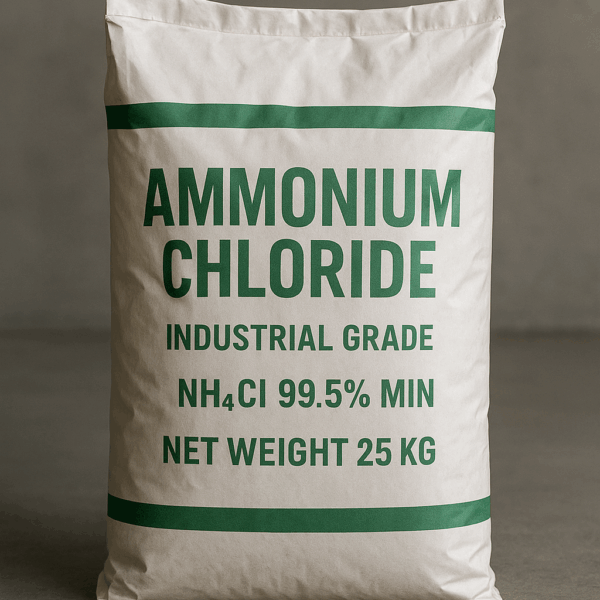
Ammonium Chloride
It is an inorganic compound having a formula of NH4CI that dissolves easily in water, glycerol, methanol and polar solvents and It is acidic in nature as its pH ranges from 4.6 to 6. It is basically the salt of ammonia and hydrogen chloride with the boiling point of 520∘C 520∘C and melting point is 338∘C 338∘C . Ammonium chloride is as a source of nitrogen for several types of fertilizers, such as chloro-ammonium phosphate. It is used as a fertilizer as it is a large source of nitrogen and urea. It is used in bread making as a yeast nutrition also used to produce many medicines and cough syrups, reducing nausea and vomiting and in many other pharmaceutical industries.
In preparing metals which are to be tin coated, galvanized or soldered, Ammonium chloride is used as a flux.
Another application of Ammonium chloride
- Used as food supplements for cattle.
- Used to bond plywood because it acts as a glue.
- Ammonium chloride is used as an electrolyte in Zinc-Carbon batteries.
- Ammonium chloride is used in hair shampoo, and cleaning products.
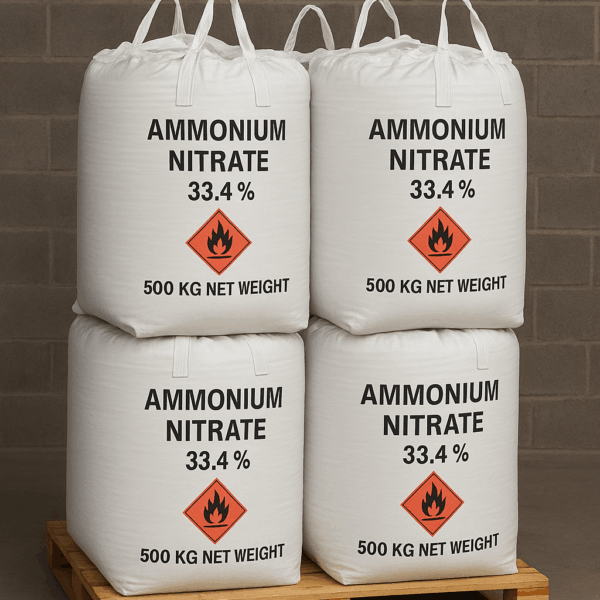
Ammonium Nitrate
Ammonium Nitrate is primarily used as a nitrogen fertilizer for agricultural applications, where its balanced ammonium and nitrate nitrogen provides a practical source of nitrogen for a wide range of crops. It can also be used as a raw material or process chemical in selected industrial applications under applicable regulations. Its high solubility makes it suitable for fertilizer formulations and controlled agricultural nutrient management. Product quality can vary according to grade, particle size, moisture content, purity, and anti-caking treatment, making the selection of a suitable commercial grade important for storage, handling, transportation, and end-use performance.
For international B2B trade, Ammonium Nitrate should be sourced according to the buyer’s required specification, intended use, packaging requirements, applicable transport regulations, and destination-country compliance requirements. Because Ammonium Nitrate is an oxidizing chemical and is subject to specific safety and regulatory controls, professional handling, secure storage, appropriate documentation, and compliant logistics are essential. Buyers looking for Ammonium Nitrate from Iran can work with experienced sourcing companies to identify suitable suppliers, verify specifications and documentation, and coordinate compliant international trade.

Ammonium Sulfate
In agriculture, Ammonium Sulfate is primarily used as a nitrogen and sulfur source for crops requiring balanced nutrient availability. Its nitrogen content supports vegetative growth and protein formation, while sulfur contributes to enzyme activity, amino acid synthesis, and overall plant development. The product is particularly useful in soils where sulfur deficiency may limit crop performance. Ammonium Sulfate can be applied to cereals, oilseeds, vegetables, fruits, industrial crops, and other agricultural plants. Its acidic reaction in soil can also make it suitable for certain alkaline or high-pH soils, subject to agronomic requirements and application conditions.
Industrial applications of Ammonium Sulfate include water treatment, chemical processing, pharmaceutical manufacturing, fermentation processes, and selected applications in flame-retardant and specialty formulations. Commercial grades may vary in particle size, purity, moisture, nitrogen content, sulfur content, and physical form according to the end-use requirements. For international B2B trade, Ammonium Sulfate is commonly offered in bulk, big bags, or standard industrial packaging, with specifications and packaging tailored to buyer requirements. Reliable sourcing should focus on consistent quality, appropriate certification, export documentation, and dependable supply capacity.
Amorphous Graphite
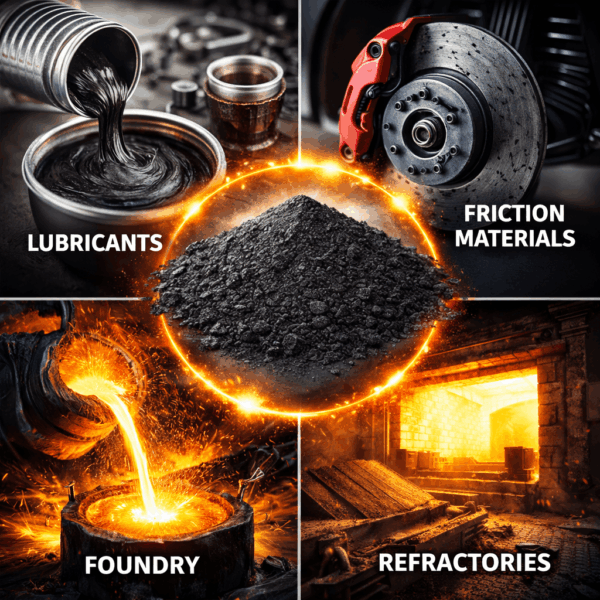
Amorphous Graphite is available in different grades according to fixed carbon percentage, ash content, moisture level, and particle size distribution. Common commercial grades include 70–80% Fixed Carbon Grade mainly used in foundry coatings, refractory products, and general industrial applications; 80–90% Fixed Carbon Grade suitable for lubricants, brake linings, batteries, and metallurgical uses; 90–95% Fixed Carbon Grade applied in advanced refractory materials, crucibles, and carbon-based products; and 95%+ High Carbon Grade used for specialized applications requiring higher purity and improved electrical and thermal conductivity. Available particle sizes include fine powder such as 100 mesh, 200 mesh, 325 mesh, and micronized grades, as well as coarser sizes according to customer requirements. Each grade can be customized based on industrial application, carbon content, and export market specifications.
Amorphous Graphite offers many advantages including excellent lubrication properties, high temperature resistance, low coefficient of friction, good electrical conductivity, corrosion resistance, and strong chemical stability. It is widely used in steelmaking, foundry casting, refractory bricks, crucibles, brake pads, pencils, coatings, lubricants, batteries, conductive materials, drilling fluids, and various industrial carbon products. The combination of competitive cost, reliable performance, and availability in multiple grades makes Amorphous Graphite an important raw material for manufacturers and international buyers looking for high-quality graphite products for global markets.
Anaerobic Adhesives
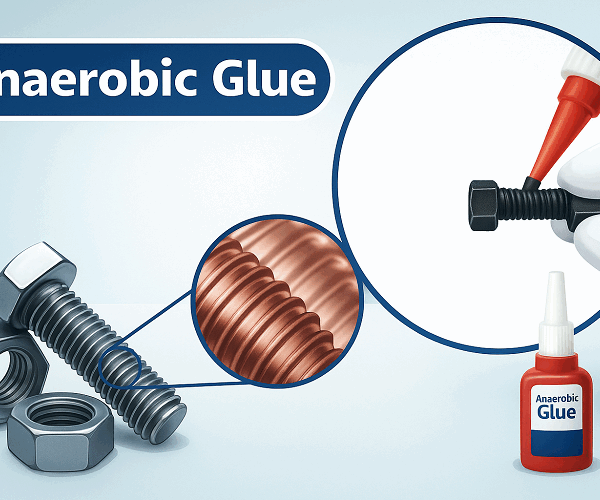
Thanks to their controlled curing mechanism and long-term durability, anaerobic adhesives are a trusted choice across automotive, manufacturing, and maintenance industries. Anaerobic adhesives are valued for their excellent resistance to vibration, shock, heat, oils, fuels, and industrial chemicals, ensuring secure assemblies under dynamic loads. Key features include controlled cure speed, high shear strength, gap-filling capability, corrosion protection, and long service life without loosening. Commercial grades are available for different functions, including threadlockers (low, medium, and high strength), retaining compounds, gasket sealants, pipe sealants, and flange sealants. These products are designed to bond and seal threaded fasteners, cylindrical parts, bearings, bushings, studs, gears, and flanges. Anaerobic adhesives eliminate the need for mechanical locking devices, reduce assembly time, and improve overall system reliability. Their liquid formulation allows easy application, uniform coverage, and precise dispensing, while curing only occurs once air is excluded between metal surfaces. Specialized grades are available for high-temperature resistance, fast curing, oil-tolerant surfaces, and service disassembly requirements.
Anaerobic adhesives are supplied in a wide range of commercial packaging to suit both maintenance and production needs, including small bottles, medium cartridges, bulk containers, and automated dispensing formats for assembly lines. Typical applications include automotive assembly, industrial machinery, pumps and valves, gearboxes, hydraulic systems, power tools, and general metal fabrication. With consistent performance, proven sealing efficiency, and compatibility with modern manufacturing processes, anaerobic adhesives remain a cost-effective and dependable solution for precision bonding, sealing, and locking in high-performance industrial applications worldwide.
Angle Structural Steel
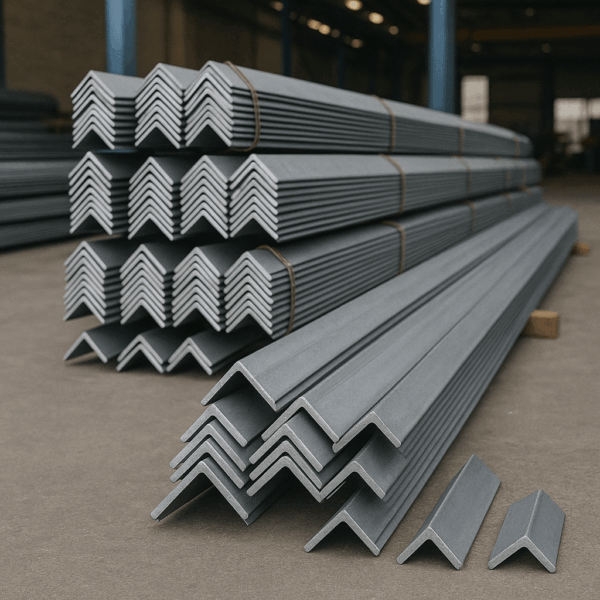
The production process of Angle Structural Steel begins with selecting premium steel billets, followed by controlled heating, hot rolling, straightening, cutting, surface inspection, and quality testing. Advanced manufacturing technology ensures precise dimensions, excellent weldability, high load-bearing capacity, and resistance against mechanical stress. Available commercial types include equal angle steel, unequal angle steel, galvanized angle steel, and customized angle profiles, each designed for specific applications. Equal angles are commonly used in building frames, towers, and general structures, while unequal angles are preferred for projects requiring optimized weight distribution and higher structural efficiency.
Angle Structural Steel is available in various sizes, thicknesses, lengths, and steel grades to meet customer requirements in global markets. It is widely applied in steel structures, bridges, transmission towers, machinery manufacturing, shipbuilding, railway projects, warehouses, industrial plants, and architectural frameworks. The product offers major advantages including high strength-to-weight ratio, long service life, easy fabrication, excellent load resistance, and cost efficiency. For export markets, Angle Structural Steel is supplied in secure bundles with protective packaging suitable for sea transportation, ensuring product safety and maintaining quality from the manufacturing facility to the final destination.
Anhydrous Ammonia
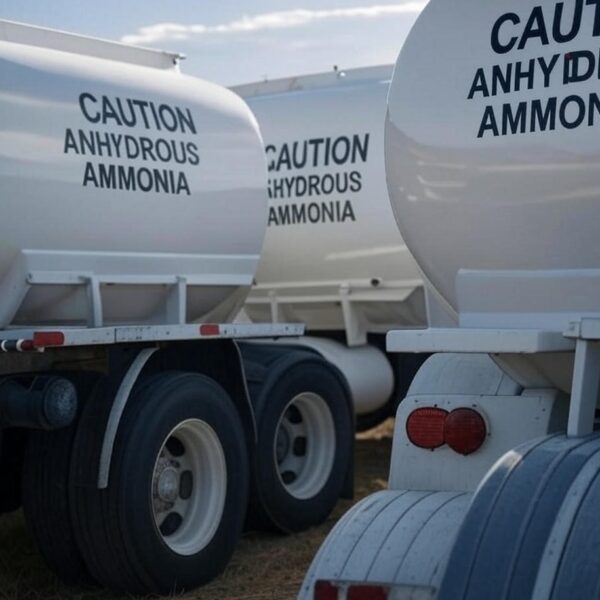
Anhydrous Ammonia is extensively used in fertilizer production, particularly for manufacturing urea, ammonium nitrate, ammonium sulfate, and other nitrogen-based fertilizers. It is also used as a refrigerant in industrial refrigeration systems, especially where efficient heat transfer and high refrigeration capacity are required. Other applications include chemical manufacturing, nitric acid production, pharmaceuticals, water treatment, mining, and various industrial synthesis processes. Its high nitrogen concentration makes it an important feedstock for agricultural and chemical industries, while its alkaline and reactive properties support a wide range of industrial applications.
For international B2B procurement, important considerations include ammonia purity, concentration, packaging method, pressure rating, loading quantity, transportation regulations, and documentation. High-quality Anhydrous Ammonia should be supplied according to agreed technical specifications and applicable safety requirements. Buyers should evaluate supplier reliability, product consistency, export capability, packaging standards, and availability before placing commercial orders. Anhydrous Ammonia is classified as a hazardous chemical and requires appropriate handling, storage, transportation, and safety procedures throughout the supply chain.
Anodized Effect Powder Coating
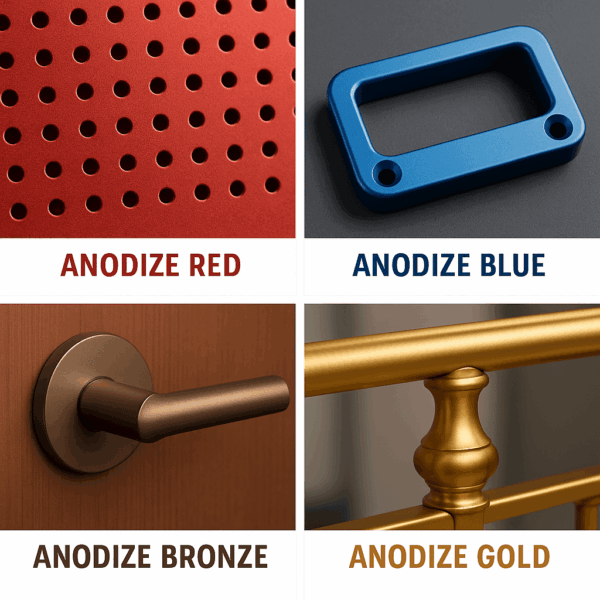
Anodized Effect Powder Coating is Designed for high-end visual performance, it offers superior UV stability, excellent scratch resistance, and long-term outdoor durability even in aggressive climates that is formulated with high-purity polyester resins, TGIC-free hardeners, metallic pigments, special pearl and mica flakes, flow modifiers, UV absorbers, and anti-yellowing additives. Anodized Effect Powder Coating achieves a smooth mirror-like aesthetic without the need for electrolytic anodizing. It eliminates color variation across batches, enables uniform coating on complex geometries, and supports eco-friendly production with zero VOC emissions. Available in bronze, champagne, stainless-steel look, titanium gold, copper, and custom metallic shades, it provides consistent anodized transparency along with mechanical reinforcement.

Anti Block Masterbatch
The blocking problem can occur during extrusion, conversion processes, or storage. Blocking can reduce packing efficiencies on automated and manual packing lines. This phenomenon can cause bags to be more difficult to open and makes stacks of thermoformed trays harder to separate. Antiblock Masterbatch is an important additive that is added in the manufacturing process of plastic products. The masterbatch can be used in many different industries to prevent plastic sheets from sticking together, instantly upgrading the product’s quality and overall efficiency. Antiblock Masterbatch solves the formation of unwanted air bubbles which can cause small localized flaws that grow over time and it prevents the blocking effect in plastic sheets. This occurs as a result of the adhesion developed between two smooth layers of film placed in contact with each other.
Certain polymers including polyolefins and polyesters have an inherent tendency to block. The blocking problem occurs when adjacent layers of polyolefin film stick together. This happens due to the composition and rolling tension of the plastic film. Masterbatches can be used across countless different industries. Every single industry is packaging its products. Be it cosmetics, home supplies, consumables, foods & drinks, and more Therefore, using Antiblock Masterbatch in the manufacturing process is absolutely crucial to assure the packaging ,or the product itself in the case of plastic sheets or bags ,is of the highest quality .

Anti Dandruff Shampoo
On the other hand, anti-dandruff or medicated shampoos are specifically formulated to combat this fungal growth and tackle dandruff more effectively. Anti-dandruff agents are intended to reduce the formation of dandruff flakes. The cause for dandruff is not fully understood but the treatment involves the use of a number of “actives” that function either as antimicrobial agents or as anti-mitotic agents. there are five ingredients that are mostly used and are approved to use in anti-dandruff shampoos. The two most popular ingredients are zinc pyrithione and selinium sulfide.

Anti Hair Fall Shampoo
A good hair fall shampoo is enriched with vitamins such as Pro- Vitamin 5 and proteins, A rich in vitamin shampoo can turn around your hair health and reduce hair fall at the same time. Sunflower Sprouts and Tara Extract repair even chemically treated hair and protects the hair and scalp against heat, pollution particles and UV stress. Other active ingredients such as Glycerine, Plant-Based Tensides Panthenol, Purslane Extract, Cationic Hyaluronic Acid, Tara Extract, Camellia Extract, European Larch Extract can be used based on formulation
Anti Rodent Masterbatch
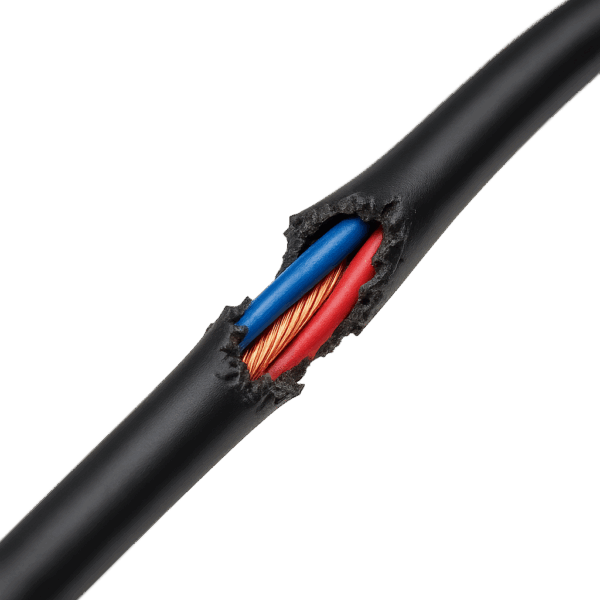
Incorporating high-performance anti-rodent masterbatches into plastic products is crucial for manufacturers looking to enhance product durability and safeguard materials from rodent damage. These masterbatches provide an effective, non-toxic barrier against rodents without compromising the overall quality or functionality of the product.
These masterbatches protect plastic cables, pipes, and films from rodent gnawing, minimizing damage in both utility and industrial applications. The rodent-repelling agents are uniformly distributed within the plastic matrix, providing sustained protection against rodents in high-risk environments. Anti rodent masterbatches are Particularly beneficial in infrastructure and agricultural sectors, the masterbatches help extend the life of products by preventing costly damage caused by rodent activity.
They are Suitable for a wide range of applications including underground cables, pipes, agricultural films, and packaging, ensuring products remain rodent-free and maintain their functional integrity. By reducing the need for frequent repairs or replacements due to surface damage, the product that is produced by anti – rodent masterbatch can cut costs while enhancing the longevity and appearance of their product.