

 Arabic
shop
PET Granules (Bottle Grade)
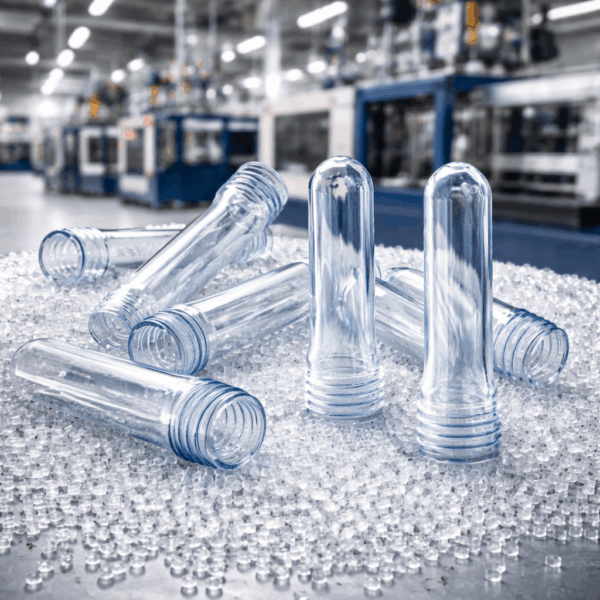
PET Bottle Grade granules are widely used by packaging manufacturers seeking performance, efficiency, and regulatory compliance. Commercial PET Bottle Grade Granules are available in different intrinsic viscosity (IV) ranges to suit various bottle sizes and production methods, including water bottles, carbonated soft drink bottles, edible oil containers, and food-grade packaging. These granules are commonly processed through injection stretch blow molding (ISBM) and extrusion blow molding systems. Key components include high-purity PET polymer with controlled acetaldehyde levels to ensure neutral taste and odor. Technical specifications typically cover intrinsic viscosity, moisture content, melting point, crystallinity, color (low b* value), and thermal stability. PET Bottle Grade offers excellent transparency, high impact resistance, good gas barrier properties for CO₂ retention, and strong chemical resistance, making it ideal for both still and carbonated beverage applications.
PET Granules (Bottle Grade) are supplied in standard commercial packages such as 25 kg bags, jumbo bags, and bulk silo deliveries for large-scale production facilities. Packaging is designed to protect the resin from moisture contamination and ensure safe handling during transportation and storage. Produced in compliance with international food-contact regulations, PET Bottle Grade granules deliver consistent batch quality and long shelf life. With stable supply, efficient processing, and proven performance, PET Granules (Bottle Grade) remain the preferred choice for manufacturers of high-quality beverage and food packaging solutions.
PET Preform
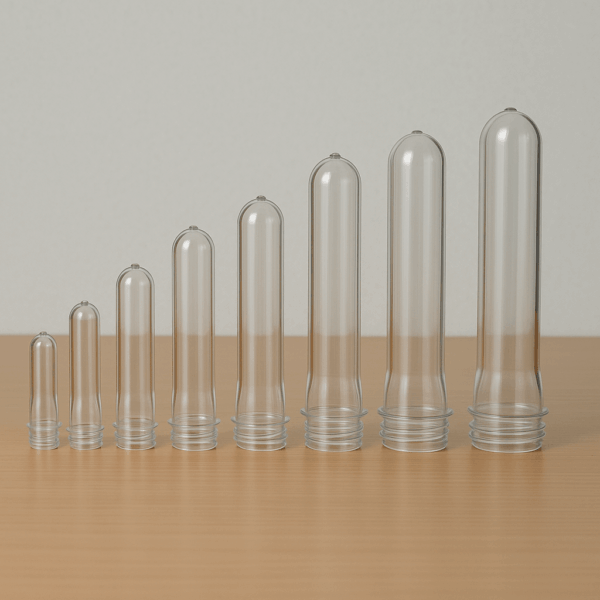
PET Preforms are supplied in various neck finishes, weights, colors, and designs according to customer requirements and bottle production specifications. Common types include standard PET Preforms for mineral water bottles, carbonated soft drink (CSD) bottles, edible oil containers, juice packaging, dairy bottles, pharmaceutical containers, cosmetic packaging, and household chemical bottles. Lightweight PET Preforms are preferred for reducing material consumption and transportation costs, while heavy-weight preforms are selected for high-pressure applications such as carbonated beverages. PET Preforms can also be produced with different neck sizes including 28 mm, 30 mm, 38 mm, and customized neck standards to match different bottle designs and filling systems.
PET Preforms offer several advantages including high impact resistance, excellent transparency, lightweight structure, recyclability, chemical stability, and compatibility with high-speed bottle manufacturing equipment. They are available in various packaging options including PE bags, carton boxes, and palletized bulk packaging according to international shipping requirements. With their reliable quality, precise dimensions, and wide range of applications, PET Preforms are considered one of the most important packaging solutions for global industries.

Petite Beurre Biscuits
Petite Beurre Biscuits are available in different commercial grades, formulations, and packaging options to meet the requirements of retailers, distributors, food service companies, and private-label brands. Standard Petite Beurre Biscuits are widely used as everyday tea biscuits and family snacks, while premium butter formulations are designed for luxury biscuit markets and hospitality applications. Mini Petite Beurre Biscuits are suitable for single-serving packs, school snacks, and portion-controlled consumption. Chocolate-coated, milk-coated, whole wheat, sugar-reduced, and enriched versions are also available for different consumer preferences. Common export packing options include individual flow packs, multipacks, carton boxes, family packs, and bulk food-service cartons with various net weights such as 25 g, 50 g, 100 g, 200 g, 400 g, 500 g, and 1 kg according to customer requirements.
Petite Beurre Biscuits are widely used in supermarkets, hypermarkets, hotels, cafes, restaurants, catering businesses, and confectionery distribution networks. Their advantages include excellent taste consistency, attractive appearance, convenient packaging, long storage stability, easy transportation, and strong consumer acceptance worldwide. These biscuits can be consumed directly as a snack, served with tea and coffee, used in dessert preparation, or incorporated into bakery recipes such as cheesecake bases, biscuit cakes, and layered desserts. High-quality Petite Beurre Biscuits manufactured under strict food safety standards provide exporters with a reliable product suitable for international markets in Europe, Asia, Africa,
Petroleum Jelly
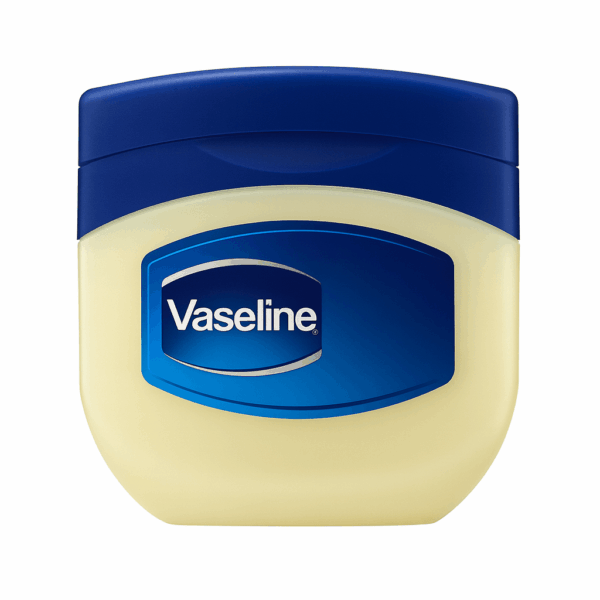
Pharmaceutical and cosmetic grade Petroleum Jelly is mainly used as a skin protectant, moisturizer, healing ointment base, lip balm ingredient, and formulation component in creams, lotions, and personal care products. Industrial grade Petroleum Jelly is used as a protective coating, lubricant, corrosion inhibitor, cable compound, rubber processing aid, and moisture barrier in various industries. Due to its excellent resistance to oxidation, low chemical reactivity, smooth texture, and high stability, Petroleum Jelly provides reliable performance in demanding environments. The product is available in different consistencies and purity levels according to customer requirements, including white and yellow grades, with pharmaceutical and cosmetic grades meeting strict quality standards for safety and purity.
The main advantages of high-quality Petroleum Jelly include superior moisturizing ability, excellent protective performance, chemical stability, non-toxic characteristics, and compatibility with a wide range of formulations. It is commonly exported for use in cosmetic manufacturing, pharmaceutical production, personal care industries, industrial lubrication, and technical applications. Manufacturers and buyers can select the appropriate grade based on purity, color, consistency, melting point, and application requirements to achieve optimum performance and product quality.
Pharmaceutical Grade Polyethylene Glycol
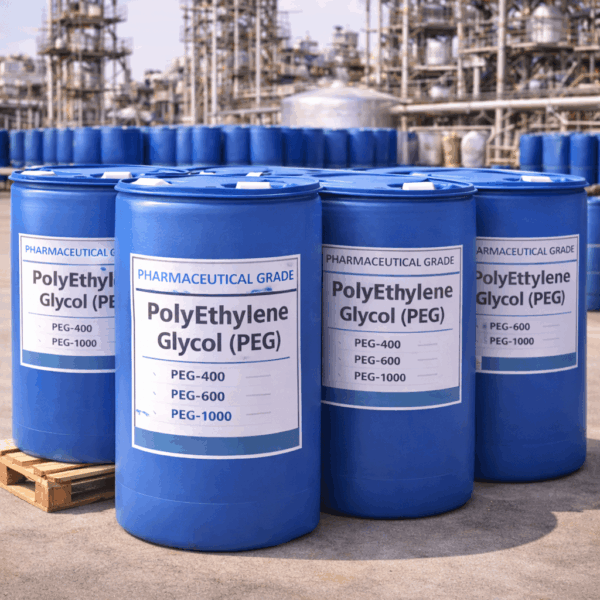
Pharmaceutical grade PEG is commercially available in a wide range of controlled molecular weights, including PEG-200, PEG-300, PEG-400, PEG-600, PEG-1000, PEG-1500, PEG-2000, PEG-4000, PEG-6000, and PEG-8000. Lower molecular weight grades are clear, colorless liquids, while higher molecular weight PEGs are supplied as semi-solids, flakes, or free-flowing powders to suit different dosage forms. In pharmaceutical manufacturing, low molecular weight PEGs such as PEG-200 to PEG-400 are commonly used as solvents, plasticizers, humectants, and carriers in oral liquids, syrups, injectables, and topical formulations. Medium molecular weight PEGs including PEG-600 to PEG-2000 function as binders, dispersants, ointment bases, and emulsifying agents, improving formulation stability and drug uniformity.
High molecular weight PEGs such as PEG-4000 to PEG-8000 are widely used as tablet binders, capsule excipients, suppository bases, film-formers, and controlled-release matrices. Molecular weights typically range from 200 to over 8,000 g/mol, directly influencing viscosity, melting point, solubility, and drug release behavior.
Key properties of pharmaceutical grade polyethylene glycol include exceptional purity, chemical and thermal stability, low toxicity, neutral taste and odor, excellent water solubility, and high compatibility with active pharmaceutical ingredients. Supplied in pharma-approved packaging with full documentation, pharmaceutical grade PEG provides manufacturers with a reliable, compliant, and cost-effective excipient for producing high-quality, safe, and globally marketable medicines.

Pharmaceutical Grade Talc Powder
Pharmaceutical grade talc is produced in specialized grades distinct from conventional industrial talc, including pharma-grade talc, USP / BP / EP compliant talc, low-heavy-metal talc, sterilizable talc, and ultra-micronized talc, each designed to meet precise regulatory and formulation requirements. Typical powder particle sizes range from 5 µm to 30 µm, with fine grades below 10 µm available for uniform blending and smooth tablet surfaces.
Due to its natural lamellar structure and chemical inertness, pharmaceutical talc functions as an effective glidant, lubricant, and anti-adherent in tablet and capsule manufacturing. It is commonly used in tablets, capsules, oral solid dosage forms, topical powders, dermatological products, medical gloves, and certain medical device applications where purity and consistency are critical.
Key properties of pharmaceutical grade talc include exceptional purity, neutral taste and odor, high whiteness, low moisture absorption, excellent flow enhancement, and thermal and chemical stability. These properties help improve powder flow, prevent sticking during compression, enhance dosage uniformity, and ensure long-term product stability. Supplied in pharmaceutical-approved packaging with full quality documentation, pharmaceutical grade talc powder provides manufacturers with a reliable, compliant, and cost-effective excipient solution for producing high-quality medicines with consistent performance and regulatory confidence.
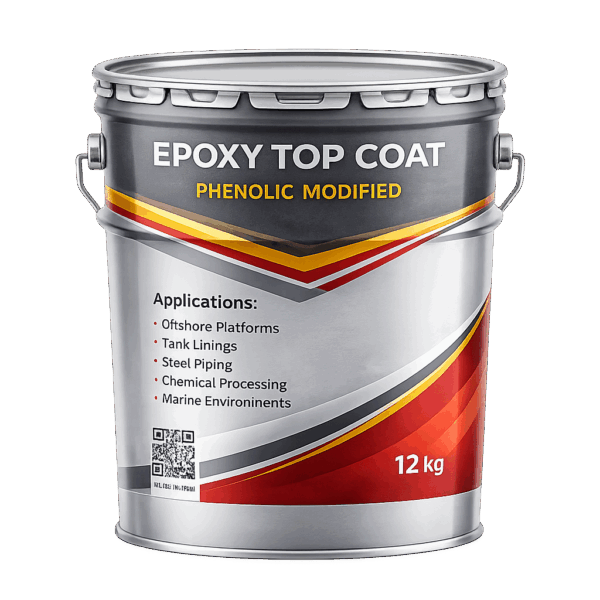
Phenolic Modified Epoxy Top Coat
Phenolic Modified Epoxy Top Coats are available in standard, high-build, and chemical-resistant grades, depending on service conditions and project specifications. Typical applications include storage tanks, chemical processing equipment, refinery units, pipelines, offshore structures, marine environments, industrial steel, and concrete surfaces exposed to aggressive chemicals. Key specifications include excellent adhesion to epoxy primers and interlayers, superior resistance to acids, solvents, fuels, and hot water, and good performance under immersion conditions. These coatings can be applied by airless spray, roller, or brush and are compatible with heavy-duty epoxy coating systems.
Phenolic Modified Epoxy Top Coat paints are supplied as two-component systems (base + hardener) in standard industrial packaging such as 12 kg and 20–25 kg metal pails, as well as 200 kg drums and bulk containers for large-scale industrial projects. Export packaging is palletized, shrink-wrapped, and labeled in compliance with international shipping standards. Phenolic Modified Epoxy Top Coat paints are a reliable solution for industries requiring long-term protection against chemicals, heat, and corrosion.
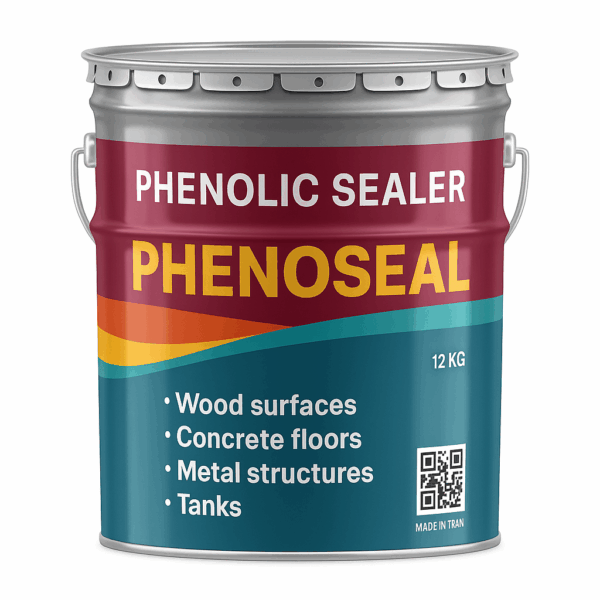
Phenolic Sealer
Phenolic Sealers are available in phenolic-modified epoxy sealers, pure phenolic resin sealers, and high-temperature resistant grades, depending on application demands. Typical applications include steel structures, storage tanks, chemical processing equipment, industrial floors, marine decks, wood panels, and metal substrates exposed to solvents, fuels, and moisture. The main ingredients generally include phenolic resins, epoxy or synthetic binders, solvents, curing agents, and performance-enhancing additives. Key advantages of phenolic sealers include excellent chemical resistance, strong adhesion to metal and concrete, good thermal stability, low permeability, and compatibility with epoxy, polyurethane, and phenolic topcoats.
In terms of properties, phenolic sealers offer high surface sealing efficiency, excellent resistance to acids, oils, fuels, and water, good abrasion resistance, and long-term performance in harsh environments. They help extend coating system life by improving substrate protection and intercoat adhesion. Commercially, phenolic sealers are supplied in various industrial packaging formats, including 1–5 kg cans, 10–12 kg metal buckets, 20–25 kg pails, and 200 kg drums for bulk industrial users.

Phosphate Lump
Phosphate Lump is commercially available in various grades based on phosphorus content, chemical composition, and particle size. Common grades include Low Grade Phosphate Rock (18–24% P₂O₅) mainly used for direct application in acidic soils and soil amendment; Medium Grade Phosphate Rock (25–30% P₂O₅) used for fertilizer production and phosphoric acid manufacturing; and High Grade Phosphate Rock (30–38% P₂O₅) preferred for high-efficiency fertilizer production, industrial phosphates, and chemical processing. Available sizes generally include 10–30 mm lump, 20–50 mm lump, 30–70 mm lump, and customized sizes depending on industrial requirements. Each grade is selected according to the final application, processing method, and required phosphorus concentration.
Export-quality Phosphate Lump offers several advantages including high phosphorus availability, natural mineral origin, excellent suitability for fertilizer industries, stable chemical performance, easy transportation, and compatibility with different industrial processes. It is widely used in the production of phosphoric acid, monoammonium phosphate (MAP), diammonium phosphate (DAP), triple superphosphate (TSP), single superphosphate (SSP), compound fertilizers, animal feed phosphates, and various phosphorus-based chemicals. With proper quality control, accurate grading, and reliable supply capacity, Phosphate Lump is an important mineral commodity for agricultural and chemical industries worldwide.
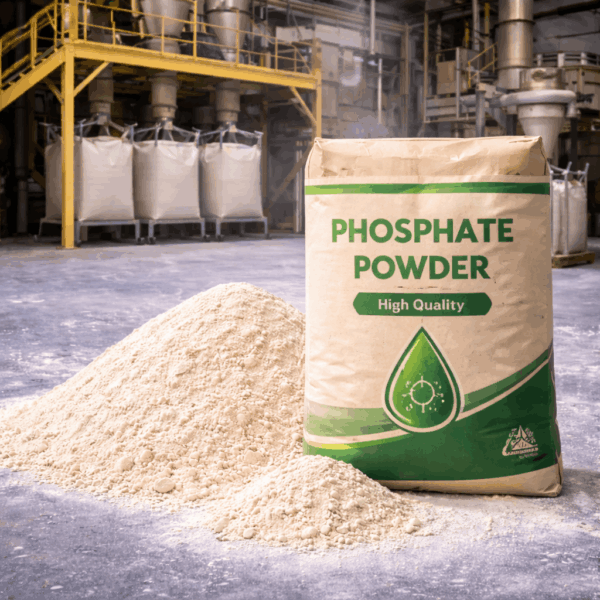
Phosphate Powder
Commercially available grades of Phosphate Powder include Natural Phosphate Powder, Activated Phosphate Powder, Micronized Phosphate Powder, Fertilizer Grade Phosphate Powder, and Industrial Phosphate Powder. Fertilizer Grade products are commonly supplied in particle sizes such as 80 mesh, 100 mesh, 200 mesh, and finer customized specifications, providing gradual phosphorus release in agricultural soils. Micronized Phosphate Powder with smaller particle sizes offers higher surface area and improved reactivity, making it suitable for specialty fertilizers and industrial applications. Industrial Grade Phosphate Powder is used in the production of phosphoric acid, phosphate chemicals, ceramics, glass manufacturing, and other mineral-based industries. The main specifications of Phosphate Powder include phosphorus pentoxide (P₂O₅) content, calcium oxide (CaO), moisture content, particle size distribution, insoluble matter, and impurity levels. Its advantages include natural mineral origin, high phosphorus availability, excellent storage stability, compatibility with fertilizer blends, cost efficiency, and suitability for large-scale international export.
Phosphate Powder is exported worldwide in various packaging options including bulk shipments, jumbo bags, and standard industrial bags according to buyer requirements. The product is carefully processed to provide consistent quality, uniform particle size, and reliable performance in different applications. Due to its essential role in agriculture and industrial manufacturing, Phosphate Powder is considered an important raw material for global fertilizer supply chains and mineral processing industries. Manufacturers can provide customized grades according to customer specifications, including different phosphate concentrations, mesh sizes, and chemical compositions. With its wide range of applications, competitive advantages, and strong demand in international markets, high-quality Phosphate Powder is an ideal choice for agricultural producers, fertilizer manufacturers, chemical companies, and industrial users looking for a dependable phosphate source.
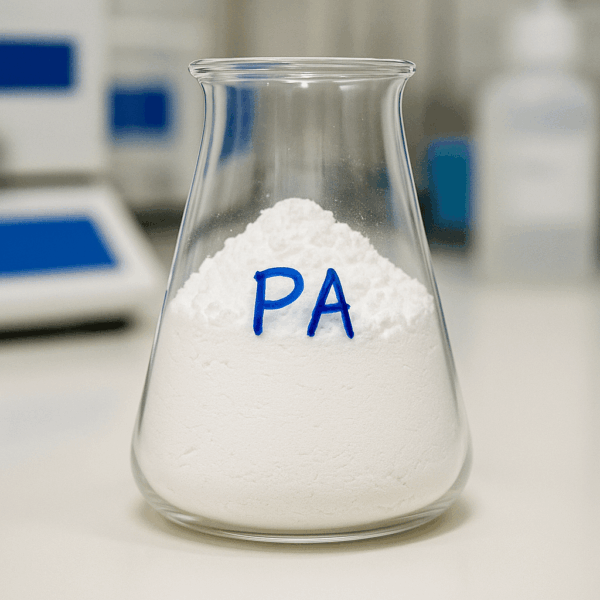
Phthalic Anhydride
Phthalic Anhydride is mainly used in the production of phthalate plasticizers, which improve flexibility, durability, and processability of PVC products such as cables, films, flooring, synthetic leather, and flexible plastic materials. It is also widely applied in manufacturing unsaturated polyester resins (UPR) used for fiberglass-reinforced plastics, automotive parts, construction materials, marine products, and industrial equipment. Other important applications include alkyd resins for paints and coatings, polyester polyols, dyes and pigments, flame retardant chemicals, agricultural chemicals, and specialty additives. Commercially available grades include Industrial Grade Phthalic Anhydride for general chemical production, High Purity Grade for applications requiring controlled impurities, and customized grades for resin, plasticizer, and coating industries.
Phthalic Anhydride offers several advantages including high chemical stability, excellent compatibility with polymer systems, efficient esterification performance, and reliable processing characteristics. The product is normally supplied in solid flake or molten form depending on customer requirements and transportation conditions. Standard commercial packaging includes 25 kg or 500 kg bags, jumbo bags, and bulk shipments in heated tanks for molten Phthalic Anhydride. With consistent quality, controlled specifications, and wide industrial applications, Phthalic Anhydride is an essential chemical raw material for manufacturers seeking reliable performance in plastics, coatings, resins, and specialty chemical production.
Piarom Date
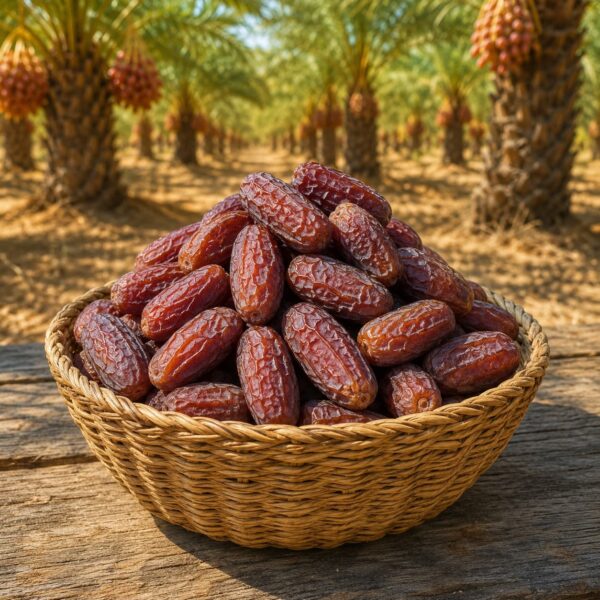
The firm and semi-dry texture of Piarom Date makes it particularly suitable for retail consumption, foodservice, wholesale distribution, and food manufacturing. Whole Piarom dates are commonly packed for direct consumption as a premium dried-fruit product and can be used as a natural snack or served with nuts, dairy products, desserts, and beverages. Pitted Piarom Dates are convenient for food processors and can be used in bakery products, energy bars, cereal products, confectionery, fillings, date paste, date syrup, and other value-added food products. The fruit can also be chopped, sliced, diced, or processed into paste depending on the intended application. Its concentrated natural sweetness allows manufacturers to use Piarom Date as an ingredient in products where natural fruit-based sweetness is preferred. Commercial specifications may include fruit count per kilogram, average fruit weight, moisture content, size classification, color, texture, maturity, seed condition, foreign matter, and defect percentage. Piarom Dates can be supplied in different commercial sizes, with larger fruits generally positioned as premium grades and smaller or less uniform fruits commonly directed toward industrial processing. Packaging options include retail cartons, plastic trays, vacuum packs, food-grade plastic containers, bulk cartons, and customized export packaging. Packaging can be selected according to the destination market, distribution channel, required shelf life, handling conditions, and buyer specifications.
For B2B buyers, Piarom Dates can be offered in bulk quantities for importers, distributors, supermarkets, foodservice companies, wholesalers, confectionery manufacturers, and food-processing industries. Common commercial forms include whole unpitted Piarom Dates, pitted Piarom Dates, premium selected dates, standard-grade dates, and industrial or processing-grade dates. The product can also be supplied in different pack sizes ranging from small retail packs to larger wholesale cartons, depending on the target market and customer requirements. Proper sorting, grading, cleaning, and hygienic packaging are important factors in maintaining consistent commercial quality throughout storage and transportation. Because Piarom Date is a semi-dry variety, it generally offers good handling characteristics compared with softer and higher-moisture dates, although appropriate temperature and humidity conditions should still be maintained during storage. The combination of firm texture, naturally dark color, concentrated sweetness, distinctive elongated shape, and flexible processing options makes Piarom Date a competitive product for both premium retail and industrial food applications. Buyers can select the appropriate grade, size, moisture level, packaging format, and processing form according to their target market and final application.