

 Arabic
shop

Gas Filled Power Cable
Manufactured with precision engineering, Gas Filled Power Cables consist of stranded copper or aluminum conductors, layered insulation, metallic sheaths, and a gas-filled chamber sealed to maintain constant internal pressure. The production process involves hermetic sealing, gas pressurization, and rigorous testing to ensure leak-free and stable operation. Available in single-core and three-core designs, they are produced according to IEC 62067 and IEEE 48 international standards. These cables are commonly used in power plants, large substations, underground transmission tunnels, and metropolitan power distribution systems that demand high voltage endurance—ranging from 132 kV up to 500 kV and beyond.
Gas Filled Power Cables offer several advantages, including superior dielectric strength, long service life, low dielectric loss, and minimal maintenance. Their design prevents moisture ingress and enhances cooling efficiency, resulting in stable power transmission even under heavy load. With outstanding reliability, environmental resistance, and high current-carrying capacity, Gas Filled Power Cables are a trusted solution for the most demanding and high-performance electrical transmission infrastructures worldwide.
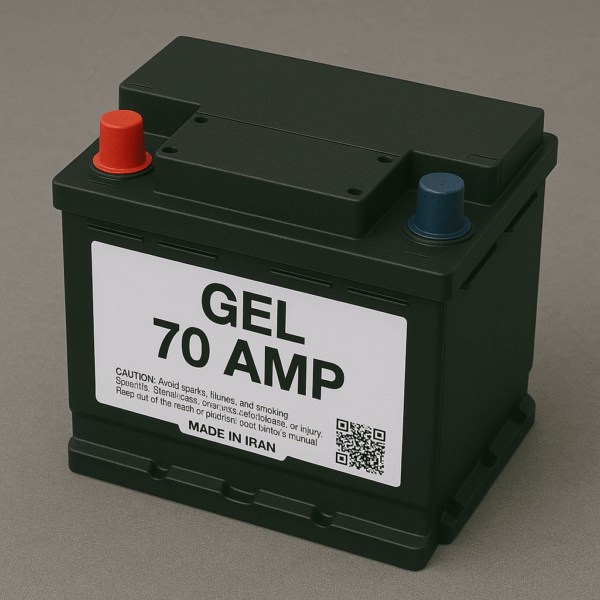
GEL Automotive Batteries
GEL batteries are widely used in off-road vehicles, commercial fleets, utility cars, electric carts, and vehicles with heavy auxiliary loads. GEL batteries are available in several industrial types, including deep-cycle GEL, high-reserve GEL, start-assist GEL, and hybrid GEL-AGM configurations for specialized automotive applications. Standard amperage ranges include 35Ah, 45Ah, 55Ah, 60Ah, 70Ah, 90Ah, 100Ah, 120Ah, 150Ah, and up to 200Ah, depending on the vehicle’s power demands. GEL technology provides consistent voltage, excellent discharge recovery, and stable performance for vehicles equipped with electronic accessories such as refrigeration units, lighting systems, navigation equipment, audio systems, and camping modules. These batteries are particularly suitable for long-idle engines, off-grid automotive applications, and environments with high heat or freezing temperatures. Their sealed, spill-proof construction enhances safety while preventing evaporation and internal corrosion, ensuring reliable operation over extended cycles.
Reliability and safety of GEL batteries make them a preferred solution for B2B buyers seeking long-lasting energy storage. Each battery is supplied with terminal protection caps, batch coding, QR traceability labels, and compliance documentation such as CE and ISO certifications. We also can offer private-label manufacturing, customized amperage selections, and region-specific battery configurations for distributors and automotive brands. Additional services include performance testing, charge-level inspection, and warranty programs for bulk B2B orders. With competitive pricing, consistent manufacturing quality, and proven deep-cycle performance, GEL automotive batteries remain a trusted solution for global B2B buyers in the automotive and mobility sectors.

General Purpose Automotive Paint
This type of paint is also called Solid color automotive paints are the most basic and common type of car paint, characterized by a single, uniform color without any metallic or pearlescent effects. These paints consist of a pigment (the color) and a clear coat (a protective layer) applied on top. Solid colors are known for their ease of application and repair, making them a popular choice for various vehicles, including cars, trucks, and motorcycles. Solid colors consist only of pigments and don’t have any visual enhancers added to the paint. They are relatively inexpensive to apply and repaint in case of damage. This is the easiest type of paint to apply, and the most common type of paint for car repair paint , heavy transportation vehicles, construction equipment and aircraft. It is also widely used on cars, trucks, and motorcycles.
It is often offered as a standard option on most vehicles, excluding luxury cars, making it the most economical choice among paint options. Paint can either be applied in single or multiple stages, depending on the nature of application. Single-stage paints dry to a glossy finish by themselves and don’t need a protective top coat. Multi-stage paints, on the other hand, require a topcoat that provides gloss and protection.
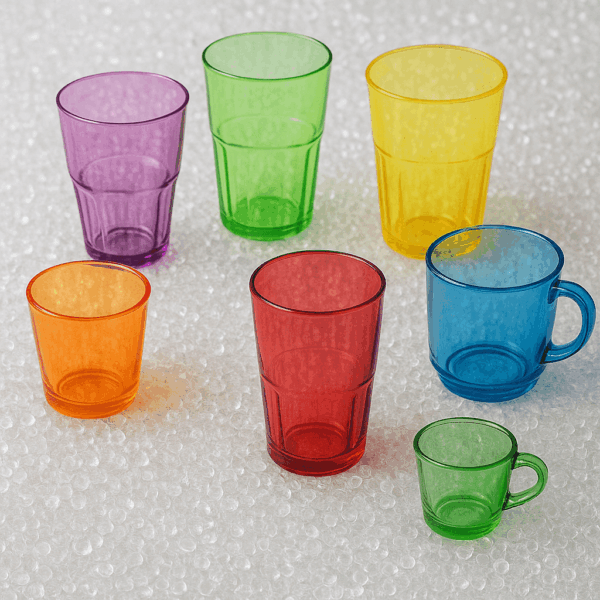
General Purpose Polystyrene (GPPS)
General Purpose Polystyrene grades include injection molding grades, extrusion grades, and high-clarity grades, each designed for specific industrial requirements. Injection molding GPPS grades are commonly used for rigid transparent products such as disposable containers, laboratory equipment, household items, and packaging components, while extrusion grades are suitable for sheets, films, and thermoformed products. High transparency GPPS grades are preferred for applications requiring excellent optical appearance, including display products, food packaging, and consumer goods. GPPS offers outstanding surface gloss, low moisture absorption, good electrical resistance, lightweight structure, and excellent processability, making it a cost-effective choice for manufacturers.
The product is widely used in packaging, electronics, construction, medical, household, and industrial sectors. Its advantages include high transparency, rigidity, precise molding performance, chemical resistance, and stable quality during processing. GPPS granules are available in different melt flow rates (MFR), viscosity levels, and specifications to meet various production technologies and end-use applications, providing manufacturers with a reliable polymer solution for high-quality finished products.
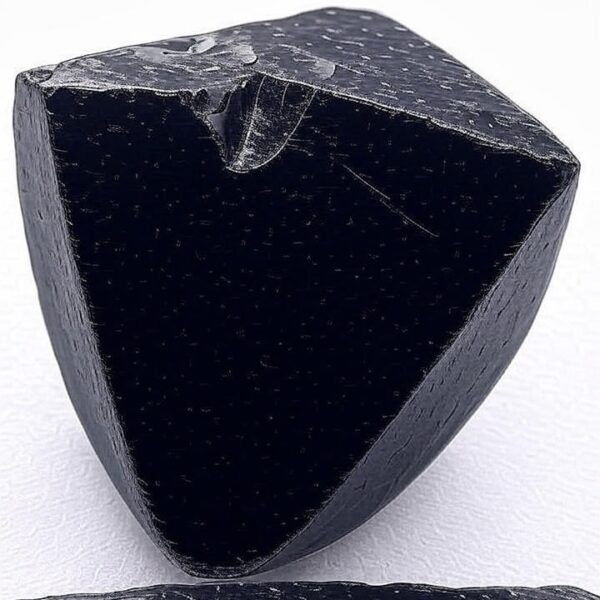
Gilsonite ( Natural Asphalt )
Within the realm of asphalt production, Gilsonite reigns supreme as a transformative additive, elevating pavement performance and longevity. Its inherent properties enhance asphalt durability, flexibility, and resistance to environmental stressors, culminating in the creation of resilient road surfaces tailored for highways, roads, airports, and parking lots. In foundry and casting applications, Gilsonite assumes a pivotal role as a binder and additive, imparting strength, thermal stability, and dimensional accuracy to castings . Gilsonite serves as a versatile ingredient, imbuing formulations with pigment dispersancy, rheological modification, and film-forming properties. Its natural black hue, high melting point, and UV resistance render it ideal for outdoor applications, including road markings, protective coatings, and waterproofing membranes.Within the ink and printing industry, Gilsonite emerges as a linchpin additive, augmenting color intensity, adhesion, and print quality.
In adhesives and sealants Gilsonite acts as a tackifier, binder, and viscosity modifier. Its innate adhesive properties, coupled with high softening points and chemical resistance, make it an indispensable component in hot melt adhesives, pressure-sensitive adhesives, and construction sealants.
Types of Natural Asphalt
– Soft Gilsonite with lower melting point is used in the production of coatings and adhesives.
– Hard Gilsonite has a higher melting point and is used in asphalt paving, foundry, and ink manufacturing.
– Technical Grade Gilsonite: This type of Gilsonite is often used in the production of various industrial products, including paints, coatings, and drilling mud.
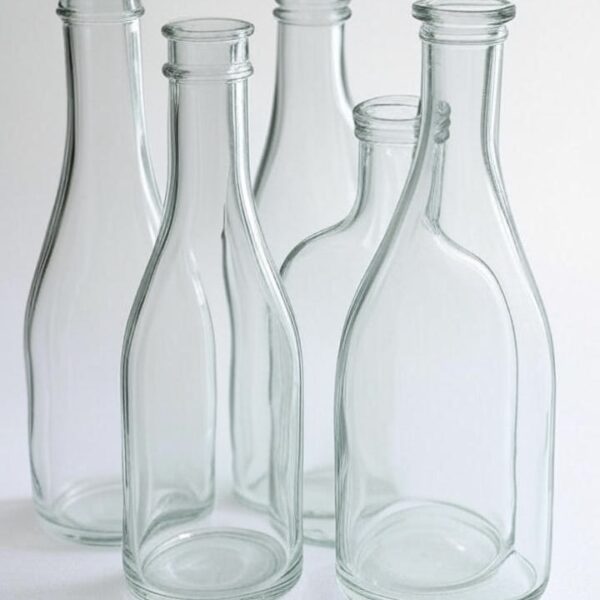
Glass Bottle
Different Types of Glass Bottles based on color available are :
Flint Glass , frosted , cobalt , green , amber , Black , purple, blue , Opaque or Milk , Aquamarine ,
Types of bottles based on materials :
Lead Glass : Bottles made from lead glass are softer so they are easier to cut.. They are usually used for making decorative figurines and glasses.
Soda Lime Glass : Soda, calcium, and silica make up soda lime glass bottles that can resist to thermal shock glass.
Borosilicate Glass : it can resist breakage caused by changes in temperature. Thus, it can be used in lab equipment, glassware, and cookware.
Fused Quartz : This is also referred to as vitreous-silica glass or fused-silica glass Fused quartz bottles are highly transparent and are shock and weather resistant.
Aluminosilicate : This type of glass bottles are made from aluminum oxide. Aluminosilicate glass containers vary in composition but normally have between 20 to 40 percent aluminum oxide. they are resistant to heat and possess better chemical resistance.
Common shapes of glass bottles include:
Round , Boston round , Oval , Square , flask , oblong , bullet , cylinder and square flask Glass Bottles and sizes from 10ml to several liters
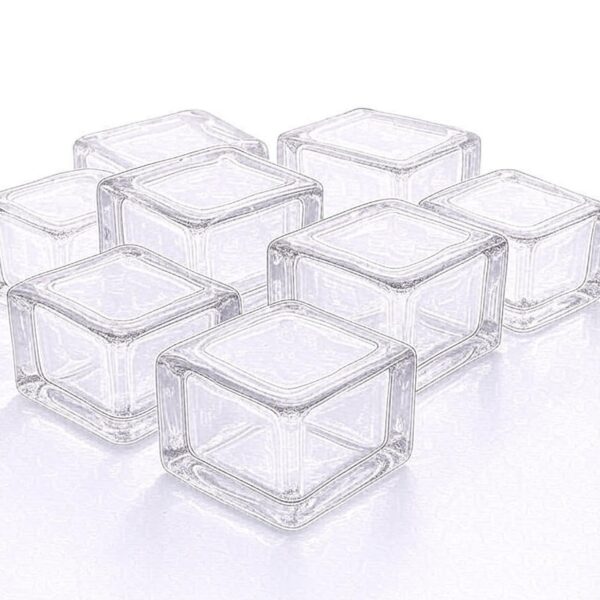
Glass Brick
Commercially available glass brick types include clear, frosted, satin, patterned, wave, ribbed, bubble, and colored designs, as well as decorative and fire-rated variants for specific architectural requirements. Standard square and rectangular formats are widely available, while different thicknesses, textures, colors, and surface finishes can be selected according to project requirements. Glass bricks are commonly used for non-load-bearing walls, interior partitions, room dividers, shower enclosures, bathroom walls, façades, basement openings, staircases, and decorative installations. Their moisture resistance and easy-to-clean glass surface make them particularly suitable for humid environments, while their solid appearance provides an attractive alternative to conventional masonry or opaque partition materials.
For B2B construction and architectural projects, glass bricks are supplied in individual units, cartons, pallets, or project-specific packaging depending on quantity and destination. Proper packaging normally uses protective cartons, separators, and palletized arrangements to minimize breakage during handling and transportation. Product selection should consider dimensions, thickness, weight, transparency, light transmission, surface pattern, color, thermal properties, and applicable safety requirements. Glass bricks can be installed using compatible mortar, spacers, reinforcement systems, or specialized framing methods depending on the application and product design. Their combination of durability, light diffusion, privacy, moisture resistance, and architectural versatility makes glass brick a practical material for modern construction, renovation, and decorative building projects.
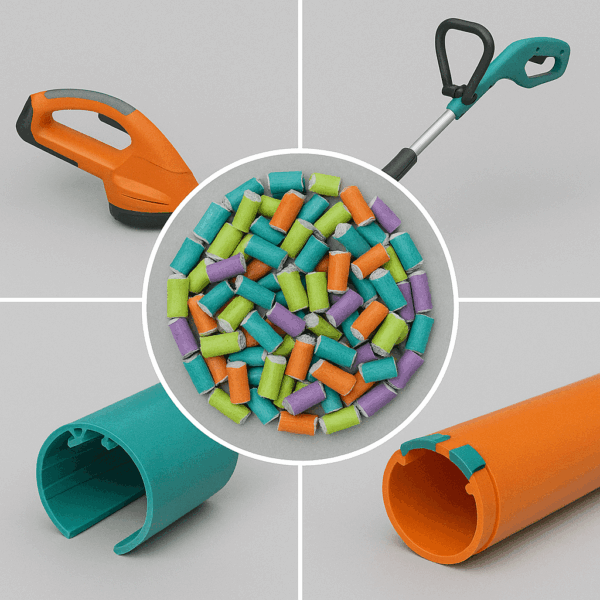
Glass Fiber Reinforced PE Compound
The reinforced PE structure provides outstanding resistance to deformation, creep, and thermal expansion, making it ideal for applications requiring structural integrity under load or elevated temperatures. With improved heat deflection temperature (HDT), reduced shrinkage, and minimized warpage, these compounds support the production of complex, high precision engineered parts. Their chemical resistance to fuels, oils, solvents, acids, and alkalis also ensures long operating life in aggressive industrial and outdoor environments. Glass fiber reinforced PE compounds are widely used in automotive components, electrical housing, industrial equipment covers, pump parts, appliance components, heavy-duty crates, infrastructure accessories, and pressure-resistant technical profiles.
Available types include 10%–40% glass fiber reinforced PE, high-impact grades, UV-stabilized outdoor grades, heat-stabilized grades, antioxidant-enhanced compounds, electrical-insulating grades, food-contact safe reinforced PE, anti-static formulations, and color-integrated reinforced compounds. Each formulation is designed for specific performance requirements such as maximum rigidity, improved thermal endurance, or optimized surface finish. These compounds are produced using controlled compounding techniques ensuring uniform fiber dispersion, consistent pellet quality, and stable melt flow properties. Their enhanced processability leads to shorter cycle times, improved mold filling, and strong fiber orientation in critical areas.
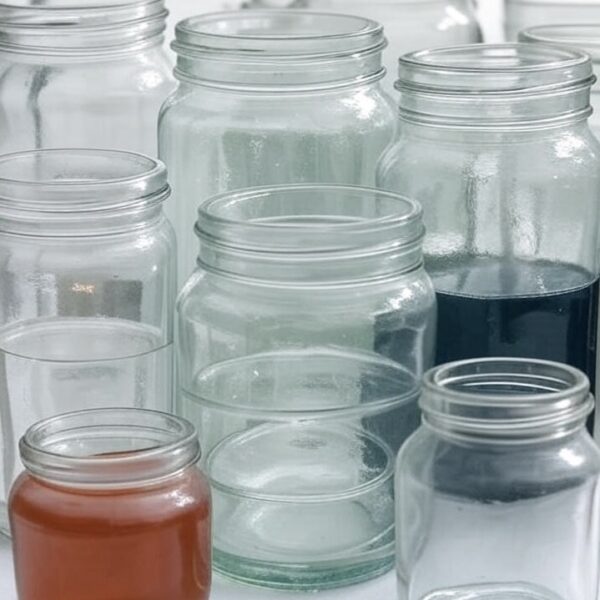
Glass Jar
Commercial glass jars are available in a wide range of types, sizes, shapes, and designs to meet different packaging requirements. Common types include clear glass jars, amber glass jars, green glass jars, wide-mouth jars, narrow-mouth jars, round glass jars, square glass jars, and customized glass containers. They are supplied with different closure systems such as metal twist-off caps, screw caps, plastic lids, cork closures, and tamper-evident sealing solutions. Glass jars can also be customized with printing, labeling, coating, embossing, and surface decoration to improve brand presentation and product recognition.
Glass jars are widely used for packaging products such as honey, jam, sauces, pickles, spices, dried foods, beverages, cosmetics, creams, pharmaceutical products, and laboratory materials. Their excellent barrier properties protect products against moisture, oxygen, odors, and chemical reactions while maintaining product quality and shelf life. Recyclability, food safety, chemical stability, and attractive appearance make glass jars a preferred choice for manufacturers seeking reliable and environmentally friendly packaging solutions for domestic and international markets.
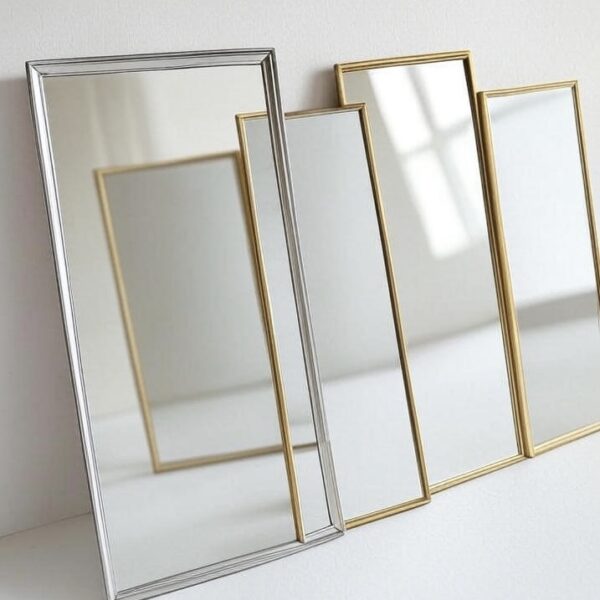
Glass Mirror
The three most common mirror glass types are:
- Plane Mirror : These are flat mirrors that reflect images in their normal proportions, reversed from left to right. This is the most common type of mirror used in bedrooms and bathrooms.
- Concave Mirror : Concave mirrors are spherical mirrors that curve inward like a spoon. They create the illusion of largeness and are typically found in bathrooms and bedrooms.
- Convex Mirror : Convex mirrors are also spherical mirrors. However, unlike concave mirrors, they bulge out and distort the reflected image, making it smaller.
Glass Wool Boards
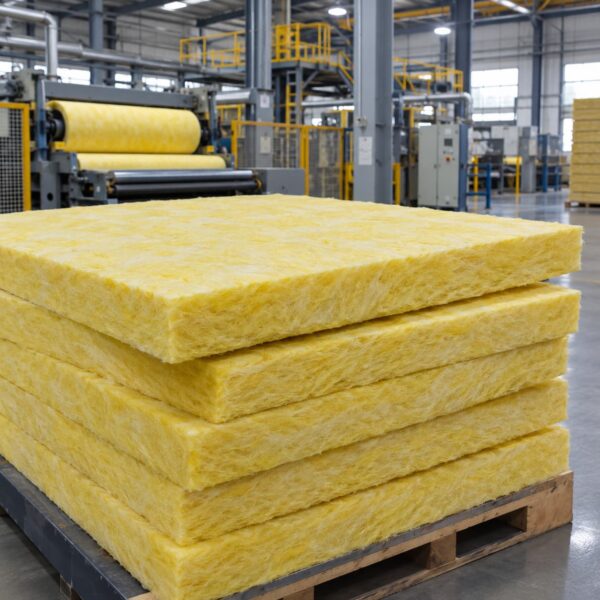
Glass Wool Boards are widely used in building insulation because they can reduce heat transfer through walls, roofs, ceilings, floors and other parts of the building envelope while also contributing to improved indoor acoustic conditions. They are commonly installed in residential buildings, offices, commercial centers, warehouses, factories, schools, hospitals and other structures where thermal and sound insulation are required. Depending on their density and construction, different grades can be selected for internal partition walls, suspended ceilings, external wall systems, roof insulation and floor applications. High-density Glass Wool Boards are particularly suitable where greater mechanical stability and improved acoustic absorption are required, while foil-faced products are commonly used in HVAC ductwork and air-conditioning systems because the facing provides an additional protective and vapor-control surface. Acoustic glass wool boards are also suitable for studios, theaters, cinemas, conference rooms, machinery rooms and other environments where noise reduction and sound absorption are important. In industrial applications, glass wool boards can be used for suitable equipment, technical installations, process areas, tanks and other systems requiring thermal insulation, provided that the selected product is compatible with the operating temperature and application conditions. Commercial specifications normally include thickness, density, thermal conductivity, fire classification, acoustic performance, facing type and board dimensions, allowing buyers and insulation contractors to select a grade according to the technical requirements of each project.
Glass Wool Boards are commercially available in a wide range of thicknesses and densities, with common thicknesses starting from approximately 25 mm and extending to 100 mm or more for applications requiring higher insulation performance. Standard board dimensions may vary according to the manufacturer and application, while customized dimensions can also be produced for specific construction and industrial projects. Product selection should consider the required thermal resistance, acoustic performance, fire behavior, mechanical stability, installation method and environmental conditions rather than relying only on thickness or density. For commercial and export supply, Glass Wool Boards are generally packed in protective polyethylene or plastic wrapping to protect the insulation from moisture, dust and mechanical damage during handling and transportation. Depending on shipment volume, the products may be supplied in compressed bundles, individual packages or palletized configurations, with packaging arrangements optimized for warehouse handling, container loading and long-distance transportation. Proper palletization and protective packaging are particularly important for international B2B shipments because they help maintain product condition while improving loading efficiency. With their combination of thermal insulation, acoustic absorption, lightweight construction, fire performance and flexible specifications, Glass Wool Boards provide a versatile insulation solution for construction, HVAC, commercial and industrial applications and can be supplied in different grades, dimensions, densities and facing options according to project and buyer requirements.
Glass Wool Pipe Sections
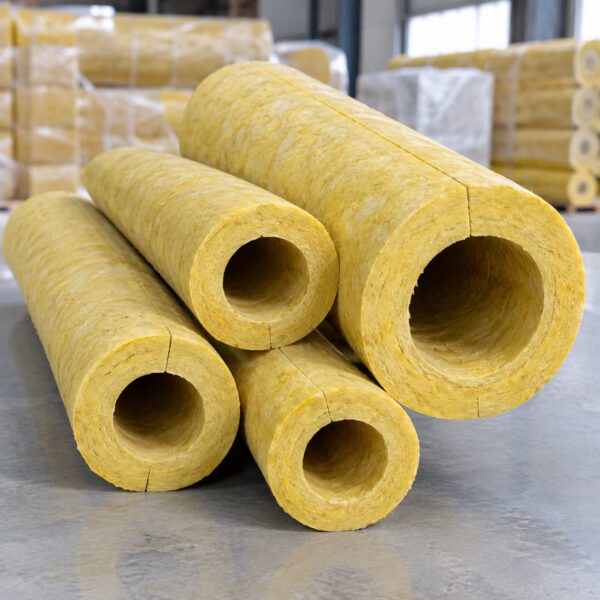
Glass Wool Pipe Sections are available in a wide range of nominal pipe diameters and insulation thicknesses to accommodate different operating temperatures and energy-efficiency requirements. Common product configurations include unfaced pipe sections, foil-faced glass wool pipe insulation, kraft-faced pipe sections, and reinforced aluminum foil-faced versions. Products can also be specified according to thermal conductivity, density, maximum service temperature, moisture resistance, facing type, and fire-performance requirements. The cylindrical geometry provides close contact around pipes and helps reduce heat transfer through the pipe wall. Glass wool pipe insulation is particularly effective for reducing heat loss from hot pipelines and limiting heat gain in chilled-water and air-conditioning systems. It also helps control surface temperatures, reduce the risk of condensation when correctly specified, and improve overall system energy efficiency. In industrial facilities, these pipe sections are used on process lines, hot-water systems, heating pipes, steam-related applications, and utility piping. In commercial buildings, they are widely used for HVAC piping, domestic hot-water systems, chilled-water networks, mechanical rooms, and building-service installations. Glass Wool Pipe Sections can also contribute to improved acoustic performance by reducing the transmission of airborne and structure-borne noise associated with piping systems. Their non-combustible mineral-fiber composition makes them suitable for projects where fire performance and thermal insulation are important design considerations. Product selection should be based on pipe diameter, insulation thickness, operating temperature, thermal conductivity, environmental conditions, and applicable project specifications.
For international B2B supply, Glass Wool Pipe Sections can be produced according to project dimensions, required insulation thickness, facing specifications, density ranges, and packaging requirements. Typical commercial packaging uses protective polyethylene bags, shrink-wrapped bundles, cartons, or palletized units depending on product dimensions and transportation requirements. Packaging is designed to protect the pipe sections from moisture, contamination, deformation, and mechanical damage during storage and shipment. For export and containerized transportation, palletized or securely bundled packaging can improve handling efficiency and help optimize loading space. The products should normally be stored in a dry, covered area and protected from prolonged exposure to water and adverse weather conditions. Glass Wool Pipe Sections are valued in the international insulation market for their low thermal conductivity, lightweight structure, dimensional consistency, fire performance, and broad range of applications. Their pre-formed cylindrical design can also reduce installation time compared with cutting and forming loose insulation materials directly around pipes. Available sizes and technical properties can be customized or selected from standard commercial ranges according to the requirements of the project. Buyers should specify pipe outside diameter, insulation thickness, operating temperature, facing type, required quantity, and packaging preference when requesting a quotation. With the right specification, Glass Wool Pipe Sections provide an efficient and practical solution for thermal insulation of industrial and building-service piping systems. The product is therefore widely considered a reliable choice for energy conservation, temperature control, fire-conscious construction, and professional pipe insulation projects.