

 Arabic
shop

Commercial Refrigerators , Ice Cream Freezers
There are various types of ice cream freezers that can be customized to fit the needs and capabilities of each business:
Glass Top Freezers: Featuring either hinged or straight glass, these are typically used for showcasing commercial ice creams.
Ice cream vitrine: Used for promoting scoop ice cream
Vertical display freezers: Suitable for promoting commercial ice creams, ice cream cakes, and novelties.
Storage freezers: Either horizontal with a lid or vertical with a solid door, used for scoop ice cream storage.
Counter top freezers: Suitable for displaying and promoting commercial ice creams

Commercial Refrigerators , Reach -In
Reach – in refrigerators or visi coolers enabling staff and customers to quickly grab necessary ingredients
With a variety of designs and features tailored for diverse applications , They vary in size, design, and functionalities to suit different business needs.
- Single Door Refrigerators
Ideal for smaller establishments or kitchens with limited space, single door models offer sufficient storage for daily operations while keeping energy consumption minimal.
- Double Door Refrigerator
Double door reach-ins are a top choice in medium-sized commercial kitchens. They provide twice the storage capacity without consuming excessive space. Their design facilitates better organization, allowing perishables on one side and beverages or other items on the opposite.

Commercial Refrigerators , Under Counter Freezers
These refrigerators come in various configurations, including drawers and doors, to accommodate different operational requirements. They are built for durability and are easy to clean. These models are suitable for all foodservice and food retailing operations. They are popular in the retail sector, where they are often used in the supermarket delicatessen departments for pizza preparation, as well as pastry, bakery and delicatessen applications.
Low velocity cooling ensures that stable and even temperatures are maintained throughout the insulated horizontal container to keep food at optimum quality and freshness for longer.
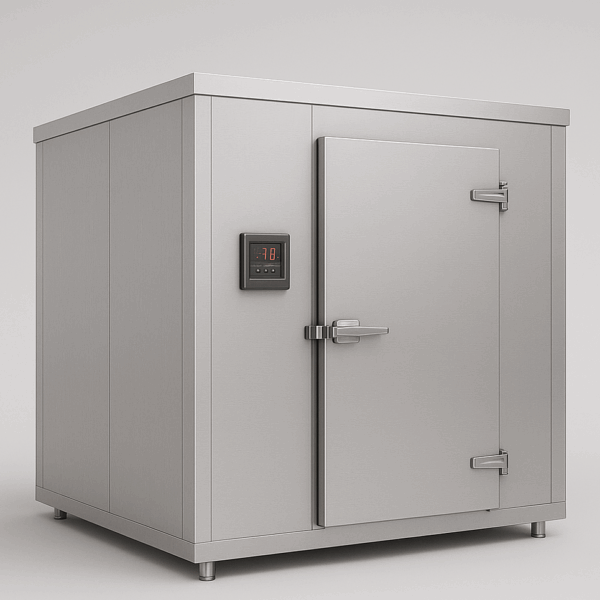
Commercial Refrigerators , Walk -In
To increase efficiency in walking – in Refrigerators and Freezers , very good insulation in walls, ceiling and floor and High quality gaskets and sealing materials for doors are used .
Walk – in Refrigerators and Freezers design and function aim to be as versatile as possible to seamlessly fit in with different types of kitchens, locations, business goals, access requirements, and more.
Pre-fabricated models (quick shipping) and custom-built models are the two main construction types for walk-in units. Pre-fabricated models possess standard features and measurements that can work perfectly for most businesses.
Applications :
- Restaurants and Food Service
- Medical and Pharmaceutical
- Retail and Grocery
- Walk-in Grow-Room Coolers
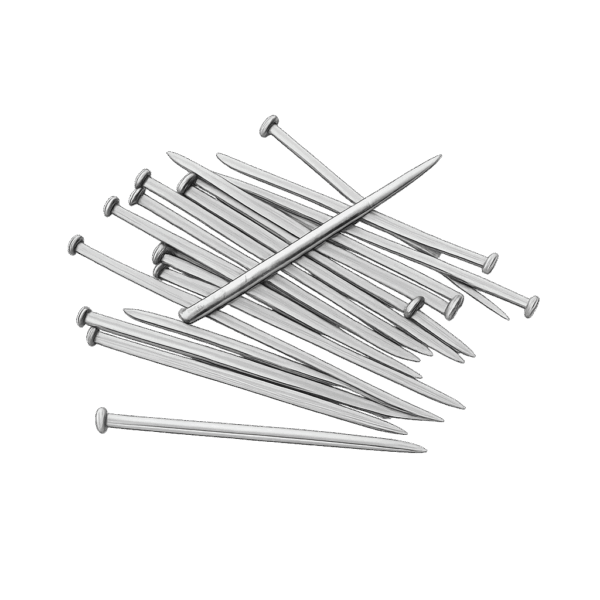
Common Nail
Nail size is determined by both length and gauge. Nail length is indicated by the letter “d,” which is a system of measurement that dates back to old England and originally represented the word “pennies.” Nails come in many lengths ranging from 2d all the way to 50d with corresponding lengths. While nails may vary between manufacturers, the most common types includes sizes from 2d that is 2 inches to 50d that is 5 ½ inches . Nails must be of suitable strength, with a shank that is long enough to provide an appropriate attachment.
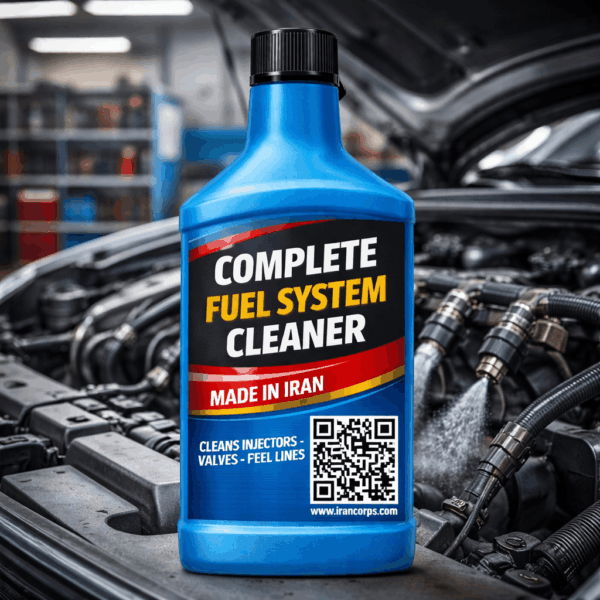
Complete Fuel System Cleaner
Commercial fuel system cleaners are available in gasoline-specific, diesel-specific, and universal multi-fuel formulations, offered as concentrated additives or ready-to-use treatments. Typical components include high-efficiency detergents, deposit control additives, dispersants, corrosion inhibitors, and combustion catalysts that dissolve carbon, varnish, and gum buildup. These products are widely used in passenger cars, light commercial vehicles, heavy-duty trucks, motorcycles, generators, and industrial engines to restore injector spray patterns, improve cold starts, and stabilize fuel quality. Advanced formulations are compatible with modern fuel systems, catalytic converters, turbochargers, and emission control devices, including GDI, MPI, and common-rail diesel systems.
Complete Fuel System Cleaners are supplied in 250 ml, 300 ml, 500 ml, and 1 L bottles for retail markets, as well as 4 L, 20 L jerry cans, 200 L drums, and IBC tanks for workshops and fleet operators. Key technical parameters include treat rate, detergent concentration, material compatibility, and fuel-type compliance. Many products meet international automotive additive standards and are safe for regular preventive maintenance. With proven cleaning performance, flexible packaging options, and broad engine compatibility, complete fuel system cleaner remains an essential solution for maintaining fuel system cleanliness and long-term engine reliability.

Composite Toe Work Shoes
Some are also designed to protect against compression, punctures, and cuts. They are a popular choice for warehouses, manufacturing facilities, and construction sites where foot injuries are a risk. Composite toe work shoes are made from a combination of durable, non-metal materials such as Kevlar, carbon fiber, and plastic. They are light weight, breathable, and great for use in extreme temperatures because they do not heat up or cool down like metal.
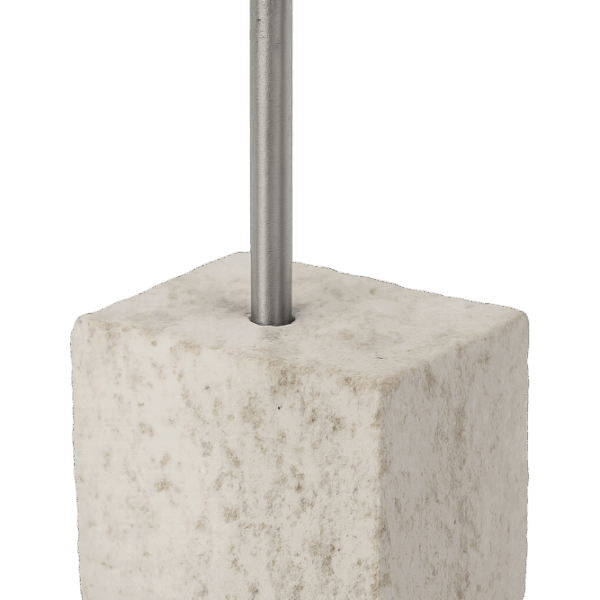
Concrete Nail
Nail size is determined by both length and gauge. Nail length is indicated by the letter “d,” which is a system of measurement that dates back to old England and originally represented the word “pennies.” Nails come in many lengths ranging from 2d all the way to 50d with corresponding lengths. While nails may vary between manufacturers, the most common types includes sizes from 2d that is 2 inches to 50d that is 5 ½ inches . Nails must be of suitable strength, with a shank that is long enough to provide an appropriate attachment.
Masonry nails and concrete nails are thick, short, and very strong. They are designed to be fastened into concrete, concrete block, and mortar joints, and are a staple of masonry work.
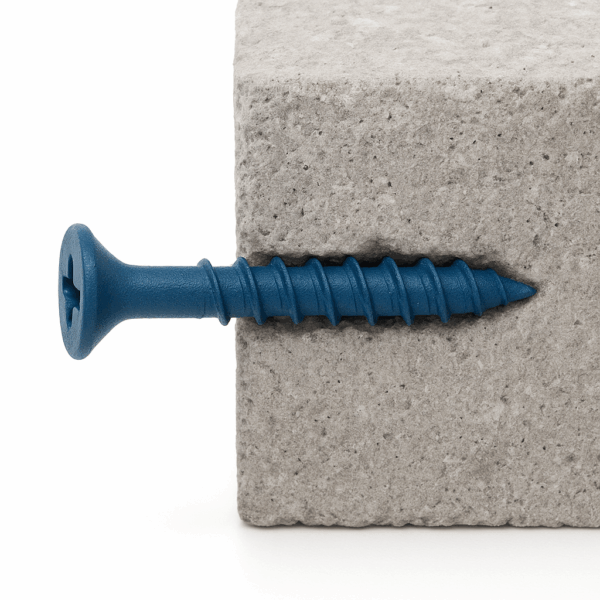
Concrete Screw (Masonry)
Masonry screws are specifically designed for use in hard materials such as brick, concrete, and stone. The threads are sharp and closely spaced to grip the masonry securely. Masonry screws are also ideal for attaching items like brackets, shelving, and fixtures to concrete or brick walls. Masonry screws work by tapping into the masonry material as they are driven in. The threads on the screw create a tight grip on the surface, providing a strong and durable hold. This makes them ideal for applications where traditional screws may not hold securely.
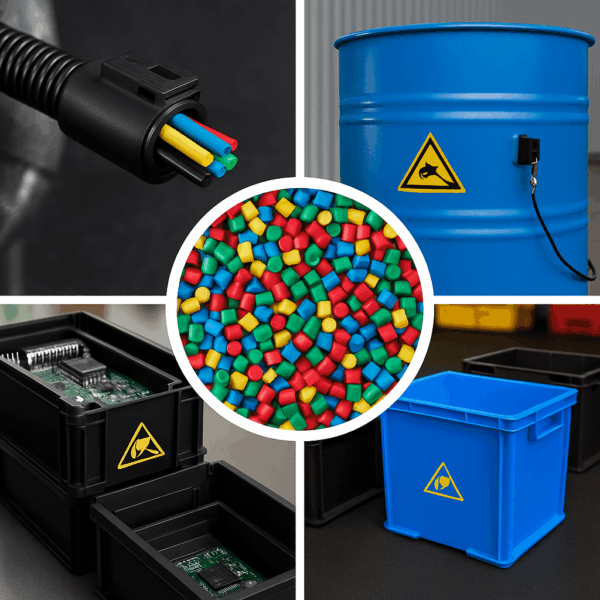
Conductive & Anti-Static PE Compounds
These compounds offer key advantages such as controlled surface resistivity (10²–10¹² Ω), high mechanical strength, excellent impact resistance, and superior environmental stress-crack performance. Their stable conductive network provides continuous anti-static functionality even under humidity fluctuations, making them ideal for environments where electrostatic buildup can damage components or ignite flammable substances. They also maintain good chemical resistance to oils, fuels, solvents, and industrial chemicals. The balanced polymer structure of Anti-Static PE compounds ensures consistent melt flow, excellent dispersion of conductive fillers, and reliable processing in extrusion, blow molding, and injection molding applications.
Conductive & Anti-Static PE Compounds are used in electronic component trays, cleanroom packaging, fuel system parts, chemical drums, cable jacketing, industrial pallets, ESD-safe containers, explosion-proof equipment housings, and sensitive automotive or aerospace components. Available types include permanently conductive PE, anti-static PE, carbon-black conductive grades, non-carbon transparent anti-static grades, surface-treated anti-dust compounds, high-impact conductive PE, UV-stabilized conductive PE, and food-grade anti-static PE.
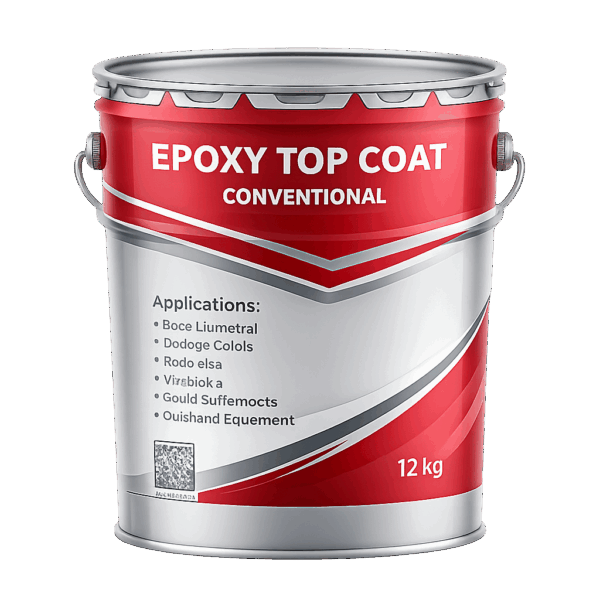
Conventional Epoxy Top Coat
Conventional Epoxy Top Coat paints are available in different types and grades, including polyamide-cured, polyamine-cured, phenolic-modified, and high-build conventional epoxy grades. They are commonly applied on structural steel, industrial equipment, pipelines, storage tanks (external surfaces), power plants, marine structures, and factory floors. Typical specifications include good adhesion to epoxy primers and interlayers, excellent resistance to moisture, oils, fuels, and mild chemicals, and good mechanical strength. These coatings can be applied by airless spray, brush, or roller, making them suitable for both workshop and on-site applications. Key advantages include strong corrosion protection, smooth and uniform finish, good abrasion resistance, and compatibility with multi-coat epoxy systems.
Conventional Epoxy Top Coat paints are supplied as two-component systems (base + hardener) in standard industrial packaging such as 12 kg and 20–25 kg metal pails, as well as 200 kg drums for large-volume projects. Export packages are prepared on pallets with proper labeling and shrink wrapping to meet international shipping requirements. Conventional Epoxy Top Coat paints remain a cost-effective and technically proven choice for customers seeking dependable industrial finishing and long-term surface protection.

Copper Cathode Sheet
The high purity, excellent electrical conductivity, high thermal conductivity, good ductility, malleability, and corrosion resistance of copper cathode make it an essential feedstock for downstream copper processing. Copper Cathode is commonly identified by internationally recognized specifications such as LME Grade A requirements and relevant ASTM, EN, ISO, or producer-specific standards. Typical chemical specifications control elements such as oxygen, sulfur, iron, lead, zinc, nickel, arsenic, and other metallic impurities. The physical appearance is normally a flat, rectangular copper plate or sheet with a characteristic reddish-orange metallic surface. Depending on the producer and contract, individual cathode sheets may commonly weigh approximately 70–120 kg, while bundles can contain multiple sheets with a total weight of several hundred kilograms or more. Dimensions, thickness, bundle weight, strapping, and loading configuration can vary according to the manufacturer and buyer requirements. The most widely traded commercial type is electrolytic copper cathode with approximately 99.99% purity, while different cathode grades may be available according to chemical composition, production process, and customer specification. Cathode copper is particularly valued because its consistent quality allows manufacturers to use it directly as a reliable feedstock for melting and further copper processing operations.
Copper Cathode Sheets are widely used as the primary raw material for producing copper wire rod, copper wire, copper tubes, copper sheets, copper plates, copper strips, copper bars, and other semi-finished copper products. The electrical industry is one of the largest consumers because high-purity cathode copper provides the conductivity required for power cables, electrical conductors, busbars, transformers, motors, generators, connectors, and electrical components. Copper cathode is also extensively used by wire rod manufacturers, cable producers, tube manufacturers, rolling mills, extrusion plants, foundries, and copper alloy producers.
During further processing, cathode sheets can be melted and continuously cast into copper rod or other intermediate products before drawing, rolling, extrusion, or fabrication. Copper Cathode is also used as feedstock for manufacturing copper-based alloys such as brass and bronze when the required alloy composition is achieved through controlled addition of other metals. Its high thermal conductivity makes refined copper particularly suitable for heat exchangers, cooling systems, radiators, and industrial heat-transfer components.