

 Arabic
Blog
In industrial painting and surface finishing, understanding the differences between paint thinners, spot blenders, and white spirits is essential for achieving high-quality results and avoiding application defects. Although these products are often grouped together as solvents, each one has a distinct formulation, purpose, and performance profile. Selecting the correct product directly affects paint flow, drying behavior, surface appearance, and overall coating durability. For professional painters, manufacturers, and maintenance teams, using the right solvent is a key part of a reliable coating system.
Paint thinners are specifically formulated to adjust the viscosity of paints and coatings according to their resin type, such as alkyd, epoxy, polyurethane, acrylic, vinyl, or nitrocellulose systems. Their primary function is to improve paint flow, leveling, and spray atomization while maintaining the original chemical and mechanical properties of the coating. Proper paint thinners help reduce defects like orange peel, sagging, brush marks, and uneven film thickness. They also support correct drying and curing behavior, ensuring strong adhesion and long-term performance. Because each coating chemistry requires a compatible thinner, paint thinners are usually resin-specific and must be selected carefully to avoid film failure or loss of gloss.
Spot blenders, on the other hand, are specialty solvents designed mainly for refinishing and repair applications, especially in automotive and industrial touch-up work. Their main purpose is not thinning paint, but blending newly applied paint into existing coatings. Spot blenders soften the edge of fresh paint, allowing it to melt smoothly into the surrounding surface without visible lines or color differences. They are essential for achieving seamle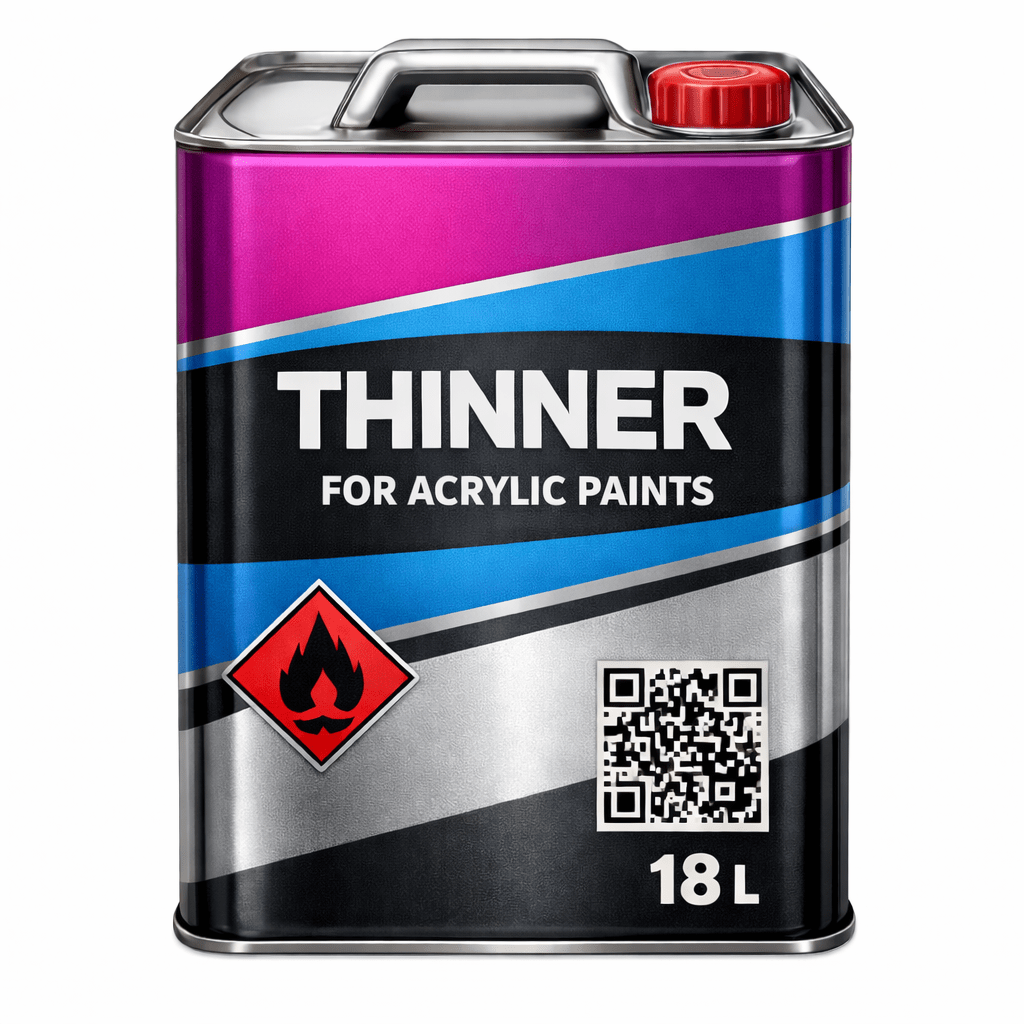 ss repairs, eliminating hard edges, and improving the visual quality of localized paint corrections. Spot blenders typically evaporate quickly and are optimized for surface blending rather than film build or coating dilution.
White spirits, also known as mineral spirits, are general-purpose petroleum solvents widely used for thinning oil-based and alkyd paints, as well as for cleaning tools and degreasing surfaces. Unlike specialized paint thinners, white spirits are more universal and less resin-specific. They offer good solvency, moderate evaporation, and effective cleaning power, making them popular in construction, woodworking, and maintenance applications. Variants such as regular, low-odor, and odorless mineral spirits allow users to choose based on performance needs and workplace comfort. However, white spirits are not suitable for all coating systems and should not be used where precise viscosity control or advanced coating performance is required.
In summary, the main difference between paint thinners, spot blenders, and white spirits lies in their intended function and formulation. Paint thinners are engineered to optimize coating application and performance, spot blenders are designed for smooth paint transitions and repair work, and white spirits serve as versatile solvents for thinning and cleaning. Choosing the correct product improves finish quality, reduces defects, and increases efficiency on site. For professional results and long-term durability, understanding these differences is essential in modern industrial and commercial painting operations.
specified info for ordering at following links :