
 Arabic
Blog
Polyurethane top coats have become one of the most widely used finishing coatings in industrial, commercial, and infrastructure projects worldwide. Their popularity is not accidental; it is the result of a unique balance between durability, protection, and appearance. In modern coating systems, polyurethane top coats play a critical role as the final protective layer that determines both service life and visual quality.
One of the main reasons to choose polyurethane top coats is their excellent resistance to weathering and UV radiation. Unlike many conventional coatings, PU top coats maintain color stability and gloss over long periods of outdoor exposure. This makes them ideal for structures that must withstand sunlight, rain, humidity, and temperature fluctuations without frequent maintenance.
Another key advantage is their strong mechanical performance. Polyurethane top coats offer high resistance to abrasion, impact, and surface wear. This property is especially important for industrial environments, machinery, floors, and structures exposed to constant mechanical stress. The flexible nature of PU coatings allows them to absorb impact without cracking or peeling.
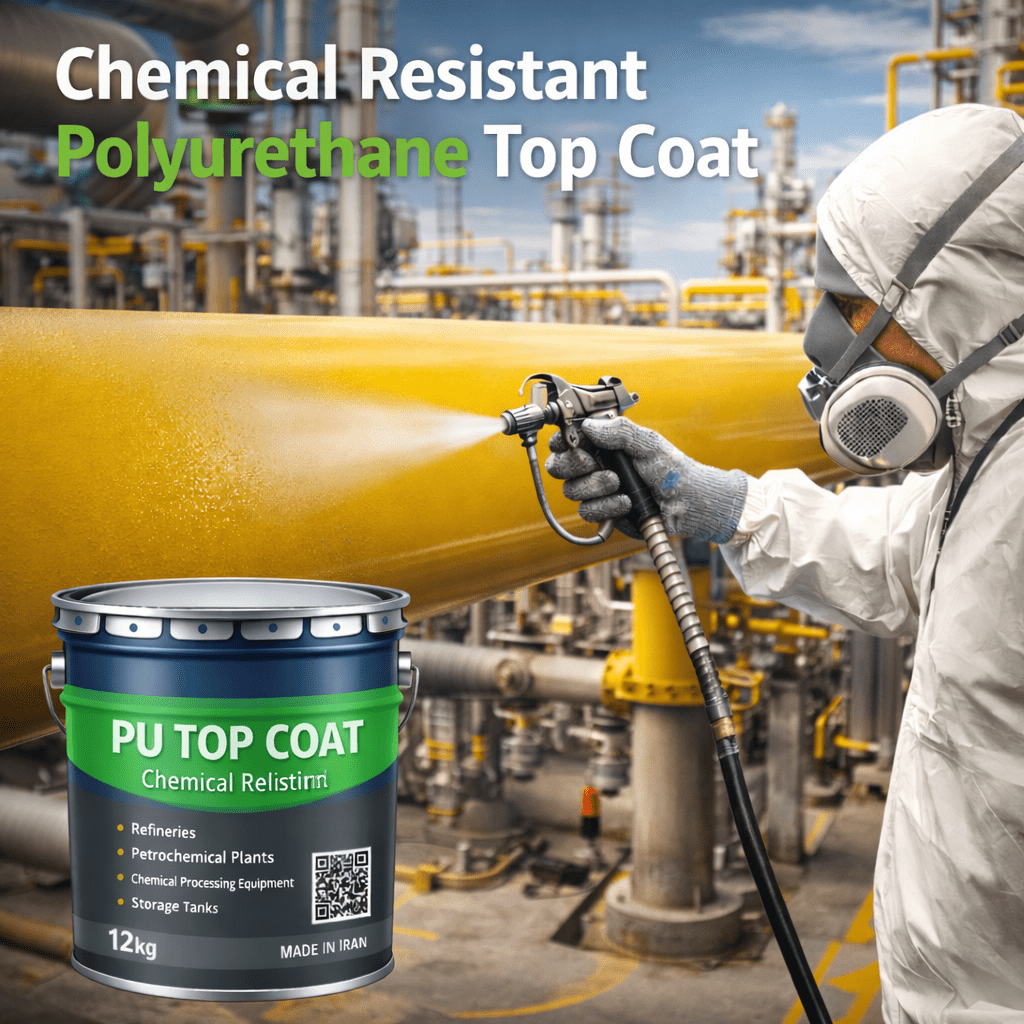
Chemical resistance is another reason polyurethane top coats are widely selected. They protect substrates against oils, fuels, solvents, salts, cleaning agents, and many industrial chemicals. This makes them suitable for chemical plants, refineries, workshops, storage tanks, and wastewater facilities where surface protection is critical.
Polyurethane top coats also provide excellent adhesion to properly prepared and primed surfaces. They can be applied over epoxy primers and interlayers, creating a complete and reliable coating system. Their smooth flow and leveling properties result in attractive finishes ranging from matte to high gloss, enhancing the professional appearance of coated surfaces.
There are different types of polyurethane top coats, each designed to meet specific performance requirements. Solvent based PU top coats are known for their excellent flow, high gloss, and strong mechanical properties, making them suitable for heavy-duty industrial applications. Water based PU top coats offer low VOC emissions and improved safety, ideal for indoor and environmentally sensitive projects.
High solid PU top coats provide thicker dry film build with reduced solvent content, helping to meet environmental regulations while improving application efficiency. Moisture cure PU top coats are single-component systems that cure with atmospheric moisture, making them ideal for field applications and maintenance projects where mixing accuracy is difficult.
Polyether PU top coats are preferred in high-humidity or water-exposed environments due to their superior resistance to hydrolysis and moisture. In contrast, polyester PU top coats offer higher surface hardness and abrasion resistance, making them suitable for applications where mechanical durability and scratch resistance are essential.
Specialized polyurethane systems are also available, including chemical resistant PU top coats, abrasion resistant PU top coats, and anti-graffiti PU top coats, each developed to address specific industrial challenges. These specialized coatings help extend service life, reduce maintenance costs, and protect valuable assets.
In conclusion, polyurethane top coats are chosen because they deliver long-lasting protection, excellent appearance, and reliable performance across a wide range of environments. Their versatility and variety allow engineers, contractors, and project owners to select the right system for each application. By choosing the appropriate type of polyurethane top coat, it is possible to achieve maximum durability, reduced maintenance, and long-term value for industrial and commercial coating projects.